
Dental braces in Vietnam offer an orthodontic treatment option for patients seeking to straighten crooked teeth, close gaps, correct dental crowding, or improve their bite. Dental clinics in Hanoi, Ho Chi Minh City, and other major Vietnamese cities provide different fixed orthodontic systems, including conventional metal braces, ceramic braces, and self-ligating brackets.
For international patients, Vietnam may offer competitive orthodontic treatment fees. However, braces are not a quick dental procedure that can be completed during a short holiday. Comprehensive orthodontic treatment usually requires months or years of regular adjustments, professional monitoring, and long-term retention.
Understanding the treatment process, costs, and follow-up requirements is essential before choosing an orthodontic provider.
This guide covers the cost of dental braces in Vietnam, available braces types, treatment procedures, expected duration, potential complications, and practical considerations for overseas patients. It also includes reference prices supplied by one of VnMedtour’s partner dental clinics, converted into US dollars.
Dental braces in Vietnam: Explore metal, ceramic, and self-ligating braces, treatment costs, and orthodontic care options with VnMedtour.
Quick Navigation
1. What Are Dental Braces?
Dental braces are orthodontic appliances designed to gradually move teeth into more appropriate positions.
Most fixed braces consist of brackets bonded to the teeth and orthodontic archwires that apply controlled forces. These forces stimulate biological changes in the periodontal ligament and surrounding bone, allowing teeth to move through a process called bone remodeling.
Orthodontists use braces to improve dental alignment and correct certain problems involving how the upper and lower teeth meet.
What Dental Problems Can Braces Treat?
Dental braces may be recommended for:
- Crowded teeth: Teeth overlap or rotate because there is insufficient space in the dental arch.
- Gapped teeth: Unwanted spaces occur between adjacent teeth.
- Overbite: The upper front teeth overlap the lower front teeth excessively.
- Underbite: The lower front teeth are positioned ahead of the upper front teeth.
- Crossbite: Some upper teeth bite inside the lower teeth.
- Open bite: Certain upper and lower teeth do not meet when the jaws close.
- Rotated teeth: Teeth are twisted or positioned incorrectly.
Not every orthodontic condition can be corrected with braces alone. Severe skeletal discrepancies may require additional treatment, including jaw surgery in selected cases.
The most suitable approach depends on the patient’s oral health, bite relationship, jaw development, and individual orthodontic needs.
For a broader overview of treatment options, read our guide to orthodontics in Vietnam.
2. Types of Dental Braces Available in Vietnam
Patients considering dental braces in Vietnam can choose from several fixed orthodontic systems. Each has different characteristics, costs, and aesthetic considerations.
2.1. Traditional Metal Braces
Traditional metal braces use stainless-steel brackets attached to the front surfaces of teeth.
An orthodontic archwire connects the brackets, while elastic ligatures commonly secure the wire.
Advantages:
- Suitable for a broad range of orthodontic conditions.
- Generally the most affordable fixed-braces option.
- Durable brackets and established clinical techniques.
- Appropriate for teenagers and adults.
- Allow orthodontists to manage complex tooth movements.
Limitations:
- More noticeable than ceramic or lingual braces.
- May initially irritate the cheeks and lips.
- Require careful cleaning around brackets.
- Certain hard or sticky foods can damage the appliance.
Metal braces are often a practical choice for patients who prioritize affordability and treatment versatility.
2.2. Self-Ligating Metal Braces
Self-ligating metal braces use brackets with built-in clips or sliding mechanisms to retain the archwire.
Unlike conventional brackets, they do not require traditional elastic ligatures for wire retention.
Potential advantages:
- Simplified archwire engagement and removal.
- No conventional elastic ties around brackets.
- May make some adjustment procedures more convenient.
Limitations:
- Usually more expensive than conventional metal braces.
- Still require routine orthodontic monitoring.
- Do not guarantee faster treatment.
- Remain visible when smiling.
Self-ligating braces are sometimes promoted as faster or more comfortable. However, available research has not consistently demonstrated a major reduction in overall treatment time for every patient.
Treatment duration depends on diagnosis, biological response, treatment mechanics, and patient cooperation.
2.3. Ceramic and Crystal Braces
Ceramic braces use tooth-colored or translucent brackets, making them less noticeable than traditional metal braces.
Some Vietnamese clinics advertise particular aesthetic bracket systems as crystal or sapphire braces. Patients should confirm the actual bracket material and manufacturer.
Advantages:
- More discreet appearance than metal brackets.
- Suitable for many orthodontic problems.
- Fixed appliances do not need to be removed for meals.
- Often preferred by adults concerned about appearance.
Limitations:
- Generally more expensive than metal braces.
- Some ceramic materials may be more susceptible to fracture.
- Elastic ligatures can become discolored.
- Cleaning around brackets remains essential.
Ceramic braces are not automatically more effective than metal braces. The choice should reflect clinical needs and personal preferences.
2.4. Self-Ligating Ceramic Braces
Self-ligating ceramic braces combine less noticeable bracket materials with built-in wire-retention mechanisms.
They may appeal to patients seeking a discreet fixed appliance without conventional elastic ligatures.
However, their higher cost does not necessarily mean shorter treatment or better clinical outcomes.
2.5. Lingual Braces
Lingual braces are attached to the inner surfaces of teeth, facing the tongue.
Because the brackets are positioned behind the teeth, they are much less visible when smiling.
Potential advantages include discreet appearance and continuous fixed-appliance treatment.
Limitations include higher fees, possible speech changes, tongue irritation, and more challenging cleaning.
Lingual orthodontics requires specialized expertise and may not be available at every dental clinic.
3. Dental Braces Cost in Vietnam: Partner Clinic Prices in USD
The cost of dental braces in Vietnam varies according to the appliance type, treatment complexity, expected duration, and services included in the quotation.
To help international patients estimate their treatment budget, VnMedtour provides the following reference prices from one of our partner dental clinics in Vietnam.
Dental Braces Price List in USD
| Type of Dental Braces | Level 1 – Mild | Level 2 – Moderate | Level 3 – Complex |
|---|---|---|---|
| Traditional Metal Braces | $1,115 | $1,346 | $1,538 |
| Self-Ligating Metal Braces | $1,462 | $1,538 | $1,731 |
| Ceramic/Crystal Braces | $1,538 | $1,731 | $1,923 |
| Self-Ligating Ceramic Braces | $1,731 | $1,923 | $2,115 |
Price note: These USD amounts are approximate conversions of a price list supplied by a VnMedtour partner dental clinic, originally valid in March 2025, using an illustrative exchange rate of USD 1 = 26,000 VND. The prices are historical references, not confirmed current 2026 quotations. Actual fees and exchange rates may differ.
Understanding the Three Treatment Levels
The partner clinic divides orthodontic cases into three broad categories.
Level 1 – Mild Cases
This category may include mild dental crowding, small gaps between teeth, and relatively straightforward alignment problems.
Level 2 – Moderate Cases
Examples may include more pronounced crowding, protrusion, and bite irregularities requiring additional orthodontic correction.
Level 3 – Complex Cases
These cases involve difficult orthodontic problems and may require advanced treatment planning, additional procedures, or coordination with other dental specialists.
These categories reflect the partner clinic’s pricing framework rather than a universal orthodontic classification.
The final treatment level is determined after a clinical examination.
How Much Do Metal Braces Cost in Vietnam?
Based on the partner clinic’s historical reference prices:
- Traditional metal braces: approximately $1,115–$1,538.
- Self-ligating metal braces: approximately $1,462–$1,731.
Conventional metal braces are generally the most economical fixed orthodontic option.
How Much Do Ceramic Braces Cost in Vietnam?
The same reference list indicates:
- Conventional ceramic/crystal braces: approximately $1,538–$1,923.
- Self-ligating ceramic braces: approximately $1,731–$2,115.
Ceramic systems generally cost more because of their aesthetic bracket materials and design.
What Is Included in the Braces Price?
A braces quotation may include bracket placement, routine adjustments, and appliance removal.
However, inclusion policies vary between providers.
Additional charges may apply for:
- Panoramic and cephalometric X-rays.
- Digital dental scans or impressions.
- Tooth extractions.
- Fillings and periodontal treatment.
- Temporary anchorage devices.
- Replacement of damaged appliances.
- Retainers after treatment.
- Extended treatment or transfer arrangements.
Patients should request a written quotation specifying what is included.
Are Installment Payments Available?
Some dental clinics in Vietnam offer orthodontic installment plans.
However, eligibility, payment schedules, and promotional conditions vary.
International patients should confirm whether installment arrangements are available to non-residents and whether any additional fees apply.
4. What Affects the Total Cost of Dental Braces?
The initial braces price is only one part of the financial planning process.
Orthodontic Case Complexity
Mild crowding may require fewer treatment stages than complex bite correction.
More difficult cases can involve additional appliances, extractions, or longer treatment periods.
Type of Braces
Metal, ceramic, self-ligating, and lingual systems have different material and technical costs.
The most expensive appliance is not necessarily the best choice for every patient.
Additional Dental Treatment
Untreated cavities, gum disease, or other dental problems may need attention before braces are fitted.
These procedures can increase the overall treatment budget.
Treatment Duration
Longer treatment may require additional appointments and maintenance.
Patients should clarify whether the quoted fee covers the entire expected treatment period.
Travel and Accommodation
For overseas patients, flights, accommodation, transportation, and time away from work can significantly affect total costs.
A lower clinic fee may not result in overall savings if repeated international travel is required.
Currency Exchange and Payment
Although this guide presents dental braces prices in USD for international readers, Vietnamese clinics may issue quotations or collect payments in local currency.
The final amount paid in USD can depend on the exchange rate applied by the bank, card provider, or payment service.
Patients should confirm the accepted payment methods and billing currency before treatment.
5. Metal vs. Ceramic vs. Self-Ligating Braces
When comparing dental braces in Vietnam, patients should consider appearance, cost, clinical suitability, and maintenance requirements.
| Feature | Metal Braces | Ceramic Braces | Self-Ligating Braces |
|---|---|---|---|
| Appearance | More visible | Less noticeable | Depends on material |
| Relative cost | Generally lower | Generally higher | Often higher |
| Wire retention | Usually elastic ligatures | Usually elastic ligatures | Built-in mechanism |
| Cleaning | Careful cleaning required | Careful cleaning required | Careful cleaning required |
| Treatment speed | Case-dependent | Case-dependent | Case-dependent |
| Follow-up | Required | Required | Required |
Which Braces Are Best for Adults?
Adults may choose metal, ceramic, or self-ligating braces depending on their orthodontic condition and personal preferences.
Ceramic braces may appeal to professionals seeking a less noticeable appliance.
However, adults with significant periodontal problems may need additional evaluation before treatment.
Which Braces Are Best for Teenagers?
Metal braces are commonly used for teenagers because of their durability and established clinical applications.
Nevertheless, treatment selection should depend on the orthodontist’s diagnosis rather than age alone.
Are Expensive Braces More Effective?
Not necessarily.
Higher fees may reflect bracket materials, design, or specialized techniques.
Clinical outcomes depend on appropriate diagnosis, treatment planning, and professional management.
6. Dental Braces Procedure in Vietnam: Step by Step
The process of getting dental braces in Vietnam involves diagnosis, appliance placement, regular adjustments, and retention.
Step 1: Orthodontic Consultation
The orthodontist examines the teeth, gums, bite, and jaw relationships.
The assessment may identify crowding, spacing, bite discrepancies, or existing dental problems.
Patients should disclose relevant medical conditions, medications, and previous orthodontic treatment.
Step 2: Diagnostic Records
Depending on clinical needs, records may include:
- Panoramic X-rays.
- Cephalometric X-rays.
- Intraoral photographs.
- Facial photographs.
- Digital dental scans or impressions.
Additional imaging may be recommended when clinically justified.
Step 3: Personalized Treatment Planning
The orthodontist develops a treatment plan based on the diagnosis.
The plan should explain the recommended appliance, estimated duration, possible extractions, treatment limitations, and expected costs.
Patients should understand the proposed treatment before proceeding.
Step 4: Dental Preparation
Before braces placement, existing cavities, gum inflammation, or other dental problems may require treatment.
Good oral health provides a more suitable foundation for orthodontic care.
Step 5: Braces Placement
Brackets are bonded to the teeth using dental adhesive.
An archwire is then positioned and secured.
The appointment may take approximately one to two hours, depending on the appliance and case.
Temporary tenderness or pressure may occur afterward.
Step 6: Regular Adjustments
Throughout active treatment, the orthodontist monitors tooth movement and adjusts the appliance.
Appointments are commonly scheduled approximately every four to eight weeks, although individual intervals vary.
Adjustments may involve changing wires, checking brackets, or introducing additional orthodontic mechanics.
Step 7: Braces Removal
When the planned treatment goals have been achieved, the orthodontist removes the brackets and adhesive.
The teeth are then evaluated to confirm the treatment result.
Step 8: Retention
Retainers help maintain corrected tooth positions.
Patients may receive removable retainers, fixed retainers, or a combination.
Long-term retainer use is often recommended because teeth can shift after treatment.
Dental Braces Before and During Treatment: Real Patient Progress
These clinical photographs illustrate changes in tooth alignment during fixed orthodontic treatment. Braces gradually guide teeth into more appropriate positions through controlled orthodontic forces. Treatment progress depends on the initial condition, individual biological response, and orthodontic treatment plan.
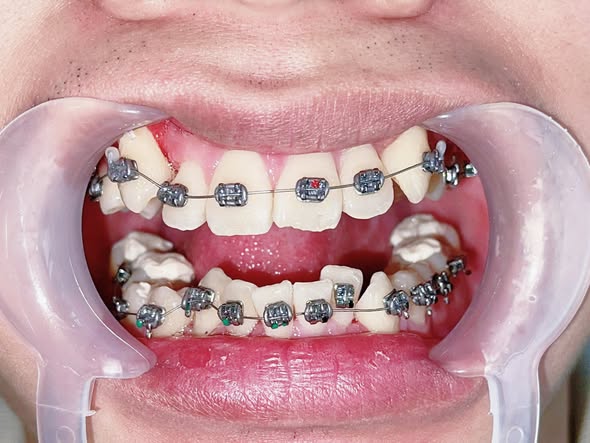
Before and during orthodontic treatment: Improved alignment of crowded teeth with fixed metal braces. Treatment is still in progress.
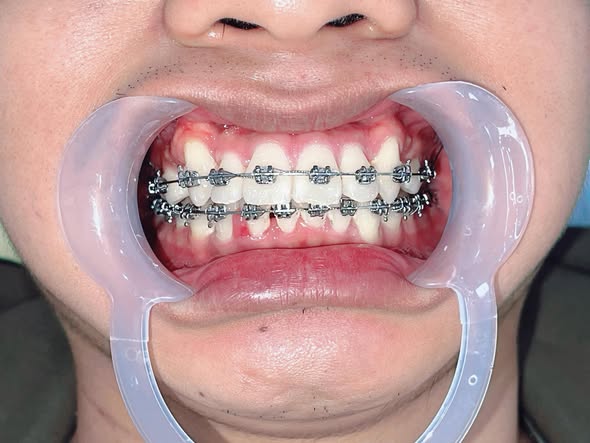
Before and during orthodontic treatment: Improved alignment of crowded teeth with fixed metal braces. Treatment is still in progress.
7. How Long Does Dental Braces Treatment Take?
Comprehensive orthodontic treatment commonly lasts approximately 12–24 months, although some patients require shorter or longer periods.
Factors affecting duration include:
- Severity of crowding.
- Type of bite discrepancy.
- Need for extractions.
- Individual biological response.
- Periodontal health.
- Appliance breakages.
- Missed appointments.
- Cooperation with prescribed elastics.
Can Braces Work in Six Months?
Limited orthodontic treatment may sometimes be completed within several months.
However, comprehensive bite correction generally requires more time.
Patients should be cautious about promises of extremely rapid treatment without individualized assessment.
Can Treatment Be Accelerated?
Some techniques are marketed as accelerating orthodontic treatment.
However, effectiveness and suitability vary, and faster movement is not always desirable.
The orthodontist should prioritize safe, controlled tooth movement rather than an unrealistic deadline.
Why Do Some Patients Need Longer Treatment?
Complex bite discrepancies, impacted teeth, missed appointments, or appliance damage may extend treatment.
In addition, tooth movement varies between individuals.
An estimated treatment duration should therefore be understood as a clinical projection rather than a guaranteed completion date.
8. Can International Patients Get Dental Braces in Vietnam?
Yes. International patients can receive dental braces in Vietnam, but they must consider long-term follow-up requirements.
Unlike procedures that can be completed during a short visit, fixed braces generally require ongoing professional management.
Foreigners Living in Vietnam
For expatriates, international students, and foreign employees, orthodontic treatment may be relatively convenient.
Patients can attend routine appointments with the same orthodontist throughout treatment.
This continuity supports monitoring and timely appliance adjustments.
Patients Visiting Vietnam Frequently
Some patients travel to Vietnam regularly for business or family reasons.
Braces may be feasible if the travel schedule is compatible with the orthodontist’s treatment plan.
Before starting, patients should discuss appointment frequency, emergency care, and management of unexpected travel changes.
Short-Term Dental Tourists
Patients visiting Vietnam for only one or two weeks are generally not suitable candidates for completing an entire fixed-braces treatment course during that trip.
Although an initial consultation or fitting may be possible, ongoing adjustments remain necessary.
Starting treatment without a realistic follow-up plan can lead to interruptions and complications.
Can I Start Braces in Vietnam and Continue Abroad?
Treatment transfer may be possible, but acceptance by another orthodontist is not guaranteed.
The receiving clinician may need to reassess the case or modify the existing treatment plan.
Patients should ideally confirm transfer arrangements before beginning treatment.
Is Remote Monitoring Enough?
Remote communication may help with selected follow-up concerns.
However, fixed braces require periodic in-person adjustments and examinations.
Remote monitoring cannot replace every clinical appointment.
What If I Relocate During Treatment?
Patients who expect to move should inform their orthodontist as early as possible.
A treatment summary, diagnostic records, appliance details, and progress information may help another clinician evaluate the case.
Nevertheless, the new orthodontist may recommend a revised treatment plan or charge additional fees.
9. Dental Braces vs. Invisalign in Vietnam
Fixed braces and Invisalign clear aligners are both orthodontic treatments, but they differ in appearance, daily use, and patient responsibilities.
| Feature | Dental Braces | Invisalign |
|---|---|---|
| Appliance | Fixed brackets and wires | Removable clear aligners |
| Appearance | Depends on bracket type | Generally discreet |
| Eating | Appliance remains attached | Aligners removed |
| Cleaning | Requires cleaning around brackets | Aligners removed for brushing |
| Wear-time compliance | Fixed appliance | Consistent wear required |
| Follow-up | Regular adjustments | Regular monitoring |
| Suitability | Depends on diagnosis | Depends on diagnosis |
Are Braces Better Than Invisalign?
Neither treatment is universally better.
Fixed braces may offer practical advantages for certain complex movements or patients who prefer a non-removable appliance.
Invisalign may appeal to patients seeking a discreet option and the ability to remove aligners during meals.
However, clear aligners require consistent daily wear, commonly around 20–22 hours, as instructed by the orthodontist.
For a detailed explanation, read our guide to Invisalign in Vietnam.
You can also explore clear aligners in Vietnam for more information about removable orthodontic systems.
Are Clear Aligners Better for International Travelers?
Removable aligners may offer practical advantages for some patients who travel frequently, but they still require professional monitoring.
Not every orthodontic case is suitable for aligners, and remote monitoring does not eliminate the need for clinical examinations.
The best option depends on the patient’s diagnosis and realistic access to follow-up care.
10. Risks and Possible Complications of Dental Braces
Orthodontic treatment is widely used, but it involves potential risks.
Temporary Discomfort
Patients may experience tenderness or pressure after fitting and adjustments.
These symptoms often improve within several days.
Mouth Irritation
Brackets and wires may irritate the cheeks, lips, or tongue.
Orthodontic wax may help manage minor irritation.
Tooth Decay and White Spot Lesions
Plaque accumulation around brackets can increase the risk of enamel demineralization and cavities.
Good oral hygiene is essential.
Gum Inflammation
Inadequate cleaning may contribute to gingivitis or worsen existing periodontal conditions.
Root Resorption
Some patients experience shortening of tooth roots during orthodontic treatment.
The extent varies, and significant cases require clinical monitoring.
Appliance Damage
Broken brackets or displaced wires may cause discomfort and interrupt treatment.
Relapse
Teeth may shift after braces are removed.
Retainers help maintain the corrected positions.
For further information about orthodontic treatment, visit the American Association of Orthodontists’ guide to braces.
11. How to Care for Dental Braces
Good oral hygiene helps protect the teeth and gums throughout treatment.
Brush Around Brackets
Use fluoride toothpaste and carefully clean all tooth surfaces, especially near brackets and the gumline.
Clean Between Teeth
Interdental brushes, floss threaders, or other recommended tools can help remove plaque around orthodontic appliances.
Avoid Damaging Foods
Hard, sticky, or particularly chewy foods may damage brackets or wires.
Follow your orthodontist’s dietary instructions.
Attend Regular Appointments
Routine reviews allow the orthodontist to monitor progress and identify problems.
Follow Retainer Instructions
After braces removal, wear retainers as directed to reduce the risk of relapse.
For general dental hygiene advice, see the American Dental Association’s guide to braces.
What Should You Do If a Bracket Breaks?
Contact your orthodontist for guidance.
A loose bracket or protruding wire may cause irritation or interfere with treatment.
Orthodontic wax may temporarily cover a sharp area, but professional assessment may still be necessary.
Do not attempt to make major adjustments to the appliance yourself.
12. Choosing a Dental Braces Clinic in Vietnam
Selecting a provider for dental braces in Vietnam should involve more than comparing prices.
Orthodontic Qualifications
Ask about the treating clinician’s orthodontic training and experience.
The orthodontist should explain the diagnosis and available options clearly.
Comprehensive Diagnosis
A reliable treatment plan should be based on an appropriate clinical examination and diagnostic records.
Transparent Pricing
Request a written quotation explaining what is included and which services may cost extra.
Follow-Up Arrangements
International patients should confirm appointment frequency and how emergencies will be managed.
Treatment Records
If relocation is possible, ask whether the clinic can provide records and treatment summaries for another orthodontist.
Communication With International Patients
Clear communication is particularly important for patients receiving care outside their home country.
Before treatment, confirm whether the clinic can explain the diagnosis, instructions, and follow-up arrangements in a language you understand.
13. Planning Your Orthodontic Treatment in Vietnam
Before traveling for dental braces in Vietnam, patients should consider their expected stay, treatment goals, and long-term availability.
Before Traveling
Prepare any available dental records, relevant X-rays, medical history, and information about previous orthodontic treatment.
These materials may support preliminary discussions but do not replace an in-person examination.
During Your Consultation
Ask about:
- Recommended braces type.
- Expected treatment duration.
- Appointment frequency.
- Total cost.
- Additional procedures.
- Possible complications.
- Retention requirements.
After Starting Treatment
Maintain good oral hygiene, attend scheduled appointments, and contact the clinic if appliances become damaged.
Patients traveling abroad should know where to obtain dental assistance if necessary.
Planning Your Budget
Before committing to treatment, consider the clinic’s quotation together with the expected cost of travel and accommodation.
If you live abroad, estimate how many international trips may be necessary and whether you can reliably attend them.
The overall cost of braces should be evaluated across the full treatment period, not only at the initial appointment.
14. Dental Braces in Vietnam With VnMedtour
VnMedtour helps international patients explore dental treatment options in Vietnam and communicate with suitable healthcare providers.
Our assistance may include:
- Coordinating preliminary orthodontic inquiries.
- Helping arrange consultations.
- Requesting information about available braces systems.
- Obtaining personalized cost estimates.
- Supporting communication with dental clinics.
- Providing practical information for treatment planning.
Clinical decisions, treatment eligibility, and final quotations are determined by the treating dental professionals.
For fixed braces, VnMedtour encourages patients to prioritize continuity of care and realistic follow-up arrangements.
Considering dental braces in Vietnam?
Contact VnMedtour to discuss your orthodontic concerns, preferred city, and expected length of stay.
Our team can help you explore consultation options and understand the next steps.
15. Frequently Asked Questions About Dental Braces in Vietnam
How much do dental braces cost in Vietnam in USD?
Costs depend on the braces system and treatment complexity. A historical price list from a VnMedtour partner dental clinic indicates approximately $1,115–$1,538 for conventional metal braces and $1,731–$2,115 for self-ligating ceramic braces. These amounts are illustrative USD conversions, and current quotations must be confirmed.
Are dental braces in Vietnam cheaper than in Australia or the United States?
Treatment fees in Vietnam may be lower than those charged by some providers abroad. However, international patients should compare total costs, including travel, accommodation, follow-up appointments, and retainers.
Which type of dental braces is the cheapest?
Conventional metal braces are generally the most affordable fixed orthodontic option.
Are ceramic braces better than metal braces?
Ceramic braces are less noticeable, while metal braces are generally more affordable. Both can be effective when appropriately selected.
Are self-ligating braces faster?
Not necessarily. Treatment duration depends on individual clinical factors rather than the bracket system alone.
How long does orthodontic treatment take?
Comprehensive treatment commonly takes around 12–24 months, although individual cases may be shorter or longer.
Can adults get dental braces in Vietnam?
Yes. Adults can receive orthodontic treatment when their teeth, gums, and supporting structures are suitable.
Can I get braces during a two-week holiday?
You may be able to arrange an initial consultation or fitting, but a complete fixed-braces treatment course cannot normally be completed during a two-week holiday.
Can I continue treatment in another country?
Treatment transfer may be possible, but it requires coordination and acceptance by the receiving orthodontist.
Do dental braces hurt?
Temporary pressure or tenderness may occur after fitting and adjustments. Severe or persistent pain should be assessed by a dental professional.
Do braces damage teeth?
Orthodontic treatment can be performed safely when appropriately planned and monitored. However, poor oral hygiene and individual risk factors can contribute to complications.
Do I need retainers after braces?
Yes. Retainers help maintain corrected tooth positions and are often required long-term.
Are braces prices in USD fixed?
No. The USD prices in this guide are approximate conversions of a partner clinic’s historical local-currency price list. Current clinic quotations and payment exchange rates may differ.
Conclusion: Are Dental Braces in Vietnam Right for You?
Dental braces in Vietnam offer several orthodontic treatment options, including conventional metal braces, ceramic braces, and self-ligating systems.
Based on a historical partner clinic price reference, the listed fixed-braces options range from approximately $1,115 to $2,115, depending on the appliance and treatment complexity. These are not confirmed current prices.
The most suitable appliance depends on the patient’s orthodontic condition, treatment goals, budget, and ability to attend regular follow-up appointments.
For international patients, the key consideration is not simply the initial price but the ability to complete treatment with consistent professional care.
A comprehensive orthodontic assessment, transparent quotation, realistic treatment timeline, and long-term retention plan are essential.
Ready to Start Your Braces Journey in Vietnam?
Explore metal, ceramic, and self-ligating braces
with support from VnMedtour. Get a personalized
treatment quotation, compare your options, and
arrange a consultation with a partner dental clinic.
No obligation to book. Final treatment plans and
prices are confirmed after clinical assessment.