
Quick Navigation
Gastroscopy in Vietnam: Safe, Modern, and Affordable Upper GI Endoscopy
Chronic upper gastrointestinal issues—ranging from persistent acid reflux and localized heartburn to severe epigastric pain—affect millions of global citizens every year. According to clinical data compiled by the World Gastroenterology Organisation (WGO), upper gastrointestinal disorders and malignancies are highly curable if diagnosed early. However, many individuals in Western countries delay scheduling a critical diagnostic evaluation because of high out-of-pocket facility bills, rigid insurance navigation, and months of waiting list backlogs.
Concurrently, a revolutionary shift is transforming international medical travel. Global patients are looking to Southeast Asia to take control of their medical care continuum.
A professional gastroscopy in Vietnam offers an elite clinical solution: access to world-class optoelectronic endoscopy hardware, Western-trained gastroenterology chiefs, and gentle conscious sedation protocols—all executed at a fraction of Western healthcare costs.
Why Choose Vietnam for a Gastroscopy?
Choosing an international destination for an endoluminal procedure involves weighing clinical reliability against direct logistics. Elite private institutions across Vietnam provide three structural advantages for international patients:
1. Exceptional Financial Value
In nations like the United States, Australia, or Canada, a private upper endoscopy easily ranges between $2,000 and $3,500 USD once you bundle the facility fee, diagnostic specialist honorarium, and anesthesiology support. In Vietnam, a premium, international-tier gastroscopy costs between $200 and $450 USD. This achieves a profound 75% to 80% direct cost optimization while maintaining absolute parity in patient safety, equipment sterilization, and clinical reporting detail.
2. Elimination of Diagnostic Delays
When dealing with burning gastric discomfort or sudden changes in digestion, waiting weeks for a specialist appointment causes intense personal anxiety. Private diagnostic facilities in Vietnam dismantle this structural friction by offering open booking schedules, allowing global travelers to secure a definitive diagnosis within a few days of contact.
3. Integrated Total Digestive Evaluations
Clinical guidelines often recommend assessing the entire digestive tract at once to maximize diagnostic accuracy under a single anesthetic event. International patients frequently pair their upper tract investigation with a comprehensive colonoscopy in vietnam safe modern affordable to screen for colorectal polyps and map lower intestinal tissues concurrently.
International Clinical Governance and Advanced Endoscopic Hardware
A common worry for foreign patients travelling for medical care is the standard of infection control and hardware quality. In Vietnam’s premium private medical sector, healthcare delivery is strictly governed by elite operational frameworks.
The country’s premier international hospitals maintain active accreditations from the Joint Commission International (JCI), forcing medical blocks to meet rigorous parameters regarding diagnostic tissue handling, patient safety management, and error minimization.
Furthermore, leading diagnostic centers are equipped with the absolute vanguard of Japanese optoelectronic engineering, utilizing next-generation endoscopy platforms from Olympus (Evis Exera/Lucera Series) and Fujifilm.
A primary technological cornerstone of premium gastroscopy care in Vietnam is Narrow Band Imaging (NBI). Standard white-light endoscopy can easily overlook flat, early-stage pre-cancerous cellular changes. NBI tech filters light into specific blue and green wavelengths that are strongly absorbed by the hemoglobin inside microscopic blood vessels. This illuminates the micro-vascular structure of the gastric mucosa, enabling your gastroenterologist to isolate hidden lesions, early-scale gastric cancers, and localized Barrett’s esophagus with unmatched precision.
Seamless Cross-Platform Health System Integration
For proactive global citizens, an upper endoscopy is rarely a standalone procedure; it is often part of a broader, long-term health review. Top private health pavilions across Vietnam coordinate their endoscopy blocks to fit smoothly into comprehensive health screening itineraries.
If you are arranging an annual diagnostic overview, pairing your gastroscopy with full biological blood profiles, cardiovascular screenings, and advanced radiology via a structured health check up in vietnam provides an exceptionally coordinated, high-efficiency roadmap for your longevity planning.
To match the geographic preferences of international medical travelers, these elite screening portals are fully integrated across Vietnam’s primary medical metropolises:
-
The Southern Commercial Hub: If your medical vacation centers around the dynamic southern region, you can explore premier international diagnostic pavilions and multi-specialty centers using our detailed guide to health check ups in ho chi minh city.
-
The Northern Capital Network: For patients who wish to pair their diagnostic imaging with a serene, restorative travel experience or traditional wellness rehabilitation, you can view the top accredited hospitals in the capital via our complete handbook to health check ups in hanoi.
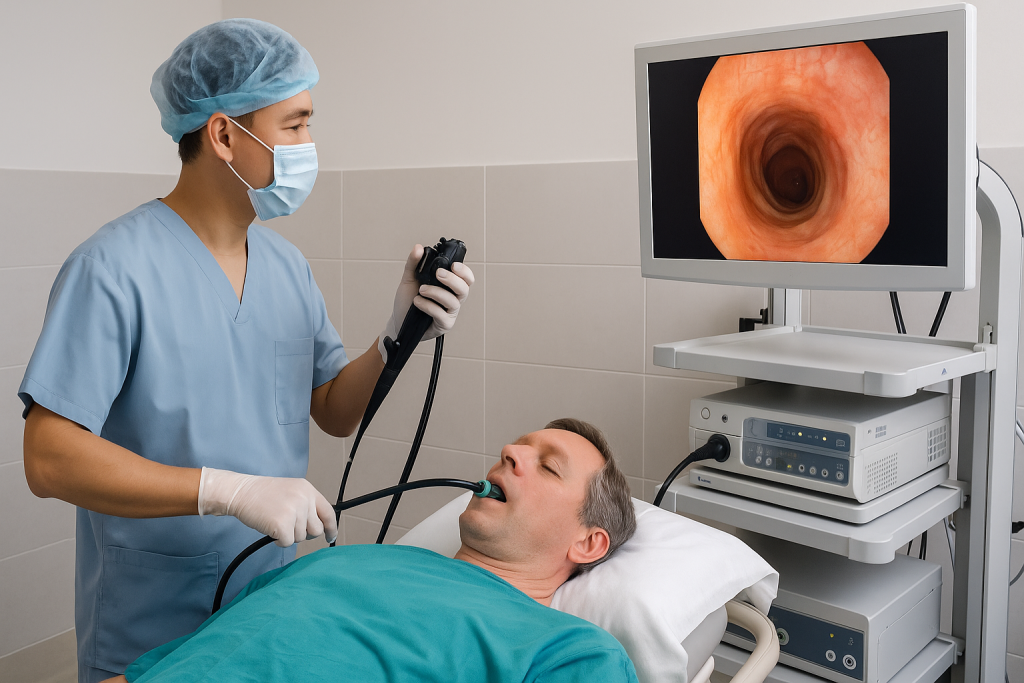
A Vietnamese gastroenterologist reviews gastroscopy findings with an international patient at a modern hospital in Vietnam
Clear Comparison Matrix of Gastroscopy Services
To provide absolute operational clarity for international patients, the following responsive, scrollable matrix details the technical, administrative, and clinical framework of gastroscopy care across Western and Vietnamese medical models:
Step-by-Step Breakdown of the Gastroscopy Procedure
An upper endoscopy is a streamlined, highly optimized medical intervention. Understanding each clinical step helps minimize pre-operative anxiety and ensures complete clarity of expectations:
1. Pre-Procedural Preparation (Fasting Protocol)
For the endoscopist to completely review the stomach lining, the upper GI tract must be clear of all debris. Patients fast from all solid foods and liquids (except small sips of water) for a minimum of 6 to 8 hours prior to the appointment. This ensures clear visualization and eliminates any risk of aspiration during sedation.
2. The Comfort of Twilight Sedation
While some medical systems perform gastroscopies using only a local anesthetic throat spray—which can leave the patient dealing with uncomfortable gag reflexes and stress—modern Vietnamese private hospitals favor advanced “twilight sedation.”
Managed continuously by a board-certified anesthesiologist, a mild sedative is delivered intravenously. The patient drifts into a shallow, comfortable sleep within seconds. You will experience no pain, no choking sensations, and no stressful memories of the procedure.
3. Precision Optical Examination and Biopsy Capture
Once the patient is comfortably sedated, the gastroenterologist gently introduces a highly flexible, slim optoelectronic endoscope (typically around the diameter of a pencil) through the mouth and guides it smoothly down the esophagus, stomach, and into the duodenum.
The scope’s ultra-high-definition camera streams real-time video to large monitors in the room. If the doctor finds an area of inflammation, an ulcer, or signs of H. pylori infection, they pass microscopic forceps through the scope’s internal channel to painlessly collect a tiny tissue sample (biopsy) for formal laboratory analysis.
4. Rapid Recovery and Expert Consultation
Because modern twilight sedatives clear the body quickly, the patient wakes up naturally in a private recovery bay within 5 to 10 minutes after the scope is removed. After a short 30-to-45-minute rest period, your consulting gastroenterologist will provide a comprehensive, printed color report of the findings. If biopsies were taken, the final histopathology results are delivered electronically within 2 to 3 business days.
Safety, Infection Control, and Sterilization Integrity
When evaluating globalized healthcare options, patient safety standards are paramount. Premier endoscopy units across Vietnam prevent cross-contamination by enforcing rigorous sterilization protocols set by international organizations like the Society of Gastroenterology Nurses and Associates (SGNA) and the Centers for Disease Control and Prevention (CDC).
Every single flexible endoscope clears a meticulous multi-stage disinfection sequence after every procedure:
-
Manual Bedside Pre-Cleaning: Mechanical flushing of all air, water, and biopsy channels with high-potency enzymatic detergents immediately post-procedure to neutralize biological films.
-
Leak Testing: Rigorous pressure verification to ensure the scope’s waterproof seals are completely intact before chemical immersion.
-
Automated Endoscope Reprocessors (AER): High-level disinfection inside automated wash chambers using validated medical-grade chemical sterilants at precise temperatures.
-
Digital Tracking: Every scope is barcoded and digitally logged, providing full traceability and verifying it has successfully cleared all automated sterilization cycles before patient contact.
The Strategic Role of Medical Facilitators
While private hospitals in Vietnam operate at an elite international level, coordinating a multi-specialty medical trip from abroad can bring administrative and language challenges. Partnering with a specialized medical tourism facilitator streamlines your entire care journey.
A professional healthcare facilitator acts as your local coordinator, medical advocate, and travel concierge:
-
Expert Doctor Matching: Matching your medical history with top Western-trained gastroenterology chiefs in Hanoi or Ho Chi Minh City.
-
Logistical Organization: Managing private airport transfers, arranging medical-friendly hotel accommodations close to the clinic, and scheduling procedures efficiently to respect your personal time.
-
Transparent Package Pricing: Bundling facility fees, anesthesiology care, pre-op screenings, and personal translation services into one upfront package price with zero hidden fees.
By leaving the logistics to a trusted local agency, international patients can bypass administrative stress and focus fully on what matters most: preventive health, physical comfort, and an enjoyable travel experience.
Summary
A preventive gastroscopy in Vietnam highlights the best of modern globalized medicine—where clinical quality, advanced Narrow Band Imaging, and transparent pricing work together seamlessly. By choosing Vietnam for your upper gastrointestinal care, you bypass the long wait times and high out-of-pocket costs of Western medical networks, investing instead in a precise, comfortable, and personalized diagnostic experience that protects your long-term health and peace of mind.
Need a Gastroscopy in Vietnam?
Get a fast appointment, clear pricing, and a tailored gastroscopy plan from VnMedtour before you travel.