
Orthodontics in Vietnam offers international patients a range of options for correcting crowded teeth, gaps, and bite problems, from conventional metal braces to discreet ceramic appliances and Invisalign clear aligners. For people considering dental treatment abroad, Vietnam may offer competitive pricing, modern diagnostic technology, and access to experienced dental professionals.
However, orthodontic treatment is different from many other dental procedures. Unlike a crown or a simple extraction, braces and aligners usually require ongoing monitoring over many months or years. Choosing where to begin treatment is therefore about more than the initial quotation. Patients also need to consider clinical suitability, follow-up appointments, travel arrangements, and long-term retention.
This guide explains the main types of orthodontic treatment available in Vietnam, reference prices from a VnMedtour partner dental clinic, typical treatment stages, potential risks, and practical considerations for overseas patients.
Whether you live in Vietnam, visit regularly for work, or are exploring treatment while traveling, understanding these factors can help you make an informed decision.
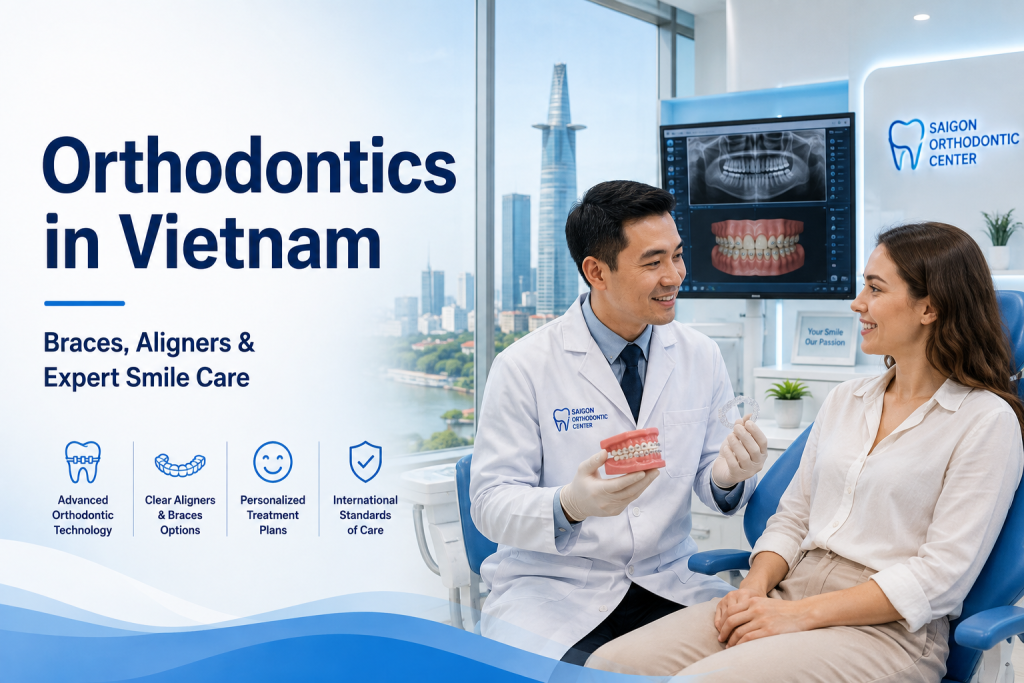
Orthodontics in Vietnam: Explore metal braces, ceramic braces, Invisalign, and personalized treatment options for international patients.
Quick Navigation
1. What Is Orthodontics?
Orthodontics is a branch of dentistry concerned with diagnosing, preventing, and treating problems involving the alignment of teeth and the relationship between the upper and lower dental arches.
Orthodontic treatment uses carefully controlled forces to move teeth toward planned positions. Depending on the patient’s needs, treatment may involve fixed braces, removable clear aligners, elastics, expansion appliances, or other orthodontic devices.
The goals are not necessarily limited to producing a straighter smile. Orthodontic treatment may also improve how teeth meet during biting and chewing, address certain spacing problems, and make some areas of the mouth easier to clean.
Nevertheless, straight teeth do not automatically guarantee freedom from dental disease. Patients still need regular dental examinations, good oral hygiene, and appropriate preventive care.
Common Problems Treated With Orthodontics
Crowded teeth
Crowding occurs when there is insufficient space for teeth to align normally. Teeth may overlap, rotate, or erupt outside the expected dental arch. Severe crowding can make cleaning certain surfaces more difficult.
Gaps between teeth
Spaces may develop because of differences between tooth and jaw sizes, missing teeth, tooth positioning, or other anatomical factors. Not every gap requires treatment, but some patients seek orthodontics for aesthetic or functional reasons.
Overbite and deep bite
An overbite describes vertical overlap between upper and lower front teeth. Some overlap is normal. An excessive deep bite may require correction, particularly when it contributes to tooth wear or soft-tissue trauma.
Overjet
Overjet refers to the horizontal distance between upper and lower front teeth. Excessive overjet is different from a deep bite, although the two conditions can occur together.
Underbite
An underbite occurs when lower front teeth sit ahead of upper front teeth. Some cases primarily involve tooth positioning, while others reflect differences in jaw growth or skeletal relationships.
Crossbite
A crossbite occurs when certain upper teeth bite inside the corresponding lower teeth. It can affect the front or back teeth and may require different treatment approaches depending on its cause.
Open bite
An open bite means some upper and lower teeth do not contact when the jaws close. It may be associated with dental positioning, skeletal relationships, or oral habits.
A complete orthodontic assessment is needed to determine whether these conditions require treatment and which approach is appropriate.
2. Why Consider Orthodontics in Vietnam?
Vietnam is one destination international patients consider when comparing orthodontic services, particularly if they already live in the country or visit regularly.
Competitive Treatment Costs
Orthodontic fees can vary considerably between countries, cities, and providers. Vietnam may offer lower treatment quotations than some patients encounter in their home countries.
However, a meaningful cost comparison must include more than the advertised appliance price. Diagnostic imaging, additional dental work, follow-up visits, retainers, travel, and possible treatment changes can affect the total amount paid.
A lower initial fee does not necessarily mean lower overall costs for someone who must fly internationally for repeated appointments.
Multiple Orthodontic Options
Depending on the dental clinic and individual case, patients may have access to conventional metal braces, self-ligating braces, ceramic braces, and removable clear aligner systems.
The most suitable option depends on the required tooth movements, bite relationship, oral health, lifestyle, and treatment goals.
Digital Assessment and Planning
Some Vietnamese dental providers use digital intraoral scanners, radiographic imaging, photographs, and computer-assisted treatment planning.
Digital tools can help document the initial condition and communicate the proposed treatment. Nevertheless, the quality of care depends on the clinician’s diagnosis, planning, execution, and follow-up—not simply the availability of advanced equipment.
Support for International Patients
Overseas patients may need assistance communicating with dental providers, understanding quotations, arranging appointments, and coordinating treatment around travel.
VnMedtour helps patients communicate with partner dental clinics and obtain information about available treatment options. Clinical decisions remain the responsibility of the treating dental professionals.
3. Types of Orthodontic Treatment Available in Vietnam
Orthodontic appliances differ in visibility, removability, maintenance requirements, and the types of movements they can accomplish.
3.1. Traditional Metal Braces
Traditional metal braces consist of brackets attached to the teeth and an orthodontic archwire that guides tooth movement. Small elastic ties or other components may secure the wire.
Metal braces are widely used for mild, moderate, and complex orthodontic problems. They allow the orthodontist to adjust forces and control tooth movements throughout treatment.
Potential advantages:
- Suitable for a broad range of orthodontic problems.
- Do not depend on the patient remembering to wear removable trays.
- Often among the more affordable fixed-appliance options.
- Can be combined with elastics or additional orthodontic devices when required.
Considerations:
- Brackets and wires remain visible.
- Cleaning around the appliances requires extra care.
- Hard or sticky foods may damage brackets.
- Regular professional adjustments are necessary.
For a more detailed explanation, read our guide to dental braces in Vietnam.
3.2. Self-Ligating Metal Braces
Self-ligating braces use brackets with an integrated mechanism to hold the archwire rather than relying on conventional elastic ties in the same way as traditional brackets.
They may offer practical differences in wire management and appointment procedures.
However, self-ligating braces should not be assumed to produce faster treatment, less discomfort, or better final results for every patient.
The orthodontist’s treatment plan and the complexity of the case remain more important than the bracket mechanism alone.
3.3. Ceramic and Crystal Braces
Ceramic braces use brackets designed to blend more closely with natural tooth color. Some systems use translucent or crystal-like materials.
Their main attraction is reduced visibility compared with conventional metal brackets.
They may be appropriate for adults and older teenagers who want fixed orthodontic treatment but prefer a less noticeable appearance.
Ceramic braces still require careful cleaning and may have different durability, friction, and maintenance characteristics from metal systems.
3.4. Self-Ligating Ceramic Braces
These appliances combine tooth-colored or translucent brackets with a self-ligating wire-retention mechanism.
They may appeal to patients seeking a more discreet fixed appliance.
Their higher price does not automatically indicate a better clinical result. Treatment suitability should be based on diagnosis rather than appearance or bracket technology alone.
3.5. Lingual Braces
Lingual braces are attached to the inner surfaces of the teeth, making them much less visible from the front.
They can be useful for patients who want fixed treatment without conventional front-facing brackets.
However, they may require specialized planning and clinical experience. Patients may also experience tongue irritation or temporary speech changes.
Not every dental clinic offers lingual orthodontics, and a separate quotation is normally required.
3.6. Invisalign Clear Aligners
Invisalign is a branded clear aligner system that uses a sequence of customized, removable trays to move teeth gradually.
The aligners are designed around a treatment plan developed by the clinician. Each set applies controlled forces to specific teeth, with new trays introduced according to the prescribed schedule.
Patients generally wear aligners for approximately 20–22 hours daily, depending on their orthodontist’s instructions.
They are removed for meals and for brushing and flossing.
Some cases also require tooth-colored attachments, interproximal enamel reduction, elastics, or other measures to achieve planned movements.
Invisalign can treat a range of orthodontic problems, but it is not automatically the best option for every bite or skeletal condition.
Learn more in our dedicated guide to Invisalign in Vietnam.
How Does Invisalign Work? Watch Our Video Guide
Invisalign uses a sequence of custom-made clear aligners to guide teeth toward planned positions. The following VnMedtour video introduces how this orthodontic system works.
Video: How Does Invisalign Work? | VnMedtour – Your Trusted Healthcare Partner in Vietnam
The video is intended as an educational introduction. Actual treatment requirements, the number of aligners, and expected results depend on an individual orthodontic assessment.
3.7. Other Clear Aligner Systems
Invisalign is not the only clear aligner option. Other professionally supervised systems may also be available, depending on the provider.
Different systems can vary in planning software, materials, manufacturing processes, clinical protocols, and pricing.
Patients should ask which system is being proposed and whether the quotation includes additional aligners, attachments, refinements, and retainers.
For a broader comparison, see clear aligners in Vietnam.
4. Orthodontic Treatment Costs in Vietnam
Cost is one of the main questions international patients ask when considering orthodontics in Vietnam.
However, there is no single national orthodontic price. Fees depend on the selected appliance, the complexity of the case, the clinic’s pricing structure, and the services included.
Reference Braces Prices in USD
The following figures are based on a historical price list provided by one of VnMedtour’s partner dental clinics in Vietnam.
| Orthodontic Appliance | Level 1: Mild | Level 2: Moderate | Level 3: Complex |
|---|---|---|---|
| Traditional Metal Braces | $1,115 | $1,346 | $1,538 |
| Self-Ligating Metal Braces | $1,462 | $1,538 | $1,731 |
| Ceramic/Crystal Braces | $1,538 | $1,731 | $1,923 |
| Self-Ligating Ceramic Braces | $1,731 | $1,923 | $2,115 |
Important pricing information: These figures were converted from a partner clinic price list valid during March 1–25, 2025, using an illustrative exchange rate of USD 1 = 26,000 VND. They are historical reference prices, not verified November 2026 quotations or guaranteed current rates.
The clinic’s Level 1, Level 2, and Level 3 classifications represent its own pricing categories. They should not be treated as a universal clinical severity scale.
A new consultation and quotation are necessary to establish current costs.
How Much Does Invisalign Cost in Vietnam?
Invisalign pricing usually depends on the treatment package, expected number of aligners, complexity of tooth movement, and the provider’s fee structure.
Some patients need limited alignment corrections, while others require comprehensive treatment involving both dental arches and substantial bite changes.
The final quotation may also depend on whether additional aligners or refinement stages are included.
Because package names and inclusions can change, VnMedtour recommends obtaining a current, case-specific quotation rather than relying on an old advertised figure.
When comparing Invisalign prices, ask whether the quotation includes:
- Initial orthodontic assessment and diagnostic records.
- Digital scans and treatment planning.
- The specified Invisalign treatment package.
- Attachments and necessary clinical procedures.
- Routine monitoring appointments.
- Additional aligners or refinements, where applicable.
- Final retainers and follow-up arrangements.
A lower advertised Invisalign fee may cover a limited package rather than comprehensive orthodontic treatment.
What Affects the Total Orthodontic Cost?
Case complexity: More extensive tooth movements, bite correction, or multidisciplinary treatment may require additional time and resources.
Appliance selection: Metal, ceramic, lingual, and clear aligner systems can have different pricing structures.
Preparatory dental treatment: Cavities, periodontal problems, or other oral health conditions may need treatment before orthodontics begins.
Additional procedures: Extractions, temporary anchorage devices, special appliances, or other interventions may be charged separately.
Treatment duration: Extended treatment or additional visits may affect costs, depending on the clinic’s agreement.
Retention: Some packages include the first set of retainers, while others charge separately.
International travel: Flights, accommodation, and time away from work can substantially change the real cost of treatment.
Questions to Ask Before Accepting a Quotation
Request a written estimate that identifies the proposed appliance, treatment objectives, expected duration, payment schedule, included appointments, and potential additional charges.
Also ask what happens if treatment takes longer than expected or if you move to another country.
A transparent quotation is particularly important for international patients who may not be able to return to the same clinic easily.
5. Braces vs. Invisalign vs. Other Clear Aligners
There is no universally superior orthodontic appliance.
The choice depends on clinical requirements and the patient’s ability to follow the treatment plan.
| Feature | Fixed Braces | Invisalign | Other Clear Aligners |
|---|---|---|---|
| Appearance | Visible; ceramic options less noticeable | Nearly transparent | Usually nearly transparent |
| Removable | No | Yes | Yes |
| Eating | Food precautions needed | Remove trays for meals | Remove trays for meals |
| Cleaning | Requires cleaning around brackets | Remove trays to brush and floss | Remove trays to brush and floss |
| Patient compliance | Less dependent on wear-time decisions | High daily wear-time compliance | High daily wear-time compliance |
| Follow-up | Regular clinical monitoring | Regular clinical monitoring | Regular clinical monitoring |
| Clinical suitability | Broad range of cases | Case-dependent | System- and case-dependent |
| Retainers afterward | Required | Required | Required |
Which Option Is Better for Adults?
Adults frequently consider ceramic braces or clear aligners because they are less conspicuous.
However, an adult with complex bite problems may benefit from fixed appliances, a combination of techniques, or other treatment.
A patient who regularly forgets to wear removable appliances may find fixed braces more practical.
Conversely, someone who prioritizes appearance and can consistently follow aligner instructions may be a suitable candidate for Invisalign or another clear aligner system.
Which Option Is Better for Teenagers?
The best choice depends on dental development, treatment objectives, maturity, oral hygiene, and ability to follow instructions.
Some teenagers manage removable aligners successfully, while others benefit from fixed braces.
Parents should discuss expected responsibilities, sports, school activities, cleaning requirements, and retainer use with the treating orthodontist.
Can Severe Cases Be Treated With Aligners?
Some complex cases can be treated with aligners under appropriate specialist supervision, sometimes using additional appliances.
Other cases may be more predictably managed with fixed braces or a combined approach.
A clinical examination and diagnostic records are necessary before determining suitability.
For an independent professional comparison, see the American Association of Orthodontists’ guide to braces and clear aligners.
6. Step-by-Step Orthodontic Treatment Process in Vietnam
Although the exact workflow varies between clinics and appliances, orthodontic care usually follows several major stages.
Step 1: Initial Consultation and Medical History
The dentist or orthodontist discusses the patient’s concerns, treatment expectations, dental history, and relevant medical conditions.
Patients should disclose medications, allergies, previous orthodontic treatment, dental restorations, and any history of periodontal disease.
The clinician examines the teeth, gums, jaw relationship, and bite.
For international patients, an initial remote discussion may help determine which records are needed. However, photographs alone cannot establish a definitive treatment plan.
Step 2: Diagnostic Records
Depending on clinical requirements, the provider may recommend:
- Intraoral and facial photographs.
- Digital scans or dental impressions.
- Panoramic radiographs.
- Cephalometric radiographs.
- Other imaging when clinically indicated.
These records help evaluate tooth positions, root relationships, jaw structures, and treatment possibilities.
Not every patient requires the same imaging. Radiographs should be justified by clinical need.
Step 3: Personalized Treatment Planning
The orthodontist explains the diagnosis and proposes a treatment strategy.
The plan should address the main alignment and bite problems, recommended appliance, estimated duration, limitations, and anticipated follow-up schedule.
Where relevant, the clinician should also discuss whether extractions, enamel reduction, additional appliances, or other dental procedures are necessary.
Patients should understand the trade-offs between different approaches before consenting.
Step 4: Oral Health Preparation
Orthodontic appliances should not be placed without considering the health of the teeth and supporting tissues.
Untreated cavities, active periodontal disease, and poor oral hygiene can complicate orthodontic care.
The dentist may recommend cleaning, restorative treatment, or periodontal management before starting.
Some patients also need coordinated care with other dental specialists.
Step 5: Appliance Placement or Aligner Delivery
For fixed braces, brackets are bonded to the teeth and connected by an archwire.
The orthodontist explains cleaning methods, food precautions, and what to do if a bracket or wire becomes loose.
For clear aligners, the clinician checks the fit, provides the prescribed trays, and explains the wear schedule.
Attachments or other supporting components may be placed when required.
Step 6: Regular Monitoring and Adjustments
Orthodontic treatment involves gradual biological changes in the tissues surrounding teeth.
For braces, the clinician periodically checks progress and adjusts wires, elastics, or other components.
For aligners, monitoring includes assessing whether teeth are tracking as planned and whether the trays fit correctly.
Appointment intervals vary, but many treatment plans involve reviews approximately every four to eight weeks. Some clear aligner protocols use different intervals.
Remote photographs or digital check-ins may supplement care when the clinician considers them appropriate. They should not be assumed to replace necessary in-person examinations.
Step 7: Completion and Retention
When the planned active treatment is complete, fixed appliances are removed or active aligner treatment ends.
The clinician evaluates the final tooth positions and bite, performs necessary finishing procedures, and arranges retention.
Retainers are essential because teeth can move after orthodontic treatment.
Patients should understand the prescribed retention schedule and the need for ongoing maintenance.
7. How Long Does Orthodontic Treatment Take?
Treatment duration varies according to the initial condition, desired movements, appliance choice, biological response, and patient cooperation.
Some limited alignment cases may be completed in several months.
Many comprehensive treatments take approximately 12–24 months, while complex cases can require longer.
These are general planning ranges rather than guaranteed timelines.
Factors That Influence Treatment Duration
Severity of malocclusion: Extensive crowding, bite discrepancies, and difficult tooth movements may require additional stages.
Treatment objectives: Aligning visible front teeth may be simpler than correcting the relationship between the upper and lower arches.
Oral health: Periodontal problems or other dental conditions may interrupt treatment.
Appointment attendance: Missed visits can delay necessary adjustments and reassessment.
Appliance care: Broken brackets, lost aligners, or failure to wear elastics may interfere with progress.
Individual biological response: Teeth do not move at exactly the same rate in every patient.
Can Orthodontic Treatment Be Completed During a Short Holiday?
Usually not.
Comprehensive braces and aligner treatment typically requires months or years, not a one- or two-week vacation.
A short visit may be sufficient for consultation, diagnostic records, and certain initial procedures. It does not eliminate the need for continued professional supervision.
International patients should establish a realistic follow-up plan before beginning treatment.
8. Orthodontics in Vietnam for International Patients
This is one of the most important considerations when deciding whether to begin orthodontics abroad.
A patient who lives in Vietnam for several years has different logistical needs from someone visiting for two weeks.
Option 1: Patients Living in Vietnam
Foreign residents, expatriates, and international students may find it practical to complete treatment locally if they can attend regular appointments.
Before choosing a clinic, consider its location, communication arrangements, emergency support, and ability to provide follow-up throughout the expected treatment period.
Option 2: Patients Who Travel to Vietnam Regularly
Some international patients visit Vietnam repeatedly for work or family reasons.
This may create opportunities for planned orthodontic reviews, but the visit schedule must be compatible with the clinician’s requirements.
Appointments should not be postponed simply because travel is inconvenient.
If a patient cannot return when necessary, the orthodontist must assess whether an alternative follow-up arrangement is clinically acceptable.
Option 3: Patients Visiting Vietnam Once
Patients who plan only one short visit should be particularly cautious about starting comprehensive orthodontic treatment.
Beginning braces in Vietnam and then returning home without an established treating orthodontist can create difficulties.
A local clinician may be unwilling to assume responsibility for another provider’s treatment plan or appliance system.
For some patients, a consultation in Vietnam followed by treatment near their long-term residence may be more appropriate.
Can Invisalign Be Monitored From Overseas?
Certain aligner treatment plans can incorporate remote communication, photographs, and digital monitoring.
However, remote monitoring has limitations.
It cannot reliably replace every examination needed to assess gum health, tooth mobility, bite changes, attachment problems, or other clinical concerns.
Some patients also require refinements, additional scans, enamel reduction, or new attachments.
A responsible treatment plan should specify when in-person care is required and what happens if the patient cannot attend.
Transferring Orthodontic Treatment Between Countries
Treatment transfer is possible in some circumstances, but it is not automatic.
The receiving orthodontist must independently evaluate the patient and decide whether to accept the case.
Transfer may involve new records, changes to the appliance system, additional fees, or a revised treatment plan.
Before beginning treatment abroad, patients should ask:
- Will I receive copies of my diagnostic records and treatment plan?
- What follow-up appointments are expected?
- Who will manage an emergency if I am overseas?
- Can the clinic communicate with a dentist in my home country?
- What are the financial arrangements if treatment is transferred or discontinued?
These questions are especially important for patients considering fixed braces.
9. Orthodontic Treatment Risks and Safety
Orthodontic treatment is commonly performed, but it is not risk-free.
Patients should understand the potential complications and how clinicians work to reduce them.
Tooth Decay and Enamel Decalcification
Fixed appliances create additional surfaces where plaque can accumulate.
If oral hygiene is inadequate, white-spot lesions, enamel decalcification, or cavities may develop.
Careful brushing, interdental cleaning, fluoride use when recommended, and regular dental check-ups help reduce these risks.
Gum Inflammation and Periodontal Problems
Plaque around brackets or poorly maintained aligners can contribute to gingival inflammation.
Patients with existing periodontal disease may require stabilization and coordinated specialist care before orthodontic treatment.
Root Resorption
Orthodontic tooth movement can be associated with shortening of tooth roots.
The degree and clinical significance vary, and some patients may require additional monitoring.
Discomfort and Soft-Tissue Irritation
Temporary tenderness is common after appliance placement or adjustments.
Brackets and wires may irritate the lips and cheeks. New aligners may create pressure or localized discomfort.
Severe, persistent, or unusual pain should be assessed by the treating clinician.
Bite Changes and Treatment Limitations
Orthodontic treatment may require adjustments as teeth respond.
Some planned movements are more difficult to achieve than others, and the final result may differ from a digital simulation.
Patients should discuss realistic objectives and limitations before starting.
Relapse After Treatment
Teeth can shift after active orthodontic treatment.
Retainers help maintain the corrected positions, but they require consistent use and periodic assessment.
The American Association of Orthodontists’ guidance on retainers provides further information about retention and maintenance.
How to Reduce Orthodontic Risks
Choose a qualified clinician, disclose relevant medical and dental history, maintain excellent oral hygiene, attend scheduled reviews, and follow appliance instructions.
Do not attempt to adjust wires, alter aligners, or change the treatment sequence without professional advice.
10. Eating, Cleaning, and Daily Life During Treatment
Good daily habits are important for both treatment progress and dental health.
Caring for Fixed Braces
Brush carefully around brackets, wires, and the gumline using the technique recommended by your dental team.
Interdental brushes or other cleaning aids may help reach difficult areas.
Avoid biting directly into very hard foods and be cautious with sticky foods that may damage brackets.
If a bracket becomes loose or a wire causes persistent irritation, contact the clinic for instructions.
Caring for Invisalign and Clear Aligners
Remove aligners before eating and follow the clinician’s instructions regarding drinks.
Clean your teeth before reinserting the trays whenever practical.
Store removed aligners in their protective case to reduce the risk of loss or damage.
Do not expose aligners to excessive heat, which may distort the material.
Wear them for the prescribed number of hours each day. Inconsistent wear may cause poor tracking and require treatment modifications.
Sports and Musical Instruments
Patients who participate in contact sports should ask about appropriate mouth protection.
Those who play wind instruments may need time to adapt to fixed appliances.
The orthodontist can provide individualized guidance.
Regular Dental Care Still Matters
Orthodontic appointments do not replace routine dental examinations and preventive care.
Patients should continue seeing their general dentist for cleaning, decay assessment, and gum health monitoring.
11. Orthodontics for Children, Teenagers, and Adults
Orthodontic needs vary by age and stage of dental development.
Children
An early orthodontic assessment can identify developing bite or jaw problems.
Not every child needs immediate treatment. Some conditions are monitored until the appropriate stage of dental development.
Early intervention may be considered when specific problems would benefit from timely management.
Teenagers
Adolescence is a common period for comprehensive orthodontic treatment because many permanent teeth have erupted.
Treatment decisions depend on dental development, oral hygiene, and the complexity of the bite.
Teenagers may be suitable for either braces or aligners, depending on clinical needs and compliance.
Adults
Adults can undergo orthodontic treatment when their teeth and supporting tissues are sufficiently healthy.
However, existing crowns, implants, missing teeth, periodontal disease, and previous dental treatment may influence planning.
Dental implants do not move like natural teeth, so their position may create additional planning considerations.
Some adults benefit from coordination between orthodontists, restorative dentists, and periodontal specialists.
There is no universal upper age limit for orthodontic treatment, but individual health and dental conditions must be evaluated.
12. When Orthodontics Alone May Not Be Enough
Not every bite problem can be corrected solely by moving teeth.
Some patients have significant skeletal differences involving the upper jaw, lower jaw, or both.
In selected cases, treatment may require a combination of orthodontics and orthognathic jaw surgery.
Such cases need specialist assessment, appropriate imaging, and multidisciplinary planning.
Patients should not assume that clear aligners or conventional braces can correct every skeletal discrepancy.
Similarly, orthodontics may be only one component of treatment for patients with missing teeth, substantial tooth wear, or complex restorative needs.
The goal is to develop a coordinated plan that addresses the patient’s actual clinical condition.
13. How to Choose an Orthodontic Clinic in Vietnam
Choosing a dental provider is a major decision, especially when treatment may continue for more than a year.
Check Professional Qualifications
Ask who will diagnose, plan, and supervise the treatment.
Confirm the clinician’s relevant training and experience, particularly for complex orthodontic cases.
Do not assume that every dental clinic offers the same level of orthodontic expertise.
Ask About Diagnostic Procedures
A proper orthodontic assessment should consider the teeth, gums, bite, and relevant supporting structures.
Ask how the provider establishes the diagnosis and what records are required.
Compare Treatment Plans, Not Just Prices
Two clinics may recommend different appliances or treatment approaches.
Ask each provider to explain the objectives, limitations, estimated duration, and reasons behind the recommendation.
A higher-priced appliance is not necessarily more appropriate for your case.
Review Follow-Up Arrangements
For international patients, follow-up planning is essential.
Confirm appointment intervals, communication channels, emergency procedures, and what happens if you relocate.
Request a Detailed Written Quotation
A useful quotation should identify the appliance or aligner package, included services, expected additional charges, payment terms, and retention arrangements.
Avoid making a decision based only on an advertised starting price.
Be Cautious About Guarantees
Orthodontic results depend on individual biological responses and treatment cooperation.
Be cautious of providers promising a perfect smile within a fixed period or claiming that one appliance is always faster and better than another.
14. Preparing for Your Orthodontic Consultation in Vietnam
Before contacting a dental provider, gather any available dental records and clarify your treatment goals.
Useful information may include your age, dental concerns, previous orthodontic history, recent radiographs, and photographs of your teeth.
You should also explain whether you live in Vietnam, visit frequently, or plan to return overseas soon.
Information to Share
- Your main concern, such as crowding, gaps, or an uncomfortable bite.
- Previous braces or clear aligner treatment.
- Relevant dental restorations, implants, or missing teeth.
- Gum disease or other known oral health conditions.
- Preferred city and travel dates.
- How frequently you can attend follow-up appointments.
- Whether you are considering fixed braces or clear aligners.
Providing this information helps the coordinator and dental clinic understand your enquiry.
However, the final treatment plan and quotation normally require professional clinical assessment.
15. How VnMedtour Supports Orthodontic Patients
VnMedtour assists international patients seeking information about dental and medical services in Vietnam.
For orthodontic enquiries, our coordination services may include communicating with partner dental clinics, requesting preliminary information, arranging consultations, and helping patients understand the appointment process.
We can also help clarify practical questions about treatment schedules, clinic communication, and follow-up expectations.
VnMedtour is a medical tourism coordinator, not the treating orthodontic provider. Diagnosis, clinical suitability, treatment planning, procedures, and medical decisions remain with the licensed dental professionals.
Patients pay the treating dental provider directly. VnMedtour does not charge patients a separate coordination service fee.
If you are considering orthodontics in Vietnam, contact VnMedtour with your dental concerns, preferred location, and expected travel schedule.
16. Frequently Asked Questions About Orthodontics in Vietnam
1. How much do braces cost in Vietnam?
Historical reference prices from one VnMedtour partner dental clinic ranged from approximately $1,115 to $2,115 for the fixed-braces categories listed in this guide. These figures came from a March 2025 price list and are not confirmed current quotations. Actual fees depend on the clinic, appliance, and case complexity.
2. Is orthodontic treatment in Vietnam cheaper than in Australia or the United States?
Some patients may receive lower treatment quotations in Vietnam. However, a fair comparison requires current written estimates for equivalent treatment, including diagnostics, adjustments, retainers, travel, and additional procedures. Savings cannot be guaranteed.
3. Is Invisalign available in Vietnam?
Yes, Invisalign treatment is offered by dental providers in Vietnam. Availability and clinical suitability depend on the provider and the patient’s orthodontic needs.
4. Is Invisalign better than traditional braces?
Neither option is universally better. Invisalign is removable and less noticeable, while fixed braces can be useful for a broad range of tooth movements. The most appropriate treatment depends on clinical findings and patient preferences.
5. How long does orthodontic treatment usually take?
Many comprehensive treatments take approximately 12–24 months, although shorter and longer courses are possible. The orthodontist should provide an individualized estimate after assessment.
6. Can I get braces during a two-week holiday in Vietnam?
A short visit may allow time for consultation, diagnostic records, and potentially appliance placement. However, comprehensive treatment requires ongoing supervision. Starting braces without a realistic follow-up plan is generally not advisable.
7. Can I start Invisalign in Vietnam and continue treatment overseas?
This may be possible for selected patients, but it requires careful planning. Remote monitoring cannot replace every necessary examination, and additional in-person procedures may be required. A receiving orthodontist must agree to any transfer of clinical responsibility.
8. Do braces or Invisalign hurt?
Temporary pressure, tenderness, or irritation may occur after braces are fitted or adjusted, or when changing aligners. Severe or persistent pain should be discussed with the treating clinician.
9. Are adults too old for orthodontic treatment?
Not necessarily. Adults can receive orthodontic treatment when their dental and periodontal health allow it. Existing restorations, missing teeth, and other conditions may influence the treatment plan.
10. Will I need teeth extracted before getting braces?
Not every patient requires extractions. The decision depends on available space, tooth positioning, facial considerations, bite relationships, and the treatment objectives. The orthodontist should explain the alternatives and reasoning.
11. Are retainers necessary after orthodontic treatment?
Yes. Retainers help maintain tooth positions after active treatment. The recommended type and wearing schedule depend on the individual case, and some degree of long-term retention is generally necessary.
12. Can I change orthodontists during treatment?
A transfer may be possible, but the new orthodontist must assess the case and agree to continue care. Additional records, changes to the treatment plan, or new fees may be necessary.
13. Does VnMedtour charge a service fee?
VnMedtour does not charge patients a separate coordination service fee. Patients pay their treating dental provider directly for clinical services.
Conclusion: Is Orthodontics in Vietnam Right for You?
Orthodontics in Vietnam can be worth considering for patients seeking professional assessment, fixed braces, Invisalign, or other clear aligner treatments.
The country offers different appliance options and potentially competitive treatment fees, but the right decision depends on more than price.
A successful orthodontic plan requires an accurate diagnosis, appropriate appliance selection, consistent monitoring, good oral hygiene, and long-term retention.
For international patients, the ability to attend follow-up appointments is particularly important. Patients living in Vietnam or visiting regularly may find local treatment easier to manage than those planning only a short holiday.
Before starting, request a personalized clinical assessment, a detailed quotation, and a clear explanation of the follow-up requirements.
Medical disclaimer: This article provides general educational information and does not replace an examination, diagnosis, or treatment recommendation from a qualified dental professional. Prices and treatment availability are subject to confirmation by the treating clinic.
Medically reviewed by MSc, MD, Doctor Dang Tien Dat
VNMEDTOUR | ORTHODONTIC CARE
Explore Your Orthodontic Options in Vietnam
Compare braces and clear aligners, request a
personalized quotation, and arrange a consultation
with a partner dental clinic through VnMedtour.
No obligation to book. Treatment suitability and
final fees are confirmed by the dental provider.