
Breast Augmentation in Vietnam is an option for international patients considering breast enhancement surgery at private hospitals and specialized cosmetic surgery facilities. Whether the goal is to increase breast volume, improve symmetry, or restore fullness after pregnancy or weight loss, choosing the right procedure requires careful consideration of implant options, surgical techniques, long-term safety, and recovery.
Vietnam offers a range of breast augmentation services, particularly in Ho Chi Minh City and Hanoi. Treatment prices may be lower than those in some higher-cost healthcare markets, but cost alone should never determine where to undergo surgery.
Breast augmentation is a medical procedure with potential complications and long-term responsibilities. Patients should understand that breast implants are not lifetime devices and may require future monitoring, removal, or replacement.
This guide explains breast augmentation costs in Vietnam for 2026, implant types, surgical approaches, recovery expectations, possible risks, and practical considerations for international patients.
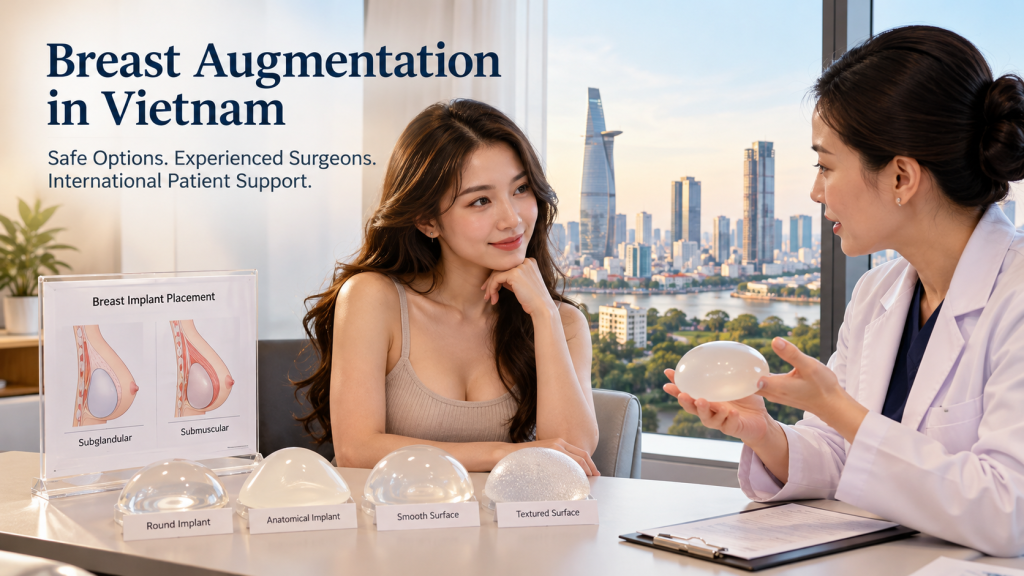
Breast augmentation consultation in Vietnam, illustrating implant options, placement techniques, and personalized surgical planning for international patients.
Quick Navigation
Breast Augmentation in Vietnam at a Glance
| Key Information | Details |
|---|---|
| Medical name | Augmentation mammoplasty |
| Main purpose | Increase breast volume or improve breast shape and symmetry |
| Main techniques | Breast implants or autologous fat transfer |
| Common implant materials | Silicone gel or saline |
| Implant placement | Above or below the pectoral muscle, including dual-plane approaches |
| Anesthesia | Usually general anesthesia for implant surgery |
| Typical procedure duration | Approximately 1–2 hours for uncomplicated implant augmentation, sometimes longer |
| Hospital stay | Outpatient or overnight care, depending on the facility and patient |
| Travel planning | Often around 10–14 days or longer, subject to surgical clearance |
| Main considerations | Implant complications, scarring, recovery, future imaging and possible revision surgery |
These are general planning estimates. The treating surgeon determines the actual procedure, admission requirements, recovery instructions, and fitness to travel.
What Is Breast Augmentation?
Breast augmentation is a surgical procedure intended to increase breast volume or modify breast shape.
It may be considered by patients who:
- Want fuller breasts.
- Have naturally small breast volume.
- Experience loss of fullness after pregnancy or weight changes.
- Want to improve differences in breast size.
- Wish to restore volume after previous breast surgery.
- Have specific aesthetic goals that cannot be achieved through non-surgical methods.
There are two principal approaches: breast implants and fat transfer.
Breast implants provide a more predictable increase in volume and are commonly selected when patients want a noticeable change in breast size.
Fat-transfer augmentation uses fat collected from another part of the patient’s body. It may provide a more modest increase in volume, although not all transferred fat survives.
The most appropriate technique depends on anatomy, available tissue, treatment goals, and the surgeon’s assessment.
Breast Augmentation vs. Breast Lift
Breast augmentation and breast lift surgery are different procedures.
Breast augmentation primarily increases volume. A breast lift, or mastopexy, repositions breast tissue and removes excess skin to address sagging.
Some patients with significant breast ptosis may need a breast lift rather than implants alone.
Others may benefit from a combined breast augmentation and lift.
Adding implants does not automatically correct substantial breast sagging, and larger implants are not necessarily an appropriate substitute for a lift.
Breast Implants vs. Fat Transfer
Patients considering Breast Augmentation in Vietnam should first understand the differences between implant-based surgery and fat-transfer augmentation.
| Feature | Breast Implants | Fat Transfer |
|---|---|---|
| Main method | Placement of a medical implant | Transfer of the patient’s own fat |
| Volume increase | Can provide a larger, more predictable increase | Usually more limited |
| Incisions | Required for implant placement | Small access incisions for liposuction and injection |
| Foreign device | Yes | No breast implant |
| Long-term monitoring | Implant-specific monitoring required | No implant monitoring, but breast changes still require assessment |
| Possible future surgery | Implant replacement, removal, or revision may be necessary | Additional fat-transfer sessions may be needed |
| Important limitations | Implant complications and device lifespan | Fat survival varies; sufficient donor fat is required |
Implant-Based Breast Augmentation
Implants are inserted through a surgical incision and positioned in a pocket created by the surgeon.
Implants are available in different volumes, profiles, shapes, surfaces, and filling materials.
The surgeon should select a device that is appropriate for the patient’s chest dimensions, tissue coverage, and desired outcome.
Fat-Transfer Breast Augmentation
Fat transfer generally involves liposuction from areas such as the abdomen, waist, or thighs.
The collected fat is processed and injected into the breasts.
This technique avoids a permanent breast implant, but results depend partly on how much transferred fat survives.
Potential concerns include fat necrosis, oil cysts, calcifications, asymmetry, and the need for additional treatment.
Fat transfer is not suitable for every patient, especially when substantial volume enhancement is desired or adequate donor fat is unavailable.
Types of Breast Implants Available in Vietnam
Implant selection is one of the most important decisions in breast augmentation surgery.
Different products vary in filling material, shape, surface, projection, and manufacturer specifications.
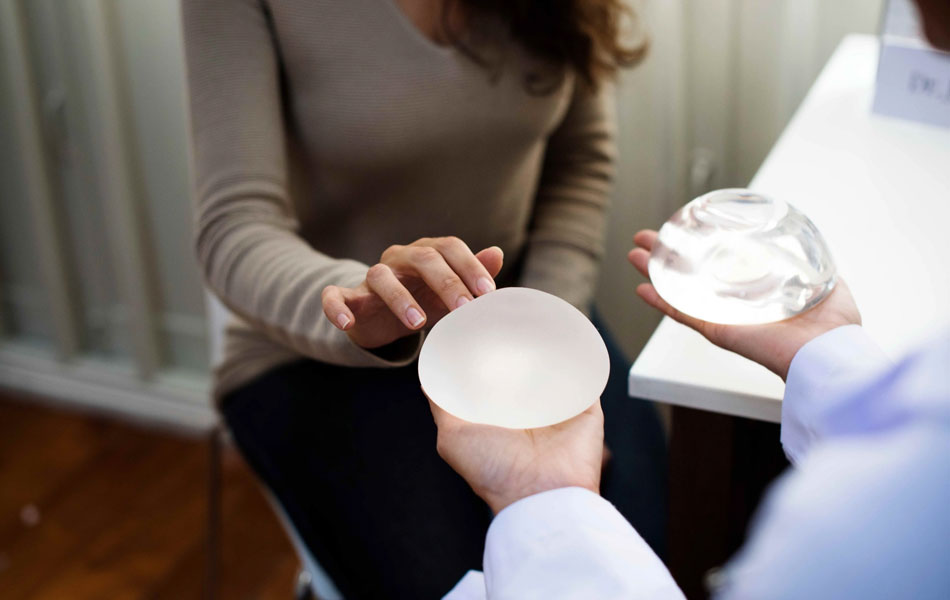
A breast implant consultation helps patients compare implant options and understand their characteristics before breast augmentation surgery.
Silicone Gel Implants
Silicone implants contain a silicone outer shell filled with silicone gel.
They are commonly selected because their consistency can resemble natural breast tissue.
However, silicone implants can rupture without obvious symptoms. This is known as a silent rupture.
Patients should understand the manufacturer’s instructions and recommended long-term imaging schedule.
Saline Breast Implants
Saline implants have a silicone shell filled with sterile saltwater.
When a saline implant ruptures, the breast may visibly lose volume as the saline is absorbed by the body.
Saline implants may not be available in every Vietnamese facility, and their suitability depends on the patient’s anatomy and preferences.
Round and Anatomical Implants
Round implants are designed to provide breast volume with varying degrees of projection.
Anatomical, or teardrop-shaped, implants have a contoured shape intended to influence the breast silhouette.
Neither shape is universally superior.
The surgeon should consider chest measurements, soft-tissue coverage, desired fullness, and device-specific risks.
Smooth and Textured Implants
Breast implants also differ in surface characteristics.
Surface selection is medically important because certain textured implants have been associated with a higher risk of breast implant-associated anaplastic large cell lymphoma, or BIA-ALCL.
Patients should ask for the exact implant manufacturer, model, and surface classification.
Terms such as nano, microtextured, or ergonomic should not be treated as proof that a product is risk-free.
Common Breast Implant Brands
Depending on the hospital and product availability, international patients may encounter brands such as Mentor or Motiva.
Availability, device registration, regulatory approval, and warranty terms must be checked for the specific model.
An implant manufacturer’s approval in one country does not automatically mean that every product in its range has identical approval in another country.
Patients should receive implant identification information and understand the applicable manufacturer warranty.
For a more detailed comparison, read our Breast Implants in Vietnam guide.
How Much Does Breast Augmentation Cost in Vietnam in 2026?
The cost of Breast Augmentation in Vietnam varies according to the implant model, surgical technique, hospital, surgeon, anesthesia, and postoperative services.
An advertised implant price should not automatically be interpreted as the final cost of treatment.
2026 Reference Prices
The following figures are provisional reference prices previously published within VnMedtour’s content and require reconfirmation with the relevant hospital before use as current quotations.
| Implant Option | Reference Price (VND) | Approximate USD |
|---|---|---|
| Nano implant, without chip | 55,000,000 | $2,115 |
| Mentor implant | 75,000,000 | $2,885 |
| Mentor Xtra implant | 80,000,000 | $3,077 |
Conversions use approximately 26,000 VND per USD. Prices are indicative, provider-specific, and subject to confirmation. Implant model, surgical technique, and included services must be verified.
These figures should not be presented as nationwide average prices or guaranteed all-inclusive packages.
What Affects the Final Price?
Implant selection: Different brands, models, sizes, and product specifications may have different prices.
Surgical approach: Implant placement and incision technique may affect operating requirements.
Combined procedures: Patients requiring a breast lift, revision surgery, or another operation may face additional charges.
Hospital facilities: Anesthesia, operating-room services, nursing, and admission arrangements vary.
Medical evaluation: Some patients require additional tests or specialist consultations before surgery.
Aftercare: Medications, surgical bras, dressings, and follow-up visits may be included or charged separately.
What Should a Breast Augmentation Quotation Include?
Before booking, ask the hospital to clarify:
- Surgeon and anesthesiologist fees.
- Implant brand, model, and size.
- Operating-room charges.
- Preoperative tests.
- Hospital admission and nursing.
- Postoperative medications.
- Surgical support bra.
- Follow-up consultations.
- Costs associated with complications or unexpected treatment.
Patients should also ask whether a quotation can change after the in-person examination.
Flights, hotels, meals, and personal travel expenses are usually separate unless explicitly included in a written arrangement.
For additional budgeting information, see our Breast Augmentation Cost in Vietnam guide.
Breast Augmentation Surgical Techniques
The surgeon must determine how to insert the implant and where to position it.
These decisions influence scar placement, tissue coverage, recovery, and the final breast shape.
Incision Options
Inframammary incision: Located in the natural crease beneath the breast. It provides direct access to the implant pocket and is commonly used in augmentation surgery.
Periareolar incision: Located around part of the areola’s border. Suitability depends on areolar dimensions, anatomy, and surgical considerations.
Transaxillary incision: Located in the armpit. This approach avoids an incision directly on the breast but still leaves a scar in the axillary area.
No incision technique guarantees invisible scars.
Patients should discuss scar placement, changes in sensation, and the surgeon’s experience with each approach.
Implant Placement Options
Implants may be positioned above or below the pectoralis major muscle.
| Placement | Description | Considerations |
|---|---|---|
| Subglandular | Behind breast tissue, above the muscle | May be suitable when sufficient tissue coverage exists |
| Submuscular | Partly or substantially beneath the pectoral muscle | May provide additional coverage but can involve muscular discomfort |
| Dual plane | Combines muscle coverage with selected tissue release | May be useful for certain anatomical characteristics |
The best placement depends on breast tissue thickness, chest anatomy, physical activity, and the desired result.
A dual-plane approach should not be assumed to provide the best outcome for every patient.
Endoscopic Breast Augmentation
Some facilities offer endoscopic assistance for selected breast augmentation techniques.
An endoscope allows the surgeon to view internal structures using a camera.
However, the availability of endoscopic equipment does not guarantee faster healing, fewer complications, or a better aesthetic outcome.
Patients should ask whether the technology is appropriate for their specific procedure and whether it affects the quotation.
Who Is a Suitable Candidate for Breast Augmentation?
Suitable candidates generally have realistic expectations, understand the risks, and are medically fit for the proposed operation.
During consultation, the surgeon may assess:
- Age and general health.
- Breast anatomy and existing tissue.
- Chest-wall dimensions.
- Previous breast surgery.
- Current medications and allergies.
- Smoking or nicotine use.
- Pregnancy and breastfeeding plans.
- Personal and family breast-health history.
- Desired breast size and shape.
Certain medical conditions may require additional evaluation or postponement of surgery.
Patients should disclose all relevant medical information, including supplements, anticoagulant medication, and previous anesthesia problems.
Breast Augmentation After Pregnancy
Pregnancy and breastfeeding can affect breast volume and skin elasticity.
Some patients consider augmentation to restore lost fullness.
However, surgery should be planned after appropriate postpartum recovery and breast changes have stabilized.
Patients expecting another pregnancy should discuss how future changes may affect the result.
Breast Augmentation After Weight Loss
Significant weight loss may reduce breast volume and contribute to loose skin.
Implants can increase volume but may not adequately correct substantial sagging.
A breast lift, with or without implants, may be recommended.
The surgeon should assess whether the patient’s weight has stabilized and whether nutritional status is appropriate for surgery.
How Is Breast Augmentation Surgery Performed?
Although techniques vary, implant-based breast augmentation generally follows several stages.
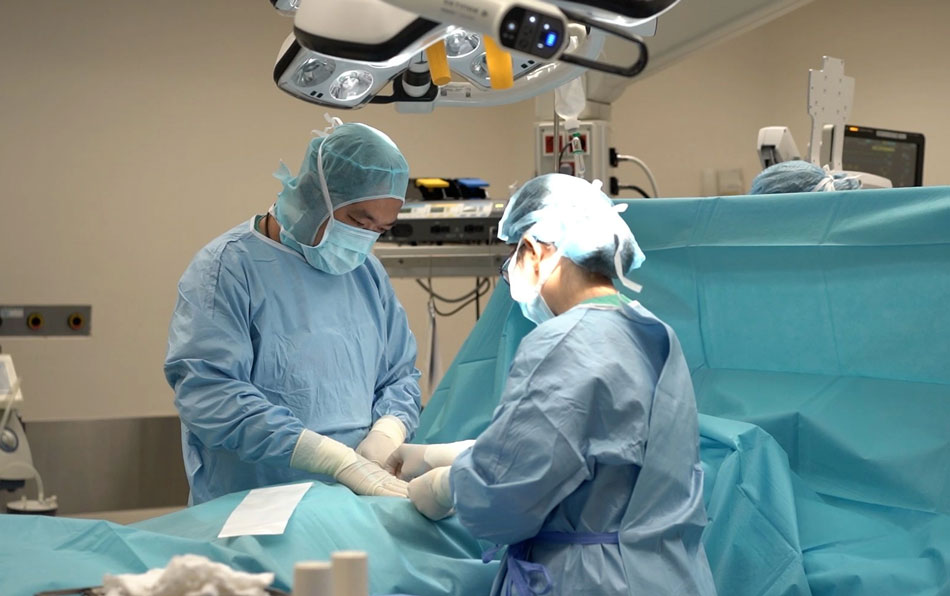
A surgical team performing an operation in a hospital operating room. Breast augmentation requires qualified surgeons, appropriate anesthesia, and postoperative monitoring.
Step 1: Consultation and Examination
The surgeon reviews medical history, examines the breasts, and discusses implant options.
Measurements may be taken to assess chest width, tissue thickness, symmetry, and suitable implant dimensions.
Preoperative testing is determined by the patient’s medical needs.
Breast imaging may be recommended according to age, symptoms, risk factors, and clinical findings.
Step 2: Anesthesia and Incision
Breast augmentation with implants is usually performed under general anesthesia.
The surgeon makes an incision using the agreed approach.
An implant pocket is created in the selected anatomical plane.
Step 3: Implant Placement
The surgeon inserts the implant and checks its position, symmetry, and relationship to the surrounding tissues.
The final implant size may be confirmed during surgery based on the agreed treatment plan and operative findings.
Step 4: Closure and Recovery Monitoring
The incisions are closed and dressings are applied.
A supportive bra may be recommended.
The medical team monitors recovery from anesthesia, pain, bleeding, and other postoperative concerns.
Some patients can be discharged on the day of surgery, while others may require overnight observation.
Recovery After Breast Augmentation in Vietnam
Recovery is particularly important for international patients planning surgery away from home.
Patients considering Breast Augmentation in Vietnam should allow enough time for initial healing and postoperative assessment before flying.
The First 48 Hours
Common early symptoms include:
- Breast tightness or pressure.
- Swelling and bruising.
- Discomfort around the incisions.
- Fatigue following anesthesia.
- Temporary limitations in arm movement.
The surgical team provides pain medication and instructions about dressing care, sleeping position, and physical activity.
Patients should arrange assistance with transportation and luggage.
The First One to Two Weeks
Swelling and discomfort usually begin to improve, although recovery varies.
Patients may attend follow-up appointments to assess incision healing and implant position.
Many people can resume light daily activities during this period, depending on their condition.
Heavy lifting, strenuous exercise, and activities that place excessive stress on the chest should be avoided until medically cleared.
Weeks Three to Six
Patients often become more comfortable with routine movement.
The surgeon may gradually permit additional physical activities.
However, return to gym training, chest exercises, and physically demanding work requires individualized guidance.
Longer-Term Recovery
The breasts may initially appear swollen, firm, or positioned differently from the eventual result.
Over time, swelling decreases and tissues adapt.
Scars also mature gradually.
Final appearance can take several months to develop, and long-term breast changes remain possible.
Breast Augmentation Recovery Timeline
| Period | General Expectations |
|---|---|
| First 1–2 days | Medical observation, discomfort management, rest |
| Days 3–7 | Swelling and gradual improvement in mobility |
| Weeks 1–2 | Follow-up appointments and light daily activities |
| Weeks 3–6 | Gradual activity progression with surgical approval |
| Months 2–3 | Further reduction in swelling |
| Months 3–6+ | Continued settling and scar maturation |
This timeline is illustrative. Individual instructions from the operating surgeon take priority.
When Can You Fly After Breast Augmentation?
International patients frequently ask how long they should remain in Vietnam.
For uncomplicated implant augmentation, approximately 10–14 days or longer may be used as an initial travel-planning allowance.
However, there is no universal postoperative day on which flying is automatically safe.
Travel readiness depends on:
- Wound healing.
- Pain and mobility.
- Postoperative complications.
- General health.
- Flight duration.
- The surgeon’s assessment.
Long-haul flights involve prolonged sitting and limited movement.
Patients should discuss their individual risk of blood clots, appropriate movement during travel, and whether any preventive measures are indicated.
Avoid lifting heavy luggage until cleared by the surgeon.
Patients should also know how to access medical care after returning home.
Breast Augmentation Risks and Complications
Breast augmentation carries surgical and device-related risks.
These should be discussed before patients consent to treatment.
General Surgical Risks
Potential complications include:
- Bleeding or hematoma.
- Infection.
- Seroma or fluid accumulation.
- Delayed wound healing.
- Unfavorable scarring.
- Changes in breast or nipple sensation.
- Asymmetry.
- Anesthesia-related complications.
- Blood clots.
- The need for additional surgery.
Capsular Contracture
After an implant is inserted, the body naturally forms scar tissue around it.
Capsular contracture occurs when this tissue tightens excessively, potentially causing firmness, discomfort, or changes in breast shape.
Severe cases may require further surgery.
Implant Rupture
Both silicone and saline implants can rupture.
Saline implant rupture often causes noticeable deflation.
Silicone implant rupture may be difficult to detect without imaging.
Patients should understand the monitoring recommendations for their specific implant.
BIA-ALCL and Other Rare Implant-Associated Cancers
Breast implant-associated anaplastic large cell lymphoma, or BIA-ALCL, is a rare lymphoma associated with breast implants, particularly certain textured devices.
It is not the same as ordinary breast cancer.
The FDA has also reported rare cases of squamous cell carcinoma and other lymphomas arising in the scar capsule around breast implants.
Persistent swelling, a new lump, pain, or changes around an implant should be medically assessed.
Patients should discuss device-specific risks with their surgeon before choosing an implant.
For authoritative information, see the FDA’s guidance on breast implant risks and complications.
How Long Do Breast Implants Last?
Breast implants are not lifetime devices.
There is no fixed expiration date that applies to every implant, and routine replacement at exactly ten years is not universally required.
However, complications become more likely over time, and some patients eventually need removal or replacement.
Reasons for future surgery may include:
- Implant rupture.
- Capsular contracture.
- Implant displacement.
- Changes in breast appearance.
- Pain or other symptoms.
- Personal preference.
Patients should budget for the possibility of future consultations, imaging, and surgery.
Do Silicone Implants Require Regular Imaging?
For asymptomatic patients with silicone gel-filled implants, the FDA recommends an initial ultrasound or MRI examination approximately five to six years after implantation, followed by imaging every two to three years.
Patients with symptoms may require earlier assessment.
These recommendations should be discussed with a healthcare professional familiar with the specific implant and the patient’s medical history.
Do Breast Implants Affect Mammograms?
Breast implants can make some breast tissue more difficult to visualize on standard mammography.
Patients should inform the imaging facility that they have implants so appropriate techniques can be used.
Implant monitoring does not replace recommended breast cancer screening.
Choosing a Breast Augmentation Surgeon and Hospital in Vietnam
Choosing a qualified medical team is essential when planning Breast Augmentation in Vietnam.
Patients should not rely solely on promotional photographs, online reviews, or low prices.
Verify Surgeon Qualifications
Ask about the surgeon’s:
- Medical license.
- Specialist training in plastic surgery.
- Experience performing breast augmentation.
- Experience with the proposed implant and surgical technique.
- Approach to managing complications.
- Availability for postoperative care.
Evaluate the Surgical Facility
Confirm that the hospital or clinic is licensed to perform the proposed operation.
Important considerations include anesthesia services, operating-room facilities, emergency arrangements, and postoperative monitoring.
International accreditation may be helpful but does not guarantee a particular surgical result.
Confirm Implant Information
Before surgery, request the implant manufacturer and exact model.
Patients should understand the implant’s surface, filling material, warranty conditions, and long-term monitoring requirements.
After surgery, retain implant identification details and relevant medical records.
Questions to Ask Before Booking
- Which implant and surgical technique do you recommend?
- Where will the incision and scar be located?
- What complications are associated with this implant?
- What is included in the quotation?
- How long should I remain in Vietnam?
- Who provides postoperative care?
- What happens if revision surgery becomes necessary?
Clear communication is an important part of informed consent.
Where Can You Have Breast Augmentation in Vietnam?
Breast augmentation services are available through selected private hospitals and specialized cosmetic surgery facilities in major cities.
Ho Chi Minh City
Ho Chi Minh City offers a range of cosmetic surgery providers and is accessible through Tan Son Nhat International Airport.
International patients may find options for implant augmentation, fat transfer, and other breast procedures.
However, the availability of particular implant brands and techniques should be confirmed directly.
Hanoi
Hanoi also has private medical facilities offering breast surgery.
Patients should compare surgeon qualifications, hospital resources, implant availability, and postoperative arrangements.
Other Vietnamese Cities
Some providers in other cities may offer breast augmentation, but services and surgical capabilities vary.
The appropriate destination depends on the medical team, facility, and recovery arrangements rather than location alone.
Planning Breast Augmentation in Vietnam From Overseas
Patients considering Breast Augmentation in Vietnam should organize medical evaluation and travel arrangements before departure.
Step 1: Share Your Treatment Goals
Patients may be asked to provide age, height, weight, medical history, previous breast procedures, medications, allergies, and desired changes.
Photographs may assist a preliminary review when shared through an appropriate secure channel.
Step 2: Obtain a Preliminary Assessment
A hospital or surgeon may review the available information and suggest potential implant or surgical options.
This does not replace a physical examination.
Final implant selection and surgical eligibility normally require an in-person consultation.
Step 3: Request a Written Quotation
The hospital should specify the proposed implant, surgical technique, included services, and possible additional charges.
Patients should clarify payment arrangements and cancellation terms before confirming treatment.
Step 4: Plan Surgery and Recovery
Travel dates should allow time for preoperative assessment, surgery, postoperative monitoring, and follow-up appointments.
Accommodation close to the treating hospital may make early recovery more convenient.
Step 5: Arrange Follow-Up After Returning Home
Before leaving Vietnam, patients should obtain medical records, implant identification details, medication instructions, and emergency contact information.
They should also identify a healthcare professional in their home country who can assist with future breast examinations and implant monitoring.
Why Consider Breast Augmentation in Vietnam?
Vietnam may be attractive to international patients because of its range of cosmetic surgery providers and treatment prices that can be lower than those in some other healthcare markets.
However, meaningful cost comparisons must include the complete medical and travel budget.
Expenses may include surgery, implants, preoperative investigations, accommodation, transportation, time away from work, and potential future treatment.
Patients should also consider the practical difficulties of receiving postoperative care abroad.
For an overview of related procedures, explore our Cosmetic Surgery in Vietnam guide.
How VnMedtour Supports International Patients
VnMedtour is a medical tourism coordination service helping international patients explore treatment options in Vietnam.
We do not perform surgery or replace the medical judgment of licensed healthcare professionals.
Depending on the patient’s needs and the hospital’s available services, VnMedtour can assist with:
- Identifying potential medical providers.
- Coordinating preliminary medical information reviews.
- Requesting individualized quotations.
- Arranging appointment communication.
- Clarifying hospital requirements and treatment schedules.
- Sharing practical information about accommodation and transportation.
- Supporting communication with the treating provider.
The hospital and licensed medical professionals remain responsible for diagnosis, surgical recommendations, informed consent, treatment, and postoperative medical care.
Frequently Asked Questions About Breast Augmentation in Vietnam
1. How much does breast augmentation cost in Vietnam?
Reference prices previously published by VnMedtour include approximately 55 million VND for a nano implant option, 75 million VND for Mentor, and 80 million VND for Mentor Xtra. These prices require current hospital confirmation and should not be interpreted as nationwide averages.
2. Is breast augmentation in Vietnam safe?
Safety depends on the patient’s health, the surgeon’s qualifications, the facility, implant selection, and postoperative care. All surgery carries risks, and no provider can guarantee a complication-free result.
3. Which is better, Mentor or Motiva implants?
Neither brand is automatically best for every patient. The decision should consider the specific implant model, device characteristics, regulatory status, tissue coverage, and individual treatment goals.
4. How long does breast augmentation recovery take?
Early recovery generally takes several weeks, while swelling and tissue settling may continue for months. Activity restrictions and return-to-work timing depend on the procedure and individual recovery.
5. Can I fly home ten days after surgery?
Some patients may be medically cleared around that time, but others require longer. The surgeon should assess wound healing, complications, mobility, and travel-related risks before departure.
6. Do breast implants need to be replaced every ten years?
Not necessarily. There is no universal rule requiring replacement at exactly ten years. However, implants are not lifetime devices and may eventually require removal or replacement.
7. Can breast implants affect breastfeeding?
Some patients can breastfeed after augmentation, but surgery may affect milk production or nipple sensation. The impact depends on individual anatomy and the surgical approach.
8. Can I get a quotation before traveling?
A preliminary quotation may be available after the hospital reviews your medical information and treatment goals. The final plan and price are subject to an in-person assessment.
Final Thoughts: Is Breast Augmentation in Vietnam Right for You?
Breast augmentation can help selected patients increase breast volume, improve symmetry, or restore fullness.
Vietnam offers potential treatment options, but patients should prioritize medical suitability, surgeon qualifications, implant safety, and long-term follow-up rather than selecting a provider based only on price.
Before proceeding, understand the recommended technique, implant characteristics, surgical risks, recovery requirements, and possibility of future surgery.
VnMedtour can help coordinate preliminary consultations and quotation requests with medical providers in Vietnam.
Medical disclaimer: This article provides general educational information and does not constitute medical advice. Treatment eligibility, implant selection, surgical risks, postoperative care, and fitness to travel must be determined by qualified healthcare professionals.
Medically reviewed by MSc, MD, Doctor Nguyen Dang Dai