
If you are considering a chemical peel in vietnam, the country has established itself as an international hub for medical-grade skin resurfacing, acne management, and anti-aging treatments. Chemical peeling involves applying clinical acid solutions—such as Alpha Hydroxy Acids (AHAs), Beta Hydroxy Acids (BHAs), Trichloroacetic Acid (TCA), and Jessner’s solution—to exfoliate damaged outer skin layers and accelerate cellular turnover. By combining authentic FDA-cleared and CE-marked formulations with board-certified, English-speaking dermatologists at 60% to 80% lower costs than Western nations, Vietnam attracts thousands of expatriates and aesthetic tourists annually.
This comprehensive 2026 guide covers everything you need to know about receiving chemical peels in Vietnam: depth levels, active ingredients, transparent cost breakdowns, top accredited clinics in Ho Chi Minh City and Hanoi, patient care pathways, and essential tropical aftercare.
Quick Navigation
Key Takeaways
-
Unbeatable Cost Advantage: A clinical chemical peel session in Vietnam averages between $50 and $150 USD, compared to $250 to $800 USD in the United States, Australia, or Western Europe.
-
Custom Depth Levels: Offered in Superficial (lunchtime peels), Medium (dermal remodeling), and Deep formulations tailored to Asian and diverse skin phototypes (Fitzpatrick Types I–V).
-
Top Global Brands: Accredited Vietnamese dermatology clinics utilize authentic imported peeling solutions from premier medical manufacturers, including SkinCeuticals, Dermamelan/Cosmelan by Mesoestetic, Enerpeel, and Obagi Medical.
-
Board-Certified Dermatologists: Treatments at verified facilities are performed directly by senior skin doctors trained in application timing, neutralizer protocols, and post-peel barrier repair.
-
Synergistic Care Pathways: Chemical peels pair effectively with energy-based devices and clinical treatments available through our master portal on Dermatology in Vietnam.
1. Why Choose a Chemical Peel in Vietnam?
Chemical peels work by breaking down intracellular desmosomes (the “glue” holding dead skin cells together), forcing the skin to shed damaged superficial layers and stimulate fresh collagen synthesis in the underlying dermis.
Choosing a chemical peel in vietnam offers global patients compelling medical and economic advantages:
-
Substantial Cost Savings: Access medical-grade European and US skin resurfacing formulations at a fraction of Western clinic pricing.
-
Specialized Expertise in Skin of Color: Vietnamese dermatologists treat high volumes of patients with higher melanin density daily, mastering low-concentration, multi-acid blending techniques to prevent Post-Inflammatory Hyperpigmentation (PIH).
-
Strict Medical Hygiene: Top clinics enforce strict sterile environments, pre-peel priming protocols, and medical-grade neutralizer systems.
-
Zero Wait Times: Foreign visitors can schedule consultations and receive custom peeling treatments on short notice during their trip.
-
Combined Medical Tourism Experience: Superficial and light-medium peels require minimal social downtime, allowing patients to enjoy Vietnam’s cultural heritage and coastal destinations alongside their treatments.
2. Types & Depths of Chemical Peels Available in Vietnam
Dermatologists in Vietnam customize peeling solutions based on individual skin thickness, pigmentation depth, acne severity, and patient downtime tolerance.
Superficial Peels (Lunchtime Peels)
-
Depth: Epidermis only (stratum corneum down to basal layer).
-
Active Acids: Glycolic Acid (20%–35%), Salicylic Acid (15%–30%), Lactic Acid, and Mandelic Acid.
-
Primary Indications: Mild acne breakouts, enlarged pores, dull complexion, and superficial roughness.
-
Downtime: None to mild flaking for 1 to 3 days.
Medium-Depth Peels
-
Depth: Papillary dermis.
-
Active Acids: Trichloroacetic Acid (TCA 15%–35%), Jessner’s Solution (Salicylic Acid + Lactic Acid + Resorcinol), and Glycolic Acid (50%–70%).
-
Primary Indications: Moderate melasma, freckles, solar lentigines, fine lines, and shallow post-acne pigmentation.
-
Downtime: Visible peeling, bronzing, and skin shedding for 5 to 7 days.
Deep Peels & Depigmenting Systems
-
Depth: Mid-to-reticular dermis.
-
Active Systems: High-concentration TCA (40%+), Phenol solutions, and intensive multi-stage depigmenting masks (Cosmelan / Dermamelan).
-
Primary Indications: Severe stubborn melasma, severe photoaging, deep rhytids, and precancerous actinic keratosis.
-
Downtime: Significant crusting, swelling, and shedding for 10 to 14 days under strict medical monitoring.
For clinical research regarding the wound-healing mechanisms and safety parameters of chemical peeling across diverse skin phototypes, consult peer-reviewed literature archived by the National Center for Biotechnology Information (NCBI).
3. How Chemical Peels Synergize with Other Skin Treatments
While chemical peels provide exceptional surface exfoliation and pigment clearance, combining them with complementary aesthetic modalities produces superior dermal rejuvenation:
-
Enhancing Laser Efficacy: Clearing dead epidermal cells via light chemical peeling prior to energy-based treatments improves laser light penetration. Learn more in our master article on Laser Skin Treatment in Vietnam.
-
Pigmentation Management Synergy: Combining depigmenting peels (like Cosmelan) with photo-acoustic laser pulses maximizes deep melasma clearance. Read our dedicated guide on Pico Laser in Vietnam.
-
Acne Scar Revision Protocols: TCA Cross (Chemical Reconstruction of Skin Scars) utilizes 70%–100% TCA applied precisely into ice pick scars alongside subcision and CO2 lasers. Explore complete scar protocols in our article on Acne Scar Treatment in Vietnam.
-
Targeting Raised vs. Flat Scars: While peels smooth surface pigmentation and texture, raised fibrous scars require targeted anti-inflammatory injections and vascular lasers. Read our guide on Hypertrophic Scar Treatment in Vietnam.
4. Comprehensive Cost Breakdown (2026 Analysis)
Pricing for a chemical peel in vietnam is transparent and accessible. The comparative table below outlines average costs for different peeling depths and brand-name treatment packages in Vietnam versus Western healthcare hubs.
Chemical Peel Cost Comparison (in USD)
| Treatment / Peel Type | Vietnam Average | United States | Australia | Singapore | Average Savings in Vietnam |
| Dermatologist Initial Consultation | $25 – $50 | $200 – $400 | $180 – $350 | $120 – $250 | 75% – 85% |
| Superficial AHA / BHA Peel | $40 – $90 | $150 – $350 | $140 – $300 | $100 – $250 | 70% – 75% |
| Medium-Depth TCA / Jessner’s Peel | $90 – $180 | $400 – $800 | $350 – $750 | $300 – $600 | 75% – 80% |
| Cosmelan / Dermamelan Melasma Pack | $350 – $650 | $1,200 – $2,200 | $1,000 – $1,800 | $900 – $1,600 | 65% – 70% |
| TCA Cross Session (Ice Pick Scars) | $50 – $120 | $300 – $700 | $250 – $600 | $200 – $500 | 80% – 85% |
Disclaimer: Costs depend on peel depth, active ingredient concentrations, facial surface area, physician seniority, and clinic accreditation. Most therapeutic protocols recommend a series of 3 to 6 sessions spaced 2 to 4 weeks apart.
5. Top Recommended Clinics for Chemical Peels in Vietnam
To ensure safe application, authentic medical-grade acid formulations, and proper pre-and post-peel care, foreign patients should choose accredited clinics and hospitals.
Top Centers in Ho Chi Minh City (HCMC)
1. Ho Chi Minh City Hospital of Dermatology (Bệnh viện Da liễu TP.HCM)
-
Facility Type: Public Specialized Tertiary Referral Hospital
-
Overview: Southern Vietnam’s premier public center for clinical dermatology and aesthetic resurfacing. Treats thousands of complex acne, melasma, and photoaging cases monthly.
-
Key Strengths: Unrivaled clinical expertise, highly economical fees, academic professors leading advanced aesthetic units.
2. FV Hospital – Dermatology & Laser Center
-
Facility Type: Private International Hospital (JCI Accredited)
-
Overview: Located in District 7, FV Hospital adheres strictly to Western clinical governance and sterile protocols with full English and French support.
-
Key Strengths: JCI safety standards, direct international health insurance processing, luxurious private facilities.
3. Grace Skincare Clinic
-
Facility Type: Boutique International Dermatology Clinic
-
Overview: Managed by senior board-certified dermatologists, Grace Skincare specializes in customized AHA/BHA and TCA peels following US FDA safety guidelines.
-
Key Strengths: Central HCMC location, thorough pre-peel priming consultations, gentle multi-acid blending techniques.
4. Stamford Skin Centre
-
Facility Type: Private Specialist Dermatology Clinic
-
Overview: Situated in District 1, Stamford Skin Centre offers European and American medical peeling formulations administered by certified dermatologists.
-
Key Strengths: Prime central location, Western medical management, experienced nursing staff.
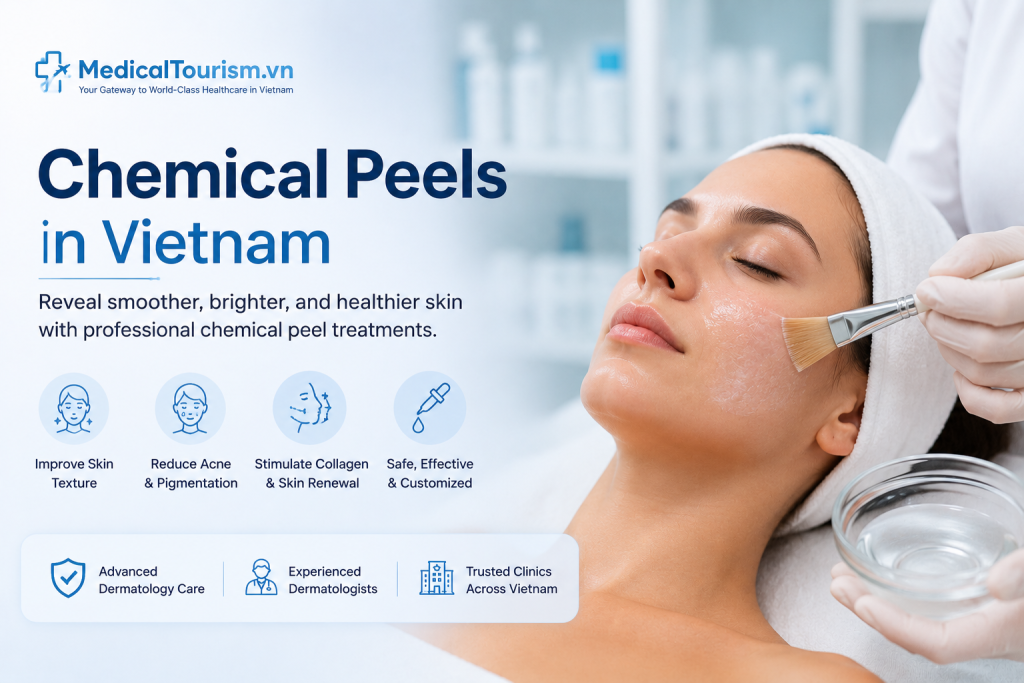
Chemical peels in Vietnam offer professional solutions for improving skin texture, acne, pigmentation, and overall skin rejuvenation at experienced dermatology clinics.
Top Centers in Hanoi
1. National Hospital of Dermatology and Venereology (Bệnh viện Da liễu Trung ương)
-
Facility Type: Apex National Public Hospital
-
Overview: Vietnam’s highest authority for clinical dermatology, skin research, and medical training, featuring advanced aesthetic and chemical peeling units.
-
Key Strengths: Leading national professors, complete diagnostic support, cutting-edge aesthetic research units.
2. Vinmec International Hospital Times City
-
Facility Type: JCI-Accredited Private Hospital Network
-
Overview: Premier private healthcare provider in Northern Vietnam offering private recovery suites, multidisciplinary care, and authentic medical-grade peeling systems.
-
Key Strengths: High privacy standards, JCI accreditation, state-of-the-art facilities.
6. Patient Journey & Step-by-Step Care Pathway
Understanding what to expect during a clinical chemical peel appointment ensures a relaxed and comfortable experience:
-
Step 1: Digital Pre-Consultation
-
Submit close-up, high-resolution photographs of your target skin concern to Medtour Vietnam or your selected clinic.
-
Receive a preliminary medical evaluation, recommended acid formulation, visit count, and cost breakdown.
-
-
Step 2: In-Person Assessment & Pre-Peel Priming
-
The dermatologist evaluates skin phototype, moisture barrier integrity, and active acne lesions using digital skin analyzers.
-
Patients with dark skin phototypes may be prescribed pre-peel topical agents (such as Hydroquinone or Tretinoin) for 1 to 2 weeks to suppress melanocyte reactivity prior to medium-depth peels.
-
-
Step 3: Cleansing, Application & Neutralization
-
The skin is disinfected and degreased with acetone or alcohol prep pads.
-
The doctor applies the chemical peeling solution using micro-sponges or brush applicators. Patients feel a mild-to-moderate warming or tingling sensation.
-
After reaching the desired clinical endpoint (such as mild erythema or uniform white “frosting”), the solution is neutralized or washed off with cold water, followed by a soothing post-peel barrier cream.
-
-
Step 4: Post-Peel Recovery & Sun Protection
-
Receive medical-grade healing ointments, lipid-replenishing creams, and broad-spectrum sunscreens.
-
Follow doctor instructions regarding gentle cleansing, sun avoidance, and scheduling follow-up sessions.
-
7. Recovery, Downtime & Tropical Sun Safety
-
Immediate Post-Treatment Reaction: Mild redness, skin tightness, and warmth last 24 to 48 hours following superficial peels, while medium-depth peels cause skin bronzing and darkening before shedding.
-
Shedding Phase: Flaking or sheet-like peeling begins on day 3 and completes by day 7. Never pick, pull, or scratch peeling skin, as forced removal causes scarring and post-inflammatory hyperpigmentation.
-
Tropical Sun Protection Protocol:
-
Freshly peeled skin is extremely sensitive to ultraviolet (UV) radiation. Exposure to Vietnam’s tropical sun can trigger severe hyperpigmentation.
-
Apply broad-spectrum SPF 50+ mineral sunscreen (containing zinc oxide or titanium dioxide) every 2 hours when outdoors.
-
Wear wide-brimmed sun hats and stay indoors during peak sunshine hours (10:00 AM – 3:00 PM).
-
-
Visa Convenience: Foreign travelers can easily obtain a 90-day single or multiple-entry e-Visa via the official Vietnam e-Visa Portal.
8. Frequently Asked Questions (FAQs)
Are chemical peels safe for dark skin tones?
Yes. When performed by a board-certified dermatologist experienced in treating Fitzpatrick Types III through V, chemical peels are safe and effective. Doctors utilize gentler acids (such as Mandelic Acid, Salicylic Acid, or low-concentration TCA blends) to prevent hyperpigmentation.
Is a chemical peel painful?
Superficial peels cause only a mild tingling or warming sensation lasting 3 to 5 minutes. Medium-depth peels produce a sting or hot sensation for 5 to 10 minutes, which is managed using handheld cooling fans or ice packs.
How many chemical peel sessions will I need to see results?
While skin smoothness and radiance improve after a single superficial peel, clearing acne, melasma, or hyperpigmentation typically requires a series of 3 to 6 sessions spaced 2 to 4 weeks apart.
Can I combine chemical peels with other cosmetic treatments?
Yes. Chemical peels pair exceptionally well with non-surgical energy devices, mesotherapy, and cosmetic injectables. If you are considering broader plastic surgery alongside skin treatments, explore our comprehensive guide on Cosmetic Surgery in Vietnam.
Conclusion & Next Steps
In conclusion, choosing a chemical peel in vietnam gives international patients access to medical-grade skin resurfacing, advanced acid formulations, and experienced dermatologists at a fraction of Western costs.
Plan Your Medical Journey with Medtour Vietnam
At Medtour Vietnam, we coordinate every aspect of your travel, connecting you with accredited clinics, top dermatologists, and transparent treatment packages.
-
Ready to refresh and restore your skin? Contact our bilingual medical coordinators today for a free photo evaluation and custom quote.
-
Explore complete skin care guides: Visit our master resource on Dermatology in Vietnam or learn more in our detailed articles on Laser Skin Treatment in Vietnam, Pico Laser in Vietnam, Acne Scar Treatment in Vietnam, and Hypertrophic Scar Treatment in Vietnam.
Medically Reviewed & Published by Medtour Vietnam Medical Editorial Team (Updated 2026).
Considering a Chemical Peel in Vietnam?
Get personalized treatment options, estimated costs, and recommendations from trusted dermatology clinics in Vietnam.