
For many individuals seeking cosmetic or reconstructive nasal surgery, the primary obstacle is not the desire for change, but the prohibitive cost. In Western countries like the United States, Canada, and Australia, a standard nose job can easily become a major financial burden.
Because of this, medical tourism has experienced a massive surge. Vietnam has rapidly emerged as a premier global hub, offering world-class cosmetic procedures at a fraction of Western prices.
If you are considering a nose job abroad, understanding the financial landscape is crucial. This comprehensive guide breaks down the actual rhinoplasty cost in Vietnam, compares it globally, explains the variables that affect your quote, and helps you plan your medical journey with absolute transparency.
Quick Navigation
1. Global Price Comparison: How Much Can You Save?
The most compelling reason international patients fly to Vietnam for plastic surgery is the dramatic cost savings. While the price is significantly lower, the quality of care remains world-class. Many top Vietnamese plastic surgeons are members of prominent global organizations like the International Society of Aesthetic Plastic Surgery (ISAPS) and have undergone rigorous training in South Korea, Japan, France, or the United States.
To put the savings into perspective, let’s compare the typical, all-inclusive out-of-pocket expenses for primary rhinoplasty across different countries:
-
Vietnam: $1,500 – $3,500 (Baseline)
-
Australia: $8,000 – $18,000 (Save up to 80%)
-
United States: $9,000 – $20,000 (Save up to 82%)
-
United Kingdom: $7,500 – $13,000 (Save up to 73%)
-
Singapore: $7,000 – $12,000 (Save up to 70%)
-
South Korea: $5,000 – $9,000 (Save up to 60%)
According to official cost statistics from the American Society of Plastic Surgeons (ASPS), the quoted average surgeon’s fee in the US is around $7,600. However, this figure is highly misleading because it excludes anesthesia, operating room facilities, medical tests, and post-op prescriptions. Once these essentials are factored in, Western patients rarely pay less than $10,000 in total.
In contrast, the pricing structures at major international clinics in Vietnam are highly consolidated, transparent, and often packaged to include these surgical extras. To learn more about the overall medical standards and safety protocols of the country, read our complete guide on Cosmetic Surgery in Vietnam.
2. Rhinoplasty Cost in Vietnam by Procedure Type
Rhinoplasty is not a one-size-fits-all surgery. The technique chosen by your surgeon depends entirely on your anatomical needs, structural goals, and ethnic background. Each approach requires different levels of surgical complexity, operating time, and materials, directly impacting the final price.
The table below outlines the estimated price ranges for different types of nose surgery in Vietnam:
| Procedure Type | Estimated Cost (USD) | Best Suited For |
| Closed Rhinoplasty | $1,500 – $2,200 | Minor bridge adjustments, dorsal hump reduction, and subtle tip refinements with zero external scarring. |
| Open Rhinoplasty | $1,800 – $2,800 | Major structural reshaping, complex tip corrections, and cases requiring maximum surgical visibility. |
| Implant Augmentation (Silicone/Gore-Tex) | $1,600 – $2,500 | Patients (particularly of Asian descent) looking to raise a flat or low nasal bridge using premium biocompatible implants. |
| Autologous Cartilage Augmentation (Ear/Rib) | $2,500 – $3,500 | Using the patient’s own tissue to reconstruct the bridge or tip, minimizing the risk of rejection or long-term thinning. |
| Reduction Rhinoplasty | $1,800 – $3,000 | Reshaping wide nasal bones, narrowing nostrils (alar base reduction), or reducing an overly prominent nose size. |
| Revision Rhinoplasty | $2,500 – $4,500 | Correcting cosmetic deformities, structural collapses, or breathing issues stemming from a failed previous surgery. |
| Cleft Rhinoplasty | $3,000 – $5,000 | Highly specialized reconstructive surgery to repair congenital nasal deformities associated with cleft lip and palate. |
Structural vs. Reconstructive Complexity
It is important to note that cosmetic enhancements generally cost less than reconstructive procedures.
If you have suffered a failed operation elsewhere and require corrective work, you must look into Revision Rhinoplasty in Vietnam. Re-operating on scarred, compromised tissue is one of the most challenging tasks in plastic surgery, requiring specialized cartilage grafting and highly advanced techniques.
Similarly, correcting congenital birth defects requires a high-precision approach. Learn more about the structural and functional restoration process by exploring our guide on Cleft Rhinoplasty in Vietnam.
3. What Factors Influence Your Custom Quote?
If you request a quote from an agency or hospital, the price you receive might differ slightly from the averages listed above. The total cost of rhinoplasty in Vietnam is determined by several clinical and administrative variables:
A. The Surgeon’s Experience and Credentials
The expertise of your surgeon is the single most critical factor in both your safety and your final aesthetic outcome. Board-certified plastic surgeons with international training, decades of experience, and active memberships in global associations like ISAPS command higher fees. However, choosing an elite specialist is the best investment you can make to avoid the immense physical and financial costs of a secondary revision.
B. Type of Anesthesia
-
Local Anesthesia with Sedation (Twilight Anesthesia): Often used for simpler closed rhinoplasties or minor tip adjustments. This is more affordable because it does not require a dedicated anesthesiologist for continuous intubation.
-
General Anesthesia: Required for complex open, revision, or cartilage-grafting procedures. This option increases the cost because it requires a highly trained anesthesiologist to manage your vitals throughout the multi-hour surgery, alongside specialized operating room equipment.
C. Choice of Materials (Synthetic vs. Biological Grafts)
-
Synthetic Implants: Modern medical-grade silicone or Gore-Tex implants are highly reliable and cost-effective.
-
Autologous Grafts (Your Own Tissue): If your nasal tip requires support, or if you prefer a completely natural approach, the surgeon must harvest cartilage from your ear (conchal cartilage), nasal septum, or rib (costal cartilage). Harvesting rib cartilage turns the procedure into a multi-site surgery, requiring advanced instruments, longer operating times, and a higher overall price tag.
D. Hospital Facility Standards
There is a pricing difference between boutique aesthetic clinics and full-scale JCI-accredited general hospitals (such as FV Hospital or Tam Anh General Hospital). While boutique clinics can offer highly competitive, lower rates, JCI hospitals provide the peace of mind of intensive care backup, sterile operating theaters, and multidisciplinary medical teams.
4. Itemized Breakdown: What Does the Price Actually Include?
A common pitfall of medical tourism is hidden costs. When evaluating quotes from different clinics, you must ensure you are comparing “apples to apples.”
A professional medical tourism package should be all-inclusive. At Medtour Vietnam, we advocate for absolute transparency. A comprehensive rhinoplasty quote should always include the following items:
-
Pre-operative evaluations: Routine blood work, coagulation profiles, EKG, chest X-rays, and nasal CT scans to ensure you are safe to undergo surgery.
-
Surgical team and facility fees: The main surgeon’s fee, assistant surgeon fees, anesthesiologist fees, and the physical rental of the sterile operating room.
-
Implants and medical consumables: The cost of the pre-shaped silicone/Gore-Tex implants, sutures, surgical splints, and specialized dressings.
-
Post-operative medications: A take-home medical kit consisting of prescription antibiotics, pain relievers, anti-inflammatory medications, and sterile saline wound care kits.
-
Immediate recovery care: Overnight stay in the hospital recovery ward with dedicated nursing care (especially if general anesthesia was administered).
-
Follow-up visits: Suture removal (typically done 7 to 10 days post-surgery), cleaning, and physical evaluations by your surgical team before you fly home.
⚠️ Red Flag Warning: If a clinic provides a quote that seems drastically lower than the market average (e.g., under $1,000 for an open structural rhinoplasty), ask them directly if anesthesia, pre-op testing, and post-op medication are included. Reputable providers will always present an itemized, all-inclusive pricing structure.
5. Designing Your Medical Tourism Travel Budget
When calculating the total financial commitment of undergoing a nose job abroad, you must look beyond the clinical bill. Fortunately, Vietnam is exceptionally budget-friendly, meaning your travel, lodging, and dining expenses will remain highly affordable.
Here is a realistic estimation of the travel-related expenses for a single patient spending 10 days in Vietnam (the recommended duration for safe post-operative monitoring):
-
Round-Trip Flights: $400 – $1,200 (highly dependent on your departure city; flights from Australia and neighboring Asian countries are incredibly economical).
-
Accommodation: $30 – $100 per night. You can easily secure clean, modern 3-star to 4-star hotels or serviced apartments in prime areas of Ho Chi Minh City or Hanoi for $45/night, which is ideal for a peaceful recovery.
-
Local Transportation: $50 – $100 total. Using ride-hailing apps like Grab is incredibly safe, convenient, and inexpensive (averaging just $3 – $7 per trip across town).
-
Food and Daily Essentials: $15 – $40 per day. Vietnam is globally renowned for its nutritious, light, and delicious cuisine. Soft, post-surgery-friendly meals like traditional rice porridge (cháo) or chicken noodle soup (phở) are widely available and very gentle on your recovery.
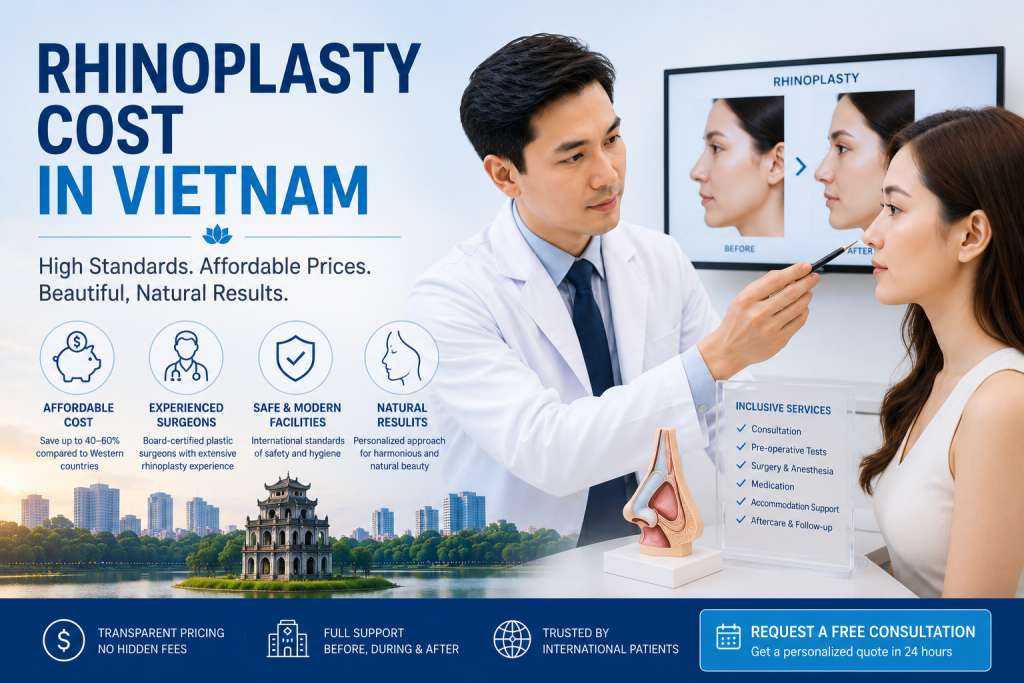
Rhinoplasty cost in Vietnam varies by surgeon experience, implant material, hospital standards, surgical technique, and aftercare services, making transparent consultation important for international patients.
The Bottom Line Savings
Even when adding a premium surgical procedure ($2,500), comfortable hotel stays, international flights, and dining, your grand total will likely sit between $3,500 and $4,800. Compared to paying up to $18,000 in Sydney or Los Angeles for the surgery alone, you are saving thousands of dollars while enjoying a unique travel experience.
6. How to Plan a Safe and Cost-Effective Journey
To maximize your budget without compromising your safety, we recommend following a structured process:
-
Step 1: Initial Virtual Consultation (Before Booking Travel)
Submit your goals, medical history, and clear photos of your nose (front, profile, and base views) through our platform. Our partner surgeons will evaluate your anatomy and provide a customized surgical plan and an accurate, transparent cost estimate.
-
Step 2: Coordinate Your Medical Travel Package (7–10 Days Before Departure)
Secure your medical visa (if required), book your flights, and reserve a hotel close to the designated hospital. Our team at Medtour Vietnam can assist with arranging local transport and airport pickups to ensure your arrival is stress-free.
-
Step 3: In-Person Examination & Surgery (Days 1–2 in Vietnam)
Meet your surgeon face-to-face for a detailed nasal consultation, perform necessary pre-op testing, and undergo your rhinoplasty procedure in a fully licensed hospital setting.
-
Step 4: Initial Post-Op Recovery & Healing (Days 3–7 in Vietnam)
Rest in your hotel. Avoid strenuous activity, keep your head elevated to minimize swelling, and follow your post-op medication regimen precisely.
-
Step 5: Suture Removal & Safe Flight Clearance (Days 8–10 in Vietnam)
Return to the clinic to have your external splint and sutures removed. Your surgeon will inspect the healing progress and issue an official “fit-to-fly” clearance certificate so you can return home safely.
To explore a deeper breakdown of the surgical techniques, patient timelines, and detailed medical considerations, please visit our foundational guide: Rhinoplasty in Vietnam: Quality Nose Surgery at Affordable Prices.
FAQs: Your Questions About Rhinoplasty Costs Answered
Q1: Can I use my home country’s health insurance to cover rhinoplasty in Vietnam?
Generally, private health insurance in Western nations does not cover cosmetic procedures, whether performed at home or abroad. However, if your rhinoplasty is medically necessary (such as correcting a deviated septum to resolve breathing problems, or undergoing reconstructive cleft surgery), you may be able to claim a partial rebate. You should check directly with your insurance provider regarding their policy on out-of-country medical claims.
Q2: Why is cosmetic surgery so cheap in Vietnam if the quality is high?
The lower cost of surgery in Vietnam is driven by the country’s lower cost of living and operational overhead. Real estate, medical staff salaries, administrative expenses, and hospital malpractice insurance are significantly lower than in Western countries. These operational savings are passed directly to the patient, without sacrificing medical supplies, sterile protocols, or surgical talent.
Q3: How should I handle payments at Vietnamese hospitals?
Most international hospitals and accredited aesthetic centers in Vietnam accept major international credit cards (Visa, Mastercard), bank wire transfers, and cash (Vietnamese Dong or US Dollars). It is always wise to inform your bank of your travel plans beforehand to prevent any automated security blocks on your card when paying for your medical treatment.
Secure Your Free, Transparent Quote Today
Undergoing rhinoplasty is a life-changing decision. While finding an affordable price is important, your health, safety, and aesthetic outcome must always be your highest priorities.
At Medtour Vietnam, we simplify your medical journey by partnering exclusively with certified, internationally trained plastic surgeons operating in state-of-the-art hospitals. We offer complete linguistic, administrative, and logistical support to ensure your experience is smooth, safe, and highly successful.
Planning Rhinoplasty in Vietnam?
Get clear guidance on rhinoplasty costs, surgeon selection, implant options, hospital standards, and treatment planning before you travel.