
Hyperpigmentation, stubborn dark patches, and uneven skin tone can profoundly affect an individual’s self-esteem and emotional well-being. Among the various dermatological conditions affecting facial aesthetics, melasma stands out as one of the most complex and persistent challenges to treat. Characterized by symmetrical brown to gray-brown patches typically surfacing on the cheeks, bridge of the nose, forehead, and upper lip, melasma demands highly specialized, medical-grade intervention.
When over-the-counter brightening creams and standard spa facials fail to yield measurable results, patients look toward clinical dermatological procedures. In Western nations like the United States, Canada, and the United Kingdom, comprehensive multi-modal melasma treatment protocols involving advanced lasers, medical chemical peels, and regular dermatologist consultations can cost thousands of dollars out of pocket, as these procedures are rarely covered by insurance.
This financial barrier, combined with long waiting lists for specialist care, has catalyzed a major shift in global medical tourism toward Southeast Asia. Vietnam has rapidly established itself as an elite international destination for advanced clinical dermatology and medical aesthetics. Offering world-class laser technology, board-certified dermatologists trained in global skincare capitals, and highly competitive pricing structures, Vietnam provides exceptional skin rejuvenation outcomes at a fraction of Western costs.
Whether you are an expatriate living in Southeast Asia or a medical tourist planning a dedicated wellness trip, this comprehensive guide explores everything you need to know about undergoing melasma treatment in Vietnam, from cutting-edge clinical technologies and cost comparisons to top-tier accredited clinics.
Quick Navigation
1. Understanding Melasma: The Anatomy of Hyperpigmentation
To build a truly effective treatment strategy, it is critical to understand the biological mechanisms behind melasma and distinguish it from other forms of facial aging or discoloration.
What Causes Melasma?
Melasma is a complex, multi-factorial skin condition triggered by the overactivation of melanocytes—the specialized cells responsible for producing melanin (the pigment that gives skin its color). Unlike localized sunspots or freckles, which are straightforward responses to UV damage, melasma is deeply tied to internal systemic triggers. According to global dermatological studies compiled by organizations such as the American Academy of Dermatology (AAD), the primary catalysts for melasma include:
-
Ultraviolet (UV) and Visible Light Exposure: UV rays from the sun directly stimulate melanocytes to overproduce pigment. Even visible light and infrared heat (from cooking or electronic screens) can worsen the condition.
-
Hormonal Fluctuation: Fluctuations in estrogen and progesterone are primary triggers. Melasma is widely known as the “mask of pregnancy” (chloasma) and frequently affects women taking oral contraceptives or undergoing hormone replacement therapy.
-
Vascular Dynamics: Emerging research indicates that altered vascular endothelial growth factors and increased numbers of leaky blood vessels within the dermal layer feed the overactive pigment cells.
-
Genetics: Individuals with deeper skin tones (Fitzpatrick skin types III through VI), particularly those of Asian, Hispanic, or Middle Eastern descent, possess inherently active melanocytes and are genetically predisposed to developing melasma.
The Three Types of Melasma
During a professional clinical consultation, a dermatologist will utilize a specialized diagnostic tool called a Wood’s lamp or a digital skin analysis system (such as VISIA) to determine the exact depth of the pigment. Melasma is categorized into three distinct types:
-
Epidermal Melasma: The pigment is confined to the superficial top layer of the skin. It typically presents as well-defined, dark brown patches and responds beautifully and rapidly to topical therapies and light chemical peels.
-
Dermal Melasma: The melanin drops down into the deeper dermal layer of the skin. It appears as ill-defined, blue-gray patches and is highly resistant to surface treatments, requiring advanced deep-reaching laser systems.
-
Mixed Melasma: This is the most prevalent form encountered by clinicians, featuring a combination of both superficial epidermal and deep dermal pigment. It demands a highly structured, multi-modal treatment approach over several months.
Holistic Facial Rejuvenation
Many international patients visiting Vietnam choose to combine their clinical skin treatments with more comprehensive structural or anti-aging facial enhancements. While laser therapies work to clear surface discoloration and smooth skin texture, structural procedures can restore youthful contours and address sagging tissue.
For instance, if your aesthetic goals include reversing deep facial sagging, jowls, and loss of jawline definition alongside clearing up pigmentation, you can explore our complete guide on Face Lift in Vietnam. Similarly, if you are looking to reshape and refine your nasal profile as part of a total facial transformation, check out our insights on Rhinoplasty in Vietnam: Quality Nose Surgery at Affordable Prices.
2. Why Choose Vietnam for Melasma Treatment?
Vietnam’s medical aesthetics market is expanding rapidly, driven by substantial infrastructure investments and a domestic population that places an exceptionally high premium on flawless, clear skin.
Elite Dermatological Expertise
Because Asian skin profiles are highly susceptible to post-inflammatory hyperpigmentation (PIH) if treated with incorrect laser settings, Vietnamese dermatologists are absolute experts in managing delicate, pigment-prone skin. Top-tier medical practitioners in Ho Chi Minh City and Hanoi hold advanced medical degrees and have completed prestigious international fellowships in France, the United States, and South Korea. They possess a deep, nuanced understanding of how to safely manipulate energy-based devices to shatter melanin without causing thermal damage to the surrounding skin tissue.
Cutting-Edge, FDA-Approved Technologies
The premium private dermatology clinics in Vietnam refuse to compromise on technology. They are equipped with genuine, FDA-approved, medical-grade laser platforms sourced directly from top global manufacturers in the US, Europe, and Korea. Patients have direct access to ultra-premium systems, including Picosecond lasers (PicoWay, PicoSure), Gold-standard Q-Switched Nd:YAG lasers (Revlite, Pastelle), and advanced vascular lasers designed to target the underlying blood vessels feeding the melasma patches.
Luxury Clinical Environments and English-Speaking Care
To seamlessly accommodate the growing influx of expatriates and medical tourists, Vietnam’s leading aesthetic dermatology institutions function like high-end wellness sanctuaries. They feature luxury private treatment suites, state-of-the-art sterile rooms, and dedicated international patient coordinators. From your initial digital consultation to your final follow-up, your care is managed by fluent English-speaking doctors and dedicated clinical case managers.
3. Advanced Melasma Treatment Modalities in Vietnam
Because melasma cannot be permanently cured with a single “magic bullet” procedure, leading Vietnamese clinics design highly customized, multi-stage treatment packages that strike a careful balance between shattering existing pigment and suppressing future melanin production.
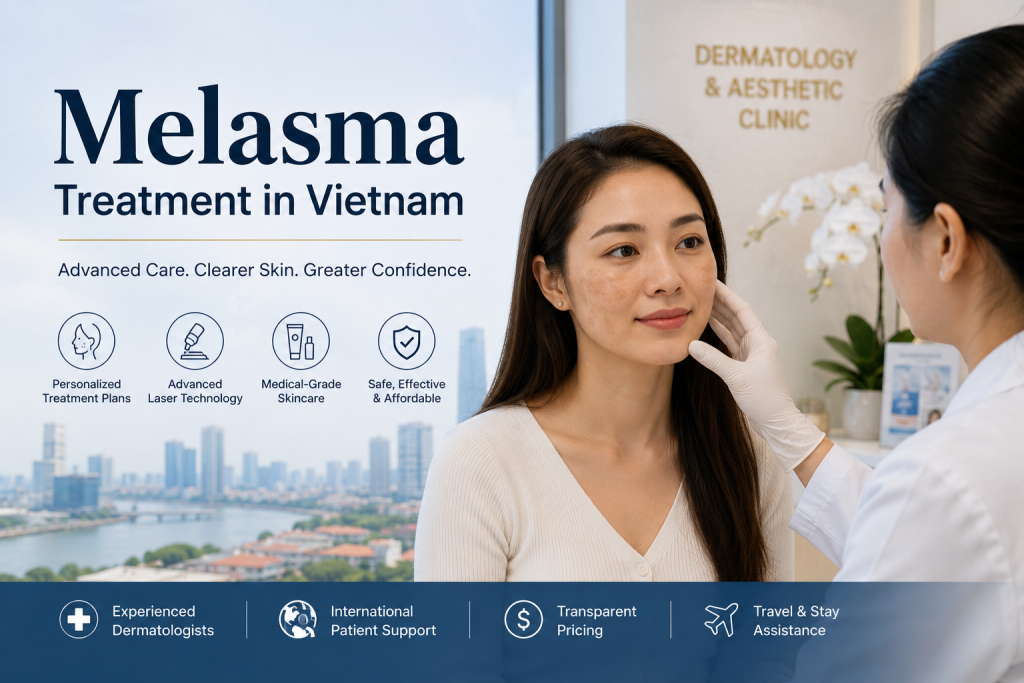
Melasma treatment in Vietnam offers international patients access to dermatologist consultation, laser technology, medical-grade skincare, and personalized pigmentation treatment plans.
1. Picosecond Laser Therapy (The Industry Gold Standard)
Traditional lasers rely on photothermal energy, utilizing heat to break up pigment. However, excess heat can trigger reactive hyperpigmentation and worsen melasma in Asian skin. To eliminate this risk, Vietnamese clinics heavily utilize advanced Picosecond Lasers.
Operating at an astonishing speed of one-trillionth of a second, these lasers deliver ultra-short, concentrated pulses of energy that create an acoustic photo-mechanical shockwave. This shockwave shatters the stubborn dermal melanin into microscopic, dust-like particles without generating heat in the surrounding skin. The body’s lymphatic system then naturally safely metabolizes and eliminates these tiny particles over the subsequent weeks, resulting in visible clearing with zero downtime or peeling.
2. Medical-Grade Chemical Peels
For patients presenting with predominantly epidermal or mixed melasma, dermatologists frequently deploy specialized chemical peels. Rather than using aggressive, single-acid formulas that cause severe blistering, Vietnamese medical centers utilize sophisticated, multi-ingredient compounds.
Formulas containing optimized blends of Trichloroacetic Acid (TCA), Glycolic Acid, Salicylic Acid, and powerful pigment-suppressors like Kojic Acid, Azelaic Acid, and Tranexamic Acid work in unison to accelerate cellular turnover. This gentle exfoliation lifts away the hyperpigmented surface cells while simultaneously signaling the deeper layers of the skin to slow down melanin production.
3. Mesotherapy and Intradermal Micro-Injections
A highly popular and effective clinical methodology throughout Asia is mesotherapy—the direct micro-injection of therapeutic cocktails into the middle layers of the skin. To treat melasma, Vietnamese dermatologists administer precise micro-droplets of Tranexamic Acid, Gluthathione, and high-concentration Vitamin C directly into the hyperpigmented zones.
By bypassing the skin’s stubborn external barrier, these potent ingredients work directly at the cellular level to block the biochemical pathways that trigger melanin synthesis, while simultaneously strengthening the skin’s localized vascular networks.
4. Controlled Topical Maintenance Protocols
A successful clinical outcome in Vietnam always includes a structured, medical-grade home maintenance regimen. Dermatologists prescribe personalized topical treatments utilizing gold-standard active agents like Cysteamine, targeted Retinoids, and custom-compounded Hydroquinone formulations, paired with high-factor, broad-spectrum physical sunscreens that protect against both UV radiation and blue light.
4. How Much Does Melasma Treatment Cost in Vietnam? (2026 Price Guide)
The financial value proposition of undergoing clinical skincare in Vietnam is unmatched. Patients can receive premium, doctor-led procedures utilizing the exact same global laser technologies found in New York, Sydney, or London at a fraction of the price.
Comparative Cost Table (USD)
| Treatment Type (Per Session) | United States | Australia | United Kingdom | Vietnam (Premium Clinic) |
| Picosecond Laser (PicoWay/PicoSure) | $400 – $800 | $350 – $700 AUD | £300 – £600 | $90 – $220 |
| Medical Chemical Peel | $150 – $350 | $180 – $300 AUD | £120 – £250 | $45 – $110 |
| Tranexamic Acid Mesotherapy | $350 – $600 | $400 – $650 AUD | £250 – £500 | $80 – $180 |
| Comprehensive Multi-Modal Package (5-10 Sessions) | $3,000 – $6,000+ | $3,500 – $6,500 AUD | £2,500 – £5,500 | $600 – $1,500 |
Factors Influencing the Total Cost
The total cost of your melasma treatment in Vietnam will depend primarily on the severity and depth of the pigmentation, which dictates the number of clinical sessions required. While a mild, superficial epidermal case may clear beautifully within 3 to 5 sessions, a deep-seated, chronic mixed melasma case can require a structured package of 8 to 12 sessions spaced two to four weeks apart. Additional factors include the prestige and location of the clinic, the reputation of the treating dermatologist, and any concurrent therapies prescribed.
5. Top Dermatology Clinics and Medical Aesthetic Centers in Vietnam
To ensure a safe clinical experience and optimal pigment clearing, it is vital to select licensed medical clinics led by credentialed dermatologists rather than non-medical day spas.
1. FV Lifestyle Clinic / FV Hospital (Ho Chi Minh City)
-
Overview: Operating within the JCI-accredited infrastructure of FV Hospital in District 7, FV Lifestyle Clinic represents the gold standard for clinical safety and medical tourism in Vietnam.
-
Dermatology Capabilities: Managed by leading cosmetic dermatologists, the clinic provides advanced skin diagnostic imaging and offers specialized, multi-disciplinary treatments. They feature top-tier, authentic laser systems and specialize in treating severe melasma, scars, and vascular lesions under strict international medical protocols.
2. Vinmec International Hospital Aesthetic Center (Hanoi & Ho Chi Minh City)
-
Overview: As part of Vietnam’s ultra-premium private healthcare network, the Vinmec International Hospital network features state-of-the-art aesthetic dermatology centers within its flagship JCI-accredited locations.
-
Dermatology Capabilities: Vinmec combines therapeutic clinical skincare with total medical wellness. Their dermatology suites provide international patients with customized treatment programs overseen by senior medical specialists, leveraging advanced global technologies and providing exceptional post-procedure care.
3. Grace Skin & Wellness Clinic (Ho Chi Minh City)
-
Overview: Grace Skin & Wellness is an exceptionally well-regarded medical boutique clinic located in the heart of Ho Chi Minh City, designed specifically to serve international expatriates and medical travelers.
-
Dermatology Capabilities: Led by highly respected medical directors, this clinic focuses heavily on evidence-based, FDA-approved dermatology. They are celebrated for their highly successful, transparent melasma and hyperpigmentation protocols, combining gentle picosecond technology with targeted mesotherapy and medical-grade home care.
4. ROHTO AOHAL CLINIC (Hanoi & Ho Chi Minh City)
-
Overview: Established in Vietnam under the strict management and standards of the renowned Rohto Pharmaceutical company from Japan, this specialized aesthetic clinic group has built an outstanding reputation for pigment treatment.
-
Dermatology Capabilities: ROHTO AOHAL CLINIC specializes in non-invasive skin treatments, utilizing advanced Japanese protocols and certified laser technologies. Their structured treatment programs are deeply tailored to Asian and international skin profiles, focusing on safe, progressive pigment clearing and long-term maintenance.
6. What to Expect: The Patient Journey and Clinical Timeline
Successfully treating melasma while traveling abroad requires a structured, well-planned timeline to accommodate your clinical procedures and follow-up care.
Phase 1: Advanced Visual Diagnosis
Your clinical journey begins with an in-depth consultation. Your dermatologist will examine your skin using advanced digital imaging systems like VISIA to map the depth, surface area, and vascular activity of your hyperpigmentation. This allows the doctor to differentiate your melasma from sun damage or post-inflammatory marks, customize the exact energy settings for your laser treatments, and establish a baseline to track your progress.
Phase 2: In-Clinic Treatment Sessions
A standard treatment session is efficient, straightforward, and requires minimal downtime:
-
Preparation: The skin is thoroughly cleansed, and an advanced topical numbing cream is applied for 30 to 45 minutes to ensure your complete comfort.
-
The Procedure: The dermatologist moves the laser handpiece across the target zones. You will feel a light snapping sensation against the skin, accompanied by a cool stream of air designed to protect the epidermis. A standard laser session takes only 15 to 30 minutes.
-
Post-Treatment Calming: The clinical team applies a specialized cooling mask, growth-factor serums, or a soothing cold compress to immediately minimize mild redness and heat.
Phase 3: Post-Procedure Recovery and Essential Skin Care
One of the greatest benefits of modern picosecond lasers and advanced medical-grade peels in Vietnam is that they cause virtually zero structural downtime.
-
Immediate Post-Op (Hours 1–24): Your skin may present with a mild pink blush, similar to a very mild sunburn, which typically fades completely within a few hours. You can apply mineral makeup and resume light social activities immediately.
-
Days 1–7: The pigmented patches may appear slightly darker initially as the shattered melanin fragments rise to the skin’s surface before naturally shedding away. You must avoid harsh physical scrubs, retinoids, or exfoliating acids during this initial week.
-
Sun Protection Mandate: Because UV radiation can instantly trigger melanocytes to reverse your progress, applying a premium, broad-spectrum SPF 50+ sunscreen every 2 to 3 hours is mandatory throughout your treatment journey.
7. Practical Travel Planning for International Skincare Patients
To maximize the success of your aesthetic medical trip to Vietnam, keep these practical travel and lifestyle tips in mind.
Recommended Duration of Stay
Because melasma requires a series of treatments spaced several weeks apart, your itinerary will depend on your travel goals:
-
The Quick-Stop Option: If you are visiting for a short vacation or business trip (7 to 10 days), you can complete an initial high-tech diagnostic assessment, receive your first advanced laser and mesotherapy session, and secure a complete 3-month medical home-care regimen to continue back home.
-
The Extended Wellness Option: For comprehensive clearing, many medical tourists or digital nomads choose to stay in Vietnam for 4 to 8 weeks, allowing them to complete 2 to 4 full clinical sessions under the direct, continuous supervision of their primary dermatologist.
Navigating the Vietnamese Climate
Vietnam features a tropical climate characterized by intense sunshine and high UV indexes, particularly in southern hubs like Ho Chi Minh City. To safeguard your investment and protect your healing skin post-procedure, always plan your outdoor sightseeing for the early morning or late afternoon.
In addition to high-factor sunscreen, adopt the local practice of wearing physical sun-protection clothing, including wide-brimmed hats, UV-blocking sunglasses, and protective face masks when walking outdoors or riding in open transport.
Conclusion: Investing in Radiant, Clear Skin
Undergoing melasma treatment in Vietnam offers a highly effective, medically sound path to clearing complex hyperpigmentation and restoring an even, radiant complexion. By choosing Vietnam’s premier aesthetic medical centers, you gain direct access to board-certified dermatologists, authentic FDA-approved technologies, and exceptional personalized care at a fraction of Western costs.
When planning your treatment, focus on medical quality: prioritize fully licensed clinics, choose experienced specialists who understand the complexities of delicate skin, and follow your prescribed home-care protocols consistently. With the right clinical strategy, your wellness trip to Vietnam will help you achieve beautifully clear skin and a renewed sense of confidence.
Frequently Asked Questions (FAQs)
1. Is melasma treatment painful?
Modern clinical treatments are highly tolerable. When undergoing a picosecond laser treatment, a topical numbing cream is applied beforehand, reducing the sensation to a mild, quick snapping feeling. Mesotherapy involves micro-injections using ultra-fine needles, which may cause a light pinching sensation, while medical chemical peels typically cause only a mild, temporary warm tingling or stinging sensation during application.
2. Can melasma return after treatment?
Melasma is a chronic, genetically and hormonally driven skin condition. While advanced clinical treatments in Vietnam can clear existing dark patches, they do not change your internal genetic predisposition or hormonal triggers. To prevent melasma from returning, it is essential to maintain a strict long-term maintenance routine, which includes dedicated sun protection and pigment-preventing topical skincare.
3. Can I undergo laser treatment if I have a tan?
No. You should avoid direct, unprotected sun exposure and active tanning for at least 2 to 4 weeks before any laser procedure. Performing laser therapy on recently tanned skin significantly increases the risk of side effects, such as burns or post-inflammatory hyperpigmentation. Your dermatologist will evaluate your skin barrier during your initial consultation to ensure it is safe to proceed.
Looking for Melasma Treatment in Vietnam?
Get personalized guidance on dermatology clinics, laser options, treatment plans, and estimated costs before you travel.