
For millions of people worldwide, a keloid scar is more than just a cosmetic concern—it is a chronic, often painful reminder of a past injury that continues to grow beyond its original boundaries. Unlike typical scars, keloid scars are caused by an overproduction of collagen during the body’s natural wound-healing process, leading to raised, firm, and benign tumors that can itch, burn, and restrict movement.
While seeking effective solutions, many international patients face exorbitant healthcare costs and lengthy waiting lists in countries like the United States, United Kingdom, Australia, and Singapore. Consequently, Vietnam has rapidly emerged as a premier global hub for medical tourism.
Offering advanced multi-modality dermatological therapies, state-of-the-art European and American laser technologies, and highly skilled dermatologists—all at a fraction of Western costs—keloid scar treatment in Vietnam delivers world-class medical excellence combined with an exceptional travel experience.
This comprehensive guide breaks down the latest medical methods, real-world cost comparisons, and top-tier hospitals in Vietnam to help you make an informed decision for your skin health journey.
Quick Navigation
1. Understanding Keloid Scars: Why Do They Form and Why Are They Difficult to Treat?
Before exploring the treatments available, it is essential to understand the clinical nature of keloids. A keloid forms due to an aberration in the proliferative phase of wound healing. When the skin is injured—whether by a surgical incision, a piercing, acne, or a minor scratch—fibroblasts continue to synthesize collagen fibers (primarily Type I and Type III collagen) long after the wound has closed.
According to clinical publications on the National Center for Biotechnology Information (NCBI), keloid tissue exhibits prolonged inflammatory responses and excessive extracellular matrix deposition. This distinguishes them from hypertrophic scars, which remain confined to the borders of the original wound and may naturally regress over time. Keloids, conversely, expand horizontally, rarely regress spontaneously, and carry a notoriously high recurrence rate (ranging from 45% to 100% when treated with standard surgical excision alone).
Because of this aggressive pathobiology, modern dermatology has shifted away from single-method treatments. Today, the international gold standard focuses on multi-modality therapies—customized combinations of cellular suppression, vascular destruction, and targeted tissue removal—which is precisely the approach pioneered by Vietnam’s leading medical institutions.
2. Advanced Clinical Methods for Keloid Scar Treatment in Vietnam
Modern protocols for keloid scar treatment in vietnam focus on multimodal strategies, combining vascular lasers with intralesional anti-fibrotic injections to achieve permanent flattening while minimizing recurrence
Vietnamese dermatological hospitals and international clinics utilize a highly sophisticated array of non-surgical and surgical interventions. Upon your arrival, a specialist will map your scar based on its vascularity, volume, anatomical location, and age to design a tailored regimen.
3. The Cost of Keloid Scar Treatment in Vietnam vs. Western Countries
The most compelling driver for international patients choosing keloid scar treatment in Vietnam is the profound cost savings, paired with uncompromised clinical quality.
In the US, UK, or Australia, specialized laser sessions or surgical scar revisions are often classified as “cosmetic” or “elective” by insurance companies, forcing patients to pay thousands of dollars out-of-pocket. In contrast, Vietnam’s medical system provides access to identical medical hardware (Lumenis, Candela, Sciton systems) and Western-trained specialists at a fraction of the price.
The comparative table below outlines the estimated expenditure across major international medical markets (all values in USD):
| Treatment Modality (Per Session/Procedure) | United States (USD) | United Kingdom (USD) | Australia (USD) | Vietnam (USD) | Average Savings in Vietnam |
| Intralesional Steroid Injection | $150 – $350 | $150 – $300 | $180 – $330 | $25 – $60 | ~80% Lower |
| Pulsed Dye Laser (PDL) / CO2 Laser | $400 – $900 | $350 – $800 | $400 – $850 | $60 – $180 | ~75% Lower |
| Surgical Excision + Adjuvant Care | $2,500 – $5,500+ | $2,000 – $4,500+ | $2,200 – $5,000+ | $350 – $900 | ~85% Lower |
| Expert Dermatologist Consultation | $150 – $300 | $120 – $250 | $150 – $280 | $15 – $40 | ~85% Lower |
Overall, the average cost for keloid scar treatment in vietnam remains highly affordable compared to Western clinics.
Clinical Case Studies: Results of Keloid Scar Treatment in Vietnam
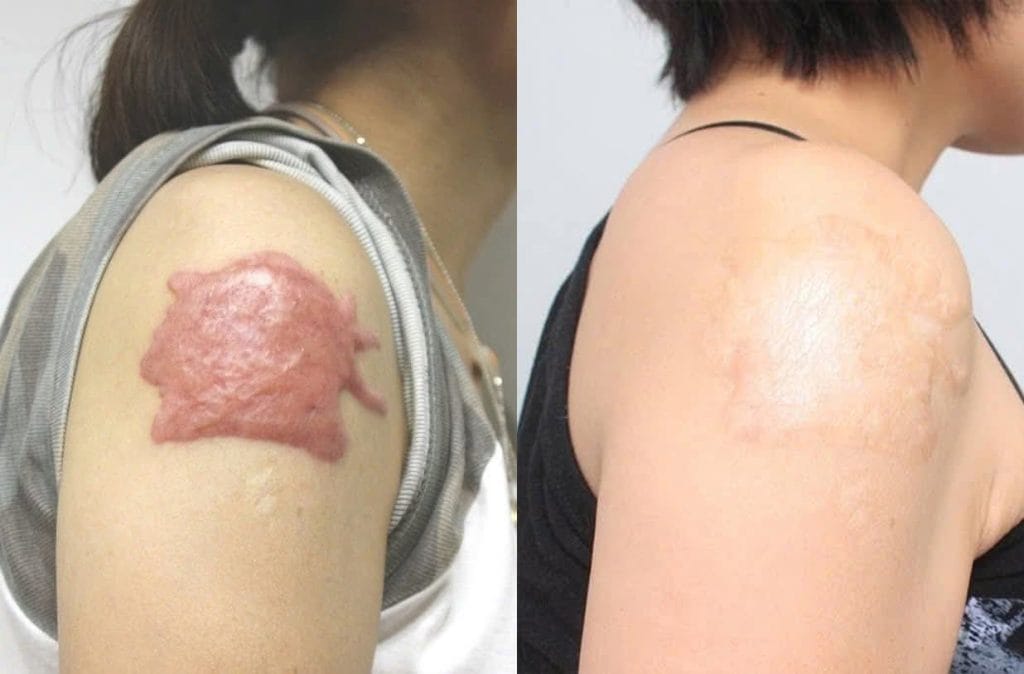
Clinical before-and-after results of deltoid keloid treatment using intralesional TAC/5-FU combined with vascular laser. Full flattening achieved with minimal recurrence risk.
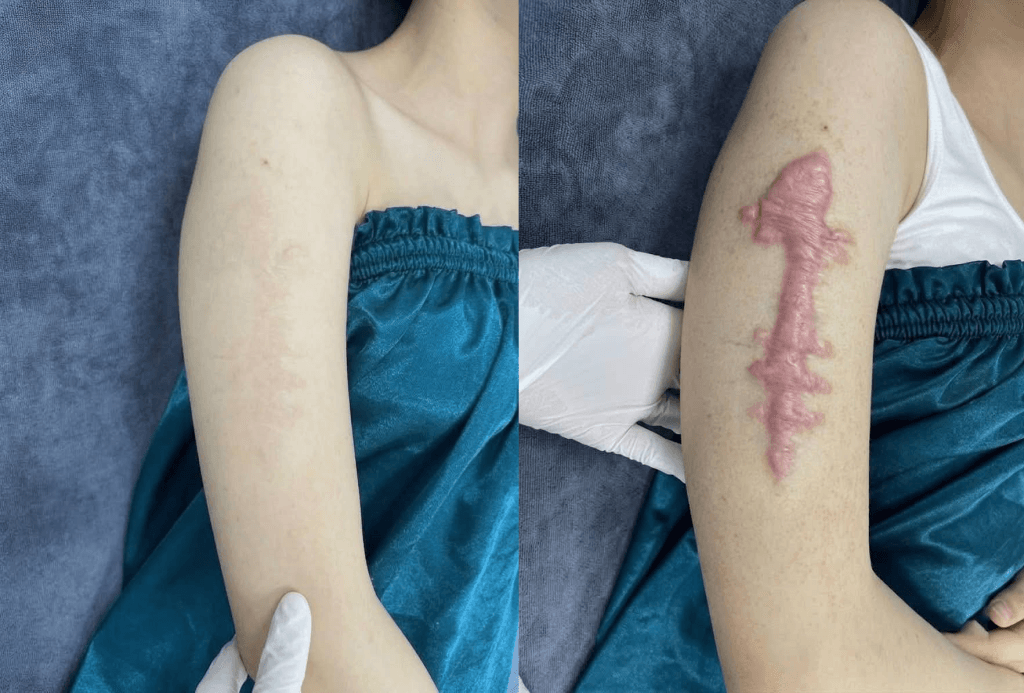
Severe upper-arm hypertrophic scar resolution following targeted multimodal scar revision, showing complete flattening and healthy skin repigmentation.
These clinical before-and-after cases illustrate the efficacy of comprehensive keloid scar treatment in vietnam, combining intralesional injections with vascular laser therapy to achieve full scar flattening.
Note: Individual clinical outcomes may vary depending on scar age, tissue biology, and adherence to post-care protocols. Published with patient consent.
Why is Medical Care More Affordable in Vietnam?
It is a common misconception that low costs equal low quality. The stark pricing differential in Vietnam is purely macroeconomic:
-
Lower Operational Overheads: Real estate, administrative costs, and medical malpractice insurance are significantly lower in Vietnam than in Western countries.
-
Favorable Currency Exchange: The purchasing power of the US Dollar, Euro, British Pound, or Australian Dollar is exceptionally high against the Vietnamese Dong (VND).
-
Government-Backed Medical Tourism: The Vietnamese government heavily subsidizes healthcare infrastructure and encourages international medical integration, keeping advanced treatments accessible.
For patients requiring extensive, long-term multi-session laser therapy, traveling to Vietnam often proves cheaper—even when factoring in luxury hotel stays and airfare—than paying for a single round of treatments back home.
4. Top-Tier Hospitals and Clinics for Keloid Treatment in Vietnam
When planning your trip, selecting the right medical institution is critical. Vietnam boasts two distinct categories of world-class facilities: specialized national public hospitals and JCI-accredited international hospitals.
A. National Specialized Public Hospitals (High Volumes & Leading Expertise)
Public hospitals in Vietnam process tens of thousands of scar revisions annually, granting their medical staff unparalleled clinical experience.
-
National Hospital of Dermatology (Hanoi): As the apex institute for dermatology in Vietnam, this hospital houses advanced clinical research laboratories and the most comprehensive laser department in the country. Their professors regularly contribute to international dermatological journals and are experts in treating large, highly refractory keloids.
-
Ho Chi Minh City Hospital of Dermatology (Ho Chi Minh City): The definitive center for skin health in Southern Vietnam. Equipped with state-of-the-art multi-wavelength lasers, their dedicated Scar Clinic specializes in combining fractional technology, vascular lasers, and intralesional therapies for international patients.
B. International & Corporate Hospitals (Premium Comfort & JCI Standards)
For patients who prioritize fluent English communication, luxury amenities, and seamless international insurance processing, these private institutions are premier choices.
-
FV Hospital (Ho Chi Minh City): Fully JCI-accredited, FV Hospital operates under French medical standards. Its plastic surgery and dermatology departments work in tandem to perform high-precision keloid excisions and post-operative care within a luxury hospital ecosystem.
-
Vinmec International General Hospital (Hanoi & Ho Chi Minh City): Part of Vietnam’s most prestigious corporate healthcare network, Vinmec features ultra-modern operating theaters and advanced aesthetic skin care departments utilizing advanced Western protocols.
-
Tam Anh General Hospital (Hanoi & Ho Chi Minh City): Renowned for its cutting-edge Dermatology and Skin Aesthetics unit, Tam Anh is highly sought after for its advanced multi-modality approach, successfully combining advanced 6D Laser protocols with tailored intralesional therapies.
5. Mapping Your Medical Tourism Journey: What to Expect
Because keloid management often requires multiple therapeutic steps, a successful trip relies on clear timelines and realistic expectations. The typical medical journey begins with your arrival and initial check-in at your hotel, followed immediately by a comprehensive clinical consultation on the second day. During this phase, the dermatologist performs precise scar mapping to analyze its vascular density and tissue thickness.
Depending on the clinical diagnosis, your treatment path will diverge into either a non-surgical or a surgical route.
For the non-surgical path, patients undergo specialized laser sessions (such as Pulsed Dye Laser or Fractional CO2) combined with target-specific intralesional injections. These sessions require no post-treatment downtime, meaning you are discharged immediately and can enjoy leisure activities or explore Vietnam’s world-class tourist destinations right away. However, keep in mind that optimal tissue flattening usually requires returning for follow-up sessions spaced 4 to 6 weeks apart.
For the surgical path, which is typically reserved for large or highly restrictive scars, surgeons perform precision intramarginal excision followed by immediate adjuvant prophylaxis to suppress immediate recurrence. If your treatment requires this surgical intervention, it is highly recommended to plan a stay of at least 7 to 14 days in the country. This buffer allows the clinical team to monitor the early phases of wound healing and safely remove the sutures before you clear your return flight.
Many international patients choose to maximize their medical itinerary by combining scar revision with other premium aesthetic procedures. To explore the full spectrum of high-end clinical upgrades available nationwide, check out our comprehensive analysis of cosmetic surgery in Vietnam.
6. Real Patient Outcomes and Medical Safety
Is it safe to seek keloid treatment in Vietnam? Absolutely. The medical devices deployed in Vietnam’s top-tier institutions carry stringent clearance from the US Food and Drug Administration (FDA) and the European CE. Furthermore, Vietnamese dermatologists operate under strict clinical safety guidelines established by global medical bodies such as the International Society for Dermatologic Surgery (ISDS).
When choosing Vietnam, you are not choosing a shortcut; you are choosing an efficient, high-tech, and economically smart gateway to premium skin reconstruction. The medical teams understand the structural vulnerability of darker skin types (Fitzpatrick scales III through VI) which are genetically more prone to keloids, ensuring that laser parameters are perfectly calibrated to prevent post-inflammatory hyperpigmentation (PIH).
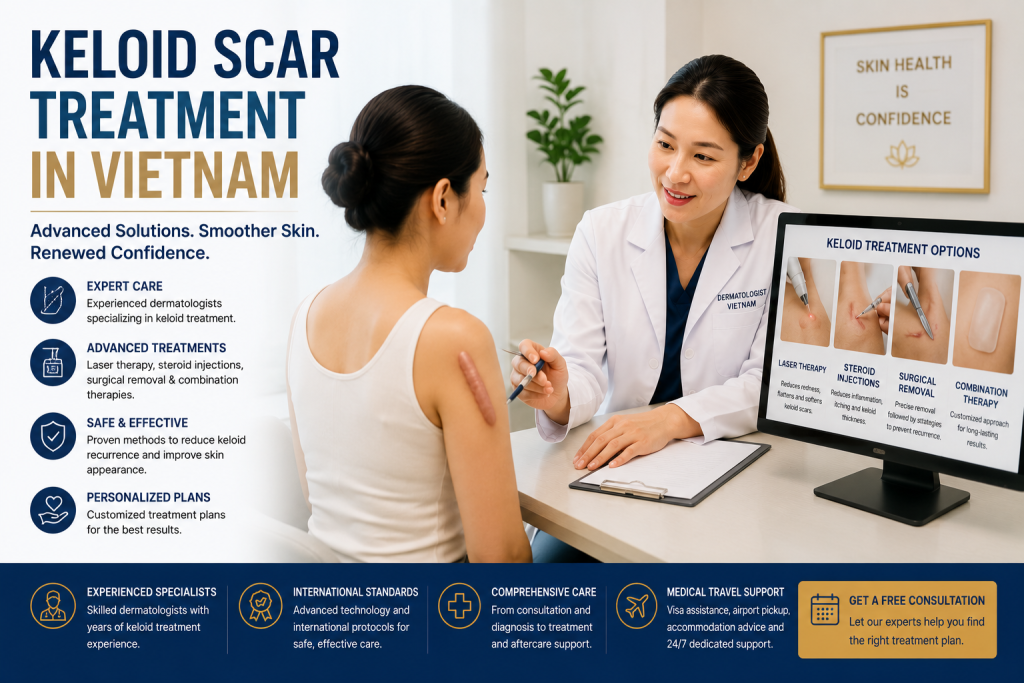
Keloid scar treatment in Vietnam offers international patients access to experienced dermatologists, advanced treatment options, personalized care plans, and medical travel support.
Conclusion: Take the First Step Toward Flawless Skin
Living with a keloid scar can erode your self-confidence and cause physical discomfort, but financial constraints or localized medical delays should not prevent you from receiving top-tier dermatological care. Keloid scar treatment in Vietnam offers the perfect alignment of medical specialization, advanced technology, rapid access, and massive economic savings.
Whether you require advanced combination injections, vascular laser therapy, or complex surgical reconstruction, Vietnam’s medical ecosystem stands ready to deliver outstanding clinical results.
Looking for Keloid Scar Treatment in Vietnam?
Get expert guidance on keloid scar treatment options, dermatology specialists, estimated costs, clinic selection, and personalized treatment planning in Vietnam.