
Root canal treatment in Vietnam has become a leading destination choice for international patients seeking high-precision endodontic care and painless restorative solutions at a fraction of Western prices. Severe tooth pain, heightened sensitivity to heat or cold, and localized swelling along the gums are primary indicators of deep dental decay or internal nerve infection. When harmful bacteria breach the protective enamel and dentin layers of a tooth, they reach the dental pulp—the innermost chamber housing vital blood vessels, connective tissues, and sensitive nerve endings. Left untreated, a pulpal infection can trigger excruciating pain, periapical abscesses, irreversible jawbone degradation, and eventual tooth loss.
Root canal therapy (also known as endodontic treatment) is a critical dental procedure designed to eliminate internal infection, disinfect the root canal system, seal the tooth cavity, and preserve your natural tooth structure for a lifetime.
For patients residing in Australia, the United States, the United Kingdom, Canada, and New Zealand, undergoing root canal therapy—especially when combined with a protective porcelain crown—demands a significant financial investment. Out-of-pocket expenses for endodontic care on a complex molar routinely range from $1,000 to over $2,500 USD per tooth. Because private dental insurance extras often impose restrictive annual coverage caps, many international patients postpone necessary care, risking total tooth loss.
Over the past decade, Vietnam has established itself as an international hub for advanced endodontics, modern rotary root canal techniques, micro-endodontics, and restorative ceramic crowns. By utilizing 3D Cone Beam Computed Tomography (CBCT), dental operating microscopes, nickel-titanium (NiTi) rotary files, and biocompatible obturation materials, top clinics in Ho Chi Minh City and Hanoi provide high-precision care at savings between 70% and 85% compared to Western rates.
This comprehensive guide delivers an exhaustive breakdown of receiving root canal treatment in Vietnam. From clinical indications, procedure protocols, and rotary technology to multi-currency cost comparisons, crown restorations, and international travel planning, here is everything you need to know before arranging your care.
Quick Navigation
What is Root Canal Treatment? Clinical Indications & Anatomy
Every natural tooth consists of two main anatomical structures: the visible crown above the gumline and the root anchored within the jawbone. Inside the crown and root lies the root canal space, which houses the dental pulp. While the pulp is vital during tooth development, a fully mature tooth can function indefinitely without it, relying on surrounding periodontal tissues for support.
According to clinical publications by the American Association of Endodontists (AAE), endodontic therapy has a clinical success rate exceeding 95% when performed under strict isolation, thorough chemo-mechanical debridement, and three-dimensional obturation.
Common Clinical Indications for Root Canal Therapy
-
Irreversible Pulpitis: Spontaneous, sharp, or throbbing pain caused by deep decay or recurrent decay beneath older fillings.
-
Prolonged Temperature Sensitivity: Lingering pain lasting long after exposure to hot or cold foods and liquids.
-
Periapical Abscess & Swelling: A localized infection at the root tip that forms a pus-filled pimple on the gums, causes facial swelling, or produces persistent bad breath.
-
Dental Trauma & Cracked Teeth: Physical impact from sports or accidents that fractures the tooth, exposing or severing the nerve blood supply.
-
Deep Mechanical Exposure: Necessary endodontic treatment prior to placing extensive restorative work when a tooth is severely worn or malaligned.
For a broader overview of how restorative care fits into international travel itineraries, consult our detailed guide on Dental Work in Vietnam: Costs & Popular Procedures Guide.
Advanced Endodontic Technology in Vietnam
Modern endodontics in Vietnam differs significantly from traditional manual methods. Leading dental centers in Ho Chi Minh City and Hanoi incorporate advanced endodontic technology to maximize clinical precision and patient comfort.
1. High-Magnification Dental Operating Microscopes (Micro-Endodontics)
Under traditional magnification, complex or tiny root canals (such as C-shaped canals or extra roots like the MB2 in upper molars) can be missed, leading to persistent infection. Using specialized dental microscopes providing up to 25x magnification, endodontists can visualize internal root anatomy, clear calcified canals, and remove fractured instruments safely.
2. 3D CBCT Imaging (Cone Beam Computed Tomography)
High-resolution 3D CBCT scans provide cross-sectional images of the jawbone and root structures, allowing specialists to evaluate root curvature, assess periapical bone loss, and map canal pathways down to the sub-millimeter level before starting treatment.
3. Rubber Dam Isolation
To maintain strict sterility, international-standard clinics isolate the target tooth using a medical-grade rubber dam. This prevents oral bacteria and saliva from entering the opened root canals while protecting the patient from swallowing irrigation solutions.
4. Apex Locators & Rotary NiTi Instrumentation
Electronic apex locators measure canal length with high accuracy, minimizing the need for multiple X-rays. Flexible nickel-titanium (NiTi) rotary files allow gentle, efficient cleaning and shaping of curved canals without altering their natural pathway.
Step-by-Step Procedure: What to Expect in Vietnam
Undergoing root canal treatment in Vietnam is efficient and comfortable, typically requiring 1 to 2 clinic visits over a stay of 3 to 5 days.
Visit 1: Diagnostics, Anesthesia, Debridement & Temporary Sealing
-
Clinical Examination & Digital X-Rays: The endodontist evaluates tooth mobility, conducts pulp vitality tests, and reviews CBCT scans.
-
Local Anesthesia Application: Computer-controlled or conventional local anesthesia completely numbs the tooth and surrounding gums for a painless experience.
-
Pulp Chamber Access & Cleaning: A small access opening is created through the biting surface of the tooth. Using NiTi rotary instruments and ultrasonic tips, the specialist removes inflamed pulp tissue.
-
Disinfection & Irrigation: Canals are flushed with sodium hypochlorite and EDTA solutions to eliminate bacteria, organic debris, and the smear layer.
-
Intracanal Medication: An antibacterial paste (such as calcium hydroxide) is placed inside the canals, and a temporary filling seals the access cavity to let the tissues settle for 24 to 48 hours.
Visit 2: Obturation & Core Build-Up
-
Canal Obturation: Once the tooth is symptom-free, the root canals are filled with gutta-percha—a natural biocompatible rubber material—and sealed with adhesive resin cement to prevent re-contamination.
-
Core Build-Up: A tooth-colored composite resin core (sometimes reinforced with a glass fiber post) fills the tooth cavity, recreating its structural foundation.
Restoring Endodontically Treated Teeth: Why Crowns Are Essential
A common misconception among patients is that a root canal completes the restoration. In reality, once the pulp is removed, a tooth loses its internal blood supply, becoming brittle over time. Posterior teeth (molars and premolars) absorb high biting forces during chewing; without external structural protection, an endodontically treated tooth faces a high risk of vertical root fracture.
To ensure long-term durability, dentists place custom ceramic restorations over the treated tooth:
-
Protective Crown Coverage: Placing custom dental crowns in Vietnam encases the remaining natural enamel, distributing biting forces evenly and preventing fractures.
-
Front Teeth Aesthetics: For anterior front teeth with minimal structural damage, high-translucency porcelain veneers in Vietnam can restore natural shade and shape while preserving sound enamel.
What If a Tooth Cannot Be Saved?
If a tooth exhibits a vertical root fracture, severe bone loss, or extensive decay below the gumline, endodontic treatment may not be predictable. In these cases, extraction followed by permanent tooth replacement offers a reliable path forward:
-
Single Tooth Replacement: A standalone single tooth implant in Vietnam or a comprehensive dental implants in Vietnam procedure replaces both root and crown without altering adjacent natural teeth.
-
Fixed Tooth-Supported Restoration: Traditional dental bridges in Vietnam offer a fixed alternative when neighboring teeth require crowns.
For patients presenting with advanced multi-tooth loss or severe jaw deterioration requiring extensive rehabilitation, specialized fixed implant protocols provide complete arch support:
In rare instances where severe jaw pain or bite misalignment stems from underlying skeletal structure rather than dental pulp issues alone, consult our clinical guide on Orthognathic Surgery in Vietnam.
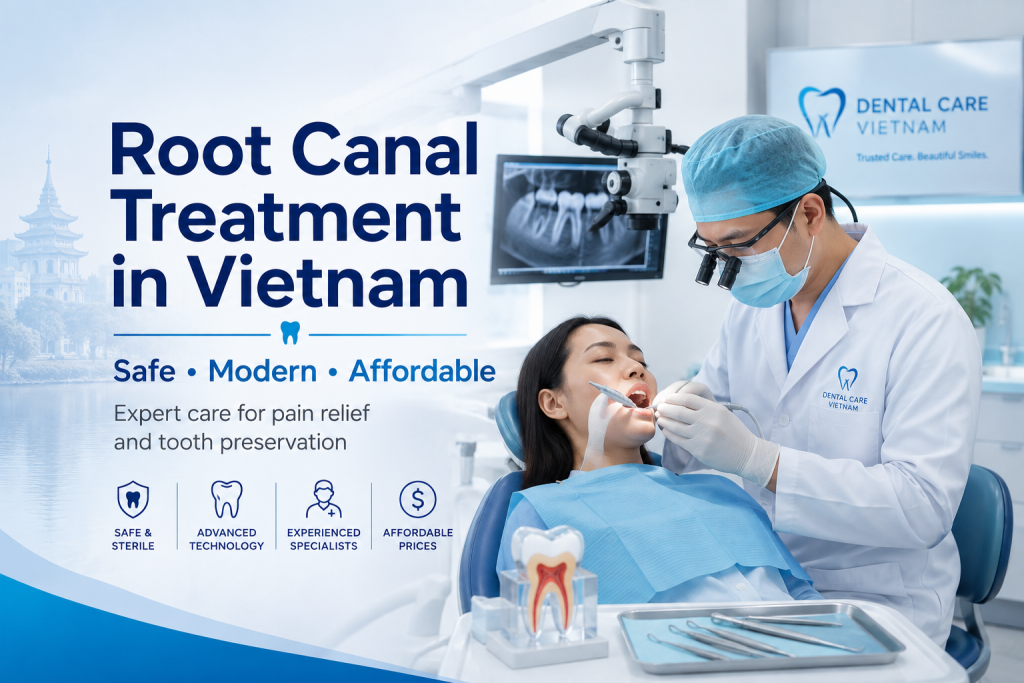
Root canal treatment in Vietnam offers international patients modern dental care, experienced dentists, and affordable treatment options.
Multi-Currency Cost Comparison: Vietnam vs. Global Destinations
Understanding treatment costs helps international travelers plan their medical travel budget effectively. The table below outlines average pricing for root canal treatment in Vietnam compared to major Western health markets. All prices are listed per tooth in USD, AUD, GBP, and CAD.
| Tooth Location / Treatment Type | Vietnam Cost (USD) | Australia (AUD) | United States (USD) | United Kingdom (GBP) | Canada (CAD) |
| Front Tooth (Single Canal) | $35 – $60 | $600 – $1,100 | $500 – $900 | £350 – £650 | $650 – $1,100 |
| Premolar Tooth (1–2 Canals) | $50 – $90 | $800 – $1,400 | $700 – $1,200 | £450 – £800 | $800 – $1,400 |
| Molar Tooth (3–4 Canals) | $80 – $140 | $1,200 – $2,200 | $1,000 – $1,800 | £600 – £1,200 | $1,200 – $2,100 |
| Micro-Endodontic Retreatment | $120 – $240 | $1,800 – $3,200 | $1,400 – $2,500 | £850 – £1,500 | $1,800 – $3,000 |
Note: Final costs depend on canal complexity, structural damage, and whether a protective ceramic crown is fitted during the same visit.
Safety Standards, Clinical Accreditation & Quality Assurance
Safety and clinical excellence are essential when undergoing endodontic care abroad. Accredited dental centers in Hanoi and Ho Chi Minh City operate under strict licensing from the Vietnamese Ministry of Health and follow infection control protocols established by the U.S. Centers for Disease Control and Prevention (CDC) and the World Health Organization (WHO).
Key clinical standards to confirm when choosing your provider include:
-
Endodontic Specialists (Endodontists): Ensure your procedure is performed by a dentist with specialized postgraduate training in endodontics and micro-surgical techniques.
-
Class-B Vacuum Autoclaves: All reusable metallic files, mirrors, and handpieces undergo multi-stage ultrasonic cleaning and high-temperature vacuum steam sterilization.
-
Single-Use Rotary Files: Leading clinics utilize single-patient NiTi rotary files to eliminate cross-contamination risks and prevent metal fatigue fractures.
-
Biocompatible Dental Materials: High-grade gutta-percha cones and resin sealers sourced from globally certified manufacturers (such as Dentsply Sirona or FKG Dentaire).
Travel Logistics: Planning Your Trip to Vietnam
Planning a medical travel trip to Vietnam for endodontic treatment is straightforward with proper preparation.
Flights & Airport Connections
-
From Australia & New Zealand: Daily direct flights connect Sydney, Melbourne, Brisbane, Perth, and Auckland with Tan Son Nhat International Airport (SGN) in Ho Chi Minh City and Noi Bai International Airport (HAN) in Hanoi via Vietnam Airlines, Jetstar, and VietJet Air (flight time: 8 to 9 hours).
-
From North America (US & Canada): One-stop connecting flights via major hubs (San Francisco, Taipei, Seoul, or Tokyo) reach Vietnam in 16 to 20 hours.
-
From Europe & the UK: Direct flights from London Heathrow, Paris CDG, and Frankfurt connect straight to Hanoi or Ho Chi Minh City via Vietnam Airlines (flight time: 12 to 13 hours).
Visa Regulations
-
Vietnamese E-Visa: Passport holders from Australia, the US, UK, Canada, New Zealand, and EU countries can easily apply online for an official 90-day multi-entry e-Visa, providing sufficient time for multi-stage dental visits.
Post-Treatment Aftercare & Recovery Guidelines
Following root canal therapy, proper aftercare supports smooth healing and long-term treatment success:
-
Manage Initial Tenderness: Mild sensitivity or jaw soreness around the injection site for 24 to 48 hours is normal and can be managed with over-the-counter pain relievers like ibuprofen or paracetamol.
-
Avoid Chewing on the Unrestored Tooth: Refrain from chewing hard or sticky foods on the treated side until a permanent core and crown are fitted, preventing tooth fractures.
-
Maintain Oral Hygiene: Continue gentle brushing and flossing around the treated area to keep surrounding gum tissue clean and healthy.
-
Attend Final Check-Ups: Ensure your endodontist takes a final digital radiograph to confirm proper root filling density before you head home.
Preserve Your Natural Teeth with Expert Care in Vietnam
Choosing root canal treatment in Vietnam offers a blend of 3D diagnostic imaging, microscopic precision, internationally trained endodontists, and exceptional cost savings. Whether you require single-visit root canal therapy or a comprehensive combination of endodontics and protective ceramic crowns, Vietnam provides a safe, highly affordable path toward saving your natural smile.
Medically reviewed by MSc, MD, Doctor Dang Tien Dat
Need Root Canal Treatment in Vietnam?
Book your consultation with MedtourVietnam’s trusted dental partners for safe and affordable endodontic care.