
A straight, well-aligned smile is fundamentally linked to optimal oral health, efficient chewing mechanics, and lasting personal confidence. However, severe malocclusion—such as crowded teeth, deep overbites, underbites, open bites, or unsightly gaps—can impair speech, accelerate enamel wear, and complicate daily dental hygiene.
For patients residing in Australia, the United States, the United Kingdom, Canada, and New Zealand, undergoing comprehensive orthodontic treatment often requires a major financial commitment. Out-of-pocket expenses for traditional braces or clear aligners routinely range from $5,000 to over $11,000 AUD/USD. Because national health schemes and private dental extras offer limited rebates for adult orthodontics, many patients put off getting necessary care.
Over the past decade, Vietnam has established itself as an international hub for advanced orthodontic care, digital clear aligner therapy, and complex orthognathic surgery. By leveraging state-of-the-art 3D intraoral optical scanning, AI-driven treatment planning, globally certified aligner materials, and bilingual orthodontists, international patients receive world-class care at savings between 60% and 70% compared to Western rates.
This comprehensive guide delivers an exhaustive breakdown of receiving orthodontics in Vietnam. From clinical indications, treatment options, and remote aligner protocols to multi-currency cost comparisons, safety standards, and global travel logistics, here is everything you need to know before starting your treatment.
Quick Navigation
What is Orthodontics? Clinical Purpose & Malocclusion Types
Orthodontics is a specialized branch of dentistry focused on diagnosing, preventing, and correcting misaligned teeth and jaw structures. Beyond aesthetic enhancements, proper orthodontic alignment ensures that biting forces are evenly distributed across the dental arch, protecting teeth from premature chipping and reducing stress on the temporomandibular joint (TMJ).
According to clinical resources published by the American Association of Orthodontists (AAO), correcting structural malocclusion reduces the long-term incidence of periodontal disease, tooth decay, and abnormal enamel wear.
Common Malocclusion Conditions Treated
-
Dental Crowding: Insufficient jaw space causes teeth to overlap, rotate, or grow crookedly, making thorough flossing difficult.
-
Spacing & Diastemas: Unwanted gaps between teeth resulting from missing teeth, tissue attachment issues, or jaw-to-tooth size discrepancies.
-
Overbite (Deep Bite): The upper front teeth overlap the lower front teeth excessively, sometimes causing the lower teeth to bite into the roof of the mouth.
-
Underbite (Class III Malocclusion): The lower front teeth protrude beyond the upper front teeth, often caused by an overdeveloped lower jaw or an underdeveloped upper jaw.
-
Open Bite: The front upper and lower teeth do not touch when the back teeth bite together, leaving an open space that impairs chewing and speech clarity.
-
Crossbite: One or more upper teeth bite inside the lower teeth, leading to uneven jaw growth and wear over time.
For a broader perspective on how orthodontic alignment fits into comprehensive medical travel, consult our detailed overview on Dental Work in Vietnam: Costs & Popular Procedures Guide.
Types of Orthodontic Treatments Available in Vietnam
Top dental centers in Ho Chi Minh City and Hanoi provide the full spectrum of modern orthodontic options, ranging from traditional fixed brackets to invisible removable aligner systems.
1. Clear Aligner Therapy (Invisalign & Certified Aligner Brands)
Clear aligners utilize a series of custom-milled, medical-grade thermoplastic trays to apply gentle, continuous pressure, moving teeth incrementally into their ideal positions.
-
Aesthetics: Near-invisible appearance, allowing adults and working professionals to undergo treatment discreetly.
-
Hygiene & Convenience: Removable trays make eating, brushing, and flossing straightforward.
-
Ideal for International Travelers: Using 3D digital treatment plans (ClinCheck), orthodontists can manufacture and issue multiple sets of aligners in advance, allowing overseas patients to progress through treatment at home while staying in touch via digital remote monitoring apps.
2. Traditional Metal & Self-Ligating Braces
High-grade stainless steel brackets are bonded to the front of the teeth and connected by thin archwires. Self-ligating systems (such as Damon Metal) use built-in sliding doors rather than elastic bands to hold archwires, reducing friction and tightening discomfort.
-
Best For: Complex orthodontic cases requiring precise, multi-directional tooth movement.
-
Best For Local Expatriates: Ideal for international residents or long-term travelers living in Vietnam who can attend monthly adjustments.
3. Aesthetic Ceramic Braces
Ceramic braces function like traditional metal braces but feature tooth-colored or clear sapphire brackets that blend in with natural enamel.
-
Best For: Patients needing the mechanical strength of fixed braces without the high visual contrast of metal brackets.
Combining Orthodontics with Complex Restorative Dentistry & Surgery
Achieving a healthy, functional smile often requires a multi-disciplinary approach. In complex cases, orthodontic alignment is paired with surgical or restorative care to resolve structural issues.
1. Pre-Surgical Orthodontics & Jaw Reshaping
When severe malocclusion stems from underlying skeletal jaw discrepancies rather than misplaced teeth alone, braces or aligners are used to align the teeth within each arch prior to surgical correction.
Once the teeth are properly positioned, an oral surgeon repositions the upper or lower jawbones. To learn about combined surgical and orthodontic care, explore our guide on Orthognathic Surgery in Vietnam.
2. Post-Orthodontic Aesthetic Restorations
After completing alignment therapy, patients often choose to refine the shade, shape, or proportions of their natural teeth to complete their smile transformation.
-
For teeth with chipped edges, uneven lengths, or intrinsic staining, read our detailed guide on Porcelain Veneers in Vietnam.
-
For structurally compromised or heavily filled teeth, review our manual on Dental Crowns in Vietnam.
3. Replacing Missing Teeth Following Orthodontics
In cases where long-term tooth loss has caused adjacent teeth to tilt into empty spaces, orthodontic treatment can upright those teeth and recreate proper spacing for permanent root replacements or bridge restorations.
For advanced cases involving extensive tooth loss where full-arch rehabilitation is necessary, specialized fixed implant systems provide stable foundations:
Multi-Currency Cost Comparison: Vietnam vs. Global Markets
The major driver for international dental travel is the substantial cost savings available without compromising treatment quality or clinical expertise. The table below outlines average costs for comprehensive orthodontic treatments across major destination markets.
| Orthodontic Treatment | Vietnam Cost (USD) | Australia (AUD) | United States (USD) | United Kingdom (GBP) | Canada (CAD) |
| Metal Braces (Full Arch) | $1,200 – $2,000 | $5,000 – $7,500 | $4,500 – $7,000 | £3,200 – £5,000 | $5,500 – $8,000 |
| Ceramic Braces | $1,800 – $2,800 | $6,500 – $9,000 | $5,500 – $8,500 | £4,000 – £6,200 | $7,000 – $10,000 |
| Invisalign / Clear Aligners | $3,000 – $4,500 | $7,500 – $11,000 | $6,000 – $9,000 | £4,500 – £7,000 | $7,500 – $11,500 |
Note: All prices represent estimated total treatment packages including initial 3D scans, diagnostic planning, aligner manufacturing, and initial retention sets.
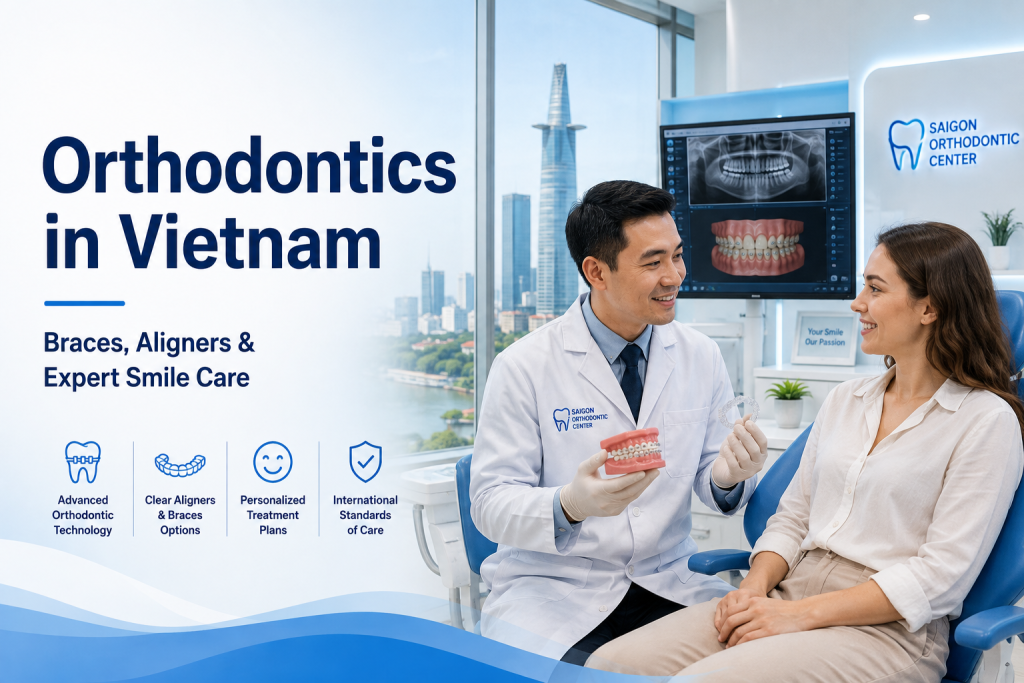
Orthodontics in Vietnam offers international patients affordable braces and clear aligner treatments with modern digital planning, experienced orthodontists, and high-quality dental care.
The Remote Aligner Protocol for International Patients
A common question among overseas visitors is: “How can I undergo a 12-to-18-month aligner process if I live in Australia, North America, or Europe?”
Modern digital dentistry makes remote treatment straightforward through a structured 3-Step Global Protocol:
Step 1: Initial Visit, 3D Scanning & Diagnostic Setup (3 to 5 Days in Vietnam)
-
Intraoral 3D Optical Scanning: Using advanced optical scanners (such as 3Shape Trios or iTero 5D), your orthodontist captures digital impressions of your teeth in minutes.
-
CBCT Radiographic Analysis: 3D X-rays evaluate root angles, jawbone density, and joint position.
-
3D ClinCheck Simulation: Using AI-assisted planning software, the orthodontist designs your complete tooth movement timeline on-screen, showing your projected final smile before treatment begins.
Step 2: Aligner Manufacturing & Issuance
Once you approve your digital simulation, your complete set of custom aligner trays is manufactured using precision 3D printing and milling systems. During your final clinic visit, the orthodontist fits your initial aligners, bonds tooth-colored composite attachments if required, and hands over your complete series of clear aligners in protective travel cases.
Step 3: Remote Progress Tracking via Digital Dentistry Apps
Back in your home country, you change to a new aligner set every 10 to 14 days as instructed. Using smartphone-based remote monitoring applications (such as DentalMonitoring), you upload high-resolution photos of your teeth every few weeks. Your orthodontist in Vietnam reviews your progress virtually, ensuring your teeth are tracking according to plan without requiring frequent long-distance flights.
Safety Standards, Clinical Credentials & Quality Assurance
Safety and clinical excellence are paramount when receiving orthodontic care abroad. Professional dental clinics in Hanoi and Ho Chi Minh City operate under strict oversight by the Vietnamese Ministry of Health, adhering to infection control guidelines established by the U.S. Centers for Disease Control and Prevention (CDC) and the World Health Organization (WHO).
Key quality indicators to verify when selecting your clinic include:
-
Certified Specialist Orthodontists: Ensure your treating doctor holds postgraduate degrees in Orthodontics (Master of Science in Orthodontics or Orthodontic Specialty Board Certification) and official Invisalign provider credentials.
-
Autoclave Sterilization Systems: Class-B vacuum sterilizers process all reusable dental instruments and handpieces between visits.
-
Traceable Aligner Materials: Authentic clear aligner materials manufactured from medical-grade, BPA-free polyurethane polymers (such as SmartTrack material).
-
Clear Retainer Packages: Professional clinics supply custom-fitted Vivera or vacuum-formed clear retainers at the end of treatment to maintain your new smile long-term.
Global Travel Logistics: Planning Your Trip to Vietnam
Organizing an orthodontic trip to Vietnam is simple with advance planning.
Flight Destinations & Travel Connections
-
From Australia & New Zealand: Direct flights operate daily from Sydney, Melbourne, Brisbane, Perth, and Auckland to Tan Son Nhat International Airport (SGN) in Ho Chi Minh City and Noi Bai International Airport (HAN) in Hanoi via Vietnam Airlines, Jetstar, and VietJet Air (flight time: 8 to 9 hours).
-
From North America (US & Canada): One-stop connecting flights via major Asian hubs (San Francisco, Taipei, Seoul, or Tokyo) reach Vietnam in 16 to 20 hours.
-
From Europe & the United Kingdom: Direct flights from London Heathrow, Paris CDG, and Frankfurt connect straight to Hanoi or Ho Chi Minh City via Vietnam Airlines (flight time: 12 to 13 hours).
Visa Requirements
-
Vietnamese E-Visa: Citizens of Australia, the US, UK, Canada, New Zealand, and EU nations can easily apply online for an official 90-day multi-entry e-Visa, providing ample time for initial setup visits.
Long-Term Maintenance: Retention Protocols
Achieving a straight smile is a two-part process; keeping it straight requires consistent retention habits. Without proper retention, teeth naturally tend to shift back toward their original positions over time—a process known as orthodontic relapse.
Follow these long-term maintenance guidelines once active treatment is complete:
-
Wear Your Retainers as Directed: Wear your custom clear retainers full-time (20 to 22 hours per day) for the first 3 to 6 months post-treatment, transitioning to night-only wear thereafter.
-
Consider Fixed Bonded Retainers: Ask your orthodontist to place a thin, stainless steel wire bonded behind your front lower teeth for discreet, permanent alignment support.
-
Maintain Meticulous Hygiene: Clean removable retainers daily using lukewarm water and gentle cleansing tablets to prevent bacterial build-up.
-
Schedule Regular Hygiene Visits: Visit a local dental hygienist in your home country every six months for routine professional cleanings and oral health check-ups.
Transform Your Smile with World-Class Orthodontics in Vietnam
Choosing orthodontics in Vietnam offers an ideal blend of 3D digital planning, internationally accredited specialists, convenient remote aligner monitoring, and substantial financial savings. Whether you require clear aligners for minor cosmetic adjustments or orthodontic preparation for orthognathic surgery, Vietnam provides a safe, modern, and cost-effective path to a healthy, confident smile.
Medically reviewed by MSc, MD, Doctor Dang Tien Dat
Need Braces or Orthodontic Treatment in Vietnam?
Share your photos or X-rays and we’ll help you choose a trusted orthodontic clinic in Vietnam.