
A tracheostomy is a critical, often life-saving medical procedure that creates a direct airway through an opening in the neck into the trachea (windpipe). It is commonly performed in patients who have difficulty breathing due to airway obstruction, prolonged mechanical ventilation, severe trauma, or neurological conditions.
In recent years, Vietnam has emerged as a reliable destination for advanced airway management and tracheostomy care, offering modern hospitals, highly trained ENT and critical care specialists, and significantly lower costs compared to many Western countries. This article provides a comprehensive overview of tracheostomy in Vietnam, including indications, procedure types, recovery, risks, costs, and top hospitals.
Quick Navigation
What Is a Tracheostomy?
A tracheostomy is a surgical or percutaneous procedure in which a doctor creates an opening (stoma) in the front of the neck into the trachea and inserts a tracheostomy tube. This tube allows air to bypass the mouth and nose and enter the lungs directly.
The procedure may be:
-
Temporary, with tube removal once breathing improves
-
Long-term or permanent, in patients with irreversible airway or neurological conditions
When Is a Tracheostomy Needed?
Tracheostomy is typically indicated in the following situations:
1. Prolonged Mechanical Ventilation
Patients who require ventilation for more than 7–14 days may benefit from a tracheostomy to reduce complications associated with long-term endotracheal intubation.
2. Upper Airway Obstruction
-
Head and neck tumors
-
Severe infections or swelling
-
Trauma to the face or neck
3. Neurological or Neuromuscular Disorders
Conditions such as stroke, spinal cord injury, ALS, or advanced Parkinson’s disease may impair breathing or airway protection.
4. Post-Surgical Airway Protection
After major head and neck surgeries, a tracheostomy may be used to secure the airway during recovery.
Types of Tracheostomy Procedures in Vietnam
Surgical Tracheostomy
-
Performed in an operating room
-
Involves a formal incision and direct visualization of the trachea
-
Preferred in complex cases or abnormal anatomy
Percutaneous Dilatational Tracheostomy (PDT)
-
Commonly performed in the ICU
-
Minimally invasive
-
Faster recovery and smaller incision
-
Widely used in Vietnamese intensive care units
Vietnamese hospitals routinely perform both techniques, following international guidelines and protocols.
The Tracheostomy Procedure: Step by Step
-
Pre-procedure assessment (airway anatomy, imaging if needed)
-
Local or general anesthesia
-
Neck incision and tracheal access
-
Insertion of tracheostomy tube
-
Securing the tube and confirming airflow
-
Post-procedure monitoring in ICU or ward
The procedure usually takes 20–45 minutes, depending on complexity.
Recovery and Post-Tracheostomy Care
Immediate Recovery
-
Close monitoring of oxygen levels and breathing
-
Regular suctioning to remove secretions
-
Tube care and stoma cleaning
Speech and Swallowing
-
Speech may be limited initially
-
Speaking valves can help restore voice
-
Swallowing therapy may be needed in some patients
Tube Removal (Decannulation)
If the tracheostomy is temporary, doctors will assess:
-
Ability to breathe independently
-
Effective cough and secretion clearance
-
Safe swallowing
Once criteria are met, the tube is removed and the opening usually closes naturally.
Potential Risks and Complications
While generally safe when performed by experienced teams, tracheostomy may involve risks such as:
-
Bleeding
-
Infection at the stoma site
-
Tube blockage by secretions
-
Tracheal irritation or narrowing (rare)
Vietnamese hospitals emphasize strict infection control and standardized care protocols, significantly reducing complication rates.
Advantages of Having a Tracheostomy in Vietnam
1. High Medical Expertise
Vietnam has well-trained ENT surgeons, anesthesiologists, and intensivists, many of whom have international training.
2. Modern Facilities
Leading hospitals are equipped with:
-
Advanced ICUs
-
Bronchoscopy and imaging systems
-
Multidisciplinary airway teams
3. Cost-Effective Treatment
Tracheostomy in Vietnam costs 40–70% less than in the US, UK, or Australia, without compromising quality.
4. Comprehensive Patient Support
International patients often receive:
-
English-speaking medical coordinators
-
Assistance with medical records
-
Post-procedure care planning
Cost of Tracheostomy in Vietnam
The total cost depends on the hospital, technique, ICU stay, and underlying condition.
Estimated costs (USD):
-
Tracheostomy procedure: $800 – $2,000
-
ICU stay (per day): $150 – $400
-
Tracheostomy tube & consumables: often included
These prices are significantly lower than in many developed countries, where total costs may exceed $10,000 – $20,000.
Top Hospitals for Tracheostomy in Vietnam
Vietnam has several reputable hospitals capable of performing tracheostomy safely and effectively, including:
-
Vinmec International Hospital – Modern private healthcare system with international standards
-
Bach Mai Hospital – One of Vietnam’s largest and most experienced tertiary hospitals
-
108 Military Central Hospital – Renowned for critical care and complex surgical cases
-
Cho Ray Hospital – Leading referral hospital in southern Vietnam
-
FV Hospital – JCI-accredited private hospital with strong ICU services
These hospitals regularly manage both local and international patients requiring advanced airway procedures.
Tracheostomy for International Patients
Vietnam is increasingly chosen by international patients for:
-
Emergency airway management
-
Long-term ventilation care
-
Post-stroke or neurological rehabilitation
Medical tourism facilitators often assist with:
-
Hospital selection
-
Cost estimates
-
Medical visa guidance
-
Communication with doctors
Tracheostomy vs. Endotracheal Intubation
| Feature | Tracheostomy | Endotracheal Tube |
|---|---|---|
| Duration | Long-term | Short-term |
| Comfort | Higher | Lower |
| Speech | Possible with valve | Not possible |
| Airway damage | Lower | Higher if prolonged |
For patients requiring prolonged ventilation, tracheostomy is generally safer and more comfortable.
Long-Term Outlook and Quality of Life
Many patients with tracheostomies:
-
Regain the ability to speak
-
Resume oral feeding
-
Return home with proper training and support
With appropriate care, a tracheostomy can significantly improve survival, comfort, and quality of life.
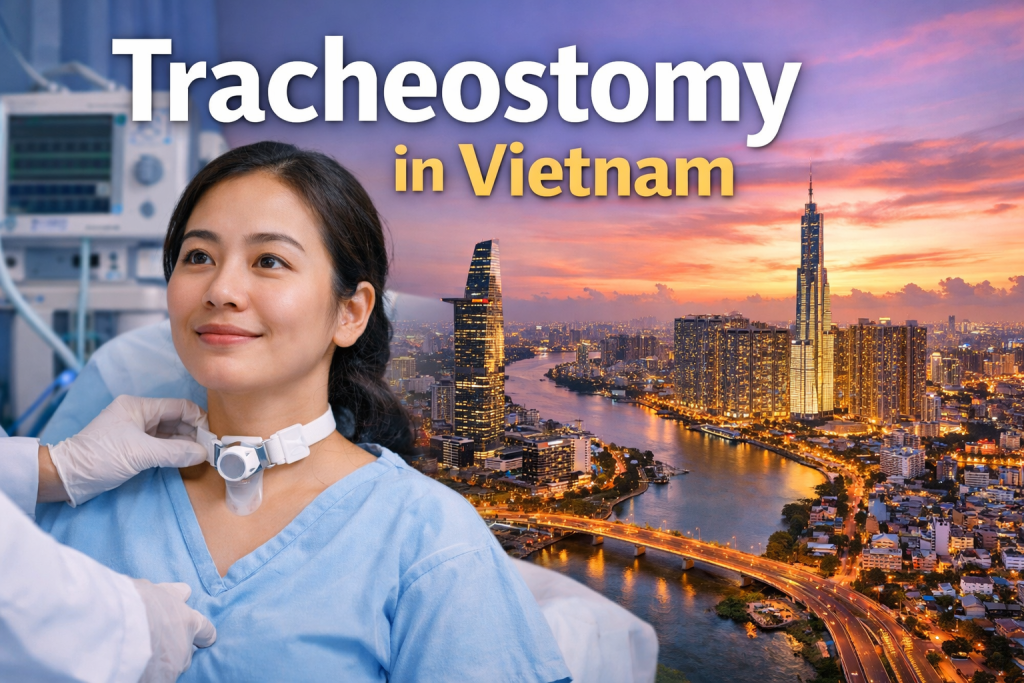
Tracheostomy in Vietnam – advanced airway management delivered by experienced specialists in modern hospitals at affordable cost.
Is Tracheostomy Safe in Vietnam?
Yes. When performed in accredited hospitals by experienced specialists, tracheostomy in Vietnam meets international safety standards. Outcomes are comparable to those in high-income countries, especially in major urban hospitals.
Conclusion
Tracheostomy in Vietnam is a safe, effective, and cost-efficient option for patients requiring advanced airway management. With modern hospitals, skilled specialists, and affordable pricing, Vietnam continues to strengthen its position as a trusted medical destination for both local and international patients.
Whether needed as a temporary life-saving measure or a long-term breathing solution, tracheostomy procedures in Vietnam are supported by comprehensive care systems that prioritize patient safety and recovery.