
Quick Navigation
1. Introduction: Why Consider Polyp Removal in Vietnam?
Polyps are abnormal tissue growths that can develop along the lining of various organs inside the body, including the colon, stomach, uterus, bladder, and nasal cavity. While many polyps are benign (non-cancerous) in their early stages, certain types—particularly gastrointestinal adenomatous polyps—possess a well-documented risk of developing into malignant tumors over time. Consequently, timely detection and removal (polypectomy) serve as one of the most effective preventive health measures in modern medicine.
In recent years, Vietnam has rapidly emerged as a premier hub for high-quality, cost-effective medical tourism in Southeast Asia. International patients from North America, Europe, Australia, and neighboring Asian countries are increasingly traveling for high-end diagnostic care and minimally invasive surgical interventions. Getting a polyp removal in Vietnam provides patients with access to state-of-the-art medical technology, board-certified, foreign-trained specialists, and international-standard JCI (Joint Commission International) accredited facilities—all at a fraction of the cost found in Western nations.
Whether you require a preventive gastrointestinal screening, an endoscopic colon polyp excision, or a specialized gynecological intervention, understanding the procedure, cost structures, and hospital selection in Vietnam is crucial for making an informed healthcare decision. This comprehensive guide details everything you need to know about undergoing a safe, modern, and affordable general surgery in Vietnam and specialized endoscopic polypectomy.
2. Understanding Polyps: Types, Risks, and Indications
To understand the importance of polyp removal, it is essential to first understand how polyps form, where they occur, and why clinical guidelines strongly advocate for their prompt excision.
What Is a Polyp?
A polyp is a small cluster of cells that grows on the mucous membrane lining of an organ. Polyps can be pedunculated (attached to the organ wall by a narrow stalk, resembling a small mushroom) or sessile (flat and attached directly to the tissue lining without a stalk). Although polyps can occur at almost any age, they are significantly more common in adults aged 40 and older.
Common Types of Polyps Requiring Excision
-
Gastrointestinal Polyps (Colon & Stomach): Colorectal polyps are the most frequently detected polyps in adult populations. According to the American Cancer Society, identifying and removing adenomatous colon polyps during routine endoscopic screening directly prevents the onset of colorectal cancer, which ranks among the leading causes of cancer-related deaths worldwide.
-
Uterine and Cervical Polyps: Located in the lining of the uterus (endometrium) or cervix, these polyps can cause irregular menstrual bleeding, postmenopausal bleeding, or fertility issues. Removal is routinely recommended to alleviate symptoms and rule out atypical hyperplasia or malignancy.
-
Nasal and Sinus Polyps: Non-cancerous growths inside the nasal passages or sinuses resulting from chronic inflammation, asthma, or allergies. Large nasal polyps can obstruct breathing, impair sense of smell, and cause recurrent sinus infections.
-
Gallbladder and Bladder Polyps: Lesions inside the gallbladder or urinary bladder that require careful diagnostic evaluation and surgical removal if they exceed specific size thresholds (typically >10 mm) due to elevated neoplastic risk.
Medical Insight: The Adenoma-to-Carcinoma Sequence
Most colorectal cancers originate from benign adenomatous polyps over a period of 5 to 15 years. This slow progression offers a vital “window of opportunity.” By performing an endoscopic polypectomy in Vietnam during routine preventive care, physicians can detect and eliminate these pre-cancerous growths long before they pose a threat to life.
3. Common Polyp Removal (Polypectomy) Procedures Available in Vietnam
Vietnam’s healthcare system features modern diagnostic equipment and surgical suites capable of executing advanced, minimally invasive polypectomy techniques. Depending on the size, location, and morphologic classification of the polyp, several therapeutic approaches are utilized:
A. Endoscopic Polypectomy (Gastrointestinal)
Endoscopic removal is the gold-standard method for removing polyps in the stomach, esophagus, and colon. Because the procedure is performed internally through the natural digestive tract, no external abdominal incisions are required.
-
Cold Snare Polypectomy: Ideal for small polyps (typically under 5 mm). A thin wire loop (snare) is passed through the endoscope to mechanically encircle and cut the polyp without thermal energy, minimizing post-procedural bleeding risks.
-
Hot Snare Polypectomy (Electrocautery): Used for larger or stalked polyps. The wire snare delivers an electrical current that simultaneously cuts through the tissue and cauterizes surrounding blood vessels to prevent hemorrhage.
-
Endoscopic Mucosal Resection (EMR): A specialized technique for larger or flat (sessile) polyps. Fluid is injected beneath the polyp to lift it away from deeper muscle layers before electrocautery resection, ensuring a safe and complete removal.
-
Endoscopic Submucosal Dissection (ESD): An advanced, highly skilled procedure used for giant or complex pre-cancerous lesions, allowing en-bloc (single-piece) removal of deep mucosal growths that previously required full open surgery.
For patients requiring lower gastrointestinal evaluation, pairing your procedure with a dedicated colonoscopy in Vietnam ensures comprehensive screening and instant therapeutic intervention within a single clinical session.
B. Hysteroscopic Polypectomy (Gynecological)
For uterine polyps, top-tier Vietnamese hospitals utilize hysteroscopy—inserting a thin, lighted telescope (hysteroscope) through the vagina and cervix into the uterine cavity. Micro-instruments or a specialized resectoscope are then used to detach and extract the polyps cleanly, preserving fertility and uterine integrity.
C. Endoscopic Sinus Surgery (Nasal Polypectomy)
Nasal polyps that do not respond to medical therapies are removed using Functional Endoscopic Sinus Surgery (FESS). Surgeons utilize high-definition cameras and micro-debriders to clear obstructed sinus pathways with minimal tissue trauma and fast postoperative recovery.
4. Why Vietnam Is a Leading Destination for Medical Tourism and Surgery
Vietnam has become one of Asia’s most attractive medical tourism destinations, offering world-class clinical expertise, modern infrastructure, and remarkable affordability. Key advantages for international patients include:
1. High Concentration of Internationally Trained Doctors
Senior medical specialists and gastroenterologists at top Vietnamese hospitals frequently undergo advanced fellowship training in countries with renowned healthcare systems, such as France, Japan, South Korea, Australia, and the United States. Many physicians hold active memberships in international organizations like the World Gastroenterology Organisation (WGO) and the American College of Gastroenterology (ACG).
2. State-of-the-Art Technology & JCI Accreditation
Leading private hospital networks in Vietnam—including Vinmec International Hospital, FV Hospital, and City International Hospital—are accredited by the Joint Commission International (JCI). These facilities feature cutting-edge diagnostic suites equipped with Olympus EVIS X1 and NBI (Narrow Band Imaging) endoscopes, enabling ultra-high-definition mucosal visualization and early dysplasia detection.
3. No Waitlists and Streamlined Patient Booking
In many Western nations or public healthcare systems (such as the UK, Canada, or Australia), patients facing non-emergency screening or elective polyp removal can encounter wait times ranging from several months to over a year. In Vietnam, international medical tourists can book appointments, undergo consultations, complete diagnostic workups, and receive therapeutic procedures within 24 to 48 hours of arrival.
4. Exceptional Medical Tourism Packages
Many patients elect to combine their procedural care with a broader health check-up. Integrating your procedure into a comprehensive health check-up in Vietnam allows you to undergo complete cardiovascular, metabolic, imaging, and endoscopic evaluations in a single executive package while exploring Vietnam’s rich cultural heritage, scenic landscapes, and renowned hospitality.
5. Cost Comparison: Polyp Removal in Vietnam vs. Western & Regional Countries
Financial savings remain one of the primary drivers for international patients seeking surgical and endoscopic care in Vietnam. Healthcare costs in Vietnam are typically 60% to 80% lower than in the United States, Europe, or Australia, without compromising on clinical quality or safety protocols.
Below is an estimated cost comparison for diagnostic colonoscopy with endoscopic polyp removal (including conscious sedation/anesthesia, facility fees, and specialist consultation):
| Country / Region | Estimated Cost (USD) | Average Patient Savings in Vietnam |
| United States | $3,500 – $7,500+ | 75% – 85% |
| Australia / UK (Private) | $2,500 – $4,800 | 65% – 75% |
| Singapore | $2,200 – $4,000 | 60% – 70% |
| Thailand | $1,200 – $2,200 | 35% – 50% |
| Vietnam (Top Int’l Hospitals) | $500 – $1,200 | — |
Note: Pricing varies depending on the number and size of polyps removed, histopathology requirements, type of anesthesia utilized, and hospital selection. Even with luxury accommodations and flights included, international patients routinely save thousands of dollars overall.
6. Leading Hospitals and International Facilities for Polypectomy in Vietnam
Selecting the right healthcare facility is paramount to ensuring clinical safety, accurate histopathological diagnosis, and comfortable patient experience. Vietnam boasts several top-tier hospitals catered to international medical tourists:
1. Vinmec International Hospital Network (Hanoi, Ho Chi Minh City, Da Nang, Phu Quoc)
Vinmec is Vietnam’s premier JCI-accredited hospital system. Featuring dedicated Centers of Gastroenterology and Hepatology, Vinmec utilizes state-of-the-art endoscopic suites, AI-assisted lesion detection technology, and full multi-lingual medical translation support for English, French, Chinese, and Japanese speakers.
2. FV Hospital (Ho Chi Minh City)
Located in District 7, Ho Chi Minh City, FV Hospital is a JCI-accredited facility founded by a group of French physicians. Its Gastroenterology & Hepatology Department excels in advanced therapeutic endoscopies, including EMR and ESD for complex colorectal polyps, adhering strictly to European medical protocols.
3. City International Hospital – CIH (Ho Chi Minh City)
Situated in the High-Tech Medical Park, CIH offers top-tier surgical and diagnostic services. With highly experienced medical staff and modern recovery rooms, it is a favored choice for international patients seeking specialized general surgery and endoscopic procedures.
4. Cho Ray Hospital & Bach Mai Hospital (Public Tertiary Centers)
For highly complex or high-risk medical cases, the leading public tertiary hospitals in Ho Chi Minh City (Cho Ray) and Hanoi (Bach Mai) house the country’s top clinical experts and academic department heads, equipped with international-grade VIP wards for foreign patients.
7. Step-by-Step Patient Journey: From Screening to Recovery
Undergoing medical treatment abroad can feel daunting. Here is a clear breakdown of what international patients can expect during their polypectomy in Vietnam:
-
Initial Online Consultation & Document Review: Prior to traveling, patients submit their medical history, previous report findings, and symptoms to medical facilitators or hospital international desks for preliminary evaluation and price quotation.
-
Pre-Procedure Consultation & Physical Exam: Upon arriving in Vietnam, you will meet your attending specialist for an in-person physical assessment, blood tests, ECG, and pre-anesthesia evaluation.
-
Bowel Preparation (For Colon Polyp Removal): For gastrointestinal polyps, proper bowel cleansing is essential. The hospital provides specialized oral laxative solutions and clear guidelines to ensure full visualization of the mucosal lining.
-
The Procedure (Day of Treatment): The procedure is typically performed under conscious sedation or intravenous MAC (Monitored Anesthesia Care) to ensure complete painlessness and comfort. The specialist introduces the endoscope, inspects the organ lining, removes detected polyps using specialized instruments, and retrieves samples for biopsy. The procedure itself usually takes 20 to 45 minutes.
-
Histopathology & Biopsy Analysis: Every excised polyp is sent to an accredited pathology laboratory to determine whether it is hyperplastic, adenomatous, or malignant. Final histopathology reports are typically available within 3 to 5 business days.
-
Post-Procedure Recovery & Discharge: Most endoscopic polyp removals are performed on an outpatient (day-surgery) basis. Patients rest in a private recovery bay for 1 to 2 hours until the sedative wears off, after which they can return to their hotel.
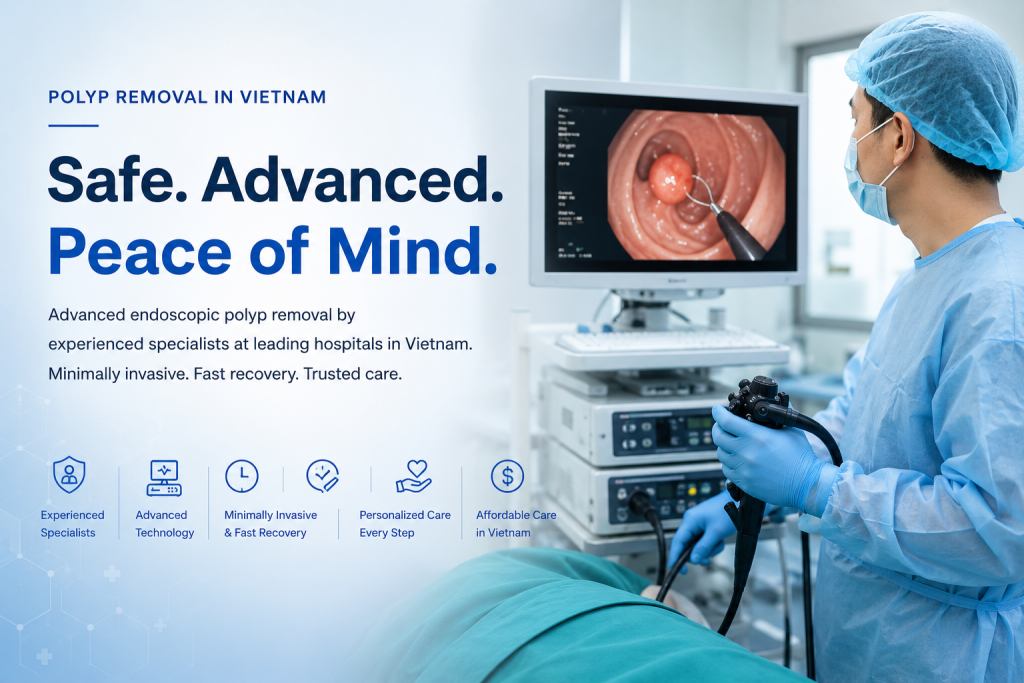
Polyp removal in Vietnam with experienced specialists, advanced endoscopy technology, minimally invasive treatment, and fast recovery.
8. Preparing for Your Polyp Removal Procedure & Travel Tips
To ensure a smooth, worry-free medical trip to Vietnam, keep these essential preparation tips in mind:
Medical & Diet Preparation
-
Medication Adjustment: Inform your physician about any blood thinners (e.g., Aspirin, Warfarin, Plavix, Xarelto) or NSAIDs you are currently taking. These medications usually need to be paused 3 to 7 days prior to the procedure under medical guidance to mitigate bleeding risks during polyp resection.
-
Dietary Adjustments: For colon polyps, transition to a low-fiber diet (avoiding seeds, nuts, corn, raw vegetables, and red dyes) 3 days prior to your screening, followed by clear liquids on the day of bowel preparation.
Travel & Logistics Recommendations
-
Visa Requirements: Vietnam offers e-Visas for citizens of over 80 countries, valid for up to 90 days with single or multiple entry options. Ensure your passport has at least 6 months of validity remaining.
-
Recommended Stay Duration: For standard endoscopic polyp removal, a total stay of 4 to 7 days in Vietnam is recommended. This allows adequate time for pre-op exams, the procedure itself, relaxing post-op recovery, receiving histopathology results, and enjoying light sightseeing.
-
Travel Insurance: Obtain comprehensive travel insurance that covers elective medical procedures abroad or emergency medical coverage.
9. Frequently Asked Questions (FAQs)
1. Is polyp removal in Vietnam safe for foreign tourists?
Yes, undergoing polyp removal in JCI-accredited or top international private hospitals in Vietnam is exceptionally safe. These facilities maintain rigorous infection control protocols, state-of-the-art sterilization suites, and international standards of care equivalent to modern hospitals in Western countries.
2. Will the polyp removal procedure be painful?
No. Most endoscopic and surgical polyp removals in Vietnam are performed under sedation (monitored anesthesia care). You will be asleep or deeply relaxed throughout the procedure and will feel no pain. Some mild bloating or cramping may occur shortly after a colonoscopy as gas is cleared from the digestive tract, but this resolves quickly.
3. What happens if a removed polyp turns out to be cancerous?
If histopathology reports indicate dysplasia or early-stage malignancy, the multidisciplinary oncology and surgical teams at top Vietnamese hospitals will provide a clear treatment plan. Depending on the depth of tissue involvement, further endoscopic resection or minimally invasive laparoscopic surgery can be arranged promptly without long waiting periods.
4. How long do I need to rest before flying back home?
For routine, small polyp removals, patients can safely board a commercial flight 24 to 48 hours after the procedure. If large polyps (>20 mm) or complex EMR/ESD resections were performed, doctors may advise staying local for 3 to 5 days to ensure no delayed post-polypectomy bleeding occurs prior to air travel.
10. Conclusion & Next Steps for International Patients
Timely diagnostic screening and proactive polyp removal are among the most powerful actions you can take to safeguard your long-term health and prevent cancer. Vietnam provides an outstanding medical tourism environment where international patients receive world-class endoscopic and surgical care, modern hospital amenities, and attentive medical staff at remarkably affordable prices.
Whether you are seeking a preventive gastrointestinal evaluation, specialized general surgery in Vietnam, a routine diagnostic colonoscopy in Vietnam, or a comprehensive executive health check-up in Vietnam, Vietnam’s healthcare system is ready to welcome you with world-class medical excellence.
Take charge of your health today: Contact our team of medical facilitators to receive a personalized quote, consult with top Vietnamese specialists, and organize a seamless, stress-free medical journey to Vietnam.
Looking for safe and reliable polyp removal in Vietnam?