
Quick Navigation
The Ultimate Guide to Stem Cell IV Therapy in Vietnam: Costs, Safety, and Systemic Regenerative Medicine
Modern medicine is undergoing a profound paradigm shift. For decades, conventional healthcare focused primarily on managing symptoms and controlling chronic conditions through perpetual pharmaceutical interventions. Today, advanced biotechnology is steering the global medical community toward a more definitive solution: cellular regeneration. At the absolute forefront of this medical evolution is Stem Cell IV Therapy—scientifically known as systemic Stem Cell Infusion.
Unlike localized treatments that isolate healing agents within a single tissue compartment, intravenous (IV) cellular therapy introduces active biologics directly into the circulatory system. This allows them to travel throughout the entire body to douse systemic inflammation, repair multi-organ damage, and balance complex immune responses.
As healthcare costs in Western nations skyrocket and regulatory pathways remain heavily restricted, international medical travelers are expanding their horizons. Today, Vietnam has rapidly transformed into a premier global destination for advanced cellular therapies. By combining world-class clinical expertise, cutting-edge laboratory infrastructure operating under strict global standards, and highly competitive pricing models, Vietnam attracts thousands of international patients seeking to reclaim their health and vitality.
This comprehensive, SEO-optimized guide provides an extensive exploration of what systemic cellular treatments entail, how they function within the human body, and why choosing Stem Cell IV Therapy in Vietnam is a highly strategic, life-changing decision for your medical travel goals.
What is Stem Cell IV Therapy?
To fully grasp the power of this therapy, it helps to understand how it differs from traditional localized treatments. While targeted procedures place healing elements directly into a single area—such as an arthritic joint space—intravenous infusion introduces cellular biologics directly into the bloodstream through a standard peripheral IV line.
The primary biological components used in modern systemic treatments are Mesenchymal Stem Cells (MSCs). These multipotent cells are isolated from high-quality donor tissues, particularly the umbilical cord matrix (known clinically as Wharton’s Jelly), or harvested from autologous (self-derived) tissue sources like bone marrow or adipose tissue.
Once introduced into the venous network, MSCs do not remain confined to the injection site. Instead, they travel along the entire circulatory highway, allowing them to survey the body, cross biological barriers, and deliver targeted healing responses to multiple organs and tissues simultaneously.
How Systemic Cellular Infusions Work: The Core Mechanisms
When international patients begin researching advanced systemic treatments, they frequently use a variety of search terms, ranging from specific scientific phrases to broad inquiries like best country for stem cell iv therapy. Regardless of the phrasing, the underlying biological process relies on a beautifully complex, three-pronged regenerative strategy:
1. The Homing Effect: The Body’s Biological GPS
Every chronic illness, damaged organ, or site of persistent inflammation releases specific biochemical distress signals, such as chemokines and pro-inflammatory cytokines. Mesenchymal Stem Cells possess specialized surface receptors that act like an internal biological GPS.
Through a process known as the homing effect, these circulating stem cells detect these chemical alarm signals. They automatically attach to the blood vessel walls near the distressed tissue, squeeze through the cellular gaps, and migrate directly into the damaged area to begin structural and chemical repairs.
2. Paracrine Signaling and Exosome Release
A common misconception is that transplanted stem cells immediately transform into new heart, lung, or brain cells. While differentiation does happen under specific conditions, the vast majority of healing is achieved through paracrine signaling.
Once the MSCs arrive at the damaged tissue, they act as advanced biochemical factories. They release billions of microscopic extracellular vesicles called exosomes, alongside vital microRNAs and essential growth factors. This biological cocktail delivers direct instructions to the patient’s resident, dormant cells, commanding them to clear out cellular debris, multiply, and actively rebuild their own damaged tissue matrix.
3. Comprehensive Immunomodulation
Systemic inflammation is the underlying root cause of accelerated aging, tissue breakdown, and modern autoimmune disorders. When stem cells are introduced via IV, they interact extensively with the body’s immune system.
They reset overactive immune responses by deactivating destructive T-cells and pro-inflammatory macrophages, while simultaneously promoting the production of protective Regulatory T-cells (Tregs). This systemic reset balances the immune system, providing deep relief for patients struggling with complex autoimmune conditions where the body mistakenly attacks its own healthy tissue.
Key Clinical Applications of Systemic Stem Cell Therapy
Because intravenous delivery allows these cells to circulate freely throughout the entire body, this therapy provides incredible versatility, addressing multiple serious medical concerns simultaneously.
Stem Cell IV Therapy for Anti-Aging and Longevity
Aging is increasingly recognized by modern scientists as a manageable state characterized by cellular senescence, progressive tissue breakdown, and chronic low-grade inflammation. When applied within an anti-aging framework, systemic infusions work to reverse these core drivers of decay.
Patients routinely report a profound boost in physical energy, sharper cognitive clarity, deeper sleep patterns, and faster physical recovery times. By reducing systemic inflammation, this therapy protects vital organs, improves cardiovascular elasticity, and rejuvenates the skin from the inside out.
Stem Cell Therapy for Autoimmune Diseases
For individuals battling chronic, systemic autoimmune disorders—such as Lupus Erythematosus, Rheumatoid Arthritis, Multiple Sclerosis, and Crohn’s Disease—traditional treatments often rely on heavy immunosuppressive drugs that leave the body vulnerable to infections.
Systemic MSC infusions offer a far more elegant, natural alternative. Instead of shutting down the immune system completely, the introduced cells tune and recalibrate the immune response. This stops the destructive self-attack, calms inflamed tissues, and helps restore long-term systemic balance.
Chronic Pulmonary Conditions (COPD and Lung Disease)
The circulatory system follows a specific anatomical route: any fluid introduced into a peripheral vein travels directly to the heart and is pumped immediately into the capillary beds of the lungs before moving to the rest of the body. For individuals seeking a stem cell iv infusion for copd or advanced xơ phổi, this route offers a major clinical advantage.
A significant portion of the infused stem cells temporarily accumulate within the pulmonary tissue. Once settled in the lungs, they work to break down rigid, fibrous scar tissue, lower chronic airway inflammation, and stimulate the regeneration of damaged alveoli, noticeably improving respiratory capacity and oxygen exchange.
Neurodegenerative Disorders and Systemic Recovery
While the blood-brain barrier is naturally restrictive, systemic inflammation can make it more permeable. Infused MSCs cross into the central nervous system or release specialized neurotrophic factors that travel into the brain.
Clinics worldwide are exploring these pathways to slow down cognitive decline in conditions like Parkinson’s and Alzheimer’s, reduce neuro-inflammation, and help rebuild neurological path ways following a stroke or traumatic brain injury.
The Clinical Regimen: What to Expect During Your Treatment in Vietnam
Choosing to undergo Stem Cell IV Therapy in Vietnam grants you access to an organized, internationally accredited medical protocol designed to prioritize patient safety and maximize cellular viability.
Phase 1: Comprehensive Pre-Screening and Assessment
Your journey begins long before you board your flight. Medical teams conduct an in-depth review of your complete medical history, current blood work, and organ function profiles to ensure you are an ideal candidate for systemic cellular therapy.
Phase 2: Ultra-Pure Cellular Cultivation
To achieve profound systemic results, a high cell count is essential—typically ranging from 50 million to over 100 million viable Mesenchymal Stem Cells per single infusion session. Vietnam’s premier clinical facilities utilize premium umbilical cord-derived MSCs cultivated inside certified Good Manufacturing Practice (GMP) laboratories.
These cells undergo rigorous safety screenings to guarantee they are completely free of endotoxins, heavy metals, or bacterial contaminants, ensuring immense cellular health and zero risk of an adverse reaction.
Phase 3: The Intravenous Administration
The actual infusion process is incredibly gentle and minimally invasive, closely resembling a standard vitamin hydration drip. You relax in a private, comfortable clinical suite while a specialized nurse establishes a peripheral IV line, usually in your arm.
The concentrated stem cell solution is then infused slowly over a period of 30 to 45 minutes under the direct supervision of an attending physician. There is absolutely no need for general anesthesia or sedation, and the entire process is completely pain-free.
Phase 4: Post-Infusion Monitoring and Recovery
Following the completion of the drip, you remain in the recovery lounge for approximately one hour so clinical staff can monitor your vital signs. Because there is no surgical recovery or downtime required, you are free to return to your hotel or enjoy your travel itinerary immediately.
Why Choose Vietnam for Your Systemic Cellular Journey?
Vietnam has steadily climbed the ranks of international medical tourism destinations, rapidly becoming a preferred choice for advanced cellular medicine and regenerative care.
Advanced Laboratory Standards and Certified Infrastructure
The Ministry of Health in Vietnam maintains a progressive yet strictly monitored regulatory framework for cellular therapies. Leading medical centers across major cities like Hanoi and Ho Chi Minh City feature state-of-the-art cleanrooms, automated cell-counting technologies, and cryopreservation systems that align with international ISO and GMP standards. These facilities closely match the laboratory protocols utilized in medical hotspots like Japan, South Korea, and Western Europe.
World-Class Clinical Expertise
Vietnamese physicians and regenerative medicine specialists are highly respected globally for their clinical precision and skill. Many leading experts hold advanced doctoral degrees and have completed extensive clinical fellowships at top-tier medical institutions across the United States, Australia, and South Korea. They regularly participate in international clinical trials, ensuring that your treatment follows the most up-to-date global medical guidelines.
Clear Financial Value
The most compelling advantage for international patients is the remarkable cost-efficiency achieved without making any compromises in clinical quality, safety, or sterility.
| Global Destination | Average Cost Per 100M Cells (USD) | Regulatory Framework | Lab Standards |
| United States | $15,000 – $30,000 | Strict FDA Restrictions | ISO Class 5 |
| Panama / Costa Rica | $12,000 – $22,000 | Ministry of Health Approved | International GMP |
| Vietnam | $5,000 – $9,000 | MOH Regulated & Approved | Certified GMP / ISO |
This significant price difference is driven entirely by lower domestic operational overhead, localized medical staff structures, and favorable currency exchange rates. This allows international travelers to receive premium, cutting-edge biological care at a fraction of Western prices.
Analyzing Long-Term Safety and Clinical Efficacy
For patients evaluating their healthcare options, understanding long-term success metrics and safety profiles is essential.
Is Stem Cell IV Therapy Safe?
Because Mesenchymal Stem Cells are immunoprivileged—meaning they do not express major histocompatibility complex (MHC) Class II molecules—they do not trigger an aggressive immune rejection response from the host body. This makes both autologous and allogeneic MSC transfers remarkably safe.
Minor side effects are rare and typically limited to a mild, temporary low-grade fever or short-term fatigue, often referred to by clinicians as a “healing crisis,” which represents the initial activation of the immune system and generally resolves naturally within 24 to 48 hours. Choosing a premier, certified medical facility completely removes major procedural risks.
Long-Term Efficacy and Clinical Tracking
Data tracked by prominent global clinical trial registries, including the U.S. National Institutes of Health (ClinicalTrials.gov), demonstrate that patients receiving high-viability systemic MSC infusions experience a sustained drop in systemic inflammatory markers (such as C-Reactive Protein and ESR) for 6 to 12 months post-treatment. These biological shifts translate directly into lasting clinical benefits, giving patients improved daily energy, better mobility, and enhanced organ function.
Strategic Integration of Advanced Stem Cell Frameworks
Stem cell IV therapy represents just one facet of Vietnam’s rapidly growing biomedical landscape. The country’s top-tier institutions routinely integrate targeted procedures with a wide range of specialized cellular and aesthetic treatments.
For example, many international medical travelers take advantage of their time in the country to combine systemic wellness treatments with localized care. To fully explore how these different cellular tracking protocols, regulatory standards, and therapeutic cleanrooms operate across the country, you can read our detailed analysis on stem cell therapy in Vietnam and regenerative treatments explained.
Additionally, the advanced laboratory systems used to cultivate highly viable cells for intravenous therapy are closely linked to specialized musculoskeletal applications. Patients looking to combine overall systemic vitality with targeted joint recovery frequently explore combined treatment plans, such as stem cell therapy for knee osteoarthritis in Vietnam, which delivers a high dose of anti-inflammatory cells directly into damaged joint spaces to rebuild worn cartilage and eliminate chronic pain.
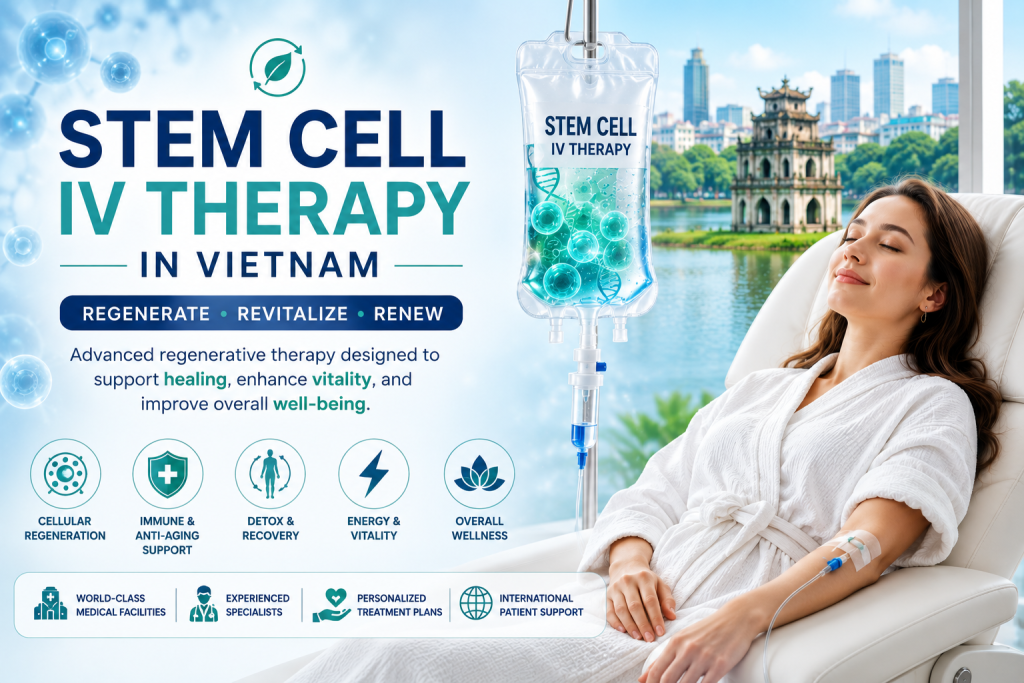
Stem Cell IV Therapy in Vietnam offers advanced regenerative medicine designed to support cellular repair, boost vitality, enhance immune function, and promote overall wellness at internationally recognized medical centers.
Streamlining Your Medical Journey to Vietnam
Planning an international trip for advanced medical care requires careful attention to detail. Following a structured preparation framework ensures a smooth, stress-free, and successful experience:
-
Step 1: Digital Consultation & Medical Review: Connect with an international patient coordinator online. You will need to provide your latest medical records, recent blood work panels, and your specific wellness goals for a comprehensive pre-screen by a specialist.
-
Step 2: Pre-Arrival Lifestyle Optimization: In strict compliance with global medical safety guidelines published by organizations like the International Society for Cell & Gene Therapy (ISCT), patients are encouraged to eliminate alcohol consumption, stop smoking, and optimize hydration at least 7 days prior to their infusion to create the ideal cellular environment for the arriving stem cells.
-
Step 3: Itinerary Mapping: For a standard systemic intravenous infusion regimen, an overall stay of 3 to 5 days in Vietnam is highly recommended. This window comfortably covers your face-to-face preoperative evaluation, the day of the infusion, vital post-treatment monitoring, and allows ample time to enjoy a relaxing holiday before flying home.
Summary
Stem Cell IV Therapy in Vietnam represents a major advancement in modern preventive and restorative medicine. By leveraging the natural homing, anti-inflammatory, and immunomodulating properties of Mesenchymal Stem Cells, this advanced therapy offers a safe, clinically proven, and highly effective alternative to continuous medication use, providing a true reset for your global health.
With its world-class medical facilities, highly experienced clinical specialists, and exceptional cost-saving packages, Vietnam stands out as a premier destination for international patients seeking to reclaim their long-term health and cellular vitality. Choosing an intravenous cellular treatment in Vietnam is a powerful investment in your long-term health, systemic longevity, and overall quality of life.
Interested in Stem Cell IV Therapy in Vietnam?
VnMedtour helps international patients access advanced stem cell IV therapy programs in Vietnam with support for hospital selection, treatment planning, and medical travel coordination.
Learn about stem cell IV therapy benefits, estimated costs, eligibility, and treatment options available in Vietnam.