
Vietnam has become an increasingly popular destination for advanced spine surgery, offering modern medical facilities, experienced neurosurgeons and orthopedic spine specialists, and significantly lower treatment costs compared to Western countries. Among the most effective procedures for relieving nerve compression in the spine is foraminotomy.
This comprehensive guide explains what foraminotomy is, who it is for, how the procedure is performed in Vietnam, expected recovery, costs, and why international patients are choosing Vietnam for this specialized spine surgery.
Quick Navigation
What Is Foraminotomy?
Foraminotomy is a spine surgery procedure designed to widen the intervertebral foramen, the small opening between vertebrae through which spinal nerve roots exit the spinal canal.
When this opening becomes narrowed—a condition known as foraminal stenosis—the spinal nerve can become compressed, causing pain, numbness, tingling, or weakness that may radiate into the arms or legs.
Foraminotomy relieves pressure on the affected nerve by removing or trimming:
-
Bone spurs (osteophytes)
-
Herniated disc material
-
Thickened ligaments
-
Other tissues compressing the nerve
The goal is to restore space around the nerve root and relieve symptoms, often without the need for extensive spinal fusion.
Conditions Treated With Foraminotomy
Foraminotomy is commonly recommended for patients experiencing persistent nerve-related pain caused by:
-
Foraminal stenosis
-
Herniated or bulging discs
-
Degenerative disc disease
-
Spinal arthritis
-
Bone spur formation
-
Failed conservative treatment (medication, physiotherapy, injections)
Typical symptoms include:
-
Radiating arm or leg pain
-
Sciatica
-
Neck, shoulder, or lower back pain
-
Numbness or tingling in extremities
-
Muscle weakness
Cervical vs Lumbar Foraminotomy
Cervical Foraminotomy (Neck)
Used to relieve nerve compression in the cervical spine, often causing neck pain radiating into the shoulder, arm, or hand.
Lumbar Foraminotomy (Lower Back)
Performed in the lumbar spine to treat nerve compression leading to sciatica or leg pain.
Both procedures are widely performed in Vietnam using modern surgical techniques.
How Foraminotomy Is Performed in Vietnam
Preoperative Evaluation
Before surgery, patients undergo comprehensive assessments, including:
-
MRI or CT scans
-
X-rays
-
Neurological examination
-
Medical history review
International patients often send imaging and medical records in advance for online consultation and treatment planning.
Surgical Techniques
Foraminotomy in Vietnam may be performed using:
1. Minimally Invasive Foraminotomy
-
Small incision
-
Muscle-sparing approach
-
Reduced blood loss
-
Faster recovery
2. Endoscopic Foraminotomy
-
Performed through a tiny incision
-
High-definition camera guidance
-
Minimal tissue disruption
-
Often outpatient or short hospital stay
3. Open Foraminotomy
-
Used for complex or multi-level cases
-
Allows direct visualization
-
May require longer recovery
The choice of technique depends on the patient’s condition, spinal level involved, and surgeon’s recommendation.
Benefits of Foraminotomy
-
Effective relief of nerve compression
-
Preservation of spinal stability
-
Reduced need for spinal fusion
-
Shorter recovery time (especially with minimally invasive methods)
-
Improvement in pain, mobility, and quality of life
Recovery After Foraminotomy
Hospital Stay
-
Minimally invasive or endoscopic surgery: 1–2 days
-
Open surgery: 2–4 days
Postoperative Recovery
-
Walking is encouraged within 24 hours
-
Light activities resume within 1–2 weeks
-
Full recovery typically within 4–8 weeks
-
Physical therapy may be recommended
Most international patients stay in Vietnam for 7–14 days for postoperative monitoring before returning home.
Success Rate and Outcomes
Foraminotomy has a high success rate, particularly when nerve compression is clearly identified. Many patients experience:
-
Significant pain reduction
-
Improved nerve function
-
Increased mobility
Long-term outcomes are especially favorable when surgery is combined with proper rehabilitation and lifestyle adjustments.
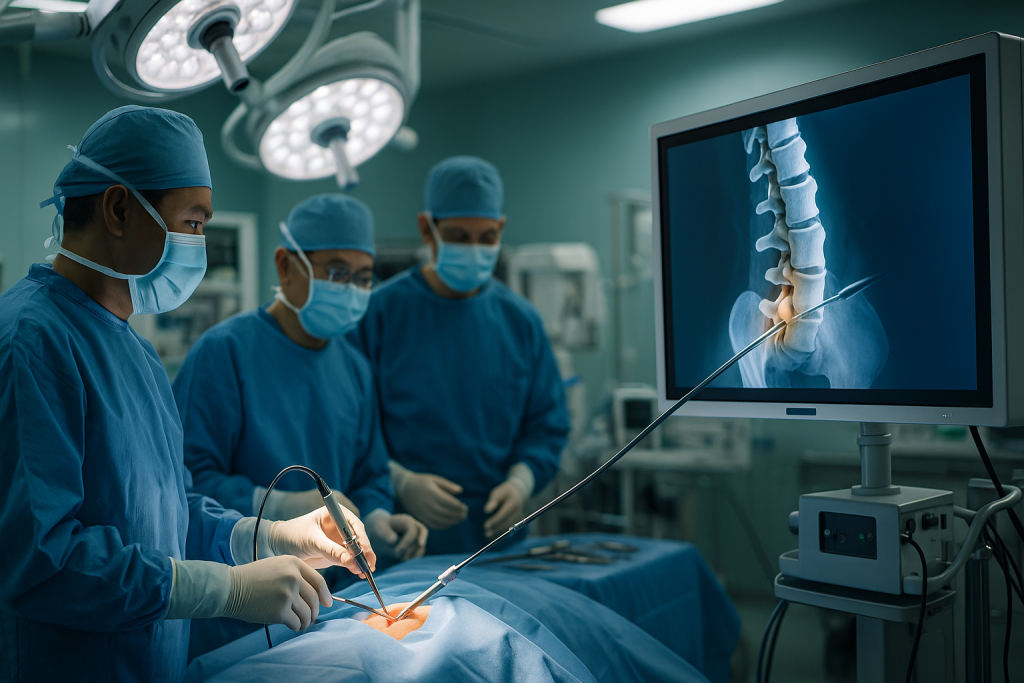
Minimally invasive foraminotomy performed by experienced spine surgeons in a modern Vietnamese hospital using advanced imaging and navigation systems.
Cost of Foraminotomy in Vietnam
One of the main reasons patients choose Vietnam is affordability.
While exact pricing depends on the hospital, surgeon, and surgical technique, foraminotomy in Vietnam typically costs much less than in the US, Australia, or Europe, often saving patients 50–70%.
Cost estimates usually include:
-
Surgeon’s fees
-
Hospital stay
-
Anesthesia
-
Basic postoperative care
Additional services such as advanced imaging, rehabilitation, or international patient support may be quoted separately.
Why Choose Vietnam for Foraminotomy?
1. Experienced Spine Surgeons
Vietnamese neurosurgeons and orthopedic spine surgeons are highly trained, with many having international fellowships and extensive experience in minimally invasive spine surgery.
2. Modern Spine Centers
Top hospitals in Vietnam are equipped with:
-
Advanced imaging systems
-
Endoscopic spine surgery technology
-
High-standard operating rooms
-
International patient departments
3. Short Waiting Times
Patients can schedule consultations and surgery quickly, making Vietnam ideal for medical travelers with limited time.
4. Comprehensive Medical Tourism Support
International patients often receive:
-
Online pre-treatment consultations
-
Personalized treatment plans
-
Visa and travel assistance
-
Airport pickup
-
Hotel arrangements near the hospital
-
English-speaking coordinators and interpreters
Leading Spine Surgery Centers in Vietnam
Vietnam is home to several reputable hospitals offering foraminotomy and other advanced spine procedures, including:
-
Major international hospitals in Ho Chi Minh City
-
Specialized orthopedic and neurosurgical centers in Hanoi
-
Private hospitals with dedicated spine units
These centers meet international safety standards and regularly treat foreign patients.
Foraminotomy vs Other Spine Procedures
| Procedure | Purpose |
|---|---|
| Foraminotomy | Widens nerve exit opening |
| Discectomy | Removes herniated disc material |
| Laminectomy | Removes part of vertebral bone (lamina) |
| Spinal Fusion | Stabilizes spine segments |
Foraminotomy is often preferred when nerve compression is localized and spinal stability can be preserved.
Is Foraminotomy Safe in Vietnam?
Yes. When performed at accredited hospitals by experienced surgeons, foraminotomy in Vietnam is safe and effective. Hospitals follow strict sterilization protocols and international clinical guidelines.
As with any surgery, potential risks include infection, bleeding, nerve injury, or recurrence of symptoms, but these risks are generally low.
Who Is a Good Candidate?
You may be a good candidate for foraminotomy if:
-
You have confirmed nerve compression on imaging
-
Symptoms persist despite conservative treatment
-
Pain significantly affects daily activities
-
You want a motion-preserving spine procedure
A specialist consultation is required to confirm suitability.
Medical Travel Planning for Foraminotomy in Vietnam
International patients are advised to:
-
Send MRI/CT scans in advance
-
Allow sufficient recovery time before flying
-
Arrange postoperative follow-up
-
Follow surgeon’s rehabilitation instructions carefully
Vietnam’s healthcare system is well-equipped to support short- and medium-term medical stays.
Conclusion
Foraminotomy in Vietnam offers an effective, safe, and affordable solution for patients suffering from nerve compression in the spine. With skilled surgeons, modern minimally invasive techniques, and comprehensive support for international patients, Vietnam has become a trusted destination for spine surgery.
Whether you are experiencing chronic neck pain, sciatica, or nerve-related symptoms, foraminotomy in Vietnam may provide lasting relief and a faster return to normal life—at a fraction of the cost found in many other countries.