
Kidney transplantation is a life-saving treatment for patients suffering from end-stage renal disease (ESRD). While medical technology and surgical expertise are crucial for successful transplants, legal regulations also play an essential role in ensuring that organ donation is ethical, safe, and transparent.
Vietnam has developed a strict legal framework governing organ donation and transplantation. These regulations are designed to prevent organ trafficking, protect donors, and ensure that every transplant procedure follows ethical medical standards.
Patients considering treatment abroad should understand the legal framework before undergoing kidney transplant in Vietnam.
For international patients considering treatment abroad, understanding the legal process for kidney transplant in Vietnam is an important step before planning the surgery. This guide explains the legal requirements, documentation, donor eligibility rules, and approval procedures involved in kidney transplantation in Vietnam.
Quick Navigation
Overview of Organ Transplant Laws in Vietnam
Organ transplantation in Vietnam is regulated by the Law on Organ and Tissue Donation and Transplantation, which was enacted to establish ethical guidelines and prevent illegal organ trade.
This law governs:
-
Organ donation and transplantation procedures
-
Rights and responsibilities of donors and recipients
-
Medical evaluation and approval processes
-
Legal documentation requirements
-
Prevention of organ trafficking
The law requires that all organ donations must be voluntary and non-commercial, meaning organs cannot be bought or sold.
Because of these regulations, every transplant procedure must go through a careful review process before surgery can take place.
Patients planning kidney transplant in Vietnam must follow these legal procedures to ensure that their transplant complies with Vietnamese law.
Why Legal Regulations Are Important for Kidney Transplants
The legal process exists to protect both donors and recipients.
Without strict regulations, organ transplantation could become vulnerable to illegal practices such as organ trafficking or exploitation of vulnerable individuals.
Vietnam’s legal framework ensures that:
-
Organ donation is voluntary
-
Donors fully understand the risks
-
Medical teams follow ethical practices
-
All procedures are documented and transparent
These safeguards help maintain public trust in the transplant system while protecting patient safety.
Who Can Legally Donate a Kidney in Vietnam?
Vietnam’s laws strongly prioritize living donor transplants between family members.
In most cases, kidney donors must be close relatives of the recipient.
Eligible donors may include:
-
Parents
-
Children
-
Siblings
-
Spouses
-
Other close family members
Hospitals must verify the family relationship before approving the transplant.
This rule helps prevent illegal organ trade and ensures that donations are made voluntarily.
Patients should understand the kidney donor requirements in Vietnam before preparing for transplant surgery.
Documentation Required for Kidney Transplant Approval
One of the most important parts of the legal process is documentation.
Hospitals must collect and review legal documents proving the relationship between donor and recipient.
Commonly required documents include:
-
Passport or identification documents
-
Birth certificates
-
Marriage certificates (if the donor is a spouse)
-
Family registry documents
-
Legal consent forms
In some cases, documents may need to be translated into Vietnamese and notarized.
Hospitals will review these documents carefully before submitting them for legal approval.
Medical and Ethical Committee Review
Before transplant surgery can proceed, the case must be reviewed by a hospital medical ethics committee.
This committee evaluates whether the transplant meets all legal and medical requirements.
The committee typically reviews:
-
Donor-recipient relationship
-
Medical compatibility tests
-
Psychological evaluation results
-
Consent documentation
The committee must confirm that:
-
The donation is voluntary
-
No financial compensation is involved
-
Both donor and recipient fully understand the procedure
Only after the committee approves the case can the transplant surgery move forward.
Special Rules for International Patients
Foreign patients can undergo kidney transplantation in Vietnam, but the legal process may involve additional steps.
International patients must usually bring a living donor who meets both medical and legal requirements.
Hospitals must verify:
-
The relationship between donor and recipient
-
Medical compatibility
-
Valid identification documents
Patients may also need to provide translated and notarized documents from their home country.
Understanding the regulations regarding can foreigners get a kidney transplant in Vietnam is important for international patients planning treatment abroad.
Living Donor Kidney Transplant Regulations
Most kidney transplants in Vietnam involve living donors.
Because of this, living donor procedures must follow strict guidelines.
The legal process requires:
-
Verified family relationship
-
Comprehensive medical evaluation
-
Psychological assessment of the donor
-
Written consent from both donor and recipient
These regulations help ensure that donors are not pressured or coerced into donating a kidney.
Living donor procedures remain one of the most common forms of kidney transplant surgery in Vietnam.
Medical Evaluation Required by Law
The law requires that both the donor and recipient undergo thorough medical evaluation before transplantation.
This evaluation ensures that the procedure is safe and medically appropriate.
Tests may include:
-
Blood type compatibility
-
Tissue typing (HLA testing)
-
Crossmatch tests
-
Kidney function tests
-
Imaging scans
Doctors must confirm that both individuals are medically fit before the transplant can be approved.
Consent and Legal Agreements
In addition to medical tests, both donor and recipient must sign legal consent forms.
These documents confirm that:
-
The donor is donating voluntarily
-
The donor understands the risks involved
-
The recipient understands the transplant procedure
Consent forms are an essential part of the legal approval process.
Hospitals cannot proceed with transplant surgery without these documents.
Government Oversight and Hospital Responsibility
Organ transplantation in Vietnam is closely monitored by government authorities.
Hospitals that perform transplant surgery must receive official approval and follow national medical guidelines.
Medical institutions must:
-
Maintain accurate transplant records
-
Follow ethical transplant protocols
-
Report transplant procedures to health authorities
This oversight ensures that transplant centers operate responsibly and transparently.
Timeline for Legal Approval
The legal review process may take time, depending on the complexity of the case.
Typical steps include:
-
Medical evaluation
-
Document verification
-
Ethics committee review
-
Legal approval
-
Surgery scheduling
For patients who bring a compatible donor and complete documentation early, the process can move relatively quickly.
Understanding the legal timeline is important for patients planning kidney transplant treatment in Vietnam.
Challenges in the Legal Process
Although the legal process helps ensure safety, it can sometimes create challenges.
Some common challenges include:
-
Missing or incomplete documentation
-
Difficulty verifying family relationships
-
Medical incompatibility between donor and recipient
-
Additional legal checks for international patients
Working with experienced medical coordinators can help patients navigate these challenges more efficiently.
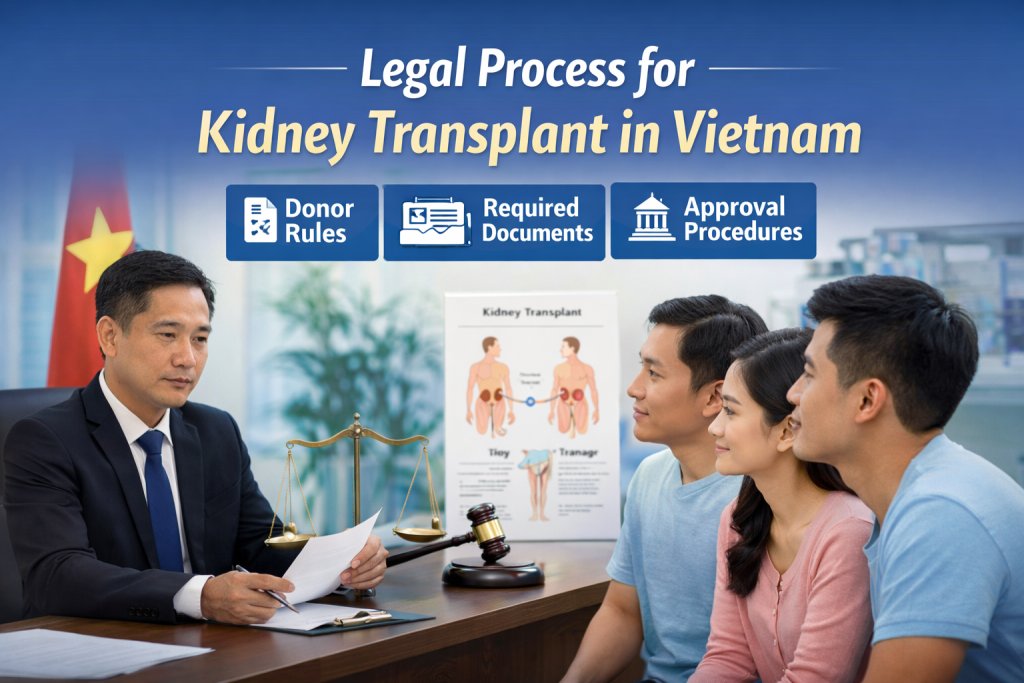
A consultation explaining the legal process and required documents for kidney transplant procedures in Vietnam.
How Medical Tourism Services Can Help
For international patients, navigating a foreign healthcare system can be complicated.
Medical tourism coordinators can help guide patients through the legal and medical process.
These services may include:
-
Document preparation assistance
-
Hospital coordination
-
Appointment scheduling
-
Translation services
-
Travel support
These services help ensure that patients complete the legal requirements before traveling for surgery.
Benefits of Vietnam’s Legal Transplant Framework
Although the legal process may seem complex, it plays an important role in protecting patients and donors.
Vietnam’s transplant regulations help:
-
Prevent illegal organ trade
-
Protect donor health and rights
-
Maintain ethical medical standards
-
Ensure safe transplant procedures
These safeguards help strengthen Vietnam’s reputation as a responsible destination for transplant surgery.
Final Thoughts
Kidney transplantation offers hope for patients suffering from severe kidney disease. However, the procedure involves more than just medical expertise—it also requires strict legal compliance.
Vietnam has established a clear legal framework that ensures organ donation and transplantation are conducted ethically and safely. The legal process includes documentation verification, donor eligibility checks, ethics committee review, and government oversight.
For international patients considering treatment abroad, understanding the legal process for kidney transplant in Vietnam is essential before beginning the transplant journey.
By preparing the required documents and working with experienced medical professionals, patients can successfully navigate the legal requirements and move forward with life-saving transplant surgery.
Learning more about kidney transplant in Vietnam can help patients understand the full treatment process, donor requirements, and legal regulations involved in organ transplantation.
Need Guidance for Kidney Transplant in Vietnam?
Our team can assist with hospital selection, document review, and treatment planning for international patients.