
Robotic prostatectomy in Vietnam offers an additional treatment option for international patients diagnosed with prostate cancer. With the introduction of advanced robotic surgical systems at selected Vietnamese hospitals, patients can explore minimally invasive prostate cancer surgery while receiving support with treatment planning and international travel arrangements.
Robot-assisted radical prostatectomy (RARP) is a surgical procedure designed to remove the prostate gland and associated cancerous tissue. Compared with traditional open surgery, the robotic approach uses smaller incisions and provides the surgeon with magnified, three-dimensional visualization of the operating area.
However, selecting prostate cancer treatment involves more than choosing a surgical technique. Cancer stage, overall health, life expectancy, urinary function, sexual health and the experience of the surgical team are all important considerations.
For international patients considering robotic prostatectomy in Vietnam, understanding hospital capabilities, treatment costs, recovery requirements and long-term follow-up is essential.
This guide explains the robotic prostatectomy procedure, its potential benefits and limitations, available hospital options, expected recovery and practical considerations for patients traveling to Vietnam.
Quick Navigation
1. What Is Robotic Prostatectomy?
Robotic prostatectomy is a minimally invasive surgical procedure in which a surgeon uses a robotic-assisted system to remove the prostate gland.
When performed to treat prostate cancer, the procedure is generally called robot-assisted radical prostatectomy (RARP). It involves removing the entire prostate gland and seminal vesicles. Nearby lymph nodes may also be removed when clinically indicated.
The surgery is typically performed through several small abdominal incisions. A high-definition camera and specialized robotic instruments are introduced into the body, allowing the surgeon to operate within the narrow pelvic cavity.
Unlike autonomous robotic technologies, surgical robots do not make independent clinical decisions or perform the operation without human control. The surgeon directs the instruments from a console throughout the procedure.
How does the da Vinci surgical system work?
The da Vinci surgical system is one of the robotic platforms used for minimally invasive procedures, including radical prostatectomy.
It provides the surgeon with a magnified three-dimensional view of the operating field and instruments with a greater range of articulation than conventional laparoscopic instruments.
These features can facilitate precise dissection and suturing around delicate anatomical structures, including those involved in urinary continence and erectile function.
The robot also filters certain unintended hand movements, helping the surgeon perform controlled movements in confined anatomical spaces.
Nevertheless, robotic technology does not guarantee successful cancer removal or complete preservation of urinary and sexual function.
The National Cancer Institute’s prostate cancer treatment guide explains radical prostatectomy and its different surgical approaches, including robot-assisted laparoscopic surgery.
2. Who Is a Suitable Candidate for Robotic Prostatectomy?
Robot-assisted radical prostatectomy is primarily considered for selected patients with localized prostate cancer and certain patients with locally advanced disease.
Before recommending surgery, the treating urologist reviews the patient’s diagnosis, cancer stage, general health and available treatment alternatives.
Patients typically undergo a comprehensive assessment involving prostate-specific antigen (PSA) testing, prostate biopsy findings, imaging and clinical evaluation.
Localized prostate cancer
Patients whose cancer remains confined to the prostate may be considered for radical prostatectomy as a treatment intended to remove the cancer.
However, not every patient with localized prostate cancer requires immediate surgery.
For some patients with low-risk disease, active surveillance may be appropriate. This involves regular monitoring through PSA testing, clinical assessment, imaging and repeat biopsy when indicated.
Other patients may benefit from radiation therapy or surgery, depending on their cancer risk and individual circumstances.
Locally advanced prostate cancer
In selected patients whose cancer has extended beyond the prostate, radical prostatectomy may form part of a broader treatment strategy.
Additional radiation therapy or hormone treatment may be required after surgery, depending on the pathological findings and postoperative PSA results.
For patients with metastatic prostate cancer, systemic treatments are generally central to management. Radical prostatectomy is not routinely recommended as a standalone treatment for widespread metastatic disease.
The European Association of Urology Guidelines on Prostate Cancer provide detailed recommendations on patient selection, surgical treatment and multidisciplinary management.
Patients who are still comparing treatment options can read our comprehensive guide to Prostate Cancer Treatment in Vietnam , which covers surgery, radiation therapy and other established approaches.
3. Benefits of Robot-Assisted Radical Prostatectomy
The potential advantages of robotic prostatectomy are primarily associated with its minimally invasive approach and the improved visualization and instrument articulation available to the surgeon.
Compared with traditional open surgery, robotic-assisted surgery may reduce blood loss and shorten the initial hospital stay in appropriately selected patients.
Smaller incisions may also contribute to reduced postoperative discomfort and earlier mobilization.
Enhanced surgical visualization
The robotic system provides a magnified three-dimensional view of the prostate and surrounding tissues.
This is particularly valuable because the prostate is located deep within the pelvis, close to the bladder, rectum and neurovascular structures.
Enhanced visualization can assist the surgeon during tissue dissection, nerve preservation and urinary tract reconstruction.
Potentially reduced blood loss
Robotic prostatectomy is generally associated with less intraoperative blood loss than conventional open radical prostatectomy.
However, the amount of blood loss varies depending on surgical complexity, patient characteristics and the operating team’s experience.
Minimally invasive recovery
Smaller incisions may allow patients to mobilize earlier and experience less immediate postoperative discomfort.
Nevertheless, recovery remains individual, and some patients require longer hospitalization or additional medical care.
Limitations of robotic surgery
Although robotic prostatectomy offers technical advantages, long-term cancer control and functional outcomes are not automatically superior to those achieved with other established surgical approaches.
The surgeon’s experience, cancer characteristics and patient-specific factors remain important determinants of treatment outcomes.
Patients should therefore consider both the technology available and the experience of the surgical team.
4. Robotic vs. Laparoscopic vs. Open Prostatectomy
Radical prostatectomy can be performed using open, conventional laparoscopic or robot-assisted laparoscopic techniques.
Each approach is intended to remove the prostate gland and associated cancerous tissue. The differences relate primarily to surgical access, instrumentation and certain perioperative outcomes.
|
Feature |
Robotic |
Laparoscopic |
Open |
|---|---|---|---|
|
Surgical access |
Small incisions |
Small incisions |
Larger incision |
|
Visualization |
Magnified 3D |
Usually 2D or 3D |
Direct |
|
Instruments |
Articulating robotic instruments |
Conventional laparoscopic instruments |
Handheld instruments |
|
Blood loss |
Generally lower than open surgery |
Often lower than open surgery |
May be higher |
|
Hospital stay |
Often shorter |
Often shorter |
May be longer |
|
Recovery |
Depends on patient and complications |
Depends on patient and complications |
Depends on patient and complications |
The available evidence does not establish that one surgical approach guarantees superior long-term urinary continence, erectile function or cancer outcomes for every patient.
The surgeon’s experience with the selected technique should be considered alongside the patient’s medical circumstances.
For patients exploring a broader range of urological procedures, our Urology in Vietnam guide provides an overview of available services and treatment options.
5. How Is Robotic Prostatectomy Performed?
Robotic prostatectomy is performed under general anesthesia.
Before surgery, patients undergo a preoperative assessment to establish their fitness for anesthesia and determine whether additional investigations are required.
The surgical team reviews the patient’s biopsy findings, PSA history, imaging results, medical conditions and current medications.
Surgical preparation
The patient is positioned on the operating table, and the anesthesia team begins continuous monitoring.
The surgeon makes small abdominal incisions through which the robotic camera and instruments are introduced.
Carbon dioxide is used to create sufficient working space within the abdomen.
The surgeon then controls the robotic instruments from a console, using magnified three-dimensional visualization to perform the procedure.
Removal of the prostate
The prostate is carefully separated from surrounding structures and removed together with the seminal vesicles.
Depending on the patient’s cancer risk, the surgeon may also remove nearby pelvic lymph nodes.
The removed tissue is sent for pathological examination to assess the cancer and determine the final pathological stage.
Nerve-sparing robotic prostatectomy
The nerves responsible for erectile function run close to the prostate.
When cancer location and extent permit, the surgeon may attempt to preserve one or both neurovascular bundles.
This approach is known as nerve-sparing prostatectomy.
Although nerve-sparing surgery may improve the possibility of recovering erectile function, it is not suitable for every patient. Cancer control remains the primary consideration.
Even when nerve preservation is technically successful, postoperative erectile dysfunction may still occur.
Urinary tract reconstruction
After removing the prostate, the surgeon reconnects the bladder to the remaining urethra.
A urinary catheter is inserted to drain urine while the connection heals.
The catheter usually remains in place for approximately one to two weeks, depending on the surgical technique and the patient’s recovery.
The treating surgeon determines when catheter removal is appropriate.
6. Robotic Prostatectomy Cost in Vietnam
The cost of robotic prostatectomy in Vietnam depends on the hospital, robotic surgical platform, complexity of the operation and services included in the treatment package.
Additional factors include preoperative investigations, anesthesia, lymph node dissection, inpatient care, pathology and postoperative follow-up.
International patients should request an individualized quotation after the hospital has reviewed their medical records.
What is included in the treatment cost?
|
Service |
Cost consideration |
|---|---|
|
Urological consultation |
Initial assessment and treatment planning |
|
Preoperative investigations |
Blood tests, imaging and anesthesia assessment |
|
Robotic surgery |
Surgeon, operating theatre and robotic equipment |
|
Anesthesia |
Anesthesia team and associated medications |
|
Hospitalization |
Inpatient room, nursing and monitoring |
|
Pathology |
Examination of removed tissue |
|
Postoperative medication |
Inpatient and discharge prescriptions |
|
Follow-up |
Catheter management and postoperative assessment |
Some hospitals may quote these services together, while others charge separately for specific investigations and procedures.
Patients should also clarify whether the quotation includes treatment for postoperative complications, additional hospitalization or further cancer treatment.
Why do robotic prostatectomy costs vary?
The type of robotic system, surgical complexity and length of hospitalization can influence the final treatment cost.
Patients with additional medical conditions may require more extensive preoperative assessment or postoperative monitoring.
The need for pelvic lymph node dissection can also affect the procedure and associated expenses.
Because the final treatment plan depends on individual clinical findings, published estimates should not replace a formal hospital quotation.
VnMedtour can help international patients request an individualized cost estimate from suitable hospitals in Vietnam.
Patients who have not yet decided which prostate treatment they need can also review our Prostate Treatment in Vietnam guide.
7. Hospitals Offering Robotic Prostatectomy in Vietnam
Selected hospitals in Vietnam have introduced robotic surgical systems for complex minimally invasive procedures, including prostate cancer surgery.
However, the availability of robotic equipment does not necessarily mean that every hospital offers robot-assisted radical prostatectomy.
International patients should confirm the specific procedure, operating surgeon, robotic platform and hospital’s current clinical capabilities before making travel arrangements.
Tam Anh General Hospital — Ho Chi Minh City
Tam Anh General Hospital in Ho Chi Minh City has publicly documented robotic prostate cancer surgery using the da Vinci Xi system.
In 2025, the hospital published information about its robotic prostate cancer surgery program. It subsequently reported using advanced robotic techniques, including a single-site approach and a dual-console system, in selected prostate cancer operations.
These developments demonstrate the hospital’s experience with robotic-assisted prostate surgery, although the suitability of a particular technique must be determined individually.
Patients can review the hospital’s official information about da Vinci Xi robotic prostate cancer surgery .
Vinmec Times City — Hanoi
Vinmec has developed robotic-assisted surgery services across selected specialties and facilities.
Patients interested in robotic radical prostatectomy at Vinmec Times City should request confirmation of current procedure availability, the responsible surgical team and the robotic platform.
The hospital should also confirm whether it can provide the complete prostate cancer treatment pathway, including postoperative pathology review and follow-up.
How to choose a hospital
When comparing hospitals for robotic prostatectomy in Vietnam, patients should consider more than the robotic platform.
Important considerations include the surgeon’s experience with radical prostatectomy, access to urological oncology specialists, anesthesia and intensive care services, postoperative rehabilitation, pathology and long-term cancer follow-up.
International patients should also ask how the hospital manages postoperative complications and whether medical records can be shared with their treating physician at home.
For information about other cancer services available in the country, visit our guide to Oncology in Vietnam .
8. Preparing for Robotic Prostatectomy in Vietnam
International patients should obtain a preliminary medical assessment before booking flights or accommodation.
The treating hospital will generally require the patient’s prostate cancer diagnosis, PSA history, biopsy report, recent imaging and relevant medical records.
A multidisciplinary review may be appropriate, particularly for patients with higher-risk or locally advanced disease.
Patients should also disclose previous abdominal or pelvic surgery, existing medical conditions, allergies and current medications.
Medical records to prepare
The hospital may request recent PSA test results, prostate biopsy findings, prostate MRI and any additional staging investigations already performed.
Patients with cardiovascular, respiratory or other significant medical conditions may require additional assessment before surgery.
The hospital may recommend further imaging or testing if the existing investigations are incomplete or outdated.
Online consultation before traveling
A preliminary online consultation may be possible when sufficient medical information is available.
However, an online assessment does not guarantee surgical eligibility or confirm that the procedure can be performed immediately after arrival.
Final treatment decisions may require an in-person examination, additional investigations and review by the treating surgical team.
International patients should therefore allow flexibility in their travel arrangements.
9. Recovery After Robotic Prostatectomy
Recovery following robotic prostatectomy depends on the patient’s overall health, surgical complexity and postoperative progress.
Although the minimally invasive approach may facilitate earlier mobilization, radical prostatectomy remains major surgery.
Patients require appropriate monitoring and follow-up throughout the recovery period.
Hospital stay
During hospitalization, the medical team monitors urinary drainage, bleeding, pain, mobility and other postoperative concerns.
Patients are generally encouraged to begin gentle mobilization when medically appropriate.
The length of hospitalization varies between hospitals and individual patients.
Some patients recover sufficiently for relatively early discharge, while others require additional monitoring.
Urinary catheter management
A urinary catheter remains in place after surgery while the connection between the bladder and urethra heals.
Catheter removal is commonly scheduled approximately one to two weeks after radical prostatectomy, although the exact timing varies.
International patients should confirm whether catheter removal will take place in Vietnam or whether suitable arrangements can be made after returning home.
Returning to normal activities
Patients may experience temporary fatigue, abdominal discomfort and urinary leakage after catheter removal.
Walking is generally encouraged during recovery, while strenuous exercise and heavy lifting should be avoided until the surgeon confirms that they are safe.
The timing of return to work depends on the patient’s recovery and the physical demands of their occupation.
When can patients fly home?
International travel after surgery requires individualized medical assessment.
Long flights, reduced mobility and recent major surgery can increase the risk of venous thromboembolism.
Patients should obtain clearance from their treating surgeon before flying and ensure that catheter management, pathology review and early postoperative follow-up have been arranged.
Return flights should not be scheduled solely according to an advertised recovery timeline.
10. Risks and Side Effects of Robotic Prostatectomy
Robotic prostatectomy is an established surgical approach, but it carries important risks and potential long-term side effects.
Complications may include bleeding, infection, blood clots, urinary leakage, injury to adjacent organs and anesthesia-related problems.
Longer-term concerns include urinary incontinence and erectile dysfunction.
Urinary incontinence
Urinary leakage is common during the early recovery period, particularly after catheter removal.
Many patients experience gradual improvement, but the rate and extent of recovery vary.
Some patients continue to have urinary incontinence and require additional treatment.
Pelvic floor muscle exercises may be recommended before or after surgery to support urinary control.
Erectile dysfunction
Radical prostatectomy can affect the nerves and blood vessels involved in erectile function.
Even when nerve-sparing surgery is performed, patients may experience erectile dysfunction.
Recovery depends on age, preoperative erectile function, nerve preservation and other medical factors.
Some patients may benefit from medication, vacuum erection devices or specialist rehabilitation.
Fertility and ejaculation
After radical prostatectomy, patients no longer ejaculate semen during orgasm and cannot conceive naturally through sexual intercourse.
Patients who may wish to have biological children in the future should discuss fertility preservation options before treatment.
Cancer recurrence
Radical prostatectomy is intended to remove the cancer, but it does not guarantee that cancer will never recur.
Postoperative pathology and subsequent PSA results help determine whether additional treatment is necessary.
Some patients may require radiation therapy, hormone therapy or other treatment after surgery.
The NHS guide to prostate cancer treatment provides additional patient information about treatment options and potential side effects.
11. Robotic Prostatectomy vs. TURP and HoLEP
Patients researching prostate surgery sometimes encounter different procedures, including radical prostatectomy, TURP and HoLEP.
Although these procedures involve the prostate, they serve different treatment purposes.
Robot-assisted radical prostatectomy is primarily used to treat prostate cancer by removing the entire prostate gland and seminal vesicles.
By contrast, transurethral resection of the prostate (TURP) and holmium laser enucleation of the prostate (HoLEP) are primarily used to relieve urinary obstruction caused by benign prostatic hyperplasia (BPH).
These procedures remove obstructing prostate tissue rather than the entire prostate gland and are not equivalent to radical prostatectomy for cancer treatment.
Patients diagnosed with benign prostate enlargement can explore our dedicated guides to TURP Surgery in Vietnam and HoLEP Surgery in Vietnam .
12. Follow-Up Care After Robotic Prostatectomy
Long-term follow-up is essential after prostate cancer surgery.
Following radical prostatectomy, PSA levels are expected to fall to a very low or undetectable level.
A PSA level that remains detectable or subsequently rises may require further investigation and specialist assessment.
The frequency of follow-up depends on cancer risk, postoperative pathological findings and the treating team’s recommendations.
International patients should establish a follow-up plan before leaving Vietnam.
This should include arrangements for postoperative pathology review, PSA monitoring, management of urinary or sexual complications and access to further treatment when necessary.
Patients should obtain copies of their operative report, discharge summary, pathology findings, prescribed medications and follow-up recommendations.
If ongoing treatment is required, communication between the Vietnamese hospital and the patient’s medical team at home can help ensure continuity of care.
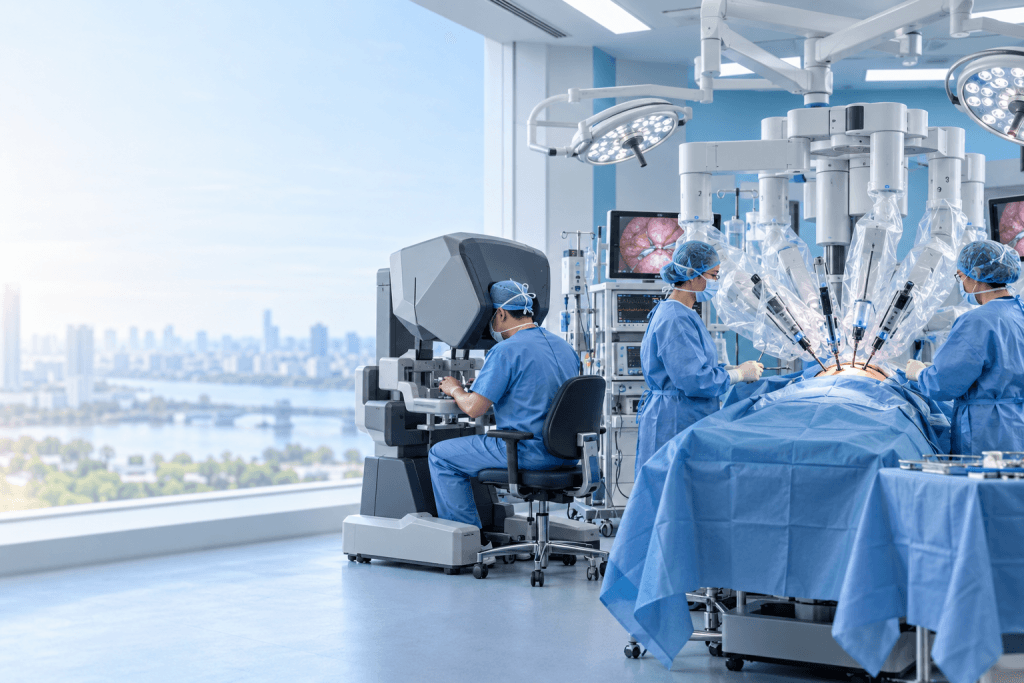
Robotic prostatectomy in Vietnam – Advanced robot-assisted surgery for prostate cancer using minimally invasive techniques.
13. Planning Robotic Prostatectomy in Vietnam with VnMedtour
Arranging prostate cancer surgery overseas requires coordination between the patient, treating hospital and medical team responsible for long-term follow-up.
VnMedtour assists international patients with preliminary hospital inquiries, consultation scheduling, treatment quotations and practical travel arrangements.
Patients considering robotic prostatectomy in Vietnam can share their diagnosis and available medical records to request a preliminary review by a suitable hospital.
Depending on the hospital’s response, VnMedtour can help coordinate further communication regarding treatment availability, estimated costs and scheduling.
Patients should receive confirmation of the proposed surgical procedure, operating surgeon and postoperative care arrangements before finalizing their travel plans.
Medical decisions, including surgical eligibility and treatment recommendations, remain the responsibility of the treating hospital and qualified healthcare professionals.
To begin the inquiry process, contact VnMedtour and provide your available medical records.
14. Frequently Asked Questions
How much does robotic prostatectomy cost in Vietnam?
The total cost depends on the hospital, surgical complexity, robotic platform and services included in the treatment package. Patients should request an individualized quotation after the hospital has reviewed their diagnosis and medical records.
Is robotic prostatectomy available in Vietnam?
Yes. Selected Vietnamese hospitals have publicly documented robotic-assisted prostate cancer surgery. Patients should confirm whether the specific hospital currently offers robot-assisted radical prostatectomy and can accept their case.
Is robotic prostatectomy better than traditional surgery?
Robotic surgery may offer certain minimally invasive advantages, including reduced blood loss and a shorter initial hospital stay. However, long-term cancer control, urinary continence and erectile function depend on multiple factors, and robotic surgery does not guarantee better outcomes for every patient.
How long does robotic prostatectomy take?
Operating time varies according to the patient’s anatomy, cancer characteristics, surgical complexity and whether pelvic lymph node dissection is required. The treating surgeon should provide an individualized estimate.
How long should international patients stay in Vietnam?
The appropriate length of stay depends on the procedure, postoperative recovery, catheter removal and medical clearance for international travel. Patients should allow flexibility for additional monitoring or unexpected complications.
Will I need a urinary catheter after robotic prostatectomy?
Yes. A urinary catheter is normally required while the connection between the bladder and urethra heals. Removal is commonly scheduled approximately one to two weeks after surgery, depending on the surgeon’s assessment.
Can robotic prostatectomy preserve erectile function?
Nerve-sparing robotic prostatectomy may improve the possibility of recovering erectile function in selected patients. However, nerve preservation depends on cancer location and extent, and recovery cannot be guaranteed.
Can prostate cancer return after robotic prostatectomy?
Yes. Cancer recurrence remains possible after radical prostatectomy. Regular PSA monitoring and appropriate follow-up are essential, and some patients require additional treatment.
Conclusion
Robotic prostatectomy in Vietnam provides international patients with access to an established minimally invasive surgical approach for selected prostate cancers.
Advances in robotic surgical technology have expanded treatment capabilities at selected Vietnamese hospitals. However, treatment decisions should be based on cancer characteristics, patient health, surgeon experience, potential complications and the availability of long-term follow-up.
Patients considering robot-assisted radical prostatectomy in Vietnam should obtain a specialist assessment and a comprehensive treatment quotation before making travel arrangements.
VnMedtour can assist international patients with hospital inquiries, medical record coordination and practical arrangements for receiving treatment in Vietnam.
Considering Robotic Prostatectomy in Vietnam? Get a Personalized Treatment Plan & Cost Estimate.