
Pterygium removal in Vietnam has rapidly become one of the most sought-after ophthalmic procedures for international medical tourists requiring affordable, timely, and world-class eye care. A pterygium—frequently called “Surfer’s Eye”—is a non-cancerous, wing-shaped growth of vascularized conjunctival tissue that expands horizontally over the clear corneal limbus. While initially presenting as a localized cosmetic blemish or mild ocular surface irritation, an advancing pterygium can exert mechanical traction on the cornea. This traction distorts corneal curvature, induces irregular astigmatism, blocks central sight, and limits normal extraocular movements. For millions living near the equatorial “pterygium belt” or active travelers frequently exposed to bright coastal environments, pterygium represents both a functional visual hazard and a persistent cosmetic nuisance.
In Western nations such as the United States, Canada, Australia, and parts of Western Europe, elective or non-emergent ophthalmic surgeries carry substantial financial burdens. Out-of-pocket costs in North America often range between $3,500 and $6,500 per eye when accounting for surgeon fees, specialized tissue adhesives, facility charges, and post-operative follow-up visits. Alternatively, public health systems in countries like the United Kingdom or Australia impose lengthy waiting periods for non-critical eye conditions.
Consequently, medical tourists are shifting their focus to Southeast Asia for timely, high-tier ophthalmic procedures. Over the past decade, Vietnam has emerged as a regional center of excellence for advanced surgical ophthalmology. Modern eye centers across Hanoi, Ho Chi Minh City, and Da Nang house state-of-the-art operating suites, JCI-accredited clinical workflows, fellowship-trained microsurgeons, and cutting-edge surgical modalities—such as conjunctival autografting with biological fibrin glue.
International patients choosing Pterygium removal in Vietnam benefit from medical savings ranging from 60% to 80% compared to Western prices, combined with zero wait times, personalized bilingual patient care, and the opportunity to recover in a world-class travel destination.
This definitive clinical guide explores every aspect of undergoing Pterygium removal in Vietnam, covering etiology, diagnostic criteria, modern surgical techniques, cost structures, recovery protocols, and how to combine ocular treatment with other specialized offerings through ophthalmology procedures in Vietnam.
Quick Navigation
2. Understanding Pterygium: Etiology, Pathology, and Indications for Excision
Pathology and Environmental Triggers
A pterygium originates on the bulbar conjunctiva—most commonly on the nasal side—and invades the clear cornea. Pathologically, it exhibits elastotic degeneration of subepithelial collagen accompanied by prominent vascular proliferation and fibrous growth.
According to clinical studies published by the National Center for Biotechnology Information (NCBI), chronic exposure to ultraviolet-B (UV-B) radiation is the leading environmental cause of pterygium development. UV-B photons cause genetic micro-damage in limbal stem cells, prompting abnormal production of matrix metalloproteinases, cytokines, and vascular endothelial growth factor (VEGF). Secondary environmental aggravators include constant wind exposure, airborne dust particles, environmental pollutants, and chronic dry eye syndrome.
While conservative measures like preservative-free artificial tears and short courses of topical corticosteroids can temporarily reduce localized swelling, surgical intervention is required to reverse structural changes. Key indications for Pterygium removal in Vietnam include:
-
Visual Impairment & Induced Astigmatism: Direct encroachment onto the optical axis or mechanical pulling on the corneal tissue that alters its curvature.
-
Refractory Ocular Discomfort: Unremitting ocular redness, burning, grittiness, or foreign-body sensation that fails to respond to medical therapy.
-
Restricted Ocular Motility: Advanced fibrovascular tissue extending deep into subconjunctival spaces, tethering extraocular muscles and causing diplopia (double vision).
-
Interference with Secondary Ophthalmic Procedures: Tissue growth that prevents accurate fitting of contact lenses or compromises baseline measurements for planned cataract or refractive procedures.
-
Cosmetic Disfigurement: Prominent, chronically inflamed tissue growth that impacts facial aesthetics and confidence.
3. Surgical Techniques: Why Modern Methods Matter
Historically, surgeons removed pterygium lesions by simply cutting away the tissue and leaving the bare sclera exposed—a technique known as bare sclera excision. However, landmark clinical trials documented by the American Academy of Ophthalmology (AAO) demonstrated that bare sclera excision leads to recurrence rates between 40% and 80%, often with recurrent growths presenting more aggressively than the original lesion.
Leading eye centers in Vietnam have abandoned bare sclera excision in favor of advanced microsurgical reconstruction techniques that lower recurrence rates to under 2%–5%.
Key Clinical Takeaway: Pterygium removal in Vietnam prioritizes Conjunctival Autografting (CAG) combined with sutureless biological fibrin glue, ensuring minimal post-operative discomfort, rapid corneal epithelial healing, and maximum recurrence prevention.
Primary Surgical Approaches Used in Vietnam
1. Conjunctival Autografting (CAG) – The Gold Standard
After the pterygium head and subconjunctival fibrotic mass are dissected from the cornea and sclera, the surgeon harvests a thin graft of healthy conjunctival tissue from the patient’s superior bulbar conjunctiva (concealed beneath the upper eyelid). This healthy graft, containing intact limbal stem cells, is transplanted over the exposed sclera. Restoring normal limbal stem cell architecture forms a cellular barrier that prevents abnormal conjunctival tissue from invading the cornea again.
2. Fibrin Tissue Glue vs. Micro-Sutures
Once the graft is harvested, it must be secured to the host tissue bed. Eye specialists in Vietnam utilize two fixation methods:
-
Fibrin Tissue Glue (Sutureless Technique): Biological adhesives created from human plasma proteins (e.g., Tisseel) are applied beneath the graft. The tissue adheres firmly within 60 to 90 seconds.
-
Benefits: Operative time decreases to 15–20 minutes, post-operative pain is minimal, foreign-body sensation from stitches is eliminated, and recovery is accelerated for traveling patients.
-
-
Micro-Suture Fixation: Ultra-fine absorbable (8-0 Vicryl) or non-absorbable (10-0 Nylon) sutures secure the graft. While cost-effective, sutures can cause temporary eyelid irritation and require removal 10–14 days post-operatively.
3. Amniotic Membrane Transplantation (AMT)
For recurrent, bilateral, or complex pterygia where healthy bulbar conjunctival tissue is insufficient for harvesting, surgeons use cryopreserved or dehydrated human amniotic membrane grafts. Amniotic membranes possess natural anti-inflammatory, anti-scarring, and pro-epithelialization properties that promote smooth ocular surface repair.
4. Adjuvant Antimetabolite Therapy (Mitomycin C)
In aggressive or recurrent cases, low-concentration topical Mitomycin C (MMC 0.02%) may be applied to the scleral bed for 1 to 3 minutes before graft positioning. MMC inhibits fibroblast proliferation, offering an added layer of protection against recurrence.
4. Technical Comparison of Surgical Approaches
| Feature / Metric | Bare Sclera (Obsolete) | Autograft with Sutures | Autograft with Fibrin Glue | Amniotic Membrane (AMT) |
| Recurrence Rate | 40% – 80% | 3% – 5% | 1% – 3% | 5% – 10% |
| Surgical Duration | 10–15 mins | 35–45 mins | 15–25 mins | 30–40 mins |
| Post-Op Pain Level | Moderate to High | Moderate (stitch friction) | Minimal to Low | Low to Moderate |
| Recovery Speed | Slow (2–4 weeks) | Moderate (10–14 days) | Fast (3–7 days) | Moderate (7–14 days) |
| Ideal Candidate | Not recommended | Budget-conscious cases | International medical tourists | Complex or recurrent cases |
5. Why Choose Vietnam for Pterygium Surgery & Ophthalmic Care?
Advanced Medical Facilities and Accreditation
Vietnam’s healthcare sector has undergone substantial modernization over the past decade. Top private eye hospitals and specialized clinics in major urban centers operate cleanroom surgical facilities equipped with high-resolution operating microscopes (e.g., Zeiss Lumera, Leica), anterior segment OCT diagnostic scanners, and automated micro-keratomes matching international safety standards.
Internationally Trained Specialists
Ophthalmologists in Vietnam complete rigorous training at top national medical universities, with many undertaking post-doctoral fellowships in Singapore, Japan, France, Germany, or the United States. These surgeons handle high patient volumes, developing refined microsurgical skills and clinical expertise.
Unrivaled Value & Transparent Pricing
Medical travel to Vietnam offers high-quality treatment at lower prices. Lower administrative overheads, reasonable facility costs, and favorable currency exchange rates allow international travelers to save up to 75% on procedures without sacrificing medical quality, pharmaceutical safety, or clinical care.
Comprehensive Combination Care
A significant advantage of organizing Pterygium removal in Vietnam is the ability to combine ocular surface treatment with other visual or cosmetic enhancements during a single trip.
For example, patients seeking freedom from reading glasses can evaluate presbyopia treatment in Vietnam, which includes multifocal intraocular lens (IOL) surgery or advanced laser therapies. Furthermore, patients looking to refresh their facial appearance can pair their procedure with specialized oculoplastic care, such as upper eyelid surgery in Vietnam to fix drooping lids (ptosis) or lower eyelid surgery in Vietnam to eliminate under-eye bags and puffiness.
6. International Cost Comparison
The financial advantages of electing to undergo Pterygium removal in Vietnam are clearly reflected in global medical pricing trends:
| Destination | Estimated Cost per Eye (USD) | Common Inclusions & Exclusions |
| United States | $3,500 – $6,500 | Out-of-pocket gaps; facility & anesthesia fees extra |
| Australia | $2,800 – $4,800 | High private health co-payments |
| Singapore | $2,500 – $4,200 | Standard private hospital fees |
| Thailand | $1,500 – $2,500 | Regional medical travel rates |
| Vietnam | $600 – $1,200 | All-inclusive package (Autograft + Fibrin Glue) |
What’s Included in Vietnam Medical Packages?
Medical travel packages for Pterygium removal in Vietnam generally cover: pre-operative imaging, slit-lamp checks, localized anesthesia, surgeon fees, surgical suite costs, fibrin glue/graft materials, post-op medication kits (antibiotic and anti-inflammatory eye drops), and follow-up checks.
7. Step-by-Step Patient Journey: What to Expect
Phase 1: Pre-Arrival Virtual Consultation
The journey starts before leaving home. Patients share clear, high-resolution photographs of their eyes alongside their medical history. Vietnamese ophthalmic specialists evaluate corneal invasion, confirm candidacy for outpatient excision, and provide a transparent, fixed-price estimate.
Phase 2: In-Clinic Diagnostic Evaluation
Upon arriving at an eye center in Hanoi or Ho Chi Minh City, you undergo an in-person assessment, including:
-
Slit-lamp biomicroscopy: Measures pterygium extension, corneal thickness, and vascular density.
-
Corneal Topography: Maps corneal curvature variations and evaluates tissue-induced astigmatism.
-
Tear Film & Ocular Surface Evaluation: Identifies underlying dry eye disease to tailor post-operative healing.
-
Intraocular Pressure (IOP) & Refractive Checks: Ensures baseline eye health.
Phase 3: The Surgical Procedure
Pterygium removal is performed as an outpatient day-procedure under local anesthesia:
-
Topical anesthetic drops ensure complete comfort.
-
An ocular speculum keeps the eye open comfortably.
-
Using an operating microscope, the surgeon dissects the pterygium head off the cornea and removes the subconjunctival tissue.
-
A thin autograft is harvested from the superior bulbar conjunctiva (under the upper lid).
-
Biological fibrin glue secures the autograft smoothly onto the sclera within 60 seconds.
-
A soft protective bandage lens or eye patch is placed over the eye. The procedure takes approximately 20 to 30 minutes per eye.
Phase 4: Recovery Timeline for International Travelers
-
Days 1–2: Mild tearing, light sensitivity, and a scratchy sensation are normal. Wear the protective eye patch for the first 24 hours and begin using prescribed antibiotic and corticosteroid drops.
-
Days 3–5: The autograft adheres firmly as the corneal surface heals. Discomfort subsides. You can enjoy light sightseeing while wearing protective UV400-rated sunglasses.
-
Day 7: A post-operative check verifies graft position, normal intraocular pressure, and absence of infection, providing flight clearance.
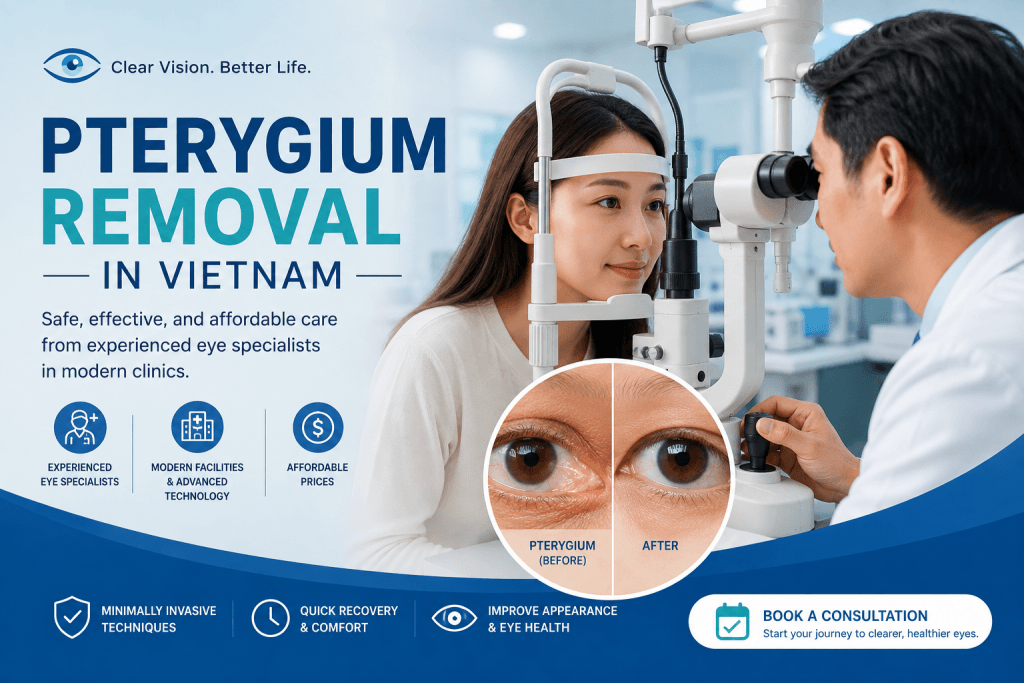
Pterygium removal in Vietnam offers international patients access to experienced eye specialists, modern diagnostic technology, and affordable treatment for clearer vision and improved eye comfort.
8. Post-Operative Care & Long-Term Recurrence Prevention
Achieving long-term success after Pterygium removal in Vietnam depends on following post-operative care instructions. Guidelines from the World Health Organization (WHO) emphasize UV radiation protection as the key factor in preventing recurrent ocular surface growths.
Critical Post-Operative Instructions
-
Strict Eye Drop Schedule: Use prescribed antibiotic drops for 1–2 weeks to prevent infection, and topical corticosteroid drops for 4–6 weeks to control tissue swelling and inflammation.
-
Prevent Water Exposure & Rubbing: Keep tap water, swimming pool water, and seawater out of the operated eye for at least two weeks. Avoid rubbing your eye to prevent dislodging the graft.
-
Wear UV Protection: Wear 100% UV400-blocking wrap-around sunglasses and a wide-brimmed hat outdoors, even on cloudy days.
-
Maintain Eye Hydration: Use preservative-free artificial tears regularly to maintain a healthy tear film and support corneal repair.
9. Planning Your Trip with MedicalTourism.vn
Coordinating medical care abroad requires professional guidance. MedicalTourism.vn serves as a specialized facilitator for foreign patients, managing every step of the medical travel journey in Vietnam.
End-to-End Facilitation Services:
-
Direct access to accredited eye hospitals and board-certified ophthalmic surgeons.
-
All-inclusive, fixed-fee surgical quotes with zero hidden charges.
-
Professional medical interpreters and English-speaking patient coordinators.
-
Complete logistics coordination, including airport pickups, clinic-adjacent hotel bookings, and private local transport.
-
Multi-specialty treatment scheduling for patients combining pterygium removal with presbyopia care or oculoplastic procedures.
Restore Your Vision and Eye Comfort in Vietnam
To schedule a virtual pre-assessment with Vietnam’s leading ophthalmic specialists, visit MedicalTourism.vn to begin your journey toward clearer vision and cost-effective eye care.
Looking for Pterygium Removal in Vietnam?
Get personalized advice, treatment options, and a cost estimate from trusted eye hospitals and specialists in Vietnam.