
Planning your budget for a cosmetic transition requires complete financial clarity, and understanding the total breast augmentation cost in Vietnam is the first step toward a successful medical journey. For many women considering breast surgery, the primary barrier in Western countries is not the availability of skilled surgeons or advanced technology, but the prohibitive cost. In countries like Australia, the United States, and the United Kingdom, breast optimization procedures frequently range from $12,000 to over $22,000 once hospital theater fees, anesthetist margins, and post-operative garments are tallied.
Consequently, Vietnam has emerged as a premier global hub for medical tourism, particularly in the realm of plastic surgery. Combining world-class medical facilities, board-certified surgeons trained in Europe and Korea, and highly competitive pricing structures, the country offers exceptional clinical outcomes at a fraction of Western costs.
However, navigating international medical bills can be daunting. To ensure a seamless medical journey, patients must understand the line-by-line expenses, distinguish between different implant technologies, and learn how to uncover hidden fees before booking a flight.
This comprehensive, transparent pricing guide provides everything you need to plan your budget for undergoing a breast optimization journey in Vietnam.
Quick Navigation
1. The Global Comparison: Breast Augmentation Cost in Vietnam vs. Western Countries
The single most compelling reason medical tourists choose Vietnam for breast augmentation is the immense cost savings. Patients can routinely save between 60% and 75% on their total surgical bill compared to their home countries, without compromising on safety or the quality of the medical devices used.
In the United States, average costs range from $9,500 to $18,500, which often only covers the surgeon’s fee and excludes essential theater and anesthesia packages. In Australia, comprehensive private clinic rates vary heavily by state, running anywhere from $12,000 to $21,000. The United Kingdom presents similar barriers, with standard Harley Street or private hospital allocations costing between $10,000 and $16,500. Even within Asia, destinations like Singapore command high premiums of $11,000 to $15,500 due to administrative taxes and private hospital room surcharges, while Thailand’s well-established market sees premium clinics matching Western rates at $4,500 to $7,500.
In stark contrast, a world-class breast augmentation package in Vietnam typically ranges from just $3,500 to $6,500. Crucially, this lower rate is an all-inclusive package that bundles the hospital stay, premium implants, surgeon fees, and overnight recovery care together.
A common misconception among international patients is that lower costs equate to inferior medical quality or substandard safety protocols. In Vietnam’s top-tier private healthcare sector, this could not be further from the truth. The drastic price discrepancy is driven by macro-economic factors rather than clinical compromises.
First, the daily operational expenses of running an accredited multi-specialty hospital in cities like Ho Chi Minh City or Hanoi—including nursing staff salaries, administrative overheads, and real estate costs—are substantially lower than in Sydney, Los Angeles, or London. Second, major Western currencies hold immense purchasing power against the Vietnamese Dong (VND), amplifying the affordability of local private medical treatments. Finally, the Vietnamese Ministry of Health actively regulates and promotes the medical tourism sector, encouraging competitive, transparent pricing frameworks within international-standard hospitals to attract global patients looking for cosmetic surgery in Vietnam.
2. Line-by-Line Breakdown of Your Total Breast Augmentation Cost in Vietnam
When reviewing a medical quote from a Vietnamese hospital or an international medical tourism agency, it is critical to verify whether the estimate is truly all-inclusive or merely covers the surgeon’s professional fee. A legitimate, transparent surgical package for standard breast optimization should account for several component costs.
Pre-operative assessments usually cost between $150 and $300. Before you are cleared to step foot into an operating theater, Vietnamese medical regulations require a rigorous battery of pre-operative health screenings. This ensures you are fit for general anesthesia and do not possess underlying conditions that could jeopardize your surgical safety. This bundle typically comprises complete blood panels, coagulation profiles, infectious disease screenings, an electrocardiogram (ECG) to evaluate cardiac function, chest X-rays, comprehensive breast ultrasound imaging, and a dedicated face-to-face consultation with an internal medicine specialist and the chief anesthesiologist.
The surgeon’s professional fee generally falls between $1,500 and $3,000. This covers the specialized labor, technical expertise, and artistic execution of your plastic surgeon. Highly reputable surgeons in Vietnam who hold international fellowships (such as memberships in the International Society of Aesthetic Plastic Surgery – ISAPS) or have extensive training histories in South Korea and France command fees on the higher end of this spectrum.
Anesthesia and theater fees range from $800 to $1,500. Breast augmentation requires general anesthesia. This fee slice accounts for the premium pharmaceutical agents used, the constant monitoring by a dedicated board-certified anesthesiologist throughout the operation, and the rental of the sterile, high-tech operating suite, including advanced surgical instrumentation and disposable medical supplies.
The physical implant device accounts for $1,200 to $2,800 of the total bill. The physical implants themselves represent a significant portion of your financial investment. Top-tier international hospitals in Vietnam use identical, genuine brands imported directly from manufacturers in the United States and Europe.
The post-operative inpatient hospital stay adds approximately $200 to $500 per night. Unlike minor cosmetic procedures that are performed on an outpatient basis, a primary breast enlargement requires an overnight hospital stay for optimal safety. This allows medical teams to monitor your initial recovery, manage post-surgical pain intravenously, check surgical drains, and ensure there are no acute complications like hematomas. Premium packages include a private, luxury inpatient room with full nursing care, specialized meals, and an extra bed for a travel companion.
Finally, post-op medications and support garments cost around $100 to $200. Your immediate recovery kit should always be bundled into your primary quote. This includes a course of broad-spectrum antibiotics, prescription pain management medications, anti-inflammatory drugs, scar management topical gels, and at least one medical-grade compression bra designed to minimize swelling and stabilize implant placement during early healing phases.
3. How Choice of Brand and Technology Shifts the Price
The total figure on your invoice is heavily influenced by the specific manufacturing technology, shape, and profile of the implants chosen during your initial clinical design phase. The pricing spectrum moves from traditional round gel models up to advanced ergonomic implants embedded with smart microchip technology. Vietnam’s premium private medical centers primarily utilize two globally dominant, FDA-approved brands: Motiva (Establishment Labs) and Mentor (Johnson & Johnson).
Motiva implants are often considered the premium choice and have captured a massive share of the international medical tourism market due to their advanced structural engineering, microtextured surfaces, and structural ergonomics. The Motiva Round model, costing between $3,800 and $4,500 for the total package, features high-density, highly cohesive gel that provides maximum upper-pole fullness and a youthful, projected aesthetic.
The Motiva Ergonomix model pushes the price to $4,800 or $5,800 for a total package because these intelligent implants adapt their shape dynamically according to gravity. When you stand, they assume a natural, sloping teardrop shape; when you lie flat, they expand smoothly to mimic natural breast tissue behavior. At the top of the spectrum sits the Motiva Ergonomix 2.0, ranging from $5,800 to $6,800, which offers enhanced gel flexibility, an incredibly soft tactile feel, and integrated RFID microchip technology that allows clinicians to verify implant data externally through a simple skin scan.
Mentor implants represent the time-tested gold standard. They carry decades of clinical safety data and are favored by patients looking for structural predictability, exceptional longevity, and a firmer, classic silhouette. The Mentor Smooth Round Gel is the most cost-effective option within premium tiers, bringing total package rates to around $3,500 to $4,200 while offering reliable round volume distribution and excellent structural stability.
For a slightly higher investment of $4,200 to $5,000, patients can upgrade to the Mentor MemoryGel Xtra. This high-profile variant features an increased fill ratio, which minimizes the risk of surface wrinkling or rippling while yielding a highly distinct, full-breasted projection profile.
Regardless of your choice, all genuine implants utilized within verified Vietnamese hospitals come accompanied by an official, serialized Global Manufacturer’s Warranty booklet, protecting the patient internationally against rare product defects such as capsular contracture or spontaneous device rupture.
4. Hidden Fees to Avoid When Booking Breast Surgery Abroad
While the baseline package pricing in Vietnam is remarkably cost-efficient, a critical aspect of managing your budget involves identifying and eliminating hidden fees—unexpected administrative or clinical surcharges that are omitted from your initial email quote but materialize once you land. To safeguard your finances, always cross-reference your medical proposal against common hidden cost areas.
Beware of the “surgeon only” deception. Some clinics advertise shockingly low prices to rank at the top of search engine results. Upon closer inspection of the fine print, you may discover that this figure covers solely the surgeon’s hands-on operating fee. You are then billed separately for the operating room rental, the anesthetist’s time, and the actual physical implants. To avoid this, demand a binding document explicitly stating that the quote is a fixed global package price covering all surgical elements.
Another critical factor is post-operative complication and emergency insurance. No surgical procedure is entirely free of clinical risk. If a patient develops an early post-operative issue—such as a localized hematoma requiring urgent surgical drainage, or a minor wound infection needing extended hospitalization—unexpected inpatient care costs can accumulate rapidly if your clinic operates on a strict fee-for-service model. The best solution is to partner with an agency or hospital that bundles comprehensive complication coverage clauses into their international contracts, or purchase specialized global medical tourism insurance coverage via recognized entities like Global Protective Solutions prior to departure.
Prescription and medical consumable surcharges are also common. It is regular practice for standard private clinics to provide a baseline surgical quote but later add separate, localized bills for routine medical consumables. This includes itemized charges for post-surgical drainage tubes, specific wound dressing kits used during follow-up visits, or the physical course of recovery take-home medications. Ensure your package terms state that all post-operative follow-up dressings, checkups, and a standard 14-day take-home medication kit are fully included.
Finally, clarify mandatory follow-up scans and ultrasound costs. At the 3-month and 6-month marks post-surgery, patients are strongly advised to undergo follow-up breast ultrasounds to monitor implant placement, track capsule development, and ensure optimal internal recovery. If you are staying in Vietnam long-term or returning for business, verify whether these routine imaging checkups are included or require out-of-pocket fees.
5. Non-Medical Expenses: Planning Your Travel Beyond the Breast Augmentation Cost in Vietnam
To form a complete picture of your financial commitment, your budget must look beyond the walls of the hospital operating theater. True medical tourism financial planning includes travel logistics, local accommodation, and lifestyle expenses for your recovery window.
Flights and entry visas generally cost between $400 and $1,200. Depending on your departure city, round-trip flights into Ho Chi Minh City or Hanoi vary based on seasonal demand. Additionally, ensure you account for the cost of obtaining your Vietnamese Electronic Visa (e-Visa) via official government portals prior to departure.
Post-op accommodations require a budget of $40 to $120 per night. Following your discharge from the hospital, you must remain in the country for at least 7 to 10 days before it is safe to board a long-haul commercial flight because air pressure fluctuations in flight can place dangerous stress on fresh internal incisions. A budget comfort selection of $40 to $60 per night provides high-quality, clean 3-star boutique hotels or modern apartments in secure central districts.
Alternatively, a premium recovery budget of $80 to $150 per night allows you to stay in 4-star and 5-star international hotels offering 24-hour room service, exceptionally comfortable bedding configurations, and wheelchair-accessible bathrooms—features that greatly enhance comfort when upper body mobility is limited after chest muscle manipulation.
Local logistics and commuting average $10 to $20 per day. You will need comfortable transportation for your transit from the airport to your hotel, and for your scheduled post-operative checkups at the hospital. As a tip, avoid unmetered street taxis and utilize local, highly secure ride-hailing applications like Grab or Xanh SM. These apps feature fixed, upfront pricing linked directly to your international credit card, eliminating fare negotiation stresses.
Food and soft living expenses range from $15 to $40 per day. Vietnam is globally celebrated for its remarkably affordable, world-class culinary scene. Healthy, protein-rich recovery meals, fresh tropical juices, and international dining options are readily accessible via convenient food delivery apps like GrabFood and ShopeeFood, delivering directly to your hotel room lobby for minimal cost.
6. The True Value of Using a Certified Medical Tourism Agency
Attempting to coordinate an international surgical procedure independently can occasionally save a minor administrative fee upfront, but it frequently exposes patients to logistical vulnerabilities and unforeseen expenses. When an independent patient navigates direct bookings, they often face unbundled surcharges, self-managed logistics, and a high risk of hidden fees.
When you orchestrate your treatment journey through a dedicated, specialized entity like Medtour Vietnam, a professional coordinator guides you through a fixed bundled package with a dedicated in-country escort, ensuring 100% price transparency.
We leverage institutional partnerships with the nation’s premier, accredited multi-specialty hospitals. This allows us to secure pre-negotiated, locked-in package rates that individual international patients cannot access independently. The price you are quoted in your initial formal paperwork is exactly what you pay.
Furthermore, our standard service frameworks systematically incorporate airport meet-and-greet services, private medical transport for all clinical consultations, localized SIM cards, and pre-vetted, recovery-friendly hotel coordination. This completely mitigates the risk of local transportation price inflation.
Our professional coordinators also function as your personal English-speaking advocates on the ground. We manage communication with hospital administrative departments, ensure all pre-surgical clearances run on schedule, and provide seamless translation during medical rounds. If you require additional physical support garments, unexpected pharmacy items, or wish to adjust your accommodation bookings mid-recovery, our team manages those adjustments rapidly, protecting you from inflated tourist premium rates.
For a comprehensive overview of the surgical process, healing milestones, and patient requirements, please read our ultimate companion document: Breast Augmentation in Vietnam: A Complete Guide.
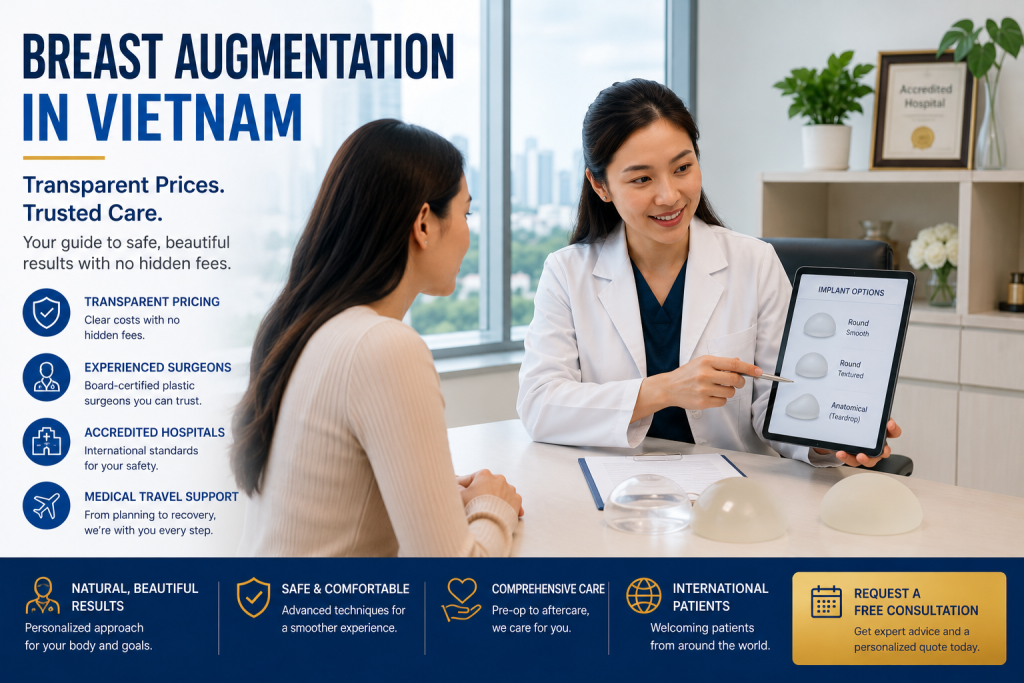
Breast augmentation cost in Vietnam can vary by implant type, surgeon experience, hospital standards, and aftercare services, making transparent consultation important for international patients.
7. Crucial Financial Checklists Before Flying
Before finalizing your deposits or boarding your flight to Vietnam, execute this final administrative checklist to ensure complete financial and clinical peace of mind:
-
Request an Itemized Inclusions Document: Verify explicitly that your quote names your chosen implant brand (e.g., Motiva Ergonomix 2.0 or Mentor MemoryGel Xtra) and contains your anesthesiologist fees, theater usage, and an overnight hospital room.
-
Confirm Payment Methods and Processing Fees: Top-tier hospitals in Vietnam accept international credit cards (Visa, Mastercard), cash conversions, or bank wire transfers. However, ask if the hospital charges a standard 1.5% to 3% credit card processing surcharge so you can manage your payment method accordingly.
-
Notify Your Bank of International Travel: Inform your home financial institutions that you will be processing large transactions in Vietnam to prevent your credit cards from being automatically flagged or frozen for fraud protection during your hospital intake process.
-
Secure Written Complication Clauses: Confirm what specific medical scenarios are covered under your hospital package terms if an extended stay or minor corrective procedure is clinically indicated during your initial recovery phase.
-
Align Your Flight Bookings with Your Medical Clearance: Do not book a non-refundable, rigid return flight too close to your surgery date. Ensure your airline ticket allows flexible date modifications in case your primary surgeon advises an extra 2 or 3 days of rest before long-haul travel.
Conclusion: Making an Informed Investment in Yourself
Choosing to undergo breast augmentation is a deeply personal, life-changing investment in your self-confidence and body harmony. Selecting Vietnam as your medical tourism destination allows you to make this investment without taking on excessive financial strain, while accessing medical care that rivals or exceeds Western standards.
By prioritizing clinical transparency, partnering with accredited medical facilities, and selecting the ideal implant technology for your specific anatomy, you can confidently embark on a smooth, stress-free path to achieving your aesthetic goals.
Are you ready to receive a personalized, 100% transparent, all-inclusive quote for your breast optimization journey? Contact a dedicated medical travel coordinator at Medtour Vietnam today to schedule your initial clinical consultation.
Planning Breast Augmentation in Vietnam?
Get clear guidance on breast implant options, transparent pricing, hospital selection, surgeon consultation, and hidden fees to avoid before you travel.