
In the heart of Southeast Asia, a beauty revolution is taking place. As we move through 2026, Nose Filler in Vietnam has become one of the most requested non-surgical procedures for international travelers. Often called a “Liquid Rhinoplasty,” this treatment offers a way to reshape, lift, and refine the nasal profile without the downtime, scars, or risks associated with traditional surgery.
Vietnam’s rise as a medical tourism powerhouse is no accident. With JCI-accredited hospitals, Western-trained aesthetic doctors, and an unbeatable price-to-quality ratio, the country is now a top-tier destination for those seeking the perfect profile.
Quick Navigation
What is Nose Filler (Liquid Rhinoplasty)?
Nose filler involves the strategic injection of dermal fillers—most commonly Hyaluronic Acid (HA)—into specific areas of the nose to alter its shape. Unlike a surgical rhinoplasty, which involves breaking bone and rearranging cartilage, fillers add volume to create the illusion of a straighter, more lifted nose.
Key Aesthetic Concerns Addressed:
-
Smoothing the Nasal Bridge: Filling the area above and below a “dorsal hump” to create a straight profile.
-
Lifting the Nasal Tip: Adding support to a drooping or “hooked” tip for a more youthful look.
-
Correcting Asymmetry: Refining small indentations or deviations.
-
Enhancing the Bridge: Adding height to a flat or low nasal bridge, a common goal in Asian aesthetic standards.
Why Choose Nose Filler in Vietnam in 2026?
Vietnam has moved past its reputation as a “budget” destination to become a center of “High-Value Excellence.”
1. Significant Cost Savings
In 2026, the price gap remains a major draw. While a liquid nose job in the USA or Australia can cost $1,000–$2,500 per session, nose filler in Vietnam typically ranges from $450 to $750. This allows patients to access premium, FDA-approved brands like Juvederm or Restylane for 60-70% less than in their home countries.
2. Specialized Expertise in the “Asian Aesthetic”
Vietnamese aesthetic doctors are globally recognized for their mastery of subtle, harmonious results. They excel at the “Asian Rhinoplasty” style—elevating the bridge and refining the tip while maintaining a natural, soft look that complements the patient’s unique facial features.
3. Safety and Technology
Reputable clinics in Ho Chi Minh City and Hanoi utilize 3D imaging technology to show patients their expected results before a single injection. Furthermore, the use of blunt-ended cannulas has become the standard for fillers in Vietnam, significantly reducing the risk of vascular complications and bruising.
Top Filler Brands Used in Vietnam
Quality is non-negotiable in Vietnam’s top clinics. In 2026, the most trusted brands for nasal augmentation include:
-
Juvederm Volux/Voluma: Known for their high structural integrity (G-Prime), making them ideal for mimicking the firmness of bone and cartilage in the nose.
-
Restylane Lyft: A favorite for precision contouring and adding height to the bridge.
-
Teosyal Ultra Deep: A premium European brand often used for long-lasting structural support.
Pro Tip: Many patients combine their nasal refinement with other facial balancing procedures. Lip fillers in Vietnam are a popular “add-on” to create a perfectly balanced profile from the side view.
The Procedure: What to Expect
A liquid rhinoplasty is often called a “lunchtime procedure” because of its speed and efficiency.
-
AI-Assisted Consultation: Your doctor will evaluate your nasal anatomy and skin thickness. Many clinics now use AI to simulate the final look.
-
Preparation: The area is cleaned with a medical-grade antiseptic.
-
Numbing: A topical anesthetic is applied for 20 minutes. Most premium fillers used in Vietnam also contain Lidocaine to ensure a painless experience.
-
Injection: The doctor precisely injects the filler. Using a cannula instead of a needle is common for nose filler in Vietnam to ensure safety and smoothness.
-
Assessment: You are given a mirror to provide feedback as the doctor makes final adjustments.
Total Time: 15–30 minutes.
Recovery and Aftercare
One of the greatest benefits of choosing a non-surgical option is the minimal downtime. Most travelers can return to their holiday activities immediately.
-
Days 1-3: You may experience mild swelling or tenderness. Avoid wearing heavy glasses that rest directly on the bridge of the nose.
-
Activities: Avoid high-intensity exercise and saunas for at least 48 hours to prevent the filler from migrating.
-
Sleep: Try to sleep on your back for the first two nights to keep the nose in a neutral position.
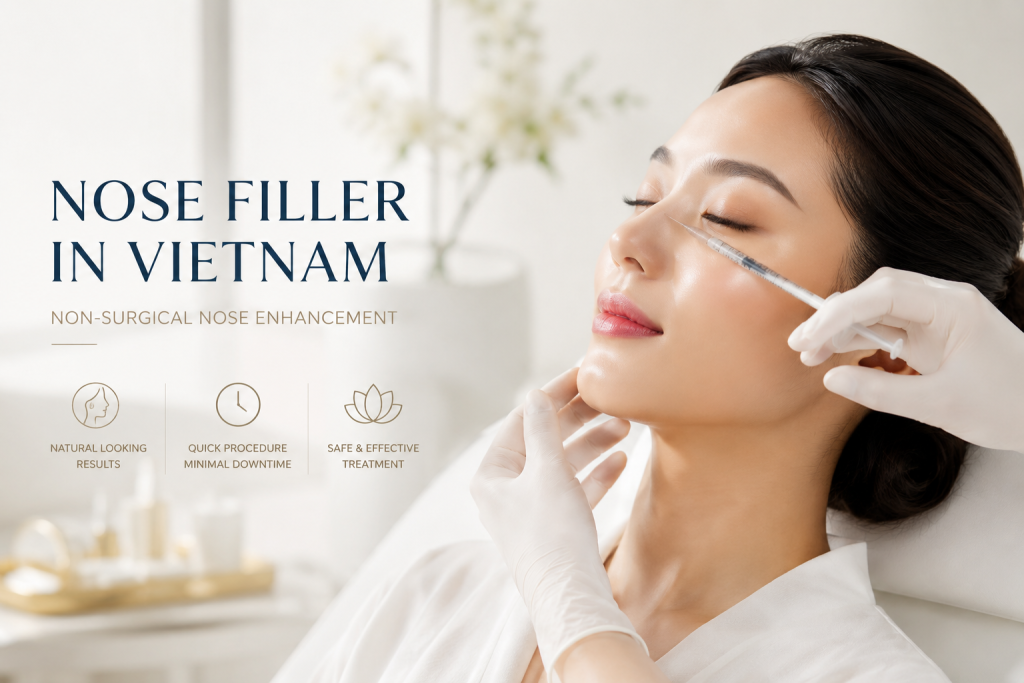
Nose filler in Vietnam is a popular non-surgical cosmetic treatment that enhances nose shape, improves bridge definition, and delivers natural-looking results with minimal downtime.
Safety First: Avoiding Risks
While non-surgical, the nose is a complex area with many blood vessels. To ensure your safety when seeking nose filler in Vietnam, follow these guidelines:
-
Verify the Practitioner: Ensure your injector is a licensed plastic surgeon or dermatologist. Membership in the International Society of Aesthetic Plastic Surgery (ISAPS) is a strong indicator of high standards.
-
Check the Product: Always ask to see the filler box, its expiration date, and its serial number.
-
Consult International Standards: The American Society of Plastic Surgeons (ASPS) highlights that while liquid rhinoplasty is safe, it must be performed by someone with an expert-level understanding of nasal vascular anatomy.
Cost Comparison: Vietnam vs. The World (2026)
| Country | Liquid Rhinoplasty Price (USD) | Savings in Vietnam |
| USA / UK | $1,200 – $2,500 | ~70% |
| Australia | $1,100 – $2,200 | ~65% |
| South Korea | $600 – $1,200 | ~30% |
| Vietnam | $450 – $750 | – |
Frequently Asked Questions (FAQ)
1. Is nose filler permanent?
No. Hyaluronic Acid fillers are naturally metabolized by the body. Results typically last between 12 and 18 months. This is often seen as a benefit for patients who want to “test drive” a new nose shape before committing to permanent surgery.
2. Can filler fix a broken nose?
Filler can camouflage small bumps or deviations caused by an old injury. However, if there is a severe internal breathing issue (deviated septum), a surgical rhinoplasty is usually required.
3. Does it hurt?
Most patients describe the sensation as a “pressure” or “slight pinch.” The numbing agents used in Vietnam’s top clinics make the procedure very tolerable.
4. Can I fly after getting nose filler?
Yes, but most doctors recommend waiting 48 hours before flying home. The change in cabin pressure can sometimes increase swelling in the immediate post-procedure period.
Conclusion: Refine Your Profile in Vietnam
Choosing nose filler in Vietnam allows you to achieve a refined, balanced facial profile without the commitment of surgery. In 2026, Vietnam offers the perfect synergy of expert medical artistry, premium global products, and exceptional value.
Whether you are looking to smooth a bump or lift the tip of your nose, the aesthetic specialists in Ho Chi Minh City and Hanoi are equipped to provide world-class results. Ready to take the first step? Explore our detailed breakdown of fillers in Vietnam to find the best clinic for your transformation.
Considering Nose Filler in Vietnam?
Medtour Vietnam can help you connect with trusted cosmetic clinics, compare estimated treatment costs, and arrange your consultation for non-surgical nose enhancement in Vietnam.