
Kidney transplantation is the most effective long-term treatment for patients with end-stage renal disease (ESRD). While dialysis can help manage kidney failure, a transplant offers better quality of life and improved survival rates. One of the most common forms of transplantation worldwide is the living donor kidney transplant, where a healthy person donates one kidney to a patient in need.
In recent years, Vietnam has become an emerging destination for transplant surgery, attracting both domestic and international patients seeking advanced medical care at more affordable costs. Understanding how living donor kidney transplant in Vietnam works is essential for patients considering treatment in the country.
This guide explains the living donor transplant process, eligibility requirements, legal regulations, costs, and what international patients should know before undergoing kidney transplantation in Vietnam.
Many patients with end-stage renal disease are now considering kidney transplant in Vietnam because the country offers experienced surgeons and modern transplant centers.
Quick Navigation
What Is a Living Donor Kidney Transplant?
A living donor kidney transplant is a procedure in which a healthy individual donates one of their kidneys to a patient with kidney failure. Humans have two kidneys, but a person can live a healthy life with only one functioning kidney.
Compared with deceased donor transplants, living donor transplants offer several advantages:
-
Shorter waiting time for surgery
-
Better compatibility between donor and recipient
-
Higher success rates in many cases
-
Improved long-term kidney function
Because of the global shortage of donor organs, living donor transplants have become the most common type of kidney transplantation in many countries.
Patients who are considering kidney transplant in Vietnam often rely on living donors, especially if they are international patients seeking treatment abroad.
Why Living Donor Kidney Transplant Is Common in Vietnam
Vietnam has strict regulations governing organ donation. These laws aim to prevent organ trafficking and ensure that all transplants are conducted ethically and safely.
Due to these regulations, kidney transplants in Vietnam most commonly involve living donors who are related to the recipient. Hospitals must verify the relationship between donor and recipient to ensure that the donation is voluntary.
For international patients, this typically means bringing a compatible donor—often a family member—to Vietnam for evaluation and transplant surgery.
Living donor transplantation offers several advantages in Vietnam:
-
Faster access to surgery when a compatible donor is available
-
Lower treatment costs compared with Western countries
-
Highly experienced transplant surgeons
-
Modern medical facilities in major cities
These factors have contributed to Vietnam’s growing reputation in the field of organ transplantation.
Who Can Be a Living Kidney Donor in Vietnam?
Living kidney donors must meet both legal and medical requirements before they are approved for transplantation.
Family Relationship Requirement
In Vietnam, living donors are typically close relatives of the recipient. These may include:
-
Parents
-
Children
-
Siblings
-
Spouses
-
Other close family members
Hospitals must verify this relationship through official documents.
These may include:
-
Birth certificates
-
Marriage certificates
-
Family registration documents
-
Passport identification
The purpose of this rule is to prevent illegal organ trade and ensure ethical transplantation.
Patients should understand the kidney donor requirements in Vietnam before planning a transplant procedure.
Medical Requirements for Living Kidney Donors
Even if a donor meets the legal requirements, they must also pass a comprehensive medical evaluation.
Doctors must ensure that the donor is healthy enough to donate a kidney safely.
Age Requirement
Most kidney donors are between 18 and 65 years old.
Donors must be adults capable of providing informed consent.
Good Overall Health
Potential donors must be free from serious medical conditions such as:
-
Diabetes
-
Severe hypertension
-
Kidney disease
-
Heart disease
-
Chronic infections
These conditions may disqualify a person from donating a kidney.
Normal Kidney Function
Doctors will test the donor’s kidney function to ensure both kidneys are healthy.
Tests may include:
-
Blood creatinine tests
-
Glomerular filtration rate (GFR)
-
Urine tests
-
Kidney imaging scans
Donors must have strong kidney function so they can safely live with one kidney after donation.
Blood Type Compatibility
Donor and recipient blood types must be compatible for the transplant to proceed safely.
In some advanced cases, ABO-incompatible transplants may be possible, but compatibility remains an important factor.
Tissue Matching (HLA Testing)
Doctors perform tissue typing tests to determine how closely the donor matches the recipient.
A closer match generally improves transplant success rates.
Crossmatch Test
A crossmatch test checks whether the recipient’s immune system will attack the donor kidney.
If the crossmatch test is positive, the transplant may not be possible.
Living Donor Evaluation Process in Vietnam
Before surgery, both the donor and recipient must undergo a thorough medical evaluation.
This process ensures that the transplant is safe for both individuals.
Step 1: Medical Record Review
Doctors review the recipient’s medical history and kidney disease status.
Donor medical records are also evaluated during this stage.
Step 2: Blood Tests
Blood tests help determine:
-
Blood type compatibility
-
Infection screening
-
Overall health
Step 3: Imaging Tests
Doctors use imaging technologies to examine the donor’s kidneys.
These may include:
-
CT scans
-
Ultrasound
-
MRI scans
These tests help surgeons understand the donor’s kidney anatomy before surgery.
Step 4: Psychological Evaluation
Doctors may also evaluate the donor’s psychological readiness.
The donor must fully understand the risks and provide voluntary consent.
Step 5: Legal Documentation Review
Hospitals must verify the relationship between donor and recipient before approving the transplant.
All documents must comply with Vietnamese law.
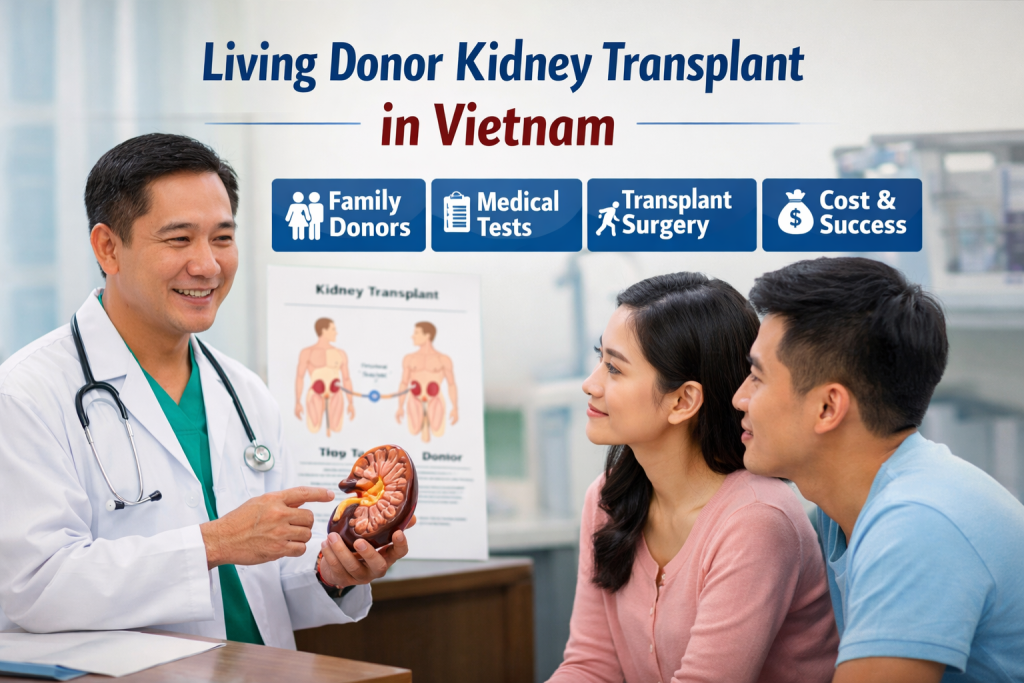
A transplant specialist explains the living donor kidney transplant process in Vietnam to a patient and family donor.
The Living Donor Kidney Transplant Procedure
Living donor kidney transplant surgery involves two separate operations:
-
Donor surgery
-
Recipient surgery
Both procedures are performed by experienced transplant surgeons.
Donor Surgery
The donor undergoes a procedure called nephrectomy, where one kidney is removed.
Modern hospitals often use laparoscopic surgery, which involves smaller incisions and faster recovery.
Recipient Surgery
The donor kidney is transplanted into the recipient’s lower abdomen.
The patient’s original kidneys usually remain in place unless there is a medical reason to remove them.
The transplanted kidney is connected to the recipient’s blood vessels and urinary tract.
The surgery typically lasts 3–5 hours.
Recovery After Living Donor Kidney Transplant
Recovery times vary for donors and recipients.
Donor Recovery
Most donors stay in the hospital for 3–5 days.
Full recovery usually takes 4–6 weeks.
Most donors can return to normal daily activities after recovery.
Recipient Recovery
Recipients typically stay in the hospital for 10–14 days after surgery.
Patients must take lifelong immunosuppressive medications to prevent organ rejection.
Regular follow-up tests are required to monitor kidney function.
Cost of Living Donor Kidney Transplant in Vietnam
One of the major reasons international patients choose Vietnam is affordability.
The cost of kidney transplant surgery in Vietnam is significantly lower compared with many developed countries.
Typical price range:
$15,000 – $25,000 USD
This is much lower than:
United States: $300,000+
Australia: $70,000+
Europe: $80,000+
Costs may vary depending on:
-
Hospital
-
Patient condition
-
Length of hospital stay
-
Post-operative care
Patients should request a personalized medical quote before planning their treatment.
Success Rate of Living Donor Kidney Transplant
Living donor kidney transplants often have excellent outcomes.
Many transplant centers report:
-
First-year survival rate above 90%
-
Better long-term kidney function compared to deceased donor transplants
Success rates depend on several factors:
-
Donor compatibility
-
Surgical expertise
-
Patient health condition
-
Post-transplant care
Vietnamese transplant teams follow international medical standards to ensure safe and successful outcomes.
Advantages of Living Donor Kidney Transplant
Living donor transplantation offers several benefits for patients.
These include:
Shorter waiting time
Better donor compatibility
Higher success rates
Improved long-term kidney function
Because of these advantages, many patients worldwide choose living donor transplantation whenever possible.
Considerations for International Patients
International patients considering treatment in Vietnam should prepare carefully before traveling.
Important steps include:
-
Preparing medical records
-
Confirming donor compatibility
-
Arranging travel and visa documents
-
Coordinating with hospitals and transplant teams
Understanding the full process of kidney transplant treatment in Vietnam can help patients plan their treatment journey more effectively.
Final Thoughts
Living donor kidney transplantation offers hope for patients suffering from severe kidney disease. By receiving a healthy kidney from a compatible donor, patients can regain kidney function and enjoy a better quality of life.
Vietnam has become a promising destination for transplant surgery thanks to experienced surgeons, modern hospitals, and affordable treatment costs. However, the procedure is strictly regulated to ensure ethical and safe transplantation.
Patients considering living donor transplantation should understand the medical requirements, legal regulations, and evaluation process before planning their surgery.
Learning more about kidney transplant in Vietnam can help international patients make informed decisions about their treatment options and prepare for a successful transplant journey.