
Herbal medicine in Vietnam plays a vital role in the country’s healthcare system and is deeply rooted in thousands of years of traditional healing practices. Known locally as Traditional Vietnamese Medicine, herbal therapy is widely used for disease prevention, chronic condition management, and post-treatment recovery.
In recent years, Vietnam has become an emerging destination for medical tourism not only for modern medical treatments but also for holistic and natural therapies. Among them, herbal medicine stands out as a safe, affordable, and effective option for international patients seeking gentle healing with fewer side effects.
This article provides a comprehensive overview of herbal medicine in Vietnam, including how it works, common herbs used, conditions treated, safety standards, treatment process, costs, and why Vietnam is gaining international recognition in traditional medicine.
Quick Navigation
What Is Herbal Medicine?
Herbal medicine is a form of traditional healthcare that uses natural plant-based substances such as roots, leaves, stems, flowers, seeds, and bark to prevent and treat illnesses.
Unlike modern pharmaceuticals that often target symptoms, herbal medicine focuses on restoring internal balance, strengthening organ function, and supporting the body’s natural healing mechanisms.
In Vietnam, herbal medicine is not considered folk therapy. It is officially regulated by the Ministry of Health and taught in medical universities alongside Western medicine.
History of Herbal Medicine in Vietnam
Vietnamese herbal medicine developed through centuries of experience with local medicinal plants and was influenced by traditional Chinese medicine while maintaining its own unique identity.
Historical medical texts, village healers, and royal physicians all contributed to the formation of Vietnam’s herbal system. During the 20th century, the Vietnamese government formally integrated traditional medicine into national healthcare.
Today, Vietnam operates:
- National Hospital of Traditional Medicine
- Provincial traditional medicine hospitals
- Traditional medicine departments in major general hospitals
This integration ensures both safety and clinical effectiveness.
Principles of Herbal Medicine
Herbal medicine in Vietnam is based on several key principles:
1. Balance of Yin and Yang
Health is maintained when Yin and Yang energies are balanced. Herbal formulas aim to restore this harmony.
2. Regulation of Organ Systems
Treatment focuses on organs such as the liver, spleen, kidneys, lungs, and heart.
3. Root Cause Treatment
Rather than treating symptoms alone, doctors aim to address the underlying imbalance.
4. Individualized Therapy
Each patient receives a customized herbal prescription based on constitution, age, lifestyle, and condition.
Common Medicinal Herbs Used in Vietnam
Vietnam is one of Southeast Asia’s richest countries in medicinal plant biodiversity, with more than 4,000 medicinal herbs identified.
Some commonly used herbs include:
- Ginseng (Panax ginseng) – boosts energy and immunity
- Licorice root – harmonizes herbal formulas
- Turmeric – anti-inflammatory and digestive support
- Dang quai (Angelica sinensis) – blood circulation and women’s health
- Astragalus – immune system strengthening
- Lotus seed and leaf – calming and digestive support
- Artichoke – liver detoxification
- Vietnamese ginseng (Ngoc Linh ginseng) – premium medicinal herb
Many herbs are locally cultivated under controlled conditions.
Conditions Treated with Herbal Medicine
Herbal medicine in Vietnam is commonly used to treat and support:
Chronic Conditions
- Arthritis and joint pain
- Chronic fatigue
- Digestive disorders
- Liver dysfunction
- High blood pressure (supportive)
Neurological and Recovery Care
- Post-stroke rehabilitation
- Nerve weakness
- Sleep disorders
Women’s Health
- Menstrual irregularities
- Menopause symptoms
- Hormonal imbalance
Respiratory Conditions
- Chronic cough
- Sinusitis
- Allergic rhinitis
Wellness and Prevention
- Immune boosting
- Detox programs
- Stress management
- Anti-aging support
Herbal medicine is frequently combined with acupuncture and physiotherapy for enhanced results.
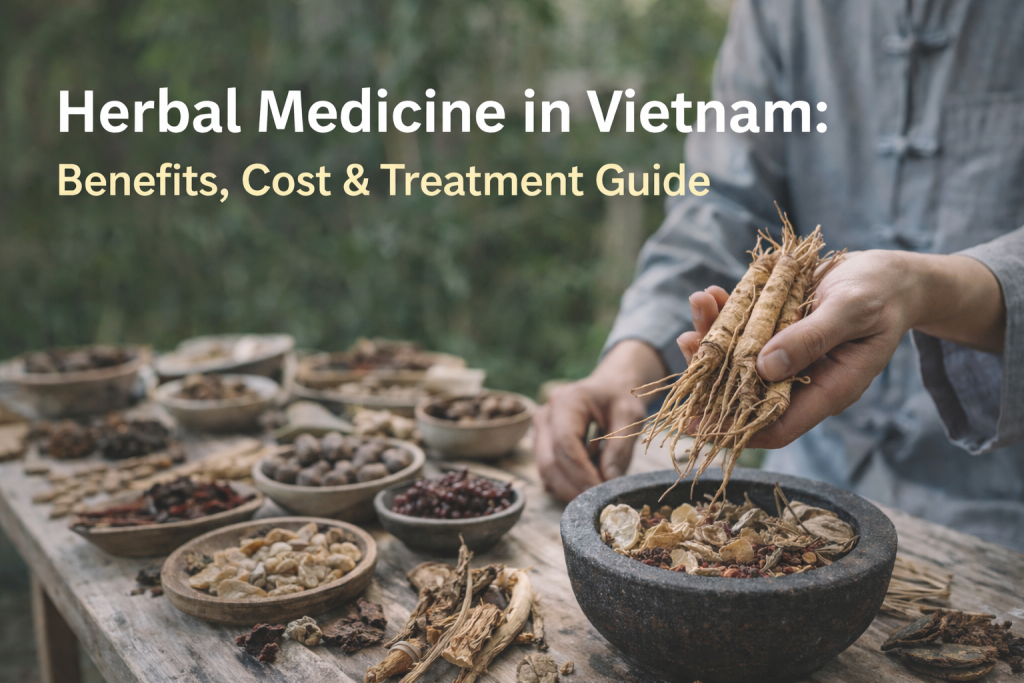
Herbal medicine in Vietnam – natural healing based on traditional Vietnamese medicine
Forms of Herbal Medicine in Vietnam
Herbal treatments may be prescribed in various forms:
- Decoction (boiled herbal tea)
- Powder or granules
- Pills or capsules
- Herbal plasters and balms
- Herbal baths
- Medicinal wines
Modern hospitals increasingly use standardized extracts for consistency and safety.
Herbal Medicine Treatment Process
Step 1: Medical Consultation
Doctors assess the patient through:
- Medical history
- Pulse diagnosis
- Tongue examination
- Review of test results
Step 2: Personalized Prescription
A customized herbal formula is designed specifically for the patient.
Step 3: Treatment Duration
Treatment usually lasts from 7 to 30 days depending on the condition.
Step 4: Follow-Up
Dosage and formula may be adjusted based on response.
Safety and Regulation
Herbal medicine in Vietnam is regulated under the Ministry of Health.
Safety standards include:
- Licensed traditional medicine doctors
- Controlled herbal sourcing
- Quality testing for contaminants
- Standardized dosage guidelines
Major hospitals comply with international hygiene and pharmacological safety protocols.
Cost of Herbal Medicine in Vietnam
Herbal medicine is highly affordable compared to Western countries.
Average Costs
- Consultation: USD 10–30
- Herbal prescriptions (7–14 days): USD 30–100
- Long-term therapy (1 month): USD 100–250
Prices vary depending on herb quality and treatment duration.
Best Places for Herbal Medicine in Vietnam
Hanoi
- National Hospital of Traditional Medicine
- Vietnam Institute of Traditional Medicine
Ho Chi Minh City
- Traditional Medicine Hospital HCMC
- University Medical Center – Traditional Medicine Department
Central Vietnam
- Da Nang Traditional Medicine Centers
- Wellness resorts offering herbal therapy
Many facilities provide English-speaking services for international patients.
Herbal Medicine and Medical Tourism in Vietnam
Herbal medicine is increasingly included in medical tourism packages such as:
- Post-surgery recovery programs
- Stroke rehabilitation
- Chronic pain management
- Wellness and detox retreats
International patients appreciate Vietnam for its personalized care, long consultation time, and holistic approach.
Benefits of Choosing Herbal Medicine in Vietnam
- Natural and gentle treatment
- Fewer side effects
- Personalized therapy
- Affordable long-term care
- Experienced licensed doctors
- Integration with modern diagnostics
- Rich medicinal plant resources
Who Should Consider Herbal Medicine?
Herbal medicine is suitable for:
- Patients with chronic conditions
- Individuals seeking preventive healthcare
- Post-treatment recovery patients
- Those sensitive to pharmaceuticals
It should always be used under medical supervision, especially for patients taking Western medications.
Frequently Asked Questions
Is herbal medicine safe?
Yes, when prescribed by licensed doctors and properly monitored.
Can herbal medicine replace Western medicine?
It is best used as complementary or integrative treatment.
How fast are results?
Some patients notice improvement within 1–2 weeks; chronic conditions require longer treatment.
Future of Herbal Medicine in Vietnam
Vietnam continues to invest in traditional medicine research, standardized herbal production, and international cooperation.
With growing global demand for natural healthcare, herbal medicine in Vietnam is expected to play an increasingly important role in international medical tourism.
Conclusion
Herbal medicine in Vietnam represents a powerful blend of ancient wisdom and modern medical regulation. With rich natural resources, licensed practitioners, and affordable treatment costs, Vietnam offers international patients a safe and effective destination for herbal therapy.
Whether used for chronic disease management, recovery support, or preventive healthcare, herbal medicine in Vietnam provides a holistic healing experience rooted in balance, nature, and personalized care.
As global interest in natural medicine continues to rise, Vietnam stands out as one of Southeast Asia’s most promising centers for traditional and herbal medicine in 2026 and beyond.