
When exploring options for circumcision in Vietnam, international patients, expatriates, and medical travelers discover a highly modernized healthcare sector that blends world-class surgical precision with absolute privacy and structural affordability. Circumcision—the surgical removal of the skin covering the tip of the penis (the foreskin)—is one of the oldest and most frequently performed surgical procedures globally. While historically rooted in cultural or religious traditions, modern clinical consensus highlights its significant medical indicators, particularly for adult men suffering from chronic, painful, or recurrent urological conditions.
While a routine medical procedure, undergoing adult circumcision in Western nations like the United States, Canada, Australia, or the United Kingdom can present unexpected hurdles. In many public healthcare systems, adult circumcision for non-emergency conditions is classified as “low priority” or elective, leading to waitlists that can span several months or even years. Conversely, pursuing the procedure through private clinics results in high out-of-pocket expenses, frequently ranging from $2,000 to over $4,500, which are rarely covered by standard private health insurance.
These logistical delays and steep domestic costs have fueled a significant rise in medical tourism to Southeast Asia. Vietnam has established itself as a premier destination for advanced andrology and minor urological interventions. By equipping internationally trained specialists with cutting-edge medical hardware—such as automated stapler systems—and housing them within pristine, internationally accredited hospitals, Vietnam offers overseas patients a seamless, rapid, and highly cost-effective clinical pathway to resolving their intimate health concerns.
This comprehensive guide covers everything from medical indications and advanced techniques to cost structures and top hospital networks for adult circumcision in Vietnam.
Quick Navigation
1. Medical Indications for Adult Circumcision
While newborn circumcision is common in several regions worldwide, adult circumcision is primarily driven by clear, diagnostic medical conditions that impact physiological function, comfort, and intimate well-being.
Primary Pathological Indicators
According to clinical criteria established by the World Health Organization (WHO), adult therapeutic circumcision is highly indicated for several chronic conditions:
-
Phimosis: A restrictive condition where the foreskin is too tight to be pulled back over the glans (the head of the penis). This can cause severe pain during erections, structural tearing, and difficulty maintaining basic hygiene, which often leads to localized infections.
-
Paraphimosis: A medical emergency that occurs when the foreskin is retracted behind the glans but becomes trapped and cannot return to its natural position. This creates a tight band that restricts blood flow, causing rapid swelling and requiring immediate clinical intervention to prevent tissue damage.
-
Chronic Balanitis and Balanoposthitis: Recurrent inflammation or persistent fungal/bacterial infections affecting the glans and foreskin. When topical treatments and lifestyle changes fail, removing the foreskin permanently eliminates the warm, moist environment where pathogens thrive.
-
Condyloma Acuminata (Genital Warts): Large or extensive viral lesions clustering beneath the foreskin that are difficult to eradicate with localized ablation or topical therapies alone.
Clinical Preventative and Systemic Benefits
Extensive epidemiological studies published by the Centers for Disease Control and Prevention (CDC) have confirmed that adult male circumcision offers substantial long-term health protections:
-
Reduction in STI Transmission: Circumcision significantly reduces a man’s risk of acquiring HIV from an infected female partner by approximately 50% to 60%, while also lowering the transmission rates of Human Papillomavirus (HPV) and Herpes Simplex Virus Type 2 (HSV-2).
-
Enhanced Intimate Hygiene: Eliminating the foreskin permanently removes the space where smegma (a natural buildup of dead skin cells and oils) accumulates, significantly lowering the risk of urinary tract infections (UTIs).
-
Prevention of Penile Malignancies: Chronic inflammation of the foreskin is a known risk factor for penile cancer. Circumcision reduces the incidence of chronic balanitis, providing a protective effect against cellular mutations.
Interconnections with Advanced Urology
Because the anatomical structures of the male groin are highly integrated, chronic foreskin conditions can sometimes mask or complicate deeper physical issues. For example, severe, untreated paraphimosis or poorly managed infections can lead to extensive scarring, tissue necrosis, or structural deformities that require comprehensive surgical remodeling.
If a severe injury, chronic condition, or previous poorly executed procedure has left you with significant structural damage or scaring on the shaft, explore our complete guide on Penile Reconstruction in Vietnam. For a broader evaluation of diagnostic technologies, advanced robotic operations, and the full scope of male reproductive healthcare available across Southeast Asia, consult our master manual on Urology in Vietnam: Treatments, Costs & Best Hospitals.
2. Why Choose Vietnam for Adult Circumcision?
Vietnam’s private medical sector has undergone an intensive phase of modernization, positioning the country as an elite, high-value alternative to traditional medical tourism destinations.
Internationally Trained Specialists
The senior urologists and andrologists directing the international men’s health departments in Vietnam possess excellent clinical credentials. Many have completed advanced surgical training, specialized fellowships, and clinical residencies across France, Germany, South Korea, and the United States. They perform minor surgeries with meticulous attention to detail, prioritizing both excellent functional healing and optimal cosmetic symmetry.
Access to Advanced Minimally Invasive Technologies
Premium Vietnamese clinics minimize patient discomfort by moving away from traditional freehand scalpel methods. Top-tier institutions across Hanoi and Ho Chi Minh City feature automated circumcision staplers (such as the Surkon device), which mechanically cut and staple the tissue in a single, ultra-precise motion, vastly reducing procedure times and recovery windows.
Total Discretion and Seamless Support
Given the deeply personal nature of andrological treatments, absolute privacy is a standard expectation. Traveling to Vietnam allows international patients to complete their procedure and navigate the initial healing phases away from their local social and professional circles. Premium international patient departments provide dedicated case managers who oversee everything from your digital pre-arrival assessments to bilingual medical translation, ensuring your journey is completely stress-free.
3. Advanced Circumcision Techniques Available in Vietnam
Premium urology divisions in Vietnam offer a choice of advanced techniques, allowing the surgeon to tailor the procedure to the patient’s anatomical requirements and cosmetic preferences.
1. Disposable Anastomat (Stapler) Circumcision
This represents the most popular, modern, and minimally invasive method utilized in premium Vietnamese wings:
-
The Procedure: The surgeon utilizes a specialized, single-use automated device that fits over the glans. With one swift activation, the device precisely removes the excess foreskin while simultaneously applying a neat ring of tiny, biocompatible silicone or titanium staples to seal the wound edges.
-
The Benefits: The entire process takes only 5 to 10 minutes under local anesthesia. Because it eliminates traditional manual cutting and hand-sewn knotting, there is minimal bleeding, significantly reduced post-operative swelling, and a highly symmetrical, clean aesthetic result. The staples drop out naturally on their own within 14 to 21 days, removing the need for painful suture extractions.
2. Laser Circumcision
An advanced technique favored for its exceptional tissue handling and clean operating field:
-
The Procedure: The surgeon maps out the precise incision line and utilizes a high-precision medical laser beam (typically a $CO_2$ laser) to smoothly divide the excess foreskin tissue.
-
The Benefits: The laser instantly cauterizes and seals microscopic blood vessels as it cuts. This close-to-zero blood loss approach minimizes bruising and local tissue trauma, resulting in less intense post-operative pain and a highly refined scar line.
3. Traditional Aesthetic Conventional Cut
A reliable, time-tested approach reserved for complex structural variations:
-
The Procedure: The surgeon carefully dissects the excess foreskin using a standard scalpel or surgical scissors, maps out custom margins to accommodate any pre-existing scar tissue from chronic infections, and closes the wound using ultra-fine, absorbable sutures.
-
The Benefits: This method allows for maximum customization, making it the ideal choice for patients with severe phimosis, embedded plaques, or asymmetrical anatomical scarring that cannot accommodate automated stapler devices.
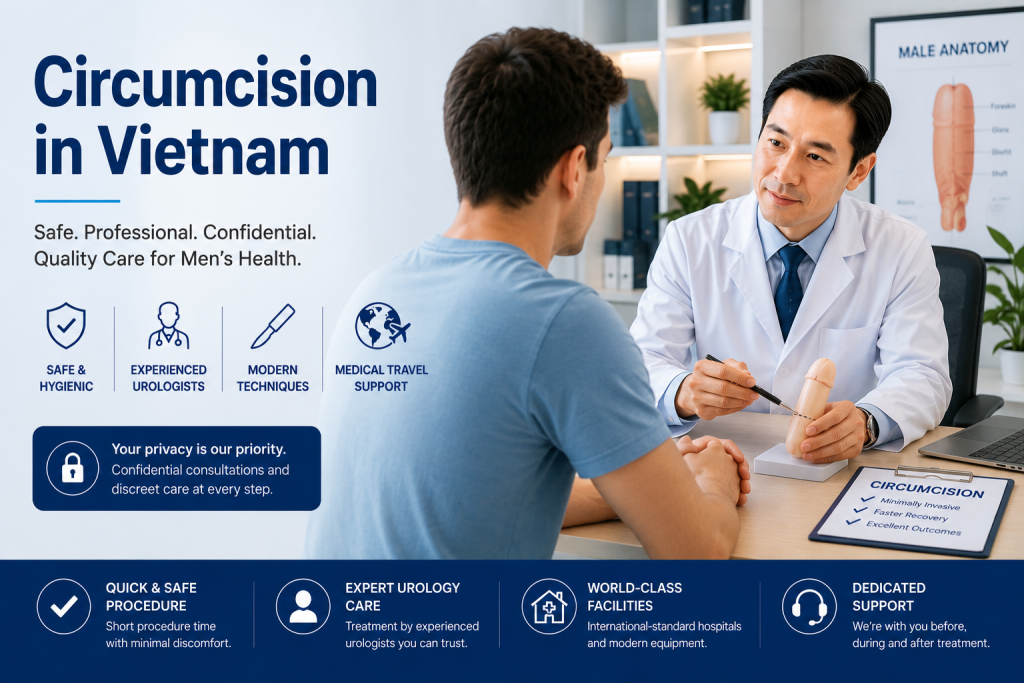
Circumcision in Vietnam offers international patients access to confidential urology consultation, experienced specialists, modern techniques, and personalized medical travel support.
4. How Much Does Circumcision Cost in Vietnam? (2026 Price Guide)
Financial transparency is a fundamental pillar of medical travel. Overseas patients choosing private medical care in Vietnam routinely save between 65% to 85% compared to private clinic fees in Western countries, with zero compromises on sterile safety or material quality.
Global Cost Comparison Table (USD)
| Medical Service / Technique | United States | Australia | United Kingdom | Vietnam (Premium Wing) |
| Specialist Consult + Local Pre-Op Blood Work | $400 – $750 | $450 – $800 AUD | £300 – £550 | $80 – $150 |
| Traditional Conventional Circumcision | $2,000 – $3,500 | $2,200 – $3,800 AUD | £1,500 – £2,800 | $350 – $500 |
| Advanced Laser Circumcision | $2,500 – $4,000 | $2,800 – $4,500 AUD | £1,800 – £3,200 | $450 – $650 |
| Premium Automated Stapler Circumcision | $2,800 – $4,500 | $3,000 – $5,000 AUD | £2,000 – £3,600 | $550 – $800 |
5. Top Accredited Hospitals for Andrological Care in Vietnam
To guarantee absolute sterile safety, accurate diagnostics, and an outstanding cosmetic result, patients should select fully licensed multi-specialty hospitals featuring dedicated international patient wings.
FV Hospital – Urology & Andrology Department (Ho Chi Minh City)
Situated in Ho Chi Minh City’s District 7, FV Hospital is highly celebrated as one of the premier private healthcare centers in Vietnam to maintain prestigious Joint Commission International (JCI) accreditation. This represents the absolute gold standard for global healthcare safety, strict infection control, and premium quality management. Their dedicated Urology & Andrology Department treats the full spectrum of male sexual health and minor surgical interventions inside pristine operating suites. Their efficient international patient department coordinates everything from multi-language translation to global health insurance processing.
Vinmec International Hospital Network (Hanoi & Ho Chi Minh City)
Operated by Vingroup, the JCI-accredited Vinmec International Hospital network—including Vinmec Times City in Hanoi and Vinmec Central Park in Ho Chi Minh City—features exceptional infrastructure. Their andrology units are equipped with advanced, single-use automated stapler devices and high-precision laser systems. Vinmec provides international travelers with highly personalized concierge services, private recovery rooms, and dedicated case managers to oversee the entire medical journey.
Binh Dan Hospital – Specialized Andrology Wing (Ho Chi Minh City)
For patients looking for leading academic authority, Binh Dan Hospital is historically recognized as the foundational pioneer and premier institution for specialized andrology and male reproductive medicine in Vietnam. Their high-end international wing allows foreign patients to be treated directly by senior professors and department heads who manage some of the highest volumes of complex sexual health and reconstructive cases in the region.
6. The Medical Travel and Clinical Journey Timeline
Undergoing minor urological surgery abroad requires a structured, well-organized timeline to maximize safety and comfort from your initial online assessment to your return flight.
Phase 1: Pre-Arrival Digital Assessment
Your care pathway begins entirely online. Through secure, encrypted digital channels, you will share your medical history, symptoms, and any relevant clinical photos with an international case coordinator. Your assigned surgeon will review this data during a virtual video consultation to confirm the primary diagnosis (such as phimosis), recommend the optimal surgical technique (such as an automated stapler vs. a laser cut), and provide an all-inclusive, transparent financial quote.
Phase 2: In-Person Procedure and Day of Care
-
Pre-Op Preparation: Upon arrival at the hospital, you will complete brief, routine pre-operative blood work and an in-person physical evaluation.
-
The Operation: You are escorted into a sterile outpatient surgical suite. The surgeon applies a highly effective local anesthetic block around the base of the penis, ensuring you feel completely numb and experience zero pain. The selected technique (such as the automated stapler) is executed smoothly within 10 to 20 minutes.
-
Immediate Discharge: After a brief 30-to-60-minute post-operative observation period in a private recovery lounge, you will receive your recovery medications and be cleared to return directly to your hotel.
Phase 3: Healing and Activity Recovery Milestones
-
Days 1 – 3 (Rest & Recovery): Focus on quiet rest at your hotel. Mild localized swelling, bruising, and sensitivity are completely normal and easily managed with prescribed oral anti-inflammatories and antibiotics. Keep the surgical dressing clean and dry.
-
Day 5 (Clinical Follow-Up): You return to the hospital for a quick follow-up appointment. The surgeon examines the incision line, removes the primary dressing, and provides a formal “Fit to Fly” flight safety clearance.
-
Weeks 3 – 4 (Complete Structural Healing): Local swelling and bruising fade completely. If an automated stapler was used, the tiny silicone staples will drop out naturally during your daily showers. Most patients can comfortably resume strenuous exercise and gym workouts.
-
Week 6 (Full Clearence): The delicate incision line is fully matured, stable, and flexible. Following a final digital checkup with your surgeon, you are cleared to safely resume full physical and sexual intimacy with complete confidence.
7. Practical Travel and Lifestyle Guide for International Patients
To ensure your medical travel experience in Vietnam is smooth and completely comfortable, keep these practical travel tips in mind.
Streamlined Visas and Local Transit
Securing entry into Vietnam is highly efficient via the government’s official E-visa portal online, which easily grants a stay of 30 or 90 days with single or multiple entries for international travelers. For local transportation, avoid unverified street taxis and utilize modern, air-conditioned ride-hailing applications like Grab. This application provides transparent, upfront pricing directly on your smartphone, entirely eliminating any language barriers, currency confusion, or local route disputes.
Choosing Your Recovery Accommodation
When booking your hotel, look for premium 4-star or 5-star properties located within a convenient 10-to-15-minute drive of your primary medical center. Vietnam’s luxury hospitality sector is highly affordable, allowing you to recover in exceptional comfort, access room service, and enjoy a peaceful environment at a fraction of Western rates.
Because regions like Southern Vietnam experience year-round tropical warmth and humidity, pack lightweight, loose-fitting cotton clothing and supportive underwear to maximize your physical comfort, minimize local movement, and keep your surgical incision sites perfectly cool, clean, and dry during your initial post-operative recovery walks.
Conclusion: Achieving Long-Term Comfort and Health
Undergoing adult circumcision in Vietnam is a highly safe, technologically advanced, and confidential path to permanently resolving painful foreskin conditions and upgrading your personal health. By partnering with the country’s premier, JCI-accredited international hospitals, you gain direct access to elite, internationally trained specialists and cutting-edge minimally invasive techniques while saving thousands of dollars compared to Western clinical costs.
When planning your care, always prioritize established clinical quality: select fully licensed medical wings with recognized international credentials, work with verified board-certified specialists, and verify that your tailored treatment package is completely transparent and all-inclusive. With a properly structured medical plan, your trip to Vietnam will provide a safe, permanent solution that lets you return home with a renewed sense of health, comfort, and personal confidence.
Frequently Asked Questions (FAQs)
1. Does adult circumcision affect sexual sensation or performance?
No. Comprehensive clinical studies indicate that adult circumcision does not negatively impact long-term sexual satisfaction, erectile function, or the ability to achieve orgasms. While the glans penis may experience temporary hypersensitivity during the first 2 to 3 weeks of recovery as it adjusts to being exposed, the nerve pathways mature rapidly, leading to normal, comfortable, and often improved intimate experiences.
2. How long do I need to remain in Vietnam for a circumcision procedure?
Because circumcision is an outpatient procedure performed under local anesthesia, your required stay in the country is brief. International patients should plan to remain in Vietnam for a minimum of 5 to 7 days. This window safely accommodates your pre-operative physical workup, the procedure day, several days of initial hotel rest, and your vital day-5 follow-up evaluation where your surgeon checks the wound and issues your formal “Fit to Fly” flight safety clearance.
3. Is the automated stapler technique suitable for all patients?
The automated stapler technique is the premier choice for the vast majority of adult men due to its rapid execution and superior cosmetic results. However, it may not be suitable for patients with severe anatomical distortions, extensive scar tissue from years of recurrent infections, or hidden penis conditions. During your pre-arrival digital assessment, senior Vietnamese urologists will carefully evaluate your baseline anatomy to ensure the safest and most effective technique is selected for your specific case.
Considering Circumcision in Vietnam?
Get confidential guidance on circumcision surgery, urology specialists, estimated costs, clinic selection, and appointment planning in Vietnam.