
Robotic surgery in Vietnam has expanded across several medical specialties, offering selected patients access to minimally invasive procedures using advanced surgical systems such as the da Vinci Xi. Hospitals in Hanoi and Ho Chi Minh City have introduced robotic technology for urological, colorectal, gynecological, thoracic and other complex surgical procedures.
For international patients, robotic-assisted surgery may provide an alternative to conventional laparoscopic or open surgery. Potential advantages include smaller incisions, reduced blood loss and shorter hospital stays for certain procedures. However, outcomes depend on the patient’s condition, the type of operation and the experience of the surgical team.
Vietnam’s robotic surgery services have continued to develop in 2026. FV Hospital officially opened its da Vinci Robotic Surgery Centre in March, while Vinmec launched a connected network of high-tech robotic surgery centers in June.
This guide explores robotic surgery in Vietnam, including available procedures, surgical technology, hospital options, treatment costs, potential risks and the arrangements international patients should consider before traveling.
Quick Navigation
1. What Is Robotic Surgery?
Robotic surgery, also known as robot-assisted surgery, is a surgical technique in which a trained surgeon operates specialized instruments through a computer-controlled robotic system.
Unlike the impression sometimes created by its name, the robot does not independently perform the operation. The surgeon controls the instruments throughout the procedure and makes the clinical decisions.
Most robotic procedures involving abdominal, pelvic or thoracic organs are performed using minimally invasive techniques. Small incisions allow the insertion of a camera and robotic instruments into the surgical area.
The system can provide magnified, three-dimensional visualization and instruments with a greater range of motion than conventional laparoscopic tools. These features are particularly useful when surgeons must operate within confined anatomical spaces or perform complex dissection and suturing.
The U.S. Food and Drug Administration recognizes robotic-assisted systems for use in a range of surgical specialties, including general, colorectal, gynecological, thoracic and urological surgery.
How does the da Vinci surgical system work?
The da Vinci platform is one of the robotic surgical technologies available in Vietnam. Its main components include a surgeon console, robotic arms and a high-definition visualization system.
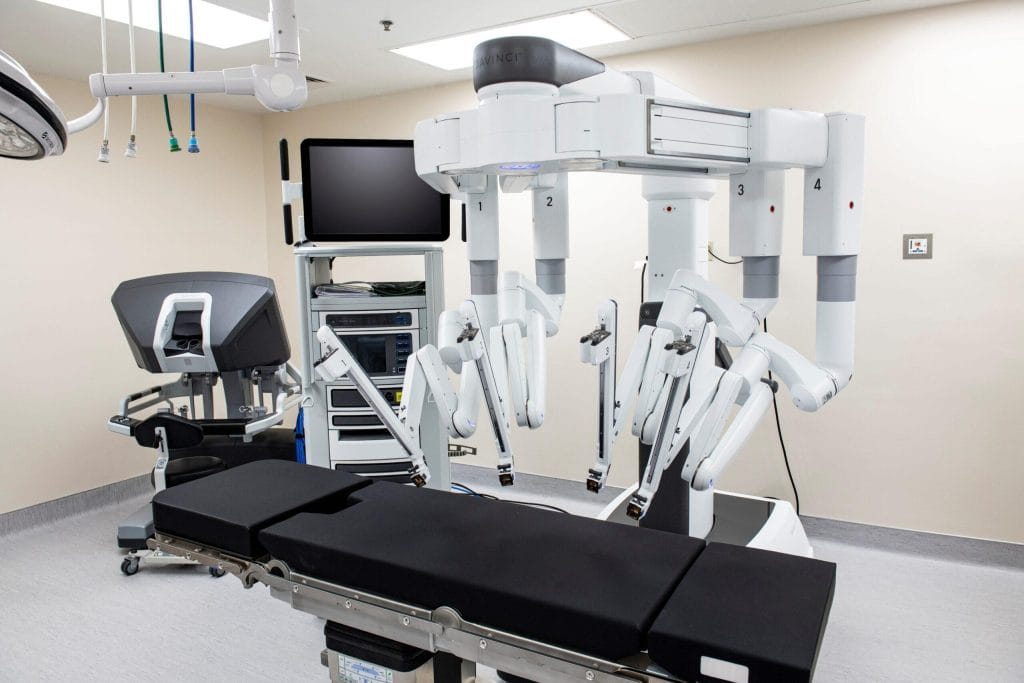
Advanced robotic-assisted surgical technology used in selected Vietnamese hospitals.
The surgeon sits at a console and views the surgical field through a magnified three-dimensional display. Hand and foot controls allow the surgeon to direct the robotic instruments.
An assistant and other members of the surgical team remain beside the patient to manage instruments, monitor the procedure and provide immediate assistance when necessary.
The da Vinci Xi platform supports several types of minimally invasive operations, including selected procedures involving the prostate, kidneys, digestive system, uterus and lungs.
Robotic technology is designed to assist the surgeon rather than replace surgical expertise. The clinical team’s experience, appropriate patient selection and access to postoperative care remain central to treatment safety.
2. Types of Robotic Surgery Available in Vietnam
Robotic surgery in Vietnam encompasses several specialties. However, not every hospital offers every procedure, and the availability of a particular technique should be confirmed before patients make travel arrangements.
2.1. Robotic Urology Surgery
Robotic urology surgery in Vietnam includes selected procedures involving the prostate, kidneys, bladder and urinary tract. The technology is particularly useful in anatomically confined areas where careful dissection and reconstruction may be necessary.
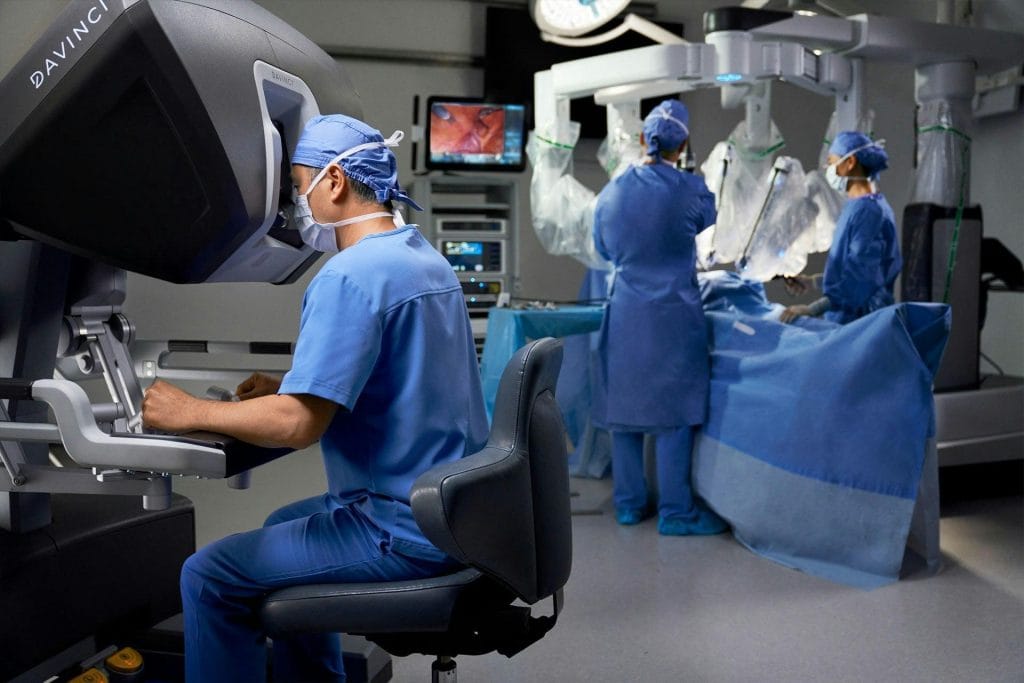
Surgeons operate robotic instruments through a dedicated console with magnified 3D visualization.
Robotic radical prostatectomy is an established application of robotic surgery for selected patients with prostate cancer. During the procedure, the surgeon removes the prostate and seminal vesicles and may remove nearby lymph nodes when clinically indicated.
The robotic system allows precise movements within the pelvis, which can support delicate dissection around structures involved in urinary continence and erectile function. Nevertheless, preservation of these functions depends on cancer characteristics and patient-specific factors.
Other robotic urological procedures include partial nephrectomy, radical nephrectomy, radical cystectomy and pyeloplasty. These operations may be considered for selected kidney tumors, bladder cancers and urinary tract obstructions.
FV Hospital lists robotic prostatectomy, cystectomy, nephrectomy and pyeloplasty among the applications of its da Vinci Xi system.
Patients considering prostate cancer surgery can explore our detailed guide to robotic prostatectomy in Vietnam , including surgical techniques, treatment costs and recovery.
For other urinary conditions, see Urology in Vietnam .
2.2. Robotic Colorectal Surgery
Robotic colorectal surgery is used for selected diseases affecting the colon and rectum. These include certain colorectal cancers and complex benign conditions requiring surgical removal or reconstruction.
Robotic-assisted colectomy involves removing a diseased section of the colon. Depending on the underlying condition, the surgeon may reconnect the remaining bowel or create a temporary or permanent stoma.
Robotic rectal surgery can be particularly useful when operating deep within the pelvis, where visibility and instrument movement may be restricted.
However, robotic surgery is not necessary for every colorectal operation. Conventional laparoscopic surgery remains an established treatment option, and open surgery may be required for complicated or emergency cases.
Clinical decisions depend on disease location, previous abdominal surgery, anatomical considerations and the operating team’s experience.
FV Hospital has reported performing robotic-assisted colorectal procedures, including surgery for colon cancer.
Learn more about colectomy in Vietnam , including indications, surgical approaches and postoperative care.
2.3. Robotic Gastrointestinal and General Surgery
Robotic-assisted general surgery can be used for selected conditions affecting the stomach, abdominal wall, gallbladder, liver and other digestive organs.
Common applications include gastric surgery, complex hernia repair, gallbladder removal and selected hepatobiliary procedures.
The choice of surgical approach varies according to the underlying disease. For example, many uncomplicated gallbladder operations can be performed safely using conventional laparoscopic techniques. Robotic surgery may be considered when additional instrument articulation or complex reconstruction could offer a procedural advantage.
For patients requiring surgery for gastric or hepatobiliary cancer, treatment planning should also consider cancer stage, the extent of the required resection and the availability of multidisciplinary cancer care.
In June 2026, FV Hospital reported a robotic-assisted total gastrectomy for a patient with advanced gastric cancer. The hospital also documents robotic applications in abdominal, hepatobiliary, pancreatic and general surgery.
For an overview of other procedures, visit General Surgery in Vietnam .
2.4. Robotic Gynecological Surgery
Robotic gynecological surgery may be considered for selected patients requiring hysterectomy, myomectomy or surgery for gynecological cancers.
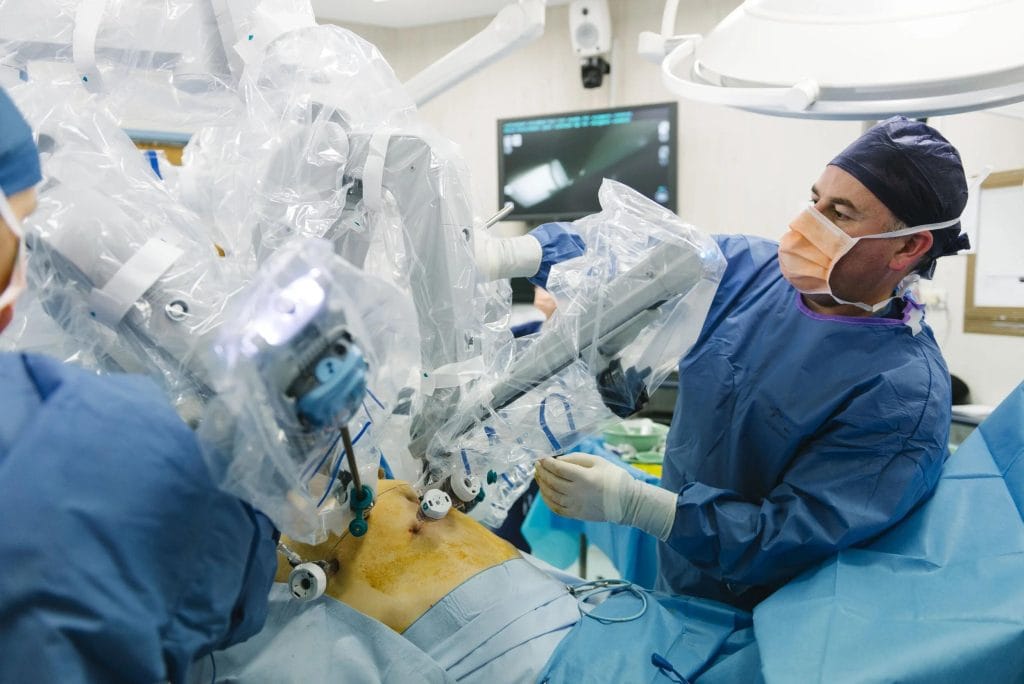
Robot-assisted radical prostatectomy is an option for selected patients with prostate cancer.
A robotic hysterectomy involves the removal of the uterus using robot-assisted instruments. Depending on the patient’s condition, the operation may also involve the removal of the cervix, fallopian tubes or ovaries.
Robotic myomectomy is another application. It allows surgeons to remove selected uterine fibroids while preserving the uterus, when clinically appropriate.
For gynecological cancers, surgery may involve more extensive tissue removal and lymph node assessment. The choice between robotic, laparoscopic and open surgery must account for the specific cancer diagnosis, disease stage and relevant clinical guidelines.
Selected Vietnamese hospitals have introduced robotic-assisted gynecological procedures. FV Hospital lists hysterectomy, myomectomy and certain gynecological cancer operations among its robotic surgical applications.
Patients should confirm that the proposed robotic approach is appropriate for their diagnosis and that the surgical team has experience with the specific procedure.
2.5. Robotic Thoracic Surgery
Robotic thoracic surgery involves procedures within the chest, including selected operations affecting the lungs, mediastinum and esophagus.
For appropriate patients, robotic systems allow surgeons to work through relatively small incisions while maintaining magnified visualization of important anatomical structures.
Applications include lung lobectomy, segmentectomy, wedge resection and selected esophageal procedures.
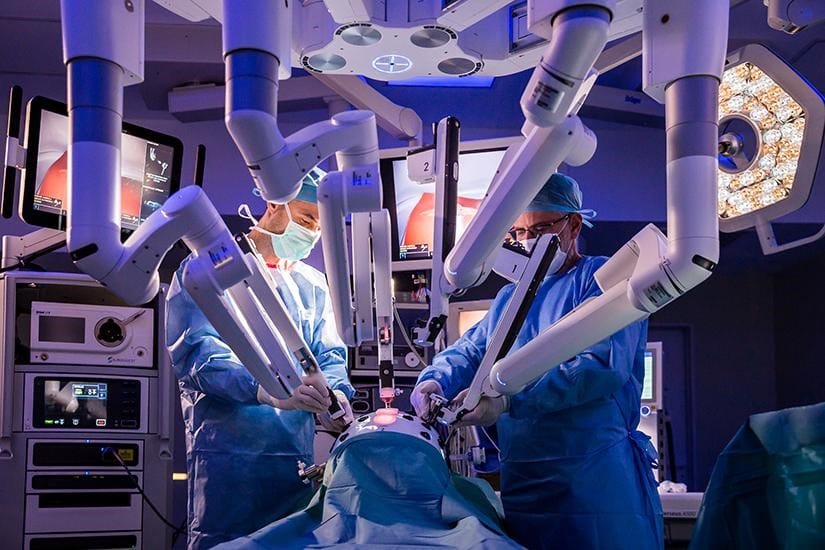
Robotic technology supports selected minimally invasive colorectal procedures.
The suitability of robotic thoracic surgery depends on tumor location, disease stage, respiratory function and the extent of the required operation.
In June 2026, FV Hospital reported using the da Vinci Xi system with fluorescence imaging during surgery for a small lung tumor. The hospital has also published information about robotic procedures involving lung tumors and mediastinal lymph nodes.
Patients with suspected or confirmed thoracic cancer should undergo specialist assessment before deciding on a surgical approach.
2.6. Robotic Orthopedic Surgery
Robotic-assisted orthopedic surgery is technologically different from the da Vinci procedures commonly used in abdominal, pelvic and thoracic operations.
In orthopedic surgery, robotic systems may assist with preoperative planning, surgical navigation and the positioning of implants during selected joint replacement procedures.
For example, robotic-assisted knee replacement can help the surgeon plan bone preparation and implant positioning using patient-specific anatomical information.
The robot assists with surgical execution but does not independently replace the joint. The operating surgeon remains responsible for the procedure.
Patients considering robotic orthopedic surgery should confirm which robotic platform is available and whether it is suitable for the planned operation.
For general information about joint replacement, read Knee Replacement in Vietnam .
3. Benefits of Robotic Surgery
The potential benefits of robotic surgery depend on the operation and the patient’s clinical circumstances.
For appropriately selected procedures, minimally invasive robotic techniques may offer advantages over open surgery, particularly regarding incision size, blood loss and early postoperative recovery.
Potential advantages
-
Enhanced three-dimensional visualization of the surgical field.
-
Articulating instruments that facilitate movements in confined anatomical spaces.
-
Smaller incisions compared with many traditional open procedures.
-
Reduced blood loss and postoperative discomfort in selected operations.
-
Potentially shorter hospitalization and earlier mobilization.
These advantages are not universal. Evidence comparing robotic and conventional laparoscopic surgery varies between procedures, and robotic surgery may not provide meaningful additional benefits in every case.
The FDA advises patients to discuss the risks and benefits of robotic surgery alongside other treatment options and to ask about the surgeon’s training and experience.
4. Robotic Surgery vs. Laparoscopic vs. Open Surgery
Robotic-assisted, conventional laparoscopic and open surgery are established approaches for different clinical situations.
|
Feature |
Robotic surgery |
Laparoscopic surgery |
Open surgery |
|---|---|---|---|
|
Incisions |
Usually small |
Usually small |
Generally larger |
|
Visualization |
Magnified 3D |
2D or 3D |
Direct |
|
Instrument movement |
Articulating robotic instruments |
Conventional laparoscopic instruments |
Handheld instruments |
|
Surgeon control |
Robotic console |
Direct instrument handling |
Direct |
|
Equipment costs |
Often higher |
Generally lower |
Varies |
|
Recovery |
Procedure-dependent |
Procedure-dependent |
Procedure-dependent |
Robotic surgery can provide additional instrument mobility compared with conventional laparoscopy, but both approaches can offer the benefits of minimally invasive surgery.
Open surgery remains appropriate in many circumstances, including selected complex cases, emergency procedures and situations where minimally invasive access is unsuitable.
The operating surgeon may also need to convert a robotic or laparoscopic procedure to open surgery if unexpected findings or complications arise.
For a more detailed explanation of conventional minimally invasive techniques, visit Laparoscopy in Vietnam .
5. Robotic Surgery Cost in Vietnam
The cost of robotic surgery in Vietnam varies substantially according to the procedure, hospital, robotic platform and complexity of the patient’s condition.
A relatively straightforward robotic-assisted gallbladder operation has a different cost structure from radical prostatectomy, complex colorectal surgery or an extensive cancer operation.
Because robotic surgery requires specialized equipment, instruments and trained personnel, it may carry higher hospital charges than conventional laparoscopic surgery.
However, a higher equipment charge does not necessarily mean that the total treatment cost or clinical outcome will differ in the same way for every patient.
What is included in a robotic surgery quotation?
|
Expense |
What patients should confirm |
|---|---|
|
Initial consultation |
Specialist evaluation and medical record review |
|
Preoperative assessment |
Blood tests, imaging and anesthesia consultation |
|
Surgical procedure |
Surgeon and operating theatre charges |
|
Robotic equipment |
Robotic system and disposable instrument charges |
|
Anesthesia |
Anesthesiologist, medications and monitoring |
|
Hospital stay |
Room, nursing and inpatient treatment |
|
Postoperative care |
Medication, wound care and follow-up consultations |
|
Additional treatment |
Pathology, rehabilitation or further specialist care |
Patients should establish whether their quotation includes every expected component of treatment or only the principal surgical fee.
Additional expenses may arise if the operation becomes more complex than anticipated, hospitalization is extended or postoperative complications require further management.
Is robotic surgery cheaper in Vietnam?
International patients may find different treatment prices in Vietnam compared with hospitals in their home countries. Nevertheless, a reliable comparison requires quotations for equivalent procedures and comparable hospital services.
For example, a quotation for robotic prostatectomy should not be compared directly with a conventional laparoscopic prostatectomy price without accounting for differences in surgical technique, hospitalization and included services.
Patients should also consider travel expenses, accommodation, postoperative follow-up and potential costs if complications occur after returning home.
VnMedtour can assist patients in requesting an individualized quotation from a hospital capable of evaluating their medical condition.
6. Hospitals Offering Robotic Surgery in Vietnam
Several Vietnamese hospitals have developed robotic-assisted surgery programs. Their available systems and specialist services differ, so patients should verify the procedure offered at the specific hospital rather than assuming that all robotic platforms support the same operations.
FV Hospital — Ho Chi Minh City
FV Hospital officially launched its da Vinci Robotic Surgery Centre on March 12, 2026, following the installation of its da Vinci Xi surgical system in late 2025.
The hospital has documented robotic applications in urology, thoracic surgery, gynecology, gastrointestinal surgery and hepatopancreatobiliary procedures. It has also published clinical reports involving robotic kidney, lung, gastric and colorectal operations.
Patients interested in treatment at FV should request confirmation of the relevant surgical team, procedure availability and individualized costs.
Explore FV Hospital’s robotic surgery services .
Vinmec Healthcare System
ảnh 6
Vinmec announced its connected high-tech robotic surgery center network in June 2026.
The network is intended to support the development of robotic-assisted procedures across participating facilities. However, the availability of individual surgical techniques and robotic platforms varies by location.
International patients should confirm which Vinmec facility offers the required operation, which surgeon will perform it and what preoperative and postoperative arrangements are available.
Tam Anh General Hospital
ảnh 7
Tam Anh General Hospital has introduced da Vinci Xi robotic surgery and has publicly documented robot-assisted prostate cancer operations.
The availability of other robotic procedures, specific surgical teams and treatment packages should be confirmed directly with the relevant hospital before an international patient arranges treatment.
How to compare robotic surgery hospitals
Patients should evaluate more than the model or generation of the robotic system.
Relevant considerations include the surgeon’s experience with the exact procedure, the hospital’s anesthesia and intensive care capabilities, the availability of specialist pathology services and arrangements for managing complications.
For cancer patients, multidisciplinary treatment planning and access to additional cancer therapies may be particularly important.
International patients should also establish whether the hospital can provide medical reports in English and coordinate postoperative care with their doctors at home.
7. Who Is a Suitable Candidate for Robotic Surgery?
Robotic-assisted surgery may be suitable for selected patients whose medical conditions require an operation that can be performed safely using a robotic approach.
However, a minimally invasive technique is not always appropriate.
The treating surgeon considers the patient’s diagnosis, disease severity, anatomical characteristics, previous operations and overall health before recommending a surgical approach.
Patients with significant cardiovascular or respiratory conditions may require additional assessment because some robotic procedures involve carbon dioxide insufflation and surgical positioning that affect breathing or circulation.
Previous abdominal surgery, extensive scar tissue, unusually complex anatomy or the extent of a tumor may also influence the choice of surgical technique.
For cancer patients, decisions must account for tumor stage and the need to achieve appropriate oncological outcomes.
Some patients may benefit from conventional laparoscopy or open surgery rather than robotic surgery. Others may not require an operation at all.
An individualized specialist assessment is therefore essential before selecting a robotic approach.
8. Risks and Limitations of Robotic Surgery
Although robotic surgery can facilitate minimally invasive procedures, it remains major surgery for many patients.
Potential complications include bleeding, infection, blood clots, anesthesia-related problems and injury to nearby organs or blood vessels.
Other risks depend on the operation. For example, patients undergoing radical prostatectomy may experience urinary incontinence or erectile dysfunction, while bowel surgery carries procedure-specific risks such as an anastomotic leak.
The surgical team may need to convert a robotic procedure to conventional laparoscopy or open surgery if technical difficulties or unexpected complications occur.
Robot-assisted operations can also involve longer operating times in some circumstances and higher equipment costs.
Robotic systems are not necessarily appropriate for every operation. The FDA emphasizes that patients should discuss both robotic and alternative approaches with their healthcare providers.
9. Recovery After Robotic Surgery
Recovery after robotic surgery in Vietnam depends primarily on the operation performed rather than the robotic technology alone.
Patients undergoing relatively straightforward abdominal procedures may recover more quickly than those requiring complex cancer surgery or extensive reconstruction.
The medical team monitors postoperative pain, bleeding, organ function and other procedure-specific concerns. Early mobilization may be encouraged when medically appropriate.
Hospital stay
Hospitalization varies according to the procedure and the patient’s recovery.
Some patients undergoing selected minimally invasive operations may be discharged within a few days. More complex procedures can require a longer inpatient stay, intensive monitoring or additional treatment.
The hospital should provide an estimated length of stay before surgery, while explaining that unexpected complications may alter the schedule.
Returning to daily activities
Patients should follow the treating surgeon’s instructions regarding walking, bathing, wound care, diet, lifting restrictions and return to work.
Small incisions do not necessarily mean that internal tissues have fully healed. Activities that place stress on the surgical area may need to be restricted for several weeks, depending on the operation.
Flying after robotic surgery
International patients should not assume that a shorter hospital stay means they can safely fly home immediately.
Long-distance travel following major surgery may increase the risk of venous thromboembolism, particularly when mobility is reduced.
The treating surgeon should assess the patient’s recovery, risk of complications and any ongoing requirements such as drains, catheters or postoperative medication before providing travel clearance.
Patients should avoid booking inflexible return flights before receiving an individualized treatment and recovery plan.
10. Planning Robotic Surgery in Vietnam for International Patients
Medical travel for robotic-assisted surgery involves several stages, beginning with medical record review and continuing through postoperative follow-up.
International patient pathway
-
Submit medical records
Provide the available diagnosis, medical reports, imaging, previous treatment history and relevant laboratory results.
-
Hospital assessment
The appropriate specialist reviews the case and determines whether robotic surgery is a possible treatment option.
-
Treatment plan and quotation
The hospital provides a proposed treatment plan, an estimated cost and information about the expected hospital stay.
-
Travel and preoperative assessment
After receiving preliminary confirmation, the patient can plan travel. Further tests and an in-person consultation may be required before surgery.
-
Surgery and postoperative monitoring
The surgical team performs the procedure and provides inpatient care according to the patient’s medical needs.
-
Discharge and follow-up
The patient receives postoperative instructions, medical reports and a follow-up plan before returning home.
What documents should patients prepare?
Depending on the diagnosis, the hospital may request recent imaging, biopsy or pathology reports, previous operative records, blood test results and a complete medication list.
Patients should also disclose allergies, previous reactions to anesthesia and any significant medical conditions.
Medical records in English may facilitate preliminary hospital assessment. Where necessary, translation or clarification may be requested.
What happens if further treatment is required?
Some operations form only one part of a broader treatment program.
Cancer patients, for example, may require further pathological assessment, chemotherapy, radiation therapy or other specialist care after surgery.
Before traveling, patients should discuss how subsequent treatment will be arranged and which medical team will be responsible for ongoing follow-up.
This is particularly important for patients who plan to receive surgery in Vietnam but complete additional treatment in their home country.
11. How VnMedtour Supports International Patients
VnMedtour assists international patients seeking medical treatment in Vietnam by coordinating communication with suitable hospitals and supporting the practical arrangements associated with medical travel.
Patients interested in robotic surgery in Vietnam can submit their available medical records for a preliminary inquiry.
Depending on the hospital’s requirements and the patient’s circumstances, VnMedtour can assist with consultation scheduling, requests for treatment quotations, communication with hospital staff and practical travel arrangements.
The treating hospital remains responsible for clinical assessment, surgical recommendations, medical treatment and postoperative management.
12. Frequently Asked Questions
Is robotic surgery available in Vietnam?
Yes. Selected hospitals in Vietnam have introduced robotic surgical systems for procedures in urology, general surgery, gynecology and thoracic surgery. The availability of a particular operation depends on the hospital and its surgical team.
How much does robotic surgery cost in Vietnam?
Costs vary according to the type of operation, hospital, robotic equipment, surgical complexity and required postoperative care. Patients should request an individualized quotation rather than rely on a general robotic surgery price.
Is da Vinci robotic surgery better than laparoscopic surgery?
The da Vinci system offers enhanced visualization and articulating instruments, but these technological features do not guarantee superior results for every procedure. The choice depends on the patient’s condition and the surgeon’s assessment.
Is robotic surgery performed by a robot or a surgeon?
A trained surgeon controls the robotic instruments throughout the operation. The robotic system assists with visualization and instrument movement; it does not independently perform the procedure.
Does robotic surgery leave scars?
Most minimally invasive robotic procedures require small incisions, which generally produce smaller scars than many traditional open operations. However, the size and number of incisions vary according to the procedure.
How long does robotic surgery take?
Operating time depends on the procedure and its complexity. More extensive cancer operations or procedures requiring reconstruction may take substantially longer than relatively straightforward operations.
How long should international patients stay in Vietnam?
The appropriate length of stay depends on the operation, hospital requirements and postoperative recovery. Patients should allow additional time for follow-up and obtain medical clearance before flying home.
Can robotic surgery treat cancer?
Robot-assisted systems can be used for selected cancer operations, including certain prostate, kidney, colorectal, lung and gynecological procedures. However, treatment suitability depends on cancer type, stage and the individual patient’s circumstances.
Conclusion
Robotic surgery in Vietnam is available across several specialties, providing selected international patients with access to advanced minimally invasive surgical techniques.
Systems such as the da Vinci Xi can assist surgeons with complex procedures involving the prostate, kidneys, digestive system, uterus and lungs. Nevertheless, robotic technology is only one component of successful surgical treatment.
Patients should consider their diagnosis, the surgeon’s experience, hospital capabilities, treatment costs, potential complications and arrangements for postoperative follow-up before selecting a surgical approach.
For international patients considering robotic-assisted surgery in Vietnam, VnMedtour can facilitate hospital inquiries, treatment quotations and practical medical travel arrangements to support informed treatment planning.
Considering Robotic Surgery in Vietnam?
Explore your treatment options with VnMedtour.
We help international patients connect with suitable
hospitals in Vietnam, request personalized treatment
estimates, and coordinate medical travel arrangements.
Personalized hospital inquiries | Treatment estimates |
International patient support