
Telemedicine in Vietnam has rapidly transformed from a supplementary healthcare solution into a strategic pillar of the country’s modern medical system. Driven by digital transformation, government support, and growing international demand, Vietnam is emerging as one of Southeast Asia’s most dynamic telehealth markets.
For local residents, expatriates, and international medical tourists, telemedicine offers faster access to doctors, lower costs, reduced travel time, and continuity of care before and after treatment. As Vietnam continues to strengthen its healthcare infrastructure, telemedicine is increasingly positioned as a bridge between traditional in-hospital care and global digital health services.
This article provides a comprehensive overview of telemedicine in Vietnam, including its development, legal framework, services offered, leading hospitals, benefits for foreign patients, limitations, costs, and future outlook.
Quick Navigation
What Is Telemedicine?
Telemedicine refers to the delivery of healthcare services remotely using digital communication technologies such as:
-
Video consultations
-
Phone calls
-
Secure messaging platforms
-
Remote monitoring devices
-
Electronic medical records (EMR)
Through telemedicine, patients can consult doctors, receive diagnoses, review test results, obtain prescriptions, and follow up on treatments without physically visiting a hospital or clinic.
In Vietnam, telemedicine is commonly known as “khám chữa bệnh từ xa”, and it plays a growing role in both public and private healthcare systems.
The Development of Telemedicine in Vietnam
Early Stage (Before 2020)
Before 2020, telemedicine in Vietnam existed mainly in pilot programs connecting central hospitals with provincial and district-level facilities. The focus was primarily on:
-
Medical training
-
Remote diagnosis support
-
Reducing overload at major hospitals
Public awareness and patient usage were still limited.
Acceleration During COVID-19
The COVID-19 pandemic became a turning point. Vietnam’s Ministry of Health accelerated nationwide telemedicine programs to ensure uninterrupted healthcare access.
Key developments included:
-
National Telehealth Platform launched by the Ministry of Health
-
Thousands of remote consultation points nationwide
-
Integration between central hospitals and local facilities
-
Expansion into outpatient and chronic disease management
Telemedicine shifted from an experimental model into a mainstream healthcare service.
Post-Pandemic Expansion
After COVID-19, telemedicine in Vietnam continued to grow due to:
-
Increased digital health literacy
-
Rising smartphone and internet penetration
-
Demand from expatriates and international patients
-
Hospital investment in digital transformation
Today, telemedicine is actively used for both domestic healthcare and cross-border medical services.
Legal Framework and Government Support
Vietnam has established a relatively clear regulatory foundation for telemedicine.
Key Regulations
-
Ministry of Health guidelines on remote medical examination and treatment
-
Legal recognition of online consultations
-
Data protection and medical confidentiality requirements
-
Licensing rules for healthcare providers offering telemedicine
Doctors providing telemedicine must be fully licensed in Vietnam and affiliated with authorized healthcare facilities.
National Telehealth Program
Vietnam’s National Telemedicine Program aims to:
-
Reduce hospital overcrowding
-
Improve healthcare access in rural areas
-
Enhance emergency consultation capabilities
-
Support digital healthcare transformation
This strong government backing provides long-term stability and credibility for telemedicine services.
Telemedicine Services Available in Vietnam
Telemedicine in Vietnam now covers a wide range of medical specialties and services.
1. Online Doctor Consultations
Patients can consult licensed Vietnamese doctors via video or phone for:
-
General health concerns
-
Minor illnesses
-
Preventive care advice
-
Medical second opinions
Many hospitals offer consultations in English for international patients.
2. Specialist Teleconsultations
Specialist services commonly available include:
-
Internal medicine
-
Cardiology
-
Endocrinology
-
Dermatology
-
Pediatrics
-
Neurology
-
Psychiatry and psychology
-
Rehabilitation medicine
Specialist teleconsultations are particularly valuable for follow-up care.
3. Chronic Disease Management
Telemedicine is widely used for managing:
-
Diabetes
-
Hypertension
-
Heart disease
-
Thyroid disorders
-
Asthma and COPD
Patients can regularly consult doctors, adjust medication, and monitor progress remotely.
4. Post-Treatment and Post-Surgery Follow-Up
For medical tourists, telemedicine is especially useful after returning home. Vietnamese hospitals provide:
-
Virtual follow-up consultations
-
Recovery monitoring
-
Medication guidance
-
Lab result interpretation
This significantly improves continuity of care.
5. Mental Health and Counseling
Vietnam has seen strong growth in online mental health services, including:
-
Stress management
-
Anxiety and depression counseling
-
Therapy for expatriates
-
Corporate mental wellness programs
Many platforms offer English-speaking psychologists.
6. Remote Diagnostic Support
While physical tests must be done in person, telemedicine allows:
-
Review of imaging results
-
Lab interpretation
-
Medical record evaluation
-
Treatment planning discussions
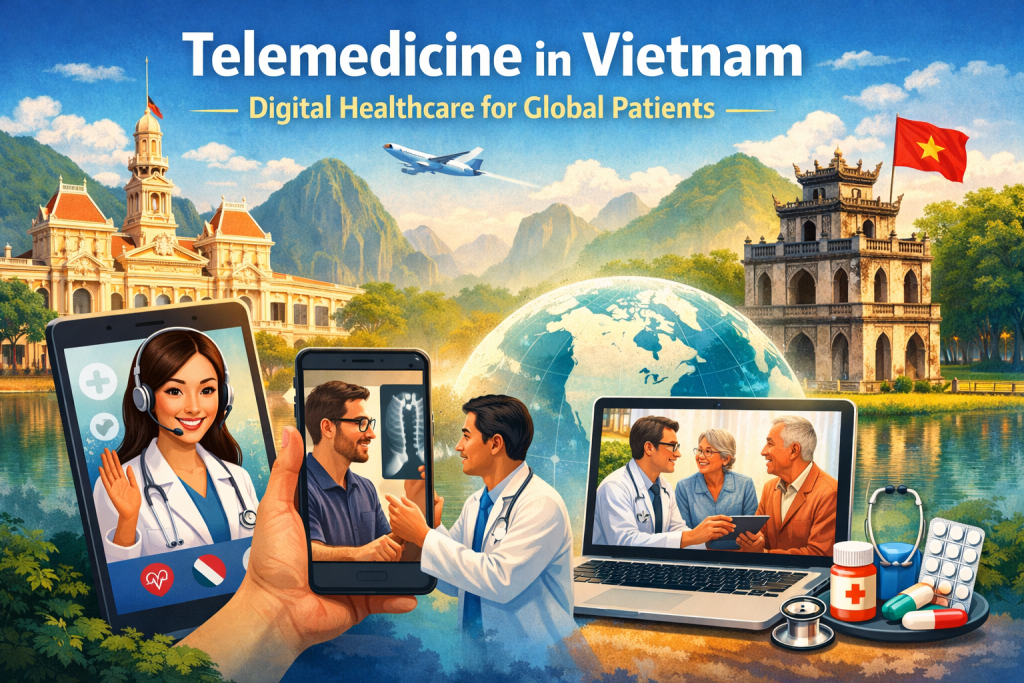
Telemedicine in Vietnam enables international patients to access online consultations, follow-up care, and digital healthcare services.
Leading Hospitals Offering Telemedicine in Vietnam
Several top hospitals and healthcare groups actively provide telemedicine services.
Vinmec International Hospital System
Vinmec is a pioneer in digital healthcare in Vietnam, offering:
-
Online consultations with international-standard doctors
-
English-speaking services
-
Integrated electronic medical records
-
Post-treatment tele-follow-up for international patients
Vinmec is widely used by expatriates and medical tourists.
FV Hospital (Ho Chi Minh City)
FV Hospital provides teleconsultation services for:
-
International patients
-
Pre-treatment consultations
-
Second opinions
-
Post-discharge follow-ups
Its Western-standard approach makes it a trusted provider.
Tam Anh General Hospital
Tam Anh Hospital integrates telemedicine for:
-
Specialist consultations
-
Follow-up care
-
High-level diagnostics support
Especially strong in orthopedics, cardiology, and internal medicine.
Hoan My Medical Corporation
Hoan My operates telemedicine programs focusing on:
-
Chronic disease management
-
Preventive healthcare
-
Corporate health solutions
Public Central Hospitals
Major public hospitals such as Bach Mai Hospital and Cho Ray Hospital participate in national telemedicine networks, primarily for professional consultations and referrals.
Telemedicine for International Patients and Medical Tourists
Telemedicine plays a critical role in Vietnam’s medical tourism ecosystem.
Pre-Treatment Consultations
Before traveling to Vietnam, international patients can:
-
Discuss treatment options
-
Share medical reports
-
Receive cost estimates
-
Determine treatment suitability
This reduces uncertainty and improves decision-making.
Treatment Planning
Doctors can design personalized treatment plans remotely, including:
-
Recommended procedures
-
Length of stay
-
Recovery timeline
-
Estimated budget
Post-Treatment Follow-Up
After returning home, patients can continue care through:
-
Online follow-up visits
-
Recovery assessments
-
Medication advice
-
Long-term monitoring
This continuity is a major advantage over traditional medical tourism models.
Benefits of Telemedicine in Vietnam
1. Cost-Effective Healthcare
Telemedicine consultations in Vietnam typically cost significantly less than in Western countries while maintaining high medical standards.
2. Convenience and Time Savings
Patients avoid:
-
Long hospital queues
-
Travel time
-
Repeated hospital visits
This is especially beneficial for follow-ups.
3. Access to Quality Doctors
Telemedicine expands access to top specialists located in major cities such as Hanoi and Ho Chi Minh City.
4. Continuity of Care
Patients receive consistent medical guidance before, during, and after treatment.
5. Support for Expats Living in Vietnam
Telemedicine provides English-speaking care and familiarity with international medical expectations.
Limitations and Challenges
Despite rapid progress, telemedicine in Vietnam still faces certain limitations.
Physical Examination Constraints
Some conditions require in-person examinations, imaging, or procedures that cannot be replaced by online consultations.
Licensing Restrictions
Vietnamese telemedicine doctors must be licensed locally, limiting cross-border practice from foreign doctors.
Data Privacy Concerns
Although regulations exist, continued investment in cybersecurity and data protection remains essential.
Technology Gaps in Rural Areas
Internet quality and digital literacy vary outside major cities.
Cost of Telemedicine in Vietnam
Approximate consultation fees:
-
General practitioner: USD 10–25
-
Specialist consultation: USD 20–50
-
International hospital teleconsultation: USD 30–80
Prices vary depending on hospital, specialty, and language requirements.
Compared with telemedicine costs in the US, Australia, or Europe, Vietnam remains highly competitive.
Telemedicine Platforms in Vietnam
Common telemedicine platforms include:
-
Hospital-owned digital platforms
-
Mobile healthcare apps
-
Integrated EMR systems
-
Medical tourism coordination platforms
Many international patients access telemedicine through hospitals or medical tourism facilitators rather than public apps.
Future of Telemedicine in Vietnam
Telemedicine in Vietnam is expected to expand significantly over the next decade.
Key Growth Trends
-
AI-assisted diagnostics
-
Remote patient monitoring devices
-
Integration with wearable technology
-
Cross-border digital healthcare services
-
Multilingual telehealth platforms
Medical Tourism Integration
Telemedicine will increasingly serve as:
-
The first contact point for international patients
-
A pre-screening tool
-
A long-term follow-up solution
Vietnam is positioning itself as a regional hub for digitally supported medical tourism.
Why Telemedicine Strengthens Vietnam’s Medical Tourism Industry
Telemedicine addresses several traditional weaknesses of medical tourism:
-
Lack of follow-up care
-
Communication barriers
-
Pre-treatment uncertainty
-
Fragmented medical records
By integrating telemedicine, Vietnam offers a more complete and trustworthy patient journey—from first consultation to long-term recovery.
Conclusion
Telemedicine in Vietnam has evolved into a powerful healthcare solution that enhances accessibility, affordability, and continuity of care. Supported by strong government initiatives, modern hospitals, and increasing digital adoption, telemedicine now plays a vital role in both domestic healthcare and international medical tourism.
For expatriates and global patients, Vietnam’s telemedicine ecosystem provides reliable medical advice, seamless follow-up care, and direct access to experienced doctors—all at competitive costs.
As digital healthcare continues to advance, telemedicine will remain a cornerstone of Vietnam’s vision to become a leading medical tourism destination in Asia.
Need a telemedicine consult in Vietnam?