
For Australians considering dental treatment overseas, Vietnam offers access to a range of procedures, including dental implants, porcelain veneers, crowns, orthodontics and full-mouth rehabilitation. However, choosing overseas dental care involves much more than comparing the cost of treatment in two countries. Patients must also consider their oral health, the qualifications of the treating dentist, travel expenses, treatment schedules and access to follow-up care after returning home.
Dental work in Vietnam for Australians requires careful preparation, particularly when complex procedures involve several appointments or multiple international trips. Understanding the complete treatment process before booking flights can help patients make informed decisions and anticipate potential expenses.
This guide provides information about indicative dental treatment prices in Vietnam, with approximate conversions into Australian dollars. It also explains common procedures, clinic-selection considerations, treatment timelines, Medicare and insurance arrangements, recovery and long-term dental maintenance. The pricing information is based on quotations supplied by a dental partner of VnMedtour in Vietnam.

An international patient discussing dental treatment options with a dentist in Vietnam.
Quick Navigation
1. Why Australians Consider Dental Treatment in Vietnam
Dental treatment can represent a substantial financial commitment, particularly for patients requiring multiple implants, extensive restorative work or full-mouth rehabilitation. For some Australians, travelling overseas provides an opportunity to explore additional treatment options and obtain quotations from dental providers in another country.
Vietnam has dental clinics offering services ranging from routine restorative dentistry to complex implant rehabilitation and cosmetic procedures. Major cities such as Ho Chi Minh City and Hanoi are accessible through international air connections and offer accommodation options for overseas visitors.
However, the cost of a dental procedure should not be considered independently of the overall expenses associated with international treatment. Airfares, accommodation, additional appointments and potential corrective treatment can significantly affect the final budget.
Clinical quality also varies between individual providers. Patients should verify the qualifications of their treating dentist, the clinic’s facilities and its arrangements for managing complications.
The Australian Dental Association advises Australians against elective overseas dental treatment, citing concerns about treatment standards, complications, continuity of care and access to corrective treatment after returning home.
Australians who nevertheless wish to explore dental treatment overseas should obtain independent advice from an Australian dentist and carefully assess the proposed treatment before committing to travel.
2. Dental Work in Vietnam for Australians: 2026 Costs in AUD
Treatment costs vary according to the procedure, number of teeth involved, materials selected and complexity of the patient’s dental condition. A person requiring a single crown will have a different treatment plan from someone needing several implants or extensive rehabilitation of both dental arches.
The following indicative prices are based on quotations supplied by a dental partner of VnMedtour in Vietnam. They are reference prices from one provider and should not be interpreted as average prices across all Vietnamese dental clinics.
Dental treatment price list
| Dental treatment | Indicative cost (VND) | Approximate cost (AUD) |
|---|---|---|
| All-on-4 / All-on-6 dental implants | 175–260 million | A$9,590–14,240 |
| Dental crowns and bridges | 6–12 million | A$330–660 |
| Porcelain veneers | 10–14 million | A$550–770 |
| Root canal treatment | 1.5–4.5 million | A$80–250 |
| Dental fillings | 300,000–500,000 | A$16–27 |
| Teeth whitening | 4 million | A$220 |
| Tooth and wisdom tooth extraction | 1–4 million | A$55–220 |
| Dentures | 17–34 million | A$930–1,860 |
| Orthodontics and clear aligners | 60–120 million | A$3,290–6,570 |
| Gum treatment | 2–3 million | A$110–165 |
| Full-mouth rehabilitation | 340–520 million | A$18,630–28,490 |
Price reference: A dental partner of VnMedtour in Vietnam. These prices are indicative and subject to individual assessment. AUD conversions are based on an indicative rate of A$1 = VND 18,252.6 on 25 September 2026. Actual exchange rates and payment fees may vary.
The final quotation will depend on the patient’s oral health, treatment complexity, materials selected and any additional procedures required. Patients should request a written treatment plan before making travel arrangements.
For crowns, veneers, implants and full-mouth rehabilitation, patients should confirm whether quoted prices apply per tooth, per arch or per treatment package.
What affects dental treatment costs?
The price of dental work in Vietnam for Australians depends on several factors, including the number of teeth requiring treatment, existing dental conditions, restorative materials and the proposed surgical or restorative technique.
For example, dental implant costs can vary according to the implant system, the availability of sufficient jawbone and whether additional procedures such as bone grafting are necessary.
The cost of porcelain veneers depends partly on the selected ceramic material, the number of veneers required and the complexity of tooth preparation.
Full-mouth rehabilitation may involve a combination of implants, crowns, bridges, extractions and periodontal treatment. These cases generally require a comprehensive assessment before the final treatment plan and quotation can be confirmed.
Patients should obtain an itemised quotation explaining what is included in the advertised price. This should identify any relevant charges for examinations, diagnostic imaging, temporary restorations, laboratory work, medication and postoperative appointments.
3. Popular Dental Work in Vietnam for Australians
Vietnamese dental providers offer treatments ranging from routine fillings and whitening to complex implant and restorative procedures. The appropriate treatment depends on an individual assessment of the patient’s oral health, medical history and treatment goals.
3.1. Dental implants and All-on-4 treatment
Dental implants are used to replace missing teeth. A typical implant-supported restoration involves a fixture placed in the jawbone, an abutment and a crown, bridge or other prosthetic restoration.
Some patients require a single implant, while others may need several implants to support a full dental arch.
All-on-4 and All-on-6 are full-arch treatment approaches using four or six implants to support a dental prosthesis. They may be considered for selected patients with extensive tooth loss.
The suitability of these techniques depends on several factors, including remaining teeth, gum health, bone availability and the patient’s general medical condition.
Before accepting treatment, patients should confirm whether the quoted price includes extractions, implant fixtures, abutments, temporary restorations and the final prosthesis.
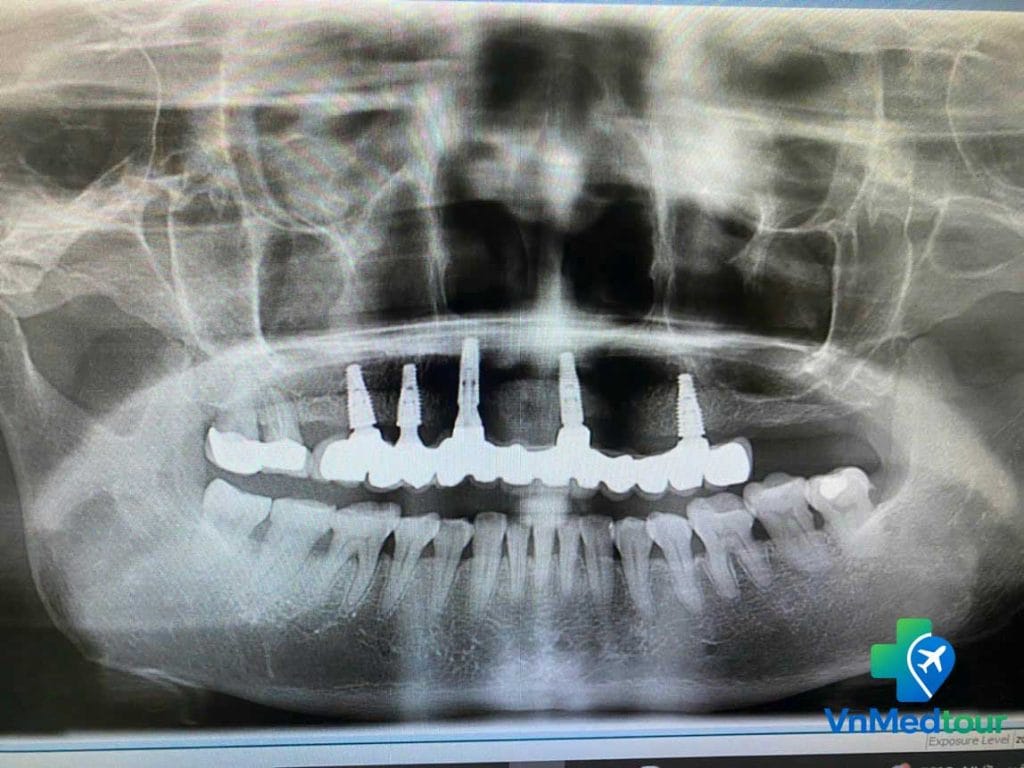
Panoramic dental X-ray used to evaluate implant positioning and support treatment planning.
Dental implant treatment frequently involves several stages. Following implant placement, a healing period may be required before the final restoration is fitted. Patients considering treatment overseas should therefore establish whether a second visit will be necessary.
For an overview of implant procedures and other restorative options, read our Dental Work in Vietnam guide.
3.2. Porcelain veneers
Porcelain veneers are thin ceramic restorations attached to the front surfaces of selected teeth. They may be used to address certain cosmetic concerns involving tooth colour, shape, size or appearance.
Before recommending veneers, the dentist should assess the teeth, gums and bite. Some patients may benefit from alternative treatments such as whitening, orthodontics or composite bonding.
The total treatment cost depends on the material selected, number of teeth treated and complexity of preparation.
Australians considering veneers during a short visit should ask how many appointments will be required for preparation, fabrication, fitting and possible adjustments.
It is also important to understand whether tooth preparation is irreversible and what future maintenance or replacement may involve.
3.3. Dental crowns and bridges
Dental crowns can restore teeth affected by extensive damage, while dental bridges may replace missing teeth using adjacent teeth or implants for support.
The dentist should explain the proposed restorative material, the number of units required and whether preparatory procedures are necessary.
For international patients, the treatment schedule may include examinations, digital scanning or impressions, tooth preparation, laboratory production, fitting and bite adjustments.
A written quotation should distinguish the cost of the restoration itself from additional treatment or laboratory charges.
3.4. Orthodontics and clear aligners
Orthodontic treatment is intended to correct tooth alignment and certain bite problems. Treatment options may include traditional braces and removable clear aligners.
Unlike many restorative procedures, orthodontic treatment generally requires monitoring and adjustments over an extended period.
Australians considering orthodontics in Vietnam should determine how their treatment would continue after returning home.
An Australian dental professional may need to review the proposed treatment plan before agreeing to provide ongoing care. Patients should not assume that treatment started overseas can automatically be transferred to another provider.
For more information about treatment options and practical considerations, explore our Clear Aligners in Vietnam guide.
3.5. Full-mouth rehabilitation
Full-mouth rehabilitation involves comprehensive restorative treatment for patients with extensive dental problems affecting several teeth or both dental arches.
Depending on individual clinical needs, treatment may combine dental implants, crowns, bridges, extractions, periodontal treatment and removable or fixed prostheses.
Complex rehabilitation requires detailed planning and may involve multiple appointments or treatment stages.
Patients should clarify whether the proposed treatment includes one or both arches, whether temporary restorations will be provided and how much healing time is expected between procedures.
For Australians travelling internationally, establishing the complete treatment timeline is particularly important because additional visits may create substantial travel and accommodation expenses.
4. Choosing a Clinic for Dental Work in Vietnam for Australians
Selecting a dental clinic should involve more than comparing advertised treatment prices or photographs of previous patients.
Before proceeding, Australians should verify the clinic’s licensing and the qualifications of the dental professionals involved in their proposed treatment.
For complex implant or restorative procedures, patients should establish who will perform each surgical and prosthetic stage.
They should also ask about diagnostic imaging, infection-prevention procedures, the materials used and arrangements for managing complications.
The Australian Dental Association recommends that Australians obtain advice from a local dentist before considering overseas elective dental treatment. Its guidance highlights possible difficulties with ongoing maintenance, access to treatment records and obtaining corrective care after returning home.
A preliminary online consultation may help patients discuss their treatment goals and obtain initial information about available procedures. However, the final diagnosis and treatment plan may require an in-person examination and appropriate imaging.
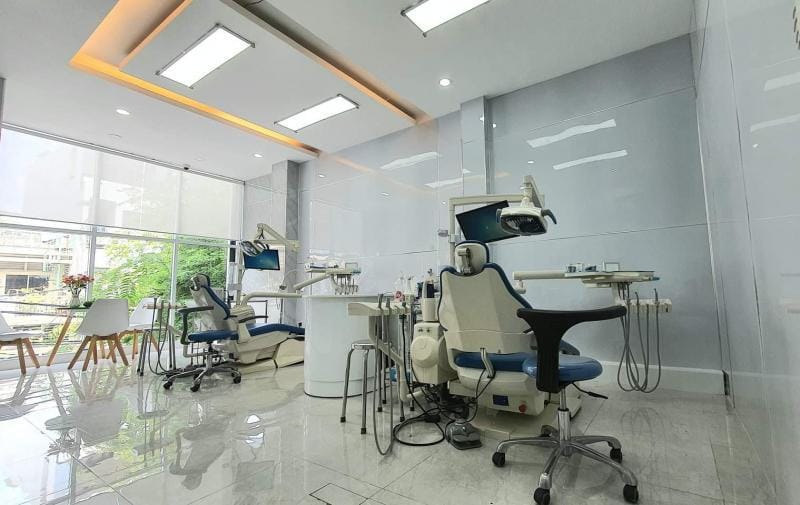
Modern dental clinic in Vietnam equipped with advanced facilities for international patients.
Questions to ask before selecting a clinic
Patients should request clear answers to the following questions:
-
Who will perform the procedure, and what are their qualifications?
-
What examinations and diagnostic imaging are required?
-
Which implant systems or restorative materials will be used?
-
What is included in the proposed treatment quotation?
-
How many appointments or international trips are expected?
-
How will complications be managed?
-
Will complete treatment records be provided?
-
What follow-up arrangements will be available after returning to Australia?
These questions are particularly important for complex treatments involving implants, multiple restorations or extensive surgical procedures.
5. Planning Your Dental Trip from Australia
Dental work in Vietnam for Australians requires coordination of clinical appointments, international flights, accommodation and recovery time.
Patients travelling from Sydney, Melbourne, Brisbane, Perth or other Australian cities should obtain a preliminary treatment plan before finalising their itinerary.
The choice of destination depends on the selected dental provider, available flights and the number of required appointments.
Ho Chi Minh City and Hanoi are major international gateways offering accommodation and transport options for international visitors.
Patients should consider staying within reasonable travelling distance of their chosen dental clinic, particularly when several appointments are scheduled.
Before booking international flights
The first step is to obtain a preliminary assessment and establish the likely treatment requirements.
Patients should provide relevant dental records, available imaging, information about previous treatment and details of significant medical conditions.
An examination with an Australian dentist before departure can provide an independent assessment and help identify problems that may require attention before travelling.
Patients should also check current Vietnamese entry requirements before booking. Australian passport holders can consult the Australian Government’s Vietnam travel advice for information about visas and other travel requirements.
How long should you stay in Vietnam?
The necessary length of stay depends on the procedure, treatment complexity and individual recovery requirements.
Routine fillings, whitening and selected restorative procedures may require relatively few appointments. More complex treatment may involve additional diagnostic examinations, laboratory work and postoperative reviews.
Patients should avoid booking an inflexible return flight immediately after major dental procedures.
The treating dentist should recommend an appropriate treatment schedule and advise whether follow-up appointments are necessary before departure.
6. One Trip or Two? Understanding Dental Treatment Timelines
One of the most important practical questions for Australians considering dental treatment overseas is whether their treatment can be completed during a single visit.
The answer depends on the procedure and individual clinical circumstances.
Procedures that may be completed during one trip
Routine dental fillings, whitening and selected crowns or veneers may be completed during one visit to Vietnam, depending on the number of appointments required.
However, laboratory production, tooth preparation and possible adjustments can affect the treatment schedule.
Patients should confirm the expected appointment dates before arranging international travel.
Procedures that may require multiple trips
Dental implant treatment frequently involves an initial surgical stage followed by a healing period before the final prosthetic restoration is placed.
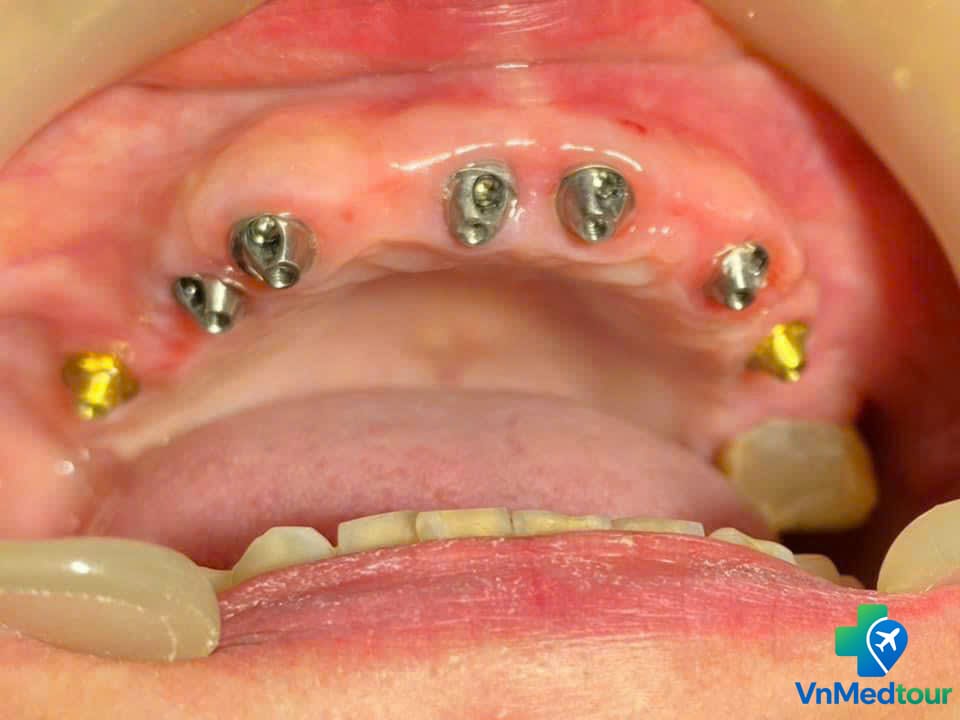
Clinical image showing dental implants prepared for implant-supported restoration.
Selected patients may receive temporary restorations soon after implant placement, but the final restoration may still require additional healing and subsequent appointments.
Patients requiring bone grafting or complex rehabilitation may need a longer treatment timeline.
Before proceeding, Australians should clarify whether the treatment plan involves one or multiple visits and include the cost of additional international travel in their budget.
Long-term orthodontic treatment
Orthodontic treatment presents different practical challenges because it generally requires ongoing reviews.
Patients considering braces or clear aligners in Vietnam should establish whether their treatment can be supervised appropriately after returning to Australia.
A short international trip is not a substitute for a complete monitoring and maintenance plan.
7. Understanding the Total Cost of Dental Tourism
The total cost of dental work in Vietnam for Australians includes more than the dental procedure itself.
Patients should budget for international flights, accommodation, local transport, meals, insurance and any additional treatment or appointments.
Those requiring multiple visits should calculate the expenses associated with each trip separately.
An initial quotation may change after an in-person examination reveals additional treatment requirements, such as periodontal therapy, extractions or bone grafting.
Patients should also consider the possibility of unexpected complications, travel changes or the need for further care after returning home.
Comparing complete treatment quotations, rather than advertised starting prices alone, can help patients understand the financial commitment involved.
A contingency fund is advisable, particularly for complex procedures or treatment plans involving several stages.
8. Medicare and Dental Insurance for Australians
Australian patients should establish their insurance arrangements before committing to overseas dental treatment.
Medicare does not cover treatment received outside Australia. Patients should not assume that they will receive reimbursement for dental procedures performed in Vietnam.
For further information, consult Services Australia.
Private health insurance policies differ, and overseas dental benefits should be confirmed directly with the insurer.
Travel insurance also requires careful examination.
Standard travel insurance policies often exclude planned medical and dental procedures, including complications arising directly from those treatments.
The Australian Government’s medical tourism guidance advises travellers to check whether their insurance covers the proposed procedure, postoperative complications and medical evacuation.
Patients should disclose their treatment plans to their insurer and obtain written confirmation of applicable coverage and exclusions.
9. Recovery and Dental Aftercare After Returning to Australia
A clear aftercare plan is particularly important for Australians receiving dental treatment overseas.
Recovery requirements vary according to the procedure. Routine restorative treatment may involve relatively limited postoperative care, while implant surgery, extractions and bone grafting can require additional recovery time and follow-up examinations.
Patients should follow the treating dentist’s instructions regarding medication, oral hygiene, eating, physical activity and postoperative appointments.
Before leaving Vietnam, request copies of treatment records, relevant imaging and details of any implants or restorative materials used.
For implant treatment, obtain the implant brand, model and component information where available.
Australians should also consider arranging follow-up care with a local dental professional before travelling.
The Australian Dental Association identifies difficulties with long-term maintenance, treatment compatibility and obtaining corrective care as important concerns associated with overseas elective dentistry.
If complications develop after returning home, patients should seek appropriate local dental or medical assessment rather than relying exclusively on remote communication with the overseas provider.
10. Dental Treatment with a Dental Partner of VnMedtour
VnMedtour works with dental partners in Vietnam to assist international patients seeking dental implants, porcelain veneers, dental crowns and other dental treatments.
The indicative prices in this guide are based on quotations supplied by a dental partner of VnMedtour. They provide a preliminary reference for patients comparing treatment options and estimating the potential cost of dental work in Vietnam.
Australians interested in treatment through VnMedtour can begin by providing information about their dental concerns, previous treatment and preferred travel dates.
Relevant dental records, recent X-rays and photographs may help the dental provider prepare a preliminary assessment.
Depending on the individual case, the provider may recommend an in-person examination and additional diagnostic investigations before confirming the final treatment plan.
VnMedtour assists with preliminary enquiries, quotation requests, communication and appointment coordination.
Final clinical recommendations, treatment eligibility and treatment fees are determined by the treating dental professionals.
For more information about dental treatment options in Vietnam, explore our comprehensive Dental Work in Vietnam guide.
11. Frequently Asked Questions About Dental Work in Vietnam for Australians
Is dental work in Vietnam cheaper than in Australia?
Certain procedures may have lower advertised prices in Vietnam, but the final cost depends on the patient’s treatment requirements, materials, travel expenses and possible follow-up care. Patients should compare complete quotations and account for potential additional expenses.
Can Australians get dental implants in Vietnam?
Dental implant treatment is available through providers in Vietnam. Suitability depends on an individual assessment of oral health, jawbone availability, relevant medical conditions and other clinical factors.
How long should I stay in Vietnam for veneers?
The required stay depends on the number of veneers, preparatory treatment, laboratory arrangements and whether additional adjustments are necessary. Patients should request a proposed appointment schedule before booking flights.
Can dental implants be completed during one holiday?
Some patients may receive temporary restorations during the initial surgical stage, but final restoration may require additional healing and a subsequent visit. The appropriate treatment schedule must be determined by the treating dentist.
Does Australian private health insurance cover dental treatment in Vietnam?
Coverage depends on the insurer and policy. Patients should contact their insurer before travelling and obtain written confirmation of any applicable overseas dental benefits or exclusions.
What happens if I experience dental problems after returning to Australia?
Patients should seek assessment from an appropriate local dental professional and provide their overseas treatment records. The treating clinic should also be informed so that any applicable aftercare arrangements can be discussed.
Can I combine dental treatment with sightseeing?
Some patients may be able to undertake limited sightseeing around their appointments. However, tourism should not interfere with treatment or recovery. Follow the treating dentist’s recommendations about travel, physical activity and postoperative restrictions.
Should I visit an Australian dentist before travelling?
An examination with an Australian dentist can help identify existing problems and provide an independent opinion about the proposed treatment. It may also help patients establish an appropriate plan for ongoing dental care.
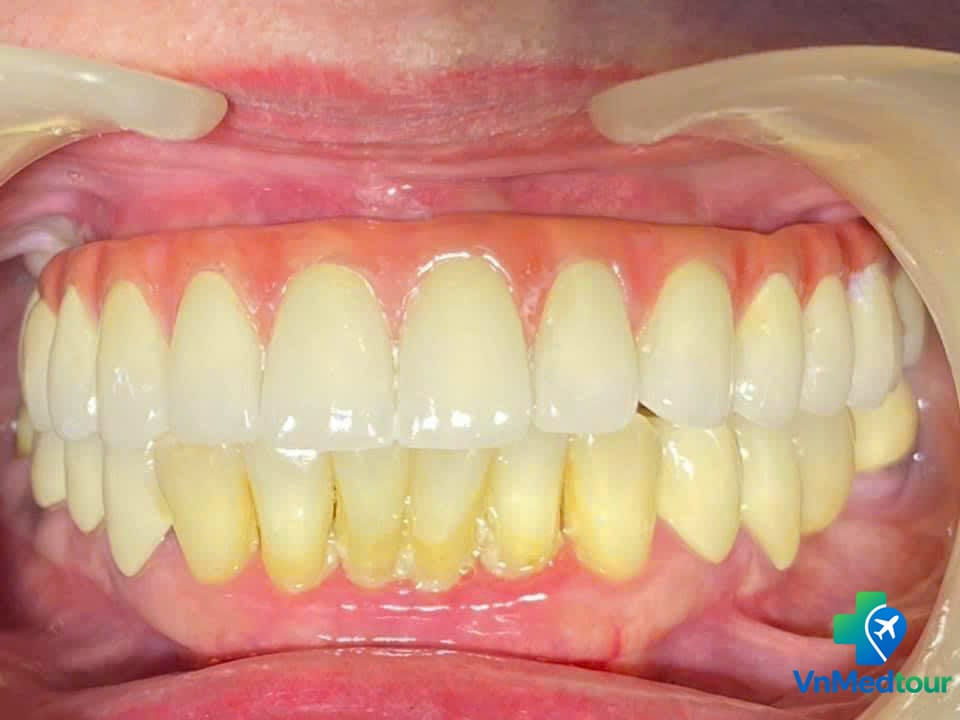
Example of restored teeth following a comprehensive dental treatment plan.
12. Request a Personalised Dental Treatment Quotation
Planning dental work in Vietnam for Australians involves coordinating clinical treatment, international travel and long-term dental maintenance.
VnMedtour assists Australian patients with preliminary dental enquiries, treatment quotations and appointment arrangements with partner dental providers in Vietnam.
To request an assessment, provide details of your dental concerns, available dental records or X-rays, relevant previous treatment and preferred travel dates.
The final treatment plan and quotation will depend on the treating dental professional’s clinical assessment.