
Intracytoplasmic Sperm Injection (ICSI) is one of the most advanced and effective assisted reproductive technologies (ART) available today. Originally developed to treat severe male infertility, ICSI has become a cornerstone of modern in vitro fertilization (IVF) programs worldwide.
In recent years, Vietnam has emerged as a leading destination for ICSI treatment, offering international patients high success rates, experienced fertility specialists, state-of-the-art laboratories, and significantly lower costs compared to many Western countries.
This article provides a comprehensive overview of ICSI in Vietnam, including how the procedure works, who it is suitable for, success rates, costs, top fertility centers, and what international patients can expect throughout their treatment journey.
Quick Navigation
What Is ICSI?
Intracytoplasmic Sperm Injection (ICSI) is a specialized form of IVF in which a single sperm is directly injected into the cytoplasm of a mature egg using a fine glass needle under high-powered microscopy.
Unlike conventional IVF, where thousands of sperm are placed around an egg and fertilization occurs naturally, ICSI bypasses many barriers to fertilization. This makes it particularly effective for couples facing male-factor infertility or previous IVF failures.
Since its introduction in the 1990s, ICSI has helped millions of couples worldwide achieve successful pregnancies.
Who Is ICSI Recommended For?
ICSI is commonly recommended in the following situations:
Severe Male Infertility
-
Very low sperm count (severe oligospermia)
-
Poor sperm motility (asthenospermia)
-
High percentage of abnormal sperm morphology (teratospermia)
-
Obstructive or non-obstructive azoospermia (no sperm in ejaculate)
Surgically Retrieved Sperm
ICSI is essential when sperm are obtained via:
-
TESE (Testicular Sperm Extraction)
-
PESA or MESA (Epididymal sperm retrieval)
Previous Fertility Treatment Failure
-
Failed fertilization in conventional IVF
-
Poor fertilization rates in prior cycles
Other Indications
-
Use of frozen eggs or sperm
-
Advanced maternal age
-
Preimplantation genetic testing (PGT/PGS)
-
Unexplained infertility with suspected fertilization issues
How Does the ICSI Procedure Work?
ICSI is performed as part of an IVF cycle and involves several carefully controlled steps:
1. Ovarian Stimulation
The female partner receives hormone medications to stimulate the ovaries to produce multiple mature eggs. Growth is monitored through ultrasound scans and blood tests.
2. Egg Retrieval
Once the eggs are ready, they are collected using a minimally invasive ultrasound-guided procedure performed under sedation.
3. Sperm Collection and Preparation
Sperm are obtained from ejaculation or surgical retrieval. Embryologists then select the healthiest and most viable sperm under a microscope.
4. ICSI Fertilization
A single sperm is injected directly into each mature egg using micromanipulation equipment in a high-standard embryology laboratory.
5. Embryo Culture
Fertilized eggs (embryos) are cultured in the laboratory for 3–5 days until they reach the cleavage or blastocyst stage.
6. Embryo Transfer
One or more high-quality embryos are transferred into the uterus. Excess viable embryos may be frozen for future use.
7. Pregnancy Testing
A blood test is performed approximately 10–14 days after transfer to confirm pregnancy.
Success Rates of ICSI in Vietnam
Vietnamese fertility centers report excellent ICSI outcomes, comparable to leading clinics in Europe, Australia, and Asia.
Typical success indicators include:
-
Fertilization rate: 70–85% of injected eggs
-
Clinical pregnancy rate:
-
Women under 35: 50–60% per transfer
-
Ages 35–39: 40–50%
-
Age 40+: 25–35%
-
Actual success rates depend on:
-
Female age and ovarian reserve
-
Sperm quality and source
-
Embryo quality
-
Uterine health
-
Laboratory standards and expertise
Importantly, large-scale studies show that ICSI does not significantly increase the risk of congenital abnormalities when performed by experienced embryologists.
Why Choose ICSI in Vietnam?
1. Highly Experienced Fertility Specialists
Vietnam has invested heavily in reproductive medicine. Many fertility doctors and embryologists are internationally trained and perform thousands of IVF and ICSI cycles annually.
2. Advanced IVF Laboratories
Top fertility centers in Vietnam operate:
-
ISO- and ESHRE-compliant IVF labs
-
Advanced micromanipulation systems
-
Time-lapse embryo monitoring
-
Vitrification (rapid freezing) technology
3. Affordable Treatment Costs
ICSI in Vietnam typically costs 40–60% less than in countries such as the United States, Australia, or Western Europe—without compromising quality.
4. Short Waiting Times
Unlike some countries with long IVF waiting lists, Vietnam offers fast access to treatment, allowing patients to start cycles promptly.
5. Comprehensive Care for International Patients
Many clinics provide:
-
English-speaking coordinators
-
Personalized treatment plans
-
Assistance with visas, accommodation, and local transportation
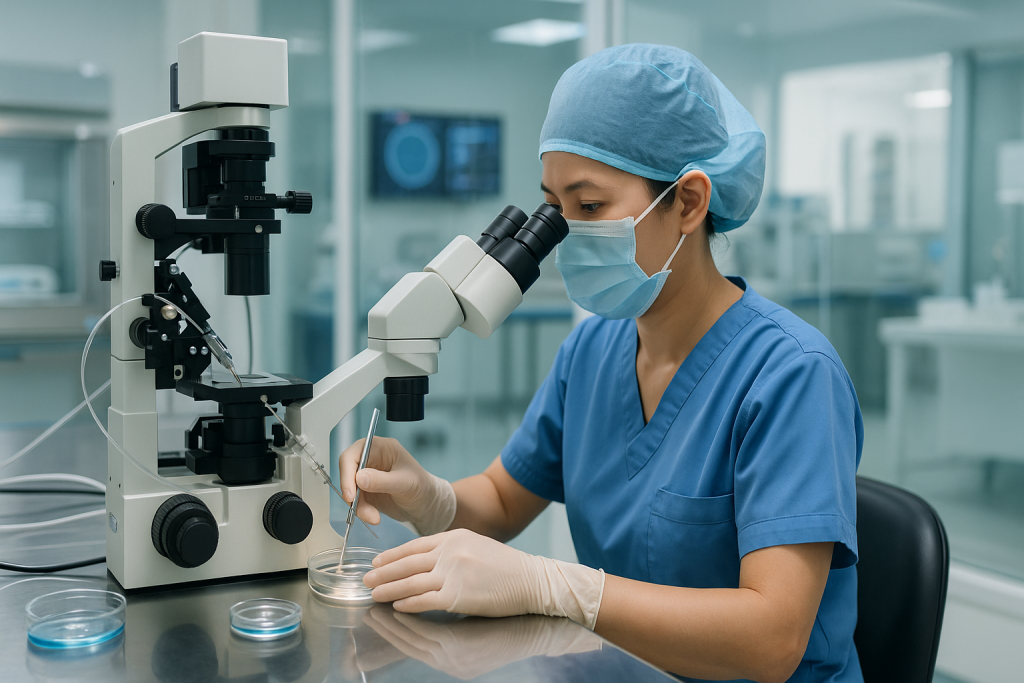
A Vietnamese embryologist preparing advanced ICSI fertilization in a high-standard IVF laboratory in Vietnam.
Cost of ICSI in Vietnam
The cost of ICSI in Vietnam varies depending on the clinic, medications, and additional services required.
Estimated Cost Range
-
IVF with ICSI: USD 4,000 – 6,500
-
Medications: USD 800 – 1,500
-
Surgical sperm retrieval (if needed): USD 500 – 1,200
-
PGT/PGS (optional): USD 2,000 – 4,000
These prices are significantly lower than:
-
USA: USD 15,000 – 25,000+
-
Australia: USD 10,000 – 15,000
-
Europe: USD 8,000 – 12,000
Leading Fertility Centers Offering ICSI in Vietnam
Vietnam has several internationally recognized fertility hospitals and IVF centers, particularly in Ho Chi Minh City and Hanoi. These centers are known for:
-
High annual IVF/ICSI volumes
-
Strict laboratory quality control
-
Multidisciplinary fertility teams
-
Ethical and transparent treatment practices
Many centers routinely treat patients from Australia, the US, Europe, and across Asia.
ICSI and Genetic Testing (PGT)
ICSI is commonly combined with Preimplantation Genetic Testing (PGT) to improve outcomes and reduce genetic risks.
PGT allows:
-
Screening embryos for chromosomal abnormalities
-
Selection of genetically healthy embryos
-
Reduced risk of miscarriage
-
Higher implantation rates, especially for older patients
Vietnamese fertility centers are increasingly offering PGT as part of comprehensive IVF-ICSI programs.
Safety and Ethical Standards in Vietnam
Vietnam’s Ministry of Health strictly regulates assisted reproductive technologies. Licensed fertility centers must meet defined standards for:
-
Laboratory conditions
-
Embryologist qualifications
-
Patient safety and consent
-
Embryo handling and storage
Vietnam allows IVF and ICSI for married couples and provides clear legal frameworks for fertility treatment.
What International Patients Can Expect
Length of Stay
-
Initial consultation: online or in person
-
Ovarian stimulation & egg retrieval: 10–14 days
-
Embryo transfer: within the same cycle or later
Most patients stay in Vietnam for 2–3 weeks per treatment cycle.
Language and Support
-
English-speaking doctors or interpreters
-
Dedicated international patient coordinators
-
Clear communication and transparent pricing
Recovery and Comfort
Vietnam offers a comfortable environment for recovery, with high-quality hotels, serviced apartments, and medical-grade aftercare support.
Is ICSI Right for You?
ICSI is not necessary for every infertility case, but it is often the best solution for severe male infertility or previous IVF failure. A personalized evaluation by a fertility specialist is essential to determine the most appropriate treatment plan.
Conclusion
ICSI in Vietnam offers international patients a powerful combination of advanced medical expertise, high success rates, modern facilities, and affordable pricing. For couples struggling with infertility—especially male-factor infertility—Vietnam has become a trusted destination for achieving the dream of parenthood.
With the right medical team and a personalized approach, ICSI can significantly improve the chances of a successful pregnancy and healthy baby.