
Pectoral implants—also known as male chest implants or pectoral augmentation—are becoming increasingly popular among men who want a stronger, more defined chest but struggle to achieve the desired results through exercise alone. In recent years, Vietnam has emerged as a competitive destination for pectoral implant surgery, attracting both local and international patients thanks to skilled surgeons, modern hospitals, and significantly lower costs compared to Western countries.
This in-depth guide (≈2000 words) explains everything you need to know about pectoral implants in Vietnam, including the procedure, costs, recovery, safety standards, and why Vietnam is gaining attention in the global medical tourism market.
Quick Navigation
1. What Are Pectoral Implants?
Pectoral implants are solid silicone implants surgically placed in the chest to enhance the size, shape, and definition of the pectoral muscles. Unlike female breast implants, pectoral implants are:
-
Made of solid (non-gel) medical-grade silicone
-
Firm and sculpted to mimic natural male muscle anatomy
-
Designed specifically for male chest contouring
They are most commonly placed under the pectoralis major muscle, creating a natural and athletic appearance.
2. Why Men Choose Pectoral Implants
Men seek pectoral augmentation for various personal and medical reasons:
Common motivations
-
Difficulty building chest muscles despite consistent gym training
-
Naturally flat or underdeveloped chest
-
Asymmetry between the left and right pectoral muscles
-
Body confidence and aesthetic goals
-
Reconstruction after trauma or congenital conditions (e.g., Poland syndrome)
While weight training remains essential for overall fitness, pectoral implants provide immediate and predictable volume and definition, something exercise alone may not achieve for everyone.
3. Why Vietnam Is a Growing Destination for Pectoral Implants
Vietnam is rapidly gaining recognition as a medical tourism hub in Southeast Asia, particularly for cosmetic and reconstructive procedures.
Key reasons international patients choose Vietnam
3.1 Affordable Costs
Patients can save 40–70% compared to Australia, the US, or Europe—without compromising on quality.
3.2 Skilled Plastic Surgeons
Many Vietnamese plastic surgeons:
-
Are internationally trained (Korea, Japan, Europe)
-
Perform high volumes of cosmetic procedures
-
Follow international surgical protocols
3.3 Modern Hospitals and Clinics
Major cities such as Ho Chi Minh City, Hanoi, and Da Nang offer:
-
JCI-aligned private hospitals
-
Advanced operating rooms
-
English-speaking medical coordinators
3.4 Ideal for Medical Tourism
Vietnam combines treatment with:
-
Affordable accommodation
-
Excellent food and hospitality
-
Short recovery stays in beach or city environments
4. Pectoral Implant Surgery: Step-by-Step
4.1 Pre-operative Consultation
Before surgery, patients undergo:
-
Physical examination and chest measurements
-
Implant size and shape selection
-
Medical history review
-
Blood tests and imaging if required
For international patients, online consultations are often available before arrival.
4.2 The Surgical Procedure
-
Anesthesia: General anesthesia
-
Incision: Usually in the armpit (axillary incision) to minimize visible scarring
-
Placement: Implant positioned beneath the pectoral muscle
-
Duration: 1–2 hours
The surgeon carefully creates a pocket to ensure symmetry and natural contours.
4.3 Post-Surgery Care
After surgery:
-
Patients wear a compression garment
-
Pain and tightness are common during the first week
-
Hospital stay: same day or 1 night
5. Recovery Timeline
| Timeframe | What to Expect |
|---|---|
| Days 1–7 | Swelling, tightness, mild pain |
| Week 2 | Return to desk work |
| Weeks 4–6 | Resume light exercise |
| 2–3 months | Final results visible |
| 3–6 months | Full implant settling |
Most surgeons advise avoiding chest workouts for at least 6 weeks.
6. Results and Longevity
Pectoral implants:
-
Provide permanent results
-
Do not require regular replacement
-
Maintain shape over many years
When combined with fitness training, results look more natural and proportionate.
7. Safety and Risks
Pectoral implants are considered safe when performed by experienced surgeons, but like any surgery, they carry risks.
Possible risks include:
-
Infection
-
Implant displacement
-
Seroma (fluid accumulation)
-
Capsular contracture (rare)
Choosing a licensed hospital and board-certified plastic surgeon significantly reduces these risks.
8. Cost of Pectoral Implants in Vietnam (2025)
Average price range
-
USD 3,500 – 6,000 (both sides)
What’s usually included
-
Surgeon’s fee
-
Silicone implants
-
Anesthesia
-
Hospital facilities
-
Post-operative care and medication
Cost comparison
| Country | Average Cost |
|---|---|
| Vietnam | USD 3,500 – 6,000 |
| Australia | USD 10,000 – 15,000 |
| United States | USD 12,000 – 18,000 |
| South Korea | USD 8,000 – 12,000 |
9. Who Is a Good Candidate?
You may be suitable if you:
-
Are in good general health
-
Have realistic expectations
-
Do not smoke (or can stop before surgery)
-
Have underdeveloped chest muscles
A personal consultation is essential to confirm candidacy.
10. Pectoral Implants vs Alternatives
Gym Training
-
Natural and healthy
-
Limited by genetics
-
Requires years of consistent effort
Fat Transfer
-
Uses your own fat
-
Limited volume
-
Less definition than implants
Pectoral Implants
-
Immediate results
-
Clear muscle definition
-
Long-lasting and predictable
Many patients combine implants + fitness training for optimal results.
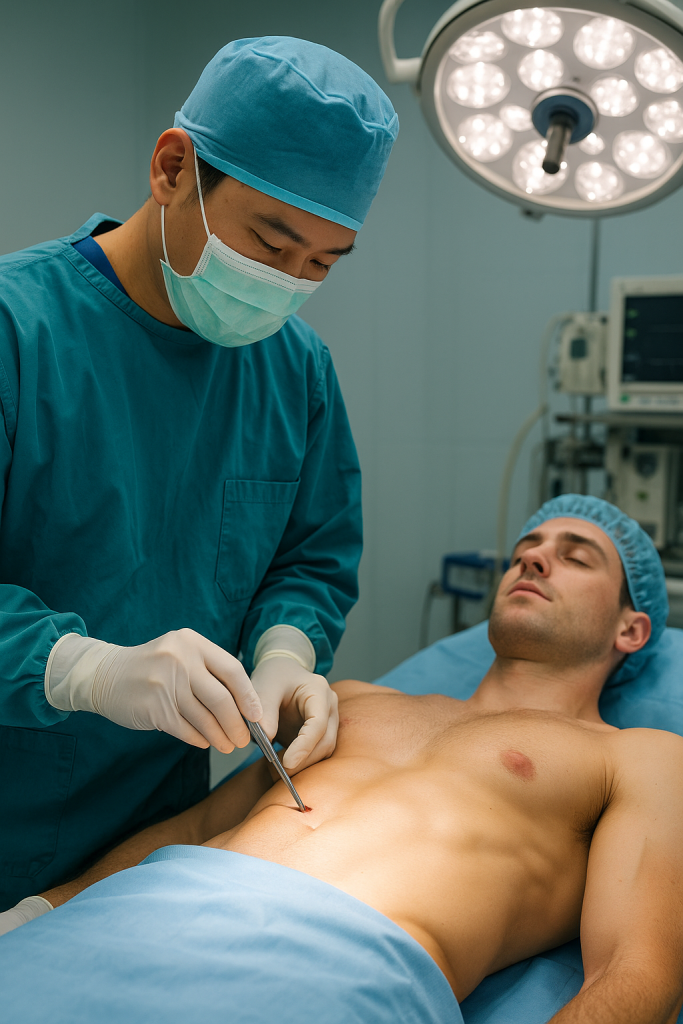
A high-resolution photo of a pectoral implant procedure in Vietnam, showing a Vietnamese surgeon enhancing a male patient’s chest definition in a sterile operating room.
11. Choosing the Right Clinic in Vietnam
When selecting a provider, look for:
-
Licensed plastic surgery hospital
-
Surgeon with male chest augmentation experience
-
Before-and-after photos
-
Clear English communication
-
Transparent pricing
Medical tourism facilitators in Vietnam can help international patients with:
-
Surgeon selection
-
Treatment planning
-
Airport pickup and accommodation
-
Translation and aftercare support
12. Travel and Recovery Tips for International Patients
-
Stay at least 7–10 days post-surgery
-
Avoid long flights in the first few days
-
Wear compression garment during travel
-
Choose accommodation near the hospital
-
Plan light sightseeing only after the first week
Vietnam’s warm climate and hospitality make recovery more comfortable for many patients.
13. Frequently Asked Questions (FAQ)
Is pectoral implant surgery painful?
Discomfort is common in the first week but manageable with medication.
Will the implants look natural?
Yes, when placed correctly under the muscle and sized appropriately.
Can implants be removed later?
Yes, implants can be removed or replaced if needed.
Do pectoral implants affect muscle movement?
No significant long-term impact when surgery is done properly.
14. Why Pectoral Implants in Vietnam Make Sense in 2025
Vietnam offers a strong balance of:
-
Affordability
-
Medical expertise
-
Modern facilities
-
Travel convenience
For men seeking a defined, masculine chest without the high price tag of Western countries, pectoral implants in Vietnam are an increasingly attractive option.
15. Final Thoughts
Pectoral implants are not a replacement for a healthy lifestyle, but they can be a powerful solution for men who want enhanced chest definition that exercise alone cannot deliver. With experienced surgeons, internationally aligned hospitals, and competitive pricing, Vietnam stands out as a reliable destination for male chest augmentation.
If you are considering pectoral implants abroad, Vietnam deserves serious consideration—not only for the surgery itself, but also for the overall patient experience.
Request a Free Quote for Pectoral Implants in Vietnam
Get an estimated treatment plan, pricing, and clinic options within 24 hours.