
Calf implants—also known as calf augmentation, calf enhancement, or gastrocnemius implant surgery—are becoming increasingly popular among individuals who desire fuller, more defined lower legs. The procedure enhances the shape, size, and contour of the calves using medical-grade silicone implants or, in some cases, fat grafting. It’s a powerful option for those who feel their calves are too small, asymmetric, or disproportionate to the rest of their body.
As Vietnam grows into one of Asia’s top medical tourism hubs, Calf Implants in Vietnam have gained significant interest from both local and international patients. With affordable prices, highly trained surgeons, and advanced medical facilities, Vietnam offers world-class calf augmentation with natural, aesthetic results.
This comprehensive guide explains everything you need to know about calf implants in Vietnam—techniques, procedures, recovery, risks, pricing, candidacy, alternatives, and why Vietnam is an exceptional destination for this treatment.
Quick Navigation
What Are Calf Implants?
Calf implants are solid silicone devices surgically placed in the lower leg to enhance the appearance of the calf muscles. They are designed to replicate the natural contour of the gastrocnemius muscle and can significantly improve:
-
Calf size
-
Lower leg symmetry
-
Muscle definition
-
Proportion between upper and lower legs
-
Overall body aesthetics
The implants are placed through a small incision behind the knee, resulting in a discreet scar hidden within the natural crease.
Who Needs Calf Implants?
Calf implants are suitable for both men and women and serve both cosmetic and reconstructive purposes.
✔ Aesthetic reasons
-
Naturally thin or underdeveloped calves
-
Desire for a more muscular or athletic leg appearance
-
Correction of imbalance between thighs and lower legs
-
Enhancement of body proportions, especially in fitness models
✔ Reconstructive reasons
Calf implants are commonly used for patients with:
-
Congenital calf deficiency
-
Asymmetry from injury
-
Muscle atrophy from conditions like poliomyelitis or spina bifida
-
Lower leg deformities
The result is a more balanced, symmetrical, and harmonious leg shape.
Why Choose Calf Implants in Vietnam?
Vietnam has rapidly become a leader in aesthetic body contouring procedures. Here’s why thousands choose Vietnam each year:
1. Affordable Prices
Calf implant surgery costs significantly less than in Western countries.
-
USA: $6,000–12,000
-
Australia: $7,000–14,000
-
Singapore: $10,000–18,000
-
Vietnam: $2,500–4,500
Despite the lower cost, medical quality is comparable to international standards.
2. Skilled Vietnamese Plastic Surgeons
Surgeons in Vietnam often receive advanced training in:
-
South Korea
-
Japan
-
France
-
Thailand
-
The United States
They specialize in leg contouring, body implants, liposuction, and reconstructive surgery, ensuring safe and natural-looking results.
3. Modern Hospitals & Safety Standards
Top Vietnamese cosmetic hospitals offer:
-
FDA-approved silicone implants
-
3D pre-surgery simulation
-
International-level sterilization
-
Ultrasound-assisted surgical equipment
-
English-speaking medical staff
Patients benefit from both safety and comfort at every stage of the procedure.
4. Natural, Balanced Aesthetic Results
Vietnamese surgeons focus on contour harmony rather than unnatural enlargement. The results prioritise:
-
Proportion
-
Symmetry
-
Subtle definition
-
Long-lasting aesthetic improvement
5. Favorable Medical Tourism Conditions
Vietnam provides:
-
Easy travel
-
Affordable accommodations
-
Private recovery rooms
-
Seamless customer service
This makes it ideal for patients traveling from abroad.
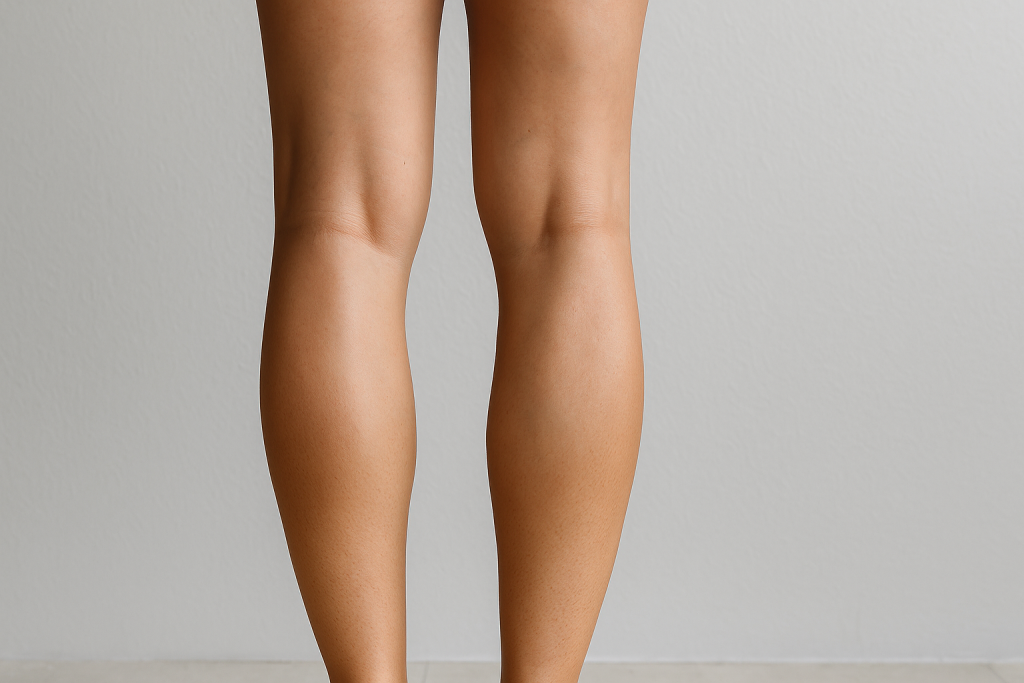
Close-up of defined calf contours—an area commonly enhanced through calf implant surgery for improved leg shape and proportion.
Types of Calf Augmentation Available in Vietnam
Two primary methods are used:
1. Silicone Calf Implants (Most Common)
This is the gold standard for calf enhancement.
How it works
-
A small, solid silicone implant is placed inside a pocket created within or under the calf muscles.
-
The implant is shaped to match the natural contour of the gastrocnemius muscle.
-
It adds volume, definition, and shape that feels firm but natural.
Advantages
✔ Long-lasting and durable
✔ Ideal for slim patients
✔ Predictable size and shape
✔ Only one surgery needed
✔ Results stable even with weight fluctuation
2. Fat Grafting (Autologous Fat Transfer)
Fat is taken from areas like the abdomen, flanks, or thighs and injected into the calves.
Advantages
✔ Very natural look and feel
✔ Dual benefit—reduces fat in donor areas
✔ Minimal scarring
Disadvantages
-
Not suitable for very slim patients
-
Only modest volume increase
-
Fat absorption rate (30–50%)
-
May require touch-up procedures
Most international patients choose silicone implants for reliable enhancement.
Who Is an Ideal Candidate?
You may be a good candidate if:
-
Your calves are naturally small or flat
-
Your legs look disproportionate to your upper body
-
You have difficulty growing your calves even with exercise
-
You have asymmetry in lower legs (medical or aesthetic)
-
You are a fitness enthusiast seeking a more muscular look
-
You want long-lasting results
You must also:
-
Be healthy
-
Avoid smoking 4–6 weeks before surgery
-
Have realistic expectations
-
Be able to avoid strenuous exercise during recovery
The Calf Implant Procedure in Vietnam
Below is a detailed step-by-step overview:
1. Consultation
Your surgeon will:
-
Evaluate calf anatomy
-
Check for symmetry and proportion
-
Discuss implant shapes/sizes
-
Show before–after results
-
Plan incision placement
-
Explain risks and expectations
2. Preoperative Preparation
Includes:
-
Blood tests
-
ECG
-
Medical history review
-
Stopping smoking
-
Avoiding aspirin and alcohol
3. Anesthesia
Calf implant surgery is performed under:
-
General anesthesia, or
-
Spinal anesthesia with sedation
Duration: 60–90 minutes
4. Incision & Pocket Creation
A small 3–4 cm incision is made in the crease behind the knee, making the scar nearly invisible.
The surgeon creates a pocket:
-
Under the fascia
-
Between muscle layers
-
Or under the muscle (rare)
5. Implant Placement
The silicone implant is inserted and positioned carefully for symmetry and shape.
6. Suturing & Dressing
The incision is closed with dissolvable sutures and covered with surgical tape.
Patients usually stay one night in the hospital.
Recovery After Calf Implant Surgery
Recovery is straightforward but requires care due to muscle involvement.
Week 1
-
Swelling, tightness, and soreness
-
Walking is possible but slow
-
Pain medications prescribed
-
Elevate legs at rest
-
Avoid stairs if possible
Week 2–3
-
Swelling decreases
-
Return to light daily activities
-
Avoid running or weight lifting
Week 4–6
-
Resume non-impact workouts
-
Improved mobility
-
Implant begins to settle naturally
Month 2–3
-
Shape becomes more natural
-
Full activities gradually restored
Month 3–6
-
Final results visible
-
Scars fade significantly
-
Comfort and movement fully restored
Expected Results
Patients can expect:
-
Fuller, more defined calves
-
Improved leg symmetry
-
Enhanced muscle contour
-
Better body proportions
-
Stronger aesthetic impact when wearing shorts, skirts, or swimwear
Results are long-lasting, especially with silicone implants.
Risks & Possible Complications
While safe when performed by a qualified surgeon, risks include:
-
Swelling or bruising
-
Infection (rare)
-
Implant displacement
-
Tightness or discomfort
-
Seroma (fluid buildup)
-
Scarring (hidden behind knee)
-
Asymmetry (correctable)
Choosing an experienced Vietnamese surgeon significantly reduces these risks.
Calf Implant Cost in Vietnam (2026)
Below is a typical price range:
| Procedure | Cost (VND) | Approx. USD |
|---|---|---|
| Calf implants (1 pair) | 60,000,000 – 110,000,000 | $2,500 – $4,500 |
| Calf fat grafting | 35,000,000 – 70,000,000 | $1,400 – $2,800 |
| Hybrid augmentation | 75,000,000 – 130,000,000 | $3,000 – $5,200 |
Price varies by:
-
Surgeon expertise
-
Implant brand/type
-
Hospital facility
-
Whether liposuction is included
Best Cities for Calf Implants in Vietnam
Ho Chi Minh City (HCMC)
-
Most advanced aesthetic clinics
-
Highly skilled surgeons
-
Popular with foreigners
Hanoi
-
Strong reconstructive surgery departments
Da Nang
-
Relaxed environment for recovery
Alternatives to Calf Implants
Some patients may consider:
✔ Calf Fat Transfer
More natural but limited in volume.
✔ Calf Muscle Building (Non-surgical)
Exercise alone often cannot correct genetic calf deficiency.
✔ Calf Fillers (temporary)
Hyaluronic acid fillers can enhance shape but last 12–18 months.
Frequently Asked Questions (FAQ)
1. Do calf implants look natural?
Yes. Modern implants are shaped to mimic natural muscle contours.
2. Will the implants limit physical activity?
No. After full recovery, you can run, jump, and exercise normally.
3. When can I walk normally again?
Usually after 1–2 weeks.
4. Do implants move or shift?
Rare when surgery is done correctly.
5. Are results permanent?
Silicone implants last 10–20 years or more.
Conclusion: Why Choose Calf Implants in Vietnam?
Vietnam offers a safe, affordable, and highly effective solution for people seeking beautifully defined and proportionate calves. With internationally trained surgeons, modern hospital facilities, and significantly lower costs than Western countries, Calf Implants in Vietnam provide excellent value and natural-looking results.
Whether you’re seeking more muscular legs, correcting an imbalance, or improving overall body harmony, Vietnam delivers world-class outcomes with exceptional care.
Considering Calf Implants in Vietnam?
Tell us about your goals and body shape, and we’ll help you connect with trusted surgeons and clinics for calf augmentation in Vietnam.