
Finding a lump anywhere on the body can be alarming. Many people immediately worry about cancer, but medical evidence shows that most lumps are benign and treatable with simple surgical procedures. Early evaluation and proper diagnosis are essential to determine whether removal is necessary and to ensure peace of mind.
Today, Vietnam has become an increasingly trusted destination for international patients seeking safe, affordable, and high-quality medical treatment. With modern hospitals, experienced surgeons, advanced diagnostic imaging, and personalized patient coordination, lump removal procedures in Vietnam offer an effective solution for both medical and cosmetic concerns.
This comprehensive guide explains what lumps are, how doctors evaluate them, available surgical techniques, treatment costs, recovery expectations, and why many overseas patients now choose Vietnam for lump removal.
Quick Navigation
What Is a Lump? Medical Definition and Causes
A lump refers to an abnormal swelling or localized mass that develops under the skin or within body tissues. Lumps can vary in size, texture, and growth speed. Some appear suddenly, while others develop slowly over months or years.
Common causes include:
-
Fat tissue growth (lipoma)
-
Blocked glands forming cysts
-
Hormonal changes
-
Inflammation or infection
-
Benign tumors
-
Enlarged lymph nodes
-
Thyroid nodules
Most lumps are non-cancerous. However, medical evaluation is important when a lump changes in size, becomes painful, or persists for a long period.
Doctors typically begin assessment through physical examination followed by imaging studies such as ultrasound, MRI, or CT scans when necessary.
How Doctors Determine Whether a Lump Is Dangerous
One of the biggest concerns patients have is whether a lump could be cancerous. Physicians follow a structured diagnostic process to evaluate risk.
Clinical Examination
Doctors assess mobility, firmness, tenderness, and growth pattern. Benign lumps are often soft and movable, while suspicious masses may feel fixed or irregular.
Diagnostic Imaging
Ultrasound is commonly used as a first-line imaging tool. It helps determine whether the lump is solid or fluid-filled.
Biopsy or Pathology Analysis
If uncertainty remains, a biopsy may be performed. A small tissue sample is examined under a microscope to confirm diagnosis.
Oncology Referral When Needed
Only a small percentage of lumps require oncology treatment. If malignancy is suspected, patients are referred to specialized cancer teams for further care.
This step-by-step evaluation ensures accurate diagnosis before any surgical decision is made.
Common Types of Lumps Treated in Vietnam
Vietnamese hospitals regularly treat a wide range of benign and suspicious lumps.
Lipoma (Fatty Lump)
Lipomas are soft, slow-growing masses made of fatty tissue and are one of the most common benign lumps. They are usually painless but may be removed for comfort, cosmetic reasons, or continued growth. Patients seeking treatment can learn more about lipoma removal in Vietnam and available surgical options.
Epidermoid and Sebaceous Cysts
Cysts commonly develop when skin glands or hair follicles become blocked, leading to fluid-filled lumps beneath the skin. While many cysts are harmless, they can become inflamed, infected, or recurrent over time. Patients experiencing discomfort or repeated swelling may consider treatment options such as cyst removal in Vietnam, which is typically performed as a minor surgical procedure.
Breast Lumps (Fibroadenoma)
Many breast lumps are diagnosed as benign fibroadenomas, particularly in younger women. Although non-cancerous, doctors may recommend monitoring or surgical removal to confirm diagnosis, relieve discomfort, or provide reassurance. Patients who require treatment can explore options for breast lump removal in Vietnam, where evaluation and minimally invasive procedures are commonly available.
Thyroid Nodules
Neck lumps frequently originate from thyroid nodules, which are common and often benign growths within the thyroid gland. Doctors typically use ultrasound imaging and, when necessary, biopsy testing to determine whether treatment is required. When symptoms, enlargement, or diagnostic concerns arise, patients may consider options such as thyroid lump removal in Vietnam, where specialized evaluation and surgical care are available.
Enlarged Lymph Nodes
Some lumps, particularly enlarged lymph nodes, may appear temporarily due to infection or inflammation and often resolve on their own. However, persistent or enlarging swelling should be medically evaluated to rule out underlying conditions. When necessary, further assessment or procedures such as lymph node evaluation and lump removal in Vietnam may be recommended to obtain an accurate diagnosis and appropriate treatment.
Soft Tissue Tumors
Some lumps develop within muscles or connective tissues and are classified as soft tissue tumors, many of which are benign. Depending on their size, location, and symptoms, doctors may recommend monitoring or surgical excision to relieve discomfort and confirm diagnosis. Patients requiring treatment can consider options such as soft tissue lump removal in Vietnam, where modern surgical techniques allow safe and precise removal.
When Is Lump Removal Recommended?
Not every lump requires surgery. Doctors recommend removal when:
-
The lump grows rapidly
-
Pain or discomfort develops
-
Infection occurs repeatedly
-
Movement becomes restricted
-
Cosmetic concerns affect confidence
-
Diagnosis remains uncertain
-
Cancer cannot be ruled out
Removal often provides both treatment and definitive diagnosis through laboratory examination.
Lump Removal Procedures and Surgical Techniques
Modern Vietnamese hospitals offer several safe and effective techniques depending on the type and location of the lump.
Surgical Excision
The most common method involves removing the lump completely through a small incision. This ensures low recurrence risk.
Minimally Invasive Surgery
Smaller lumps can often be removed using minimally invasive approaches, reducing scarring and recovery time.
Local Anesthesia Procedures
Many lump removals are performed under local anesthesia, allowing patients to remain awake and return home the same day.
Image-Guided Surgery
For deeper masses, surgeons may use ultrasound guidance to improve precision.
Pathology Examination
After removal, tissue is routinely analyzed to confirm whether the lump is benign.
Cost of Lump Removal in Vietnam for International Patients
Vietnam offers significant cost advantages compared with Western healthcare systems.
Typical price estimates include:
-
Small lump removal: USD 150 – 400
-
Lipoma or cyst surgery: USD 300 – 800
-
Breast or thyroid lump removal: USD 1,000 – 2,500
-
Complex soft tissue surgery: USD 2,000 – 4,000
Factors influencing cost include:
-
Size and depth of the lump
-
Required imaging tests
-
Type of anesthesia
-
Hospital category
-
Length of stay
Despite lower prices, many hospitals use modern equipment comparable to regional medical hubs.
Hospitals and Surgeons Specializing in Lump Removal
Major cities such as Ho Chi Minh City and Hanoi host private and international-standard hospitals equipped with advanced surgical facilities.
Patients benefit from:
-
Experienced general and specialized surgeons
-
English-speaking medical staff
-
Digital imaging systems
-
Short waiting times
-
Coordinated international patient services
Many doctors have international training or experience treating overseas patients, ensuring clear communication and personalized care.
Treatment Process for Overseas Patients
Medical travel to Vietnam is designed to be efficient and stress-free.
Step 1: Online Case Review
Patients send medical reports, ultrasound images, or photos for initial evaluation.
Step 2: Treatment Planning
Doctors recommend suitable procedures and provide estimated costs.
Step 3: Travel Preparation
Appointments are scheduled according to travel dates.
Step 4: Examination and Surgery
Doctors confirm diagnosis before performing the procedure.
Step 5: Recovery and Follow-Up
Patients attend short follow-up visits and continue monitoring remotely after returning home.
Recovery Time, Scarring, and Aftercare
Recovery varies depending on surgical complexity.
General expectations include:
-
Minor procedures: recovery within a few days
-
Moderate surgery: 1–2 weeks
-
Larger operations: several weeks
Modern surgical techniques aim to minimize scarring. Doctors provide wound care instructions and scar management guidance to improve healing outcomes.
Patients are usually able to resume light travel activities shortly after treatment.
Why International Patients Choose Vietnam for Lump Removal
Vietnam is becoming a preferred destination due to several advantages:
-
Affordable medical costs
-
Skilled surgeons and specialists
-
Modern private hospitals
-
Minimal waiting times
-
Convenient travel within Asia
-
Comfortable recovery environment
Many patients combine treatment with a short recovery holiday, making the overall experience both efficient and reassuring.
Frequently Asked Questions About Lump Removal
Is lump removal painful?
Local anesthesia prevents pain during surgery. Mild discomfort afterward is usually manageable.
How long does the procedure take?
Most surgeries last between 20 minutes and one hour depending on complexity.
Do all lumps need biopsy?
Biopsy is recommended when diagnosis is uncertain or confirmation is required.
Can I travel after surgery?
Most patients can travel within a few days, depending on the procedure.
Are Vietnamese hospitals safe?
Leading hospitals follow strict medical standards and provide modern surgical care.
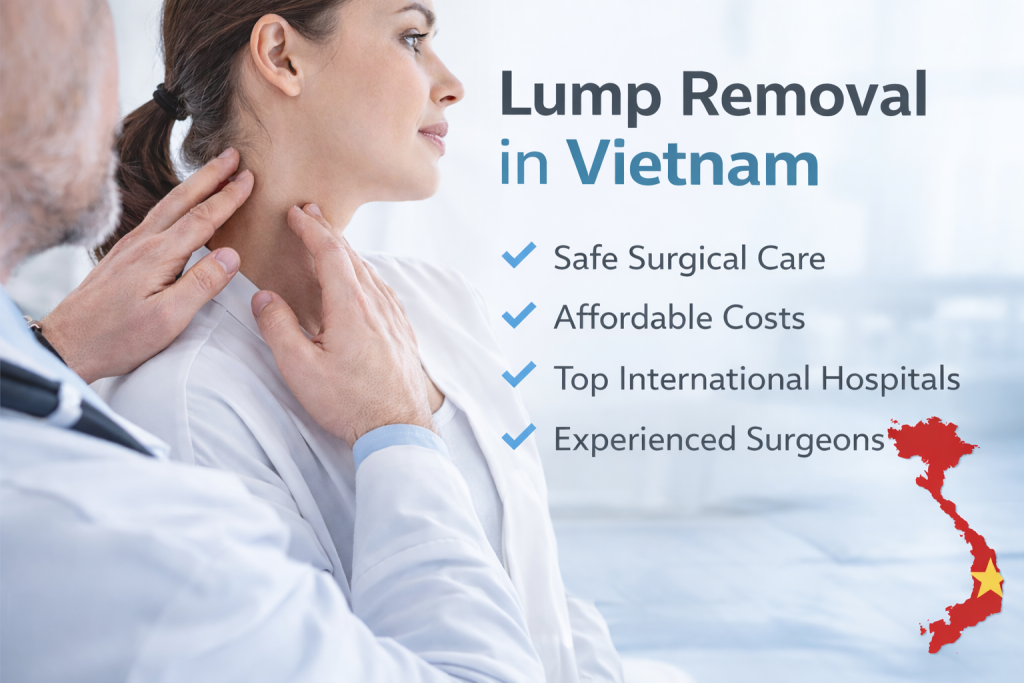
Professional medical consultation for safe and affordable lump removal procedures at modern hospitals in Vietnam.
Conclusion
Although discovering a lump can cause anxiety, most cases are treatable through safe and straightforward procedures. Accurate diagnosis, experienced surgical care, and proper follow-up are key to successful outcomes.
Vietnam offers a compelling combination of medical expertise, modern facilities, and affordable pricing, making it an attractive option for international patients seeking lump removal treatment abroad. With careful planning and professional support, patients can receive high-quality care while benefiting from a smooth and comfortable medical travel experience.
Request a Lump Removal Consultation in Vietnam
Send your ultrasound/scan results (if available) and get a doctor-reviewed treatment plan, estimated cost, and suggested hospital options.
Typical reply time: within 24–48 hours (Mon–Fri).