
Dry eye syndrome (DES), also known as dry eye disease, is one of the most common and irritating eye conditions worldwide. It affects millions of people and has become increasingly prevalent due to long screen time, climate changes, contact lens usage, and post-LASIK dryness.
Vietnam has emerged as a growing destination for high-quality dry eye treatment, offering advanced diagnostics, modern therapies, and affordable pricing — making it an attractive option for both expatriates and international medical tourists. This guide provides an in-depth overview of dry eye treatment in Vietnam, covering causes, symptoms, types of treatment, costs, best clinics, and travel tips.
Quick Navigation
What Is Dry Eye Syndrome?
Dry eye syndrome occurs when the eyes do not produce enough tears or when tears evaporate too quickly. This imbalance results in instability of the tear film, inflammation of the ocular surface, and discomfort during daily activities.
Common symptoms include:
-
Dryness or gritty sensation
-
Burning or stinging
-
Eye redness
-
Sensitivity to light
-
Blurred or fluctuating vision
-
Watery eyes (reflex tearing)
-
Fatigue during reading or screen use
-
Discomfort with contact lenses
Dry eye can significantly reduce quality of life, especially for individuals working on computers or living in hot, dry climates.
Causes of Dry Eye Syndrome
Dry eye has multiple underlying causes. Understanding them allows doctors to choose the right treatment plan.
1. Evaporative Dry Eye
The most common form, caused by poor oil secretion due to Meibomian Gland Dysfunction (MGD).
2. Aqueous Deficiency Dry Eye
Occurs when the lacrimal glands do not produce enough tears.
3. Post-LASIK or SMILE Dry Eye
Laser procedures temporarily reduce corneal nerve sensitivity, decreasing tear production.
4. Environmental Factors
Air conditioning, pollution, low humidity, and wind exposure.
5. Hormonal Changes
Common during menopause, pregnancy, or thyroid disorders.
6. Autoimmune Diseases
Sjögren’s syndrome, rheumatoid arthritis, lupus.
7. Medications
Certain antidepressants, antihistamines, and acne medications increase dryness.
8. Aging
Tear production naturally declines with age.
Dry Eye Diagnosis in Vietnam
Vietnam’s leading eye centers use modern diagnostic methods to identify the exact type of dry eye and severity.
Common diagnostic tests include:
-
Schirmer test — measures tear production
-
Tear Break-Up Time (TBUT) — evaluates tear film stability
-
Fluorescein or lissamine staining — identifies corneal damage
-
Meibography — shows the condition of Meibomian glands
-
Tear osmolarity — measures tear concentration
-
Slit lamp examination — evaluates eyelid and ocular surface health
Accurate diagnosis ensures a personalized treatment plan.
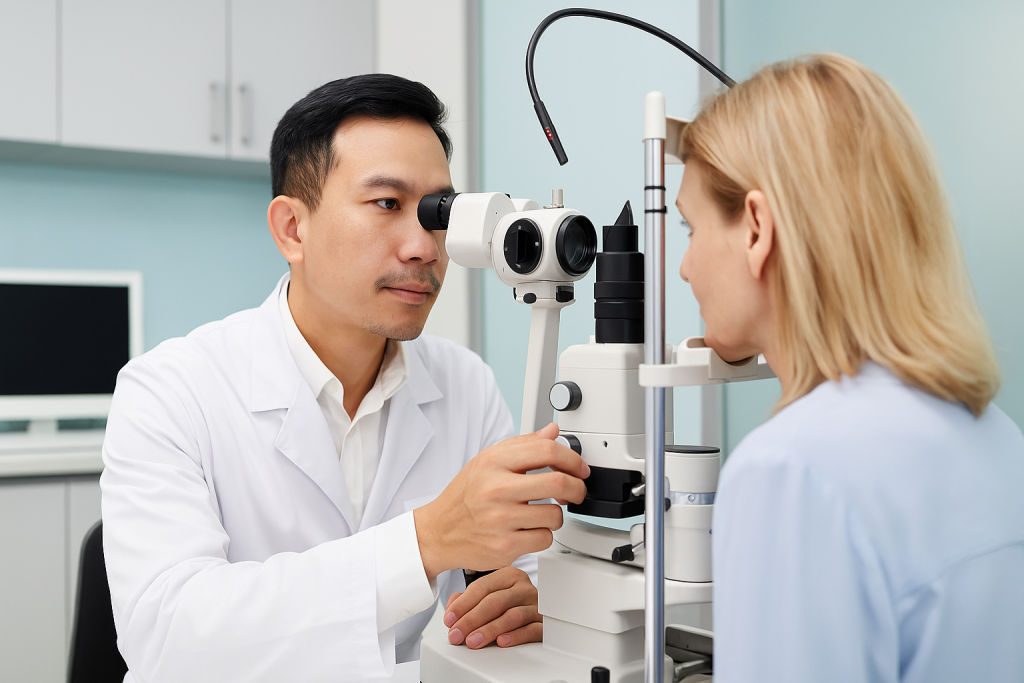
A Vietnamese ophthalmologist conducts a slit-lamp examination for an international patient during a dry eye evaluation.
Dry Eye Treatment Options in Vietnam
Vietnam offers a full range of dry eye therapies, from basic to advanced clinical procedures. Treatment plans are often customized based on the specific cause of dryness.
1. Artificial Tears and Lubricating Eye Drops
These are often the first-line treatment for mild dry eye. Depending on severity, doctors may recommend:
-
Carboxymethylcellulose (CMC) drops
-
Hyaluronic acid–based drops
-
Preservative-free artificial tears
-
Gel drops for longer-lasting relief
-
Ointments for nighttime use
Artificial tears supplement natural moisture and provide temporary comfort.
2. Anti-Inflammatory Eye Drops
For moderate to severe dry eye caused by inflammation, doctors may prescribe:
-
Cyclosporine (Restasis)
-
Lifitegrast (Xiidra)
-
Mild corticosteroid drops (short-term use)
-
Antihistamine or anti-allergy drops
These medications reduce ocular inflammation and help restore tear production.
3. Punctal Plugs (Tear Duct Plugs)
Punctal plugs are one of the most effective treatments for chronic dry eye. Small silicone or collagen plugs are inserted into the tear ducts to prevent tears from draining too quickly.
Benefits include:
-
Quick 2–5 minute procedure
-
Immediate improvement in moisture
-
Reversible and safe
-
Ideal for post-LASIK dryness
-
Suitable for moderate to severe dry eye
Both temporary and permanent punctal plugs are available in Vietnam.
4. Meibomian Gland Dysfunction (MGD) Treatments
MGD is the root cause of over 60% of dry eye cases. Vietnam offers advanced technologies to manage it.
A. LipiFlow Thermal Pulsation
Uses gentle heat and pressure to unclog blocked oil glands.
B. IPL (Intense Pulsed Light) Therapy
Targets inflammation and improves oil gland function.
C. MiBo ThermoFlo
A heated massage device that helps loosen hardened oils.
D. Lid hygiene and warm compress
Basic but essential for long-term management.
MGD treatment significantly improves evaporative dry eye by restoring the oil layer of the tear film.
5. Autologous Serum Eye Drops (ASEDs)
For severe or chronic dry eye, especially in autoimmune conditions, doctors may prescribe eye drops made from the patient’s own blood serum.
Advantages:
-
Contains natural growth factors
-
Promotes healing
-
Ideal for severe ocular surface disease
6. Amniotic Membrane Therapy
Used for advanced dry eye with corneal damage. Amniotic membrane lenses promote regeneration and reduce inflammation.
7. Lifestyle and Environmental Management
Doctors in Vietnam also provide guidance on:
-
Humidifier use
-
Reducing screen time
-
Improving blink habits
-
Switching to daily disposable contact lenses
-
Dietary supplements such as omega-3
These changes complement medical treatment for long-term relief.
Cost of Dry Eye Treatment in Vietnam
Vietnam is known for offering world-class treatment at significantly lower prices than Western countries.
Estimated costs (2025):
| Treatment | Cost (USD) |
|---|---|
| Consultation + diagnostic tests | $10–$30 |
| Artificial tears | $5–$20 |
| Anti-inflammatory drops | $15–$40 |
| Silicone punctal plugs | $40–$80 per eye |
| Collagen plugs | $20–$40 per eye |
| LipiFlow | $250–$400 |
| IPL therapy | $40–$80 per session |
| MiBo ThermoFlo | $30–$50 per session |
| Autologous serum drops | $80–$150 |
| Amniotic membrane | $70–$150 |
Dry eye care in Vietnam can be 3–10 times cheaper compared to the U.S., Australia, or Singapore.
Best Eye Clinics for Dry Eye Treatment in Vietnam
1. Ho Chi Minh City Eye Hospital
High-volume centre with advanced dry eye diagnostics.
2. National Eye Hospital (Hanoi)
Vietnam’s leading public ophthalmology center.
3. Vinmec International Hospital (Hanoi & Ho Chi Minh City)
International-standard equipment and highly trained specialists.
4. FV Hospital (Ho Chi Minh City)
JCI-accredited hospital offering full dry eye management.
5. Saigon Eye Hospital System
Modern equipment and fast treatment scheduling.
If you want, I can build a comparison table for these hospitals.
Why Vietnam Is an Excellent Destination for Dry Eye Treatment
✔ Modern diagnostic technology
✔ Affordable pricing
✔ Skilled ophthalmologists
✔ Short waiting times
✔ Excellent patient care
✔ Ideal for medical tourism
How to Prepare for Dry Eye Treatment in Vietnam
-
Bring previous eye exam records
-
Remove contact lenses before the appointment
-
Provide a list of current medications
-
Inform doctors about autoimmune diseases
-
Plan enough time for follow-up sessions (if choosing IPL or LipiFlow)
Aftercare and Recovery
Short-term care:
-
Do not rub your eyes
-
Use prescribed drops correctly
-
Avoid eye makeup for 24 hours
Long-term care:
-
Maintain eyelid hygiene
-
Follow up regularly
-
Use artificial tears if needed
-
Take omega-3 supplements
-
Apply warm compresses
Most patients experience dramatic improvement within days.
Frequently Asked Questions (FAQ)
1. Is dry eye curable?
Not always, but symptoms can be controlled very effectively.
2. How long do punctal plugs last?
Silicone plugs can last months to years; collagen plugs dissolve naturally.
3. Can dry eye get worse over time?
Yes, if untreated. Early treatment prevents damage.
4. How many IPL sessions are needed?
Typically 3–4 sessions spaced one month apart.
5. Are contact lens wearers suitable for treatment?
Yes. Treatment often improves lens comfort.
Looking for Dry Eye Treatment in Vietnam?
We help international patients access affordable, modern dry eye therapies across Vietnam.