
Colonoscopy is one of the most important diagnostic tools in modern medicine, particularly for detecting colon cancer, polyps, bleeding, inflammatory bowel diseases, and other digestive disorders. As global awareness of colorectal cancer increases, more patients seek safe and affordable screening options outside their home countries.
In recent years, Vietnam has emerged as a leading destination for colonoscopy, offering advanced endoscopy technology, well-trained doctors, international-standard hospitals, fast scheduling, and significantly lower prices compared to Western countries. Travelers combine medical care with tourism, making Vietnam a highly attractive choice for both screening and diagnostic colonoscopy.
This comprehensive guide provides everything you need to know about colonoscopy in Vietnam—including procedure details, benefits, preparation, recovery, hospitals, costs, and why Vietnam is becoming a top medical tourism hub for digestive diagnostics.
## What Is a Colonoscopy?
A colonoscopy is an endoscopic procedure that allows doctors to examine the inside of the large intestine using a long, flexible tube with a high-definition camera. The procedure evaluates the:
-
Rectum
-
Sigmoid colon
-
Descending colon
-
Transverse colon
-
Ascending colon
-
Cecum
-
Terminal ileum (sometimes)
Doctors can see real-time images on a monitor, identify abnormalities, take biopsies, and even remove polyps during the same session.
## Why Do You Need a Colonoscopy?
Doctors recommend colonoscopy for both screening and diagnostic purposes.
1. Colon Cancer Screening
Colonoscopy is the global gold standard for detecting early colorectal cancer. Medical guidelines recommend:
-
People aged 45+ should undergo routine colonoscopy
-
High-risk individuals should begin earlier, especially with:
-
Family history of colon cancer
-
History of polyps
-
Inflammatory bowel disease
-
2. Digestive Symptoms That Require a Colonoscopy
A colonoscopy is recommended if you have:
-
Rectal bleeding
-
Persistent diarrhea
-
Chronic constipation
-
Abdominal pain or cramps
-
Sudden changes in bowel habits
-
Unexplained weight loss
-
Iron deficiency anemia
-
Suspected polyps
-
Positive fecal occult blood test (FOBT)
3. Monitoring Chronic GI Conditions
Colonoscopy is used to monitor:
-
Crohn’s disease
-
Ulcerative colitis
-
Diverticulitis
-
History of colon polyps
## What Conditions Can a Colonoscopy Diagnose?
Colonoscopy can detect a wide range of lower digestive tract conditions, including:
1. Colorectal cancer
One of the most common—and preventable—cancers worldwide.
2. Colon polyps
Precancerous growths that can be removed during the procedure.
3. Ulcerative colitis & Crohn’s disease
Chronic inflammatory bowel diseases.
4. Diverticulosis and diverticulitis
Small pouches or inflamed pockets in the colon wall.
5. Hemorrhoids (internal)
Detected during colonoscopy.
6. Bleeding sources
Helps identify and treat bleeding in the intestinal tract.
7. Bowel obstruction or narrowing
8. Ischemic colitis
Reduced blood flow to the colon.
Colonoscopy is not only diagnostic but also therapeutic.
## Why Choose Vietnam for Colonoscopy?
Vietnam has become a trusted medical tourism destination for colonoscopy due to several key advantages:
1. Modern Endoscopy Technology
Vietnamese hospitals use advanced systems including:
-
Olympus EVIS EXERA III & EVIS X1
-
Fujifilm ELUXEO
-
Narrow Band Imaging (NBI)
-
Blue Light Imaging (BLI)
-
High-definition and 4K scopes
These technologies help detect small polyps and early-stage cancers that are often missed with older systems.
2. Experienced Gastroenterologists
Vietnamese endoscopists are well trained and highly experienced, often completing fellowships in:
-
Japan
-
South Korea
-
Singapore
-
France
-
Australia
High-volume GI centers in Vietnam perform thousands of colonoscopies each year, ensuring excellent clinical accuracy.
3. Safe and Comfortable Sedation
Colonoscopy in Vietnam is usually performed with:
-
IV sedation
-
Light general anesthesia
-
Continuous monitoring
This ensures a painless, stress-free experience.
4. Affordable Prices
Vietnam offers some of the most competitive prices in Asia for colonoscopy—often 60–80% cheaper than in Western countries.
Average Cost Comparison (USD)
| Procedure | Vietnam | USA | Australia | Singapore |
|---|---|---|---|---|
| Colonoscopy | $120–$250 | $2,000–$5,000+ | $1,200–$2,000+ | $600–$1,200 |
| Colonoscopy + polyp removal | $180–$350 | $3,000–$7,000+ | $1,500–$2,500+ | $900–$1,500 |
Prices vary depending on sedation, hospital type, and whether biopsy/polypectomy is performed.
5. Fast Scheduling & Minimal Waiting
In countries like the US, UK, or Australia, waiting for a colonoscopy can take weeks or months.
In Vietnam:
-
Appointments can be arranged same day or next day
-
Biopsies return within 3–5 days
-
Polyp removal can be done immediately
Ideal for patients with limited travel time.
6. English-Speaking Staff
Major international hospitals provide:
-
English-speaking doctors
-
Interpreters
-
Dedicated patient coordinators
This makes the experience smooth for international visitors.
## How a Colonoscopy Is Performed in Vietnam
Here’s what happens during a typical colonoscopy procedure.
1. Preparation (1 day before)
Proper bowel preparation is essential.
You will be advised to:
-
Follow a low-fiber diet for 1–2 days
-
Consume only clear liquids the day before
-
Take prescribed laxatives to clean the colon
-
Avoid red or purple drinks
Good preparation allows for accurate visualization.
2. Sedation
You will receive:
-
IV sedation (most common), or
-
Deep sedation by an anesthesiologist
You will not feel pain or remember the procedure.
3. During the Procedure
Duration: 20–30 minutes
Steps include:
-
A lubricated endoscope is inserted through the rectum.
-
The doctor examines the entire colon.
-
Polyps can be removed on the spot using snares or special tools.
-
Biopsies can be taken if necessary.
-
The scope is withdrawn slowly for careful inspection.
4. Recovery
After the procedure:
-
You rest in a recovery room for 20–40 minutes
-
You may feel mild bloating due to gas
-
You can eat lightly after 1–2 hours
-
Avoid driving for the rest of the day
Overall, recovery is quick and well tolerated.
## Polyp Removal (Polypectomy) in Vietnam
Polyp removal is a major strength of GI centers in Vietnam. Techniques include:
-
Cold snare polypectomy
-
Hot snare polypectomy
-
Endoscopic mucosal resection (EMR)
-
Endoscopic submucosal dissection (ESD) for complex lesions
Removing polyps early prevents them from becoming cancerous.
## Is Colonoscopy Safe in Vietnam?
Yes. Colonoscopy is considered very safe when performed by skilled doctors.
Rare complications (extremely low risk):
-
Minor bleeding
-
Perforation (<1 in 10,000 cases)
-
Temporary discomfort
Vietnamese hospitals follow strict sterilization standards and international infection-control protocols.
## Best Hospitals in Vietnam for Colonoscopy
1. Vinmec International Hospital
-
Modern Olympus and Fujifilm endoscopy systems
-
Japanese-standard protocols
-
Excellent international patient support
2. FV Hospital (Ho Chi Minh City)
-
French-operated
-
Strong GI & Hepatology Department
-
High accuracy in early cancer detection
3. Tam Anh General Hospital
-
Advanced GI endoscopy
-
Skilled doctors with overseas training
-
Strong oncology and digestive surgery team
4. 108 Military Central Hospital (Hanoi)
-
Affordable pricing
-
High-volume GI center
-
Strong expertise in complex polypectomy
5. City International Hospital (HCMC)
-
Popular for health check-up packages
-
Modern screening facilities
## Who Should Avoid Colonoscopy?
Colonoscopy may be delayed or adjusted for patients with:
-
Severe heart/lung disease
-
Blood clotting issues
-
Acute abdominal infections
-
Uncontrolled hypertension
Your medical history will be reviewed before the procedure.
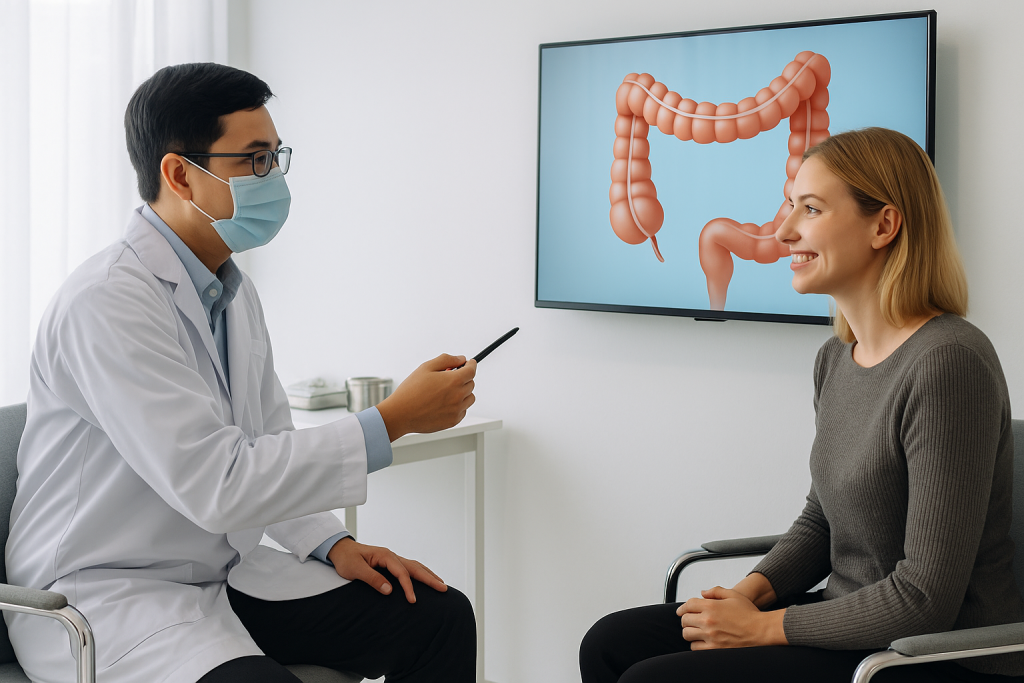
A Vietnamese gastroenterologist reviews colonoscopy findings with an international patient at a modern hospital in Vietnam.
## How Long Should You Stay in Vietnam?
Recommended stay:
-
Colonoscopy only: 2–3 days
-
Colonoscopy + biopsy: 3–4 days
-
Colonoscopy + polyp removal: 4–5 days
This ensures safe preparation and proper recovery post-procedure.
## Travel Tips for Medical Tourists
Best Cities for Colonoscopy
-
Ho Chi Minh City
-
Hanoi
-
Da Nang
-
Nha Trang
Combine With:
-
Annual health check-ups
-
Gastroscopy (upper GI endoscopy)
-
Travel and sightseeing
Vietnam is both medically reliable and tourist-friendly.
## Why Vietnam Is a Growing Destination for Colonoscopy
Vietnam offers a unique combination of:
-
Modern hospitals
-
Skilled gastroenterologists
-
Low prices
-
Fast appointments
-
Excellent medical tourism services
-
Friendly English-speaking staff
-
Strong track record in GI diagnostics
For many travelers, Vietnam provides an ideal balance of quality, safety, convenience, and affordability.
Conclusion
Colonoscopy in Vietnam is a safe, accurate, and cost-effective way to diagnose digestive problems and screen for colorectal cancer—a disease that is highly preventable with timely testing. Thanks to modern equipment, experienced specialists, and affordable pricing, Vietnam has become one of Asia’s top destinations for GI endoscopy.
Whether you need routine screening, symptomatic evaluation, or polyp removal, Vietnam delivers world-class medical care with warm hospitality and efficient service.
Need a Colonoscopy in Vietnam?
Get clear prices and a fast screening plan before you travel.