
Targeted therapy represents a major advancement in modern cancer treatment, offering precision medicine tailored to the genetic and molecular characteristics of each patient’s cancer. In recent years, targeted therapy in Vietnam has expanded rapidly, supported by improved genetic testing, access to internationally approved drugs, and experienced oncology specialists. As a result, Vietnam is becoming an increasingly attractive destination for international patients seeking effective, personalized, and more affordable targeted cancer treatment.
This comprehensive guide explains everything you need to know about targeted therapy in Vietnam, including how it works, who is eligible, available treatments, costs, safety standards, and what international patients should expect.
What Is Targeted Therapy?
Targeted therapy is a type of cancer treatment that uses drugs designed to specifically target genetic mutations, proteins, or molecular pathways that drive cancer growth. Unlike chemotherapy, which affects both cancerous and healthy fast-dividing cells, targeted therapy focuses on precise cancer “targets”, resulting in more selective action and fewer systemic side effects.
Targeted therapy may:
-
Block signals that tell cancer cells to grow
-
Prevent tumors from forming new blood vessels
-
Trigger cancer cell death
-
Enhance the effectiveness of other treatments
It is commonly used alone or in combination with surgery, chemotherapy, radiotherapy, or immunotherapy.
Why Choose Targeted Therapy in Vietnam?
Vietnam has made significant progress in precision oncology, enabling targeted therapy to be delivered safely and effectively.
Key Advantages of Targeted Therapy in Vietnam
-
Access to FDA- and EMA-approved targeted drugs
-
Growing availability of genetic and molecular testing
-
Oncologists trained in precision cancer medicine
-
Lower treatment costs compared to Western countries
-
Short waiting times
-
Dedicated international patient services
For patients who require long-term oral targeted therapy, Vietnam offers both high medical quality and cost efficiency.
How Does Targeted Therapy Work?
Targeted therapy works by identifying specific abnormalities in cancer cells, such as:
-
Gene mutations (EGFR, ALK, BRAF, KRAS)
-
Protein overexpression (HER2)
-
Abnormal signaling pathways
Once these abnormalities are identified through biomarker or genetic testing, doctors select drugs that directly interfere with those targets, slowing or stopping tumor growth.
This approach allows for personalized cancer treatment, improving outcomes in patients whose tumors carry actionable mutations.
Types of Targeted Therapy Available in Vietnam
Vietnamese oncology centers provide a wide range of targeted therapies based on international guidelines.
1. Tyrosine Kinase Inhibitors (TKIs)
These drugs block enzymes that promote cancer cell growth.
Commonly used for:
-
Lung cancer (EGFR, ALK, ROS1)
-
Liver cancer
-
Chronic myeloid leukemia
TKIs are often taken as oral tablets, making treatment convenient.
2. Monoclonal Antibodies
Laboratory-produced antibodies that bind to specific cancer targets.
Used for:
-
Breast cancer (HER2-positive)
-
Colorectal cancer
-
Lymphomas
These drugs are usually administered via intravenous infusion.
3. Angiogenesis Inhibitors
These drugs block the formation of new blood vessels that tumors need to grow.
Used in:
-
Colorectal cancer
-
Lung cancer
-
Kidney cancer
-
Liver cancer
4. Hormone-Targeted Therapy
Used for hormone-sensitive cancers such as:
-
Breast cancer
-
Prostate cancer
These treatments block or reduce hormone signals that fuel tumor growth.
Who Is a Suitable Candidate for Targeted Therapy?
Targeted therapy is not suitable for all cancer patients. Eligibility depends on molecular testing results.
Common Requirements
-
Confirmed cancer diagnosis
-
Presence of actionable genetic mutations or protein targets
-
Adequate organ function
-
Stable overall health condition
Before starting treatment in Vietnam, patients typically undergo:
-
Tumor biopsy review
-
Genetic or molecular testing
-
Imaging studies
Cancers Commonly Treated With Targeted Therapy in Vietnam
Targeted therapy is widely used in Vietnam for:
-
Non-small cell lung cancer (NSCLC)
-
Breast cancer (HER2-positive)
-
Colorectal cancer
-
Liver cancer
-
Thyroid cancer
-
Kidney cancer
-
Gastrointestinal stromal tumors (GIST)
-
Certain leukemias
Treatment plans are highly individualized based on cancer type, stage, and genetic profile.
Targeted Therapy Process in Vietnam: Step by Step
1. Medical Record Review
International patients submit pathology reports, imaging (CT, MRI, PET-CT), and previous treatment history.
2. Genetic and Biomarker Testing
Testing may include:
-
EGFR, ALK, ROS1, BRAF
-
HER2 testing
-
KRAS / NRAS
-
Other molecular panels
These results guide drug selection.
3. Treatment Planning
Oncologists design a personalized targeted therapy regimen, including:
-
Drug selection
-
Dosage
-
Treatment duration
-
Combination strategies if needed
4. Treatment Administration
Targeted therapy is delivered via:
-
Oral medications (daily or weekly)
-
Intravenous infusions (every 2–4 weeks)
Many patients can continue daily activities during treatment.
5. Monitoring and Follow-Up
Doctors monitor:
-
Tumor response
-
Drug tolerance
-
Potential resistance development
Treatment may continue for months or years if effective.
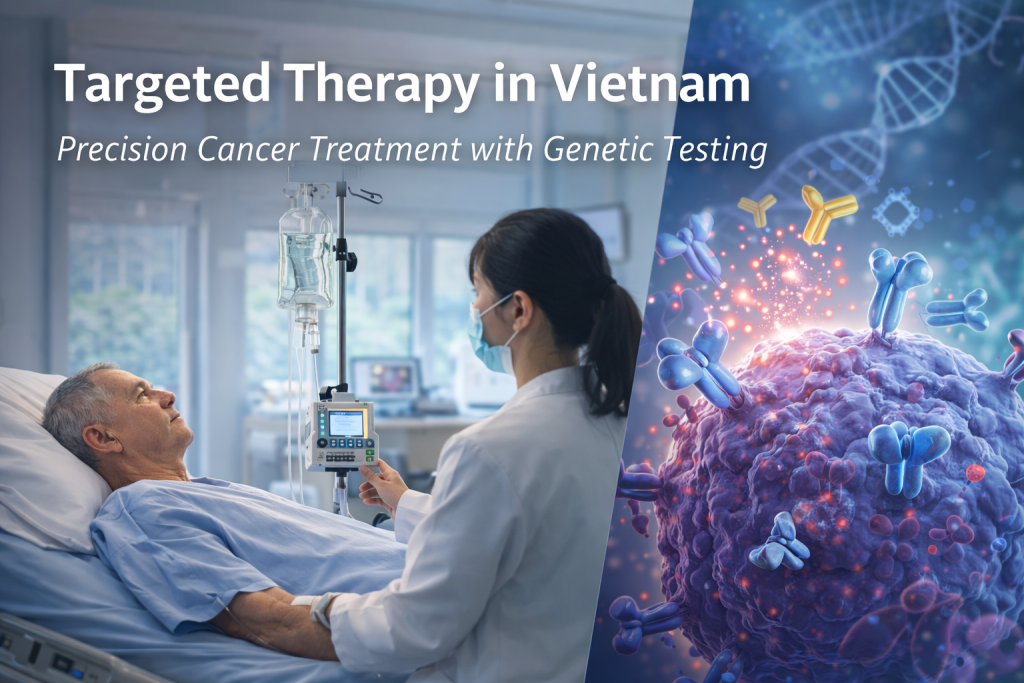
Precision targeted cancer therapy guided by genetic testing at international-standard hospitals in Vietnam
Cost of Targeted Therapy in Vietnam
Cost is a major advantage of receiving targeted therapy in Vietnam.
Average Costs (USD)
-
Oral targeted therapy: USD 1,500 – 4,000 per month
-
Intravenous targeted drugs: USD 2,000 – 5,000 per cycle
-
Genetic testing: USD 300 – 800
These costs are significantly lower than in the US, Europe, or Singapore, where monthly expenses may exceed USD 8,000 – 15,000.
Side Effects and Safety Management
Targeted therapy generally causes fewer side effects than chemotherapy.
Common Side Effects
-
Skin rash
-
Fatigue
-
Diarrhea
-
Mild nausea
-
Blood pressure changes
Safety in Vietnam
Vietnamese hospitals follow international safety protocols, including:
-
Regular blood tests
-
Dose adjustments
-
Early management of adverse effects
Most side effects are manageable and reversible.
Public vs Private Hospitals for Targeted Therapy in Vietnam
Public Hospitals
-
Highly experienced oncology teams
-
Lower treatment costs
-
High patient volumes
Private & International Hospitals
-
English-speaking medical staff
-
Shorter waiting times
-
Personalized care
-
Comfortable outpatient facilities
International patients often prefer private hospitals for smoother communication and coordination.
Living in Vietnam During Targeted Therapy
Many targeted therapies are taken orally, allowing patients to stay in Vietnam long-term.
Estimated Monthly Living Costs
-
Accommodation: USD 400 – 1,000
-
Food: USD 150 – 300
-
Transportation: USD 50 – 100
Vietnam’s affordability makes prolonged treatment feasible.
International Patient Support Services
Hospitals and medical tourism facilitators assist with:
-
Pre-treatment medical review
-
Visa support
-
Airport transfers
-
Language interpretation
-
Appointment scheduling
-
Follow-up coordination
Future of Targeted Therapy in Vietnam
Vietnam continues to expand:
-
Precision oncology programs
-
Molecular diagnostics
-
Access to new targeted drugs
-
Integration with immunotherapy
-
Participation in clinical research
These advancements strengthen Vietnam’s role in personalized cancer treatment.
Conclusion
Targeted Therapy in Vietnam offers a powerful combination of precision medicine, skilled oncologists, modern diagnostic capabilities, and significantly lower costs. For international patients with actionable genetic mutations, Vietnam provides a reliable and cost-effective option for long-term targeted cancer treatment.
As oncology care continues to advance, targeted therapy is becoming an essential pillar of Vietnam’s modern cancer treatment ecosystem.
Get a Targeted Therapy Plan & Cost Estimate in Vietnam
Share your diagnosis, pathology report, scans (CT/MRI/PET-CT), and genetic test results (EGFR/ALK/HER2, etc.) to receive a confidential hospital recommendation and quote.