
Coronary artery disease is one of the world’s most common and dangerous health problems. When coronary arteries become narrowed or blocked, blood supply to the heart is reduced, increasing the risk of chest pain, heart attack, heart failure, and sudden cardiac death. Among all heart procedures, Coronary Angioplasty (PCI) — often combined with stent placement — is the most widely performed lifesaving intervention.
In recent years, Vietnam has emerged as a highly reliable and affordable destination for PCI, attracting international patients from Australia, Singapore, Malaysia, South Asia, the Middle East, and Europe. With advanced cardiology centers, highly experienced interventional cardiologists, and significantly lower treatment costs, Vietnam delivers excellent outcomes at a fraction of Western prices.
This 2025 guide provides everything you need to know about Coronary Angioplasty (PCI) in Vietnam, including the procedure, benefits, risks, cost comparison, best hospitals, patient journey, and who is suitable for treatment.
⭐ 1. What Is Coronary Angioplasty (PCI)?
Coronary Angioplasty, also known as Percutaneous Coronary Intervention (PCI), is a minimally invasive procedure used to open blocked or narrowed coronary arteries. It restores blood flow to the heart muscle by:
-
inserting a balloon catheter
-
inflating the balloon to widen the artery
-
placing a stent (usually a drug-eluting stent) to keep the artery open
PCI is commonly performed for:
-
Coronary artery disease (CAD)
-
Acute myocardial infarction (heart attack)
-
Unstable angina
-
Chest pain caused by narrowed arteries
-
Patients unsuitable for bypass surgery (CABG)
PCI is fast, effective, and lifesaving when performed promptly.
⭐ 2. Why Vietnam Is Becoming a Top Destination for PCI
✔ Advanced cardiac centers
Vietnam’s top hospitals feature:
-
Hybrid operating theatres
-
State-of-the-art catheterization labs (Cath Labs)
-
Intravascular ultrasound (IVUS)
-
Fractional Flow Reserve (FFR)
-
Optical Coherence Tomography (OCT)
-
Drug-eluting stents from Europe, USA, Japan
These technologies are identical to those used in hospitals across Singapore, Japan, and South Korea.
✔ Highly trained interventional cardiologists
Many Vietnamese cardiologists have trained in:
-
France
-
Germany
-
Japan
-
South Korea
-
Singapore
-
United States
Vietnam is home to several high-volume heart centers that perform thousands of PCI procedures every year, ensuring optimal outcomes.
✔ Affordable treatment costs
PCI in Vietnam costs 50–70% less than in Western or regional countries while maintaining high medical standards.
| Country | Average PCI Cost |
|---|---|
| United States | $25,000 – $40,000 |
| Australia | $12,000 – $20,000 |
| Singapore | $10,000 – $18,000 |
| South Korea | $9,000 – $15,000 |
| Vietnam | $3,000 – $6,000 |
This makes Vietnam one of the most cost-effective destinations for lifesaving heart treatment.
✔ Fast access & short waiting times
PCI is time-sensitive, especially during heart attacks.
Vietnam offers:
-
immediate emergency PCI
-
same-day evaluations
-
minimal waiting time for elective PCI
✔ English-speaking support
Major hospitals have international patient departments offering:
-
English-speaking coordinators
-
Dedicated case managers
-
24/7 hotline
-
Follow-up support
✔ High success rates
Vietnamese cardiac centers follow international guidelines (AHA/ESC) with success rates comparable to top Asian countries.
⭐ 3. When Do You Need Coronary Angioplasty?
PCI may be recommended for patients with:
✔ Heart attack (acute myocardial infarction)
Primary PCI within 90 minutes saves heart muscle and reduces mortality.
✔ Significant coronary blockage
70% stenosis typically requires intervention.
✔ Severe or unstable chest pain
Especially if medication is not effective.
✔ Abnormal stress test results
Indicating insufficient blood flow to the heart.
✔ Narrowed stent or restenosis
PCI can re-open previously treated arteries.
✔ Poor candidates for bypass surgery
Some patients may not be suitable for CABG.
⭐ 4. How PCI Is Performed: Step-by-Step
1️⃣ Preparation
-
Clinical evaluation
-
ECG
-
Blood tests (troponin, CK-MB)
-
Echocardiogram
-
CT or coronary angiography
2️⃣ Local anesthesia
Only local anesthesia is used, usually at the wrist.
3️⃣ Catheter insertion
A thin catheter is inserted via:
-
Radial artery (wrist) — most common
-
Femoral artery (groin)
4️⃣ Coronary angiogram
Dye is injected into the coronary arteries to identify blockages.
5️⃣ Balloon inflation
A small balloon is inflated to open the narrowed segment.
6️⃣ Stent placement
A drug-eluting stent is deployed to keep the artery open.
7️⃣ Post-procedure monitoring
Patients stay 1–2 days for observation.
8️⃣ Medication
-
Antiplatelet therapy
-
Statins
-
Blood pressure control medications
PCI typically takes 30–60 minutes.
⭐ 5. Types of Stents Used in Vietnam
Vietnamese cardiology centers use high-quality, internationally certified stents such as:
✔ Drug-Eluting Stents (DES) – most common
Coated with medication to prevent restenosis.
Brands include:
-
Abbott Xience
-
Boston Scientific Synergy
-
Medtronic Resolute
-
Terumo Ultimaster
-
Orsiro Hybrid DES
✔ Bare-Metal Stents (BMS)
Used rarely today, mainly for special cases.
✔ Bioresorbable Vascular Scaffolds (BVS)
Available in select hospitals.
⭐ 6. Cost of Coronary Angioplasty (PCI) in Vietnam (2025)
Below is the average price range:
| Treatment | Cost (USD) |
|---|---|
| Diagnostic coronary angiography | $500 – $1,000 |
| PCI with one drug-eluting stent | $3,000 – $6,000 |
| Additional stent | $1,200 – $2,000 each |
| Emergency PCI for heart attack | $4,000 – $7,000 |
| Post-PCI hospitalization (1–2 nights) | Included in most packages |
Total cost varies based on:
-
hospital type
-
stent brand
-
number of stents
-
complexity of blockage
-
emergency vs elective PCI
Still, Vietnam remains one of the most affordable countries for PCI in Asia.
⭐ 7. Best Hospitals for PCI in Vietnam
🏥 Ho Chi Minh City
-
Vinmec Central Park
-
FV Hospital
-
University Medical Center HCMC
-
Cho Ray Hospital
-
Tam Anh General Hospital HCMC
🏥 Hanoi
-
Hanoi Heart Hospital
-
Vietnam National Heart Institute (Bach Mai)
-
Vinmec Times City Hospital
-
108 Military Central Hospital
-
Tam Anh General Hospital Hanoi
🏥 Da Nang
-
Da Nang General Hospital
-
Vinmec Da Nang
These hospitals have dedicated cardiology departments with cath labs, ICU support, and cardiac surgeons available for backup.
⭐ 8. Risks of PCI (Rare but Possible)
Like any medical procedure, PCI has risks:
-
Bleeding or hematoma
-
Allergic reaction to contrast dye
-
Arrhythmias
-
Restenosis (narrowing again)
-
Heart attack (rare)
-
Stroke (very rare)
-
Kidney problems in patients with kidney disease
However, PCI is considered very safe when performed by experienced cardiologists.
⭐ 9. Recovery & Post-Procedure Care
✔ Most patients return home after 24–48 hours
✔ Light activities after 2–3 days
✔ Avoid heavy lifting for 1 week
✔ Continue medication:
-
Aspirin
-
Clopidogrel or Ticagrelor
-
Statins
-
Blood pressure medications
✔ Lifestyle recommendations
-
Stop smoking
-
Healthy diet
-
Exercise 30 minutes/day
-
Manage cholesterol & blood pressure
-
Regular check-ups
⭐ 10. PCI vs CABG (Bypass Surgery)
| PCI | CABG |
|---|---|
| Minimally invasive | Major surgery |
| Local anesthesia | General anesthesia |
| 1–2 days hospital stay | 5–7 days stay |
| Quick recovery | Longer recovery |
| Ideal for 1–2 blockages | Best for complex 3-vessel disease |
Cardiologists will recommend the most suitable option based on your angiogram.
⭐ 11. Why International Patients Choose PCI in Vietnam
-
Affordable pricing
-
Advanced cardiac care
-
Korean/Japanese/Singapore technologies
-
High-success interventional cardiologists
-
Fast scheduling
-
Good ICU support
-
English-speaking staff
-
Excellent tourism infrastructure for recovery
Vietnam provides top-tier heart care without the high cost of Western countries.
⭐ 12. Patient Journey: PCI in Vietnam
🟦 Step 1: Pre-arrival consultation
Send medical records, ECG, angiography images.
🟦 Step 2: Hospital booking
Choose doctor + treatment time.
🟦 Step 3: Arrival in Vietnam
Airport pickup optional.
🟦 Step 4: In-hospital evaluation
Repeat tests, imaging, cardiology consultation.
🟦 Step 5: PCI procedure
Performed in cath lab (30–60 min).
🟦 Step 6: Recovery
1–2 nights in hospital.
🟦 Step 7: Follow-up
Post-procedure check before returning home.
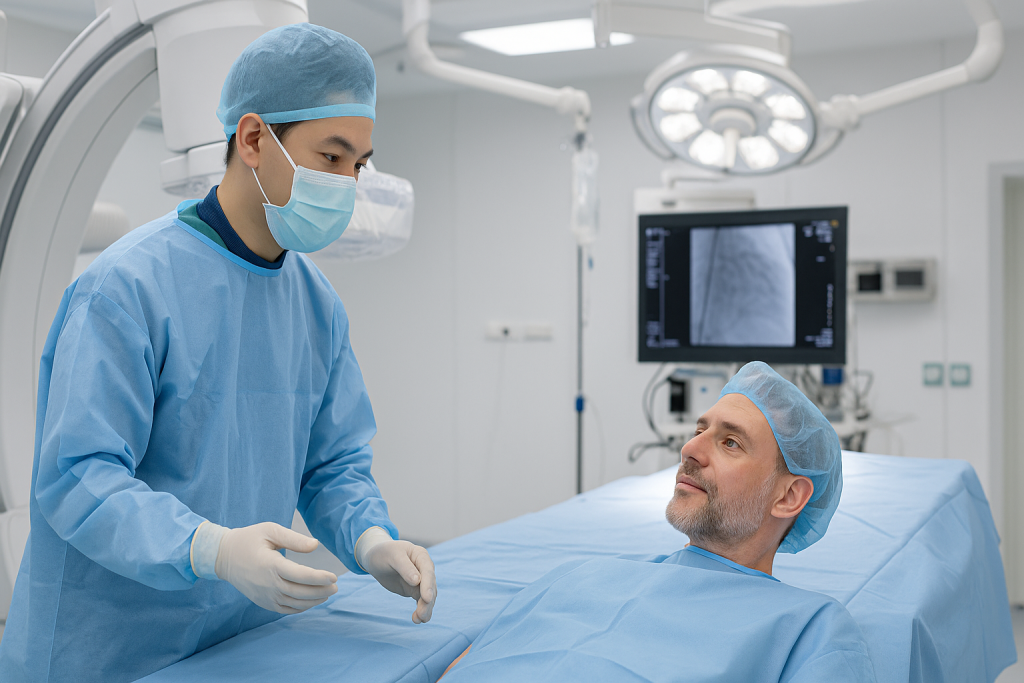
Vietnam offers advanced, affordable coronary angioplasty (PCI) performed by skilled cardiologists in modern, high-standard operating rooms.
⭐ 13. Conclusion
Coronary Angioplasty (PCI) in Vietnam has become an accessible, safe, and affordable option for international patients seeking high-quality heart care. With advanced cath labs, experienced cardiologists, modern stent technologies, and significantly lower costs, Vietnam is now one of the most reliable places in Asia for PCI.
Whether you are dealing with chest pain, coronary artery disease, or recovering from a heart attack, Vietnam provides timely, effective, and world-class treatment.
Need Coronary Angioplasty (PCI) in Vietnam?
Send us your medical reports and get a fast, clear treatment plan from Vietnam’s top cardiac specialists.