
For many patients with end-stage liver disease, transplantation is the only life-saving treatment. However, long waiting lists, strict eligibility systems, and extremely high medical costs in many countries have led patients and families to explore treatment options abroad. In recent years, Vietnam has emerged as a promising destination for complex medical procedures, including liver transplantation.
International patients are increasingly asking an important question: Can foreigners legally receive a liver transplant in Vietnam? The answer is yes — but the process involves specific medical, legal, and ethical requirements that differ from those in Western healthcare systems.
This 2026 guide explains everything foreign patients need to know, including eligibility criteria, donor requirements, treatment procedures, expected costs, and what to expect before traveling to Vietnam for a liver transplant.
Why International Patients Consider Liver Transplant Abroad
Liver transplantation is among the most resource-intensive procedures in modern medicine. In countries such as the United States, Canada, Australia, and parts of Europe, patients often face several major barriers:
-
Waiting lists that may last years
-
Limited availability of donor organs
-
Strict allocation systems prioritizing domestic patients
-
Treatment costs that can exceed USD 400,000–800,000
For patients whose conditions are progressing rapidly, waiting may not be an option. As a result, medical travel has become a practical solution for many families seeking faster access to treatment.
Vietnam is gaining attention due to its combination of experienced transplant teams, modern hospital infrastructure, and significantly lower treatment costs compared to Western countries.
Can Foreigners Legally Receive a Liver Transplant in Vietnam?
Yes. Foreign patients are legally permitted to undergo liver transplantation in Vietnam, provided they meet national medical and ethical regulations.
Vietnam’s transplant system follows strict medical governance designed to ensure patient safety and ethical organ donation practices. Hospitals performing liver transplantation must receive authorization from the Ministry of Health and comply with regulations regarding donor relationships and medical evaluation.
Unlike some countries that rely heavily on deceased donor systems, liver transplants in Vietnam are primarily performed using living donors. This means international patients usually need to travel with a medically eligible donor.
Before approval, hospitals conduct comprehensive reviews that include:
-
Verification of medical necessity
-
Assessment of transplant eligibility
-
Confirmation of donor relationship and consent
-
Ethical committee evaluation
These safeguards ensure transparency and protect both donor and recipient.
Who Is Eligible for a Liver Transplant in Vietnam?
Eligibility depends primarily on medical condition rather than nationality. Foreign patients must meet clinical transplant criteria similar to international standards.
Common conditions treated include:
-
Liver cirrhosis (including hepatitis-related cirrhosis)
-
Liver failure
-
Certain liver cancers within transplant criteria
-
Genetic or metabolic liver diseases
-
Acute liver failure requiring urgent intervention
Patients typically undergo evaluation based on:
-
Severity of liver disease
-
Overall physical condition
-
Heart and lung function
-
Absence of uncontrolled infections
-
Ability to tolerate major surgery
Age alone is not always a limiting factor. Instead, transplant teams focus on whether surgery offers a meaningful survival benefit.
Living Donor Requirements in Vietnam
Because most liver transplants in Vietnam involve living donors, understanding donor eligibility is essential.
A living donor must generally:
-
Be a close relative or legally recognized family member
-
Be in good physical and psychological health
-
Have compatible blood type and liver anatomy
-
Provide voluntary and informed consent
The donor undergoes extensive medical testing to ensure safety. Only a portion of the liver is transplanted, and both donor and recipient livers regenerate over time.
Vietnamese regulations strictly prohibit commercial organ donation. Ethical review committees carefully evaluate each case to confirm that donation is voluntary and medically appropriate.
Step-by-Step Liver Transplant Process for International Patients
Although individual cases vary, most foreign patients follow a similar treatment pathway.
1. Initial Medical Record Submission
Patients send medical reports, imaging scans, and laboratory results to the hospital or medical coordinator for preliminary assessment.
2. Specialist Review
Transplant surgeons evaluate the case to determine eligibility and request additional tests if necessary.
3. Online Consultation
Many hospitals arrange virtual consultations to discuss risks, expected outcomes, and preparation requirements.
4. Travel Planning
Once approved, patients schedule travel with their donor and prepare visas, medical documents, and accommodation arrangements.
5. Pre-Transplant Evaluation in Vietnam
Upon arrival, both donor and recipient undergo final medical testing lasting several days.
6. Surgery
The transplant procedure typically lasts 8–12 hours and involves specialized surgical and anesthesia teams.
7. Intensive Care Unit (ICU)
Patients are closely monitored in ICU immediately after surgery.
8. Hospital Recovery
Hospitalization usually continues for several weeks while doctors monitor liver function and recovery progress.
Once eligibility is confirmed, many international patients next consider the financial planning required for treatment. You can explore our detailed guide on liver transplant cost in Vietnam to better understand expected expenses.
Once eligibility is confirmed, choosing the right medical center becomes the next important step. You can explore our guide to the best hospitals for liver transplant in Vietnam to compare treatment options.
How Long Do Patients Stay in Vietnam?
Recovery timelines vary, but most international patients should plan for an extended stay.
Typical duration includes:
-
ICU monitoring: about 5–10 days
-
Hospital stay: 3–4 weeks
-
Post-discharge monitoring: several additional weeks
Doctors closely track liver function and adjust immunosuppressive medications during this period. Follow-up visits are essential before patients are cleared to return home.
Many families choose accommodation near the hospital to allow regular monitoring and easier recovery support.
Estimated Liver Transplant Cost in Vietnam
One of the main reasons patients consider Vietnam is affordability compared to Western healthcare systems.
While prices vary depending on hospital, complexity, and recovery needs, liver transplant costs in Vietnam are generally significantly lower than in countries such as the United States or Japan.
Estimated costs typically include:
-
Pre-transplant evaluation
-
Surgery and operating room fees
-
ICU and hospital stay
-
Medication during hospitalization
-
Post-operative monitoring
Even with travel and accommodation expenses, total treatment costs are often a fraction of those in high-income countries.
Challenges International Patients Should Know
Although Vietnam offers strong medical capabilities, transplantation abroad requires careful preparation.
Patients should consider:
-
The need for a qualified living donor
-
Extended recovery commitment
-
Post-transplant medication management after returning home
-
Coordination with doctors in their home country for long-term follow-up
Understanding these factors helps patients make informed decisions and reduces unexpected complications.
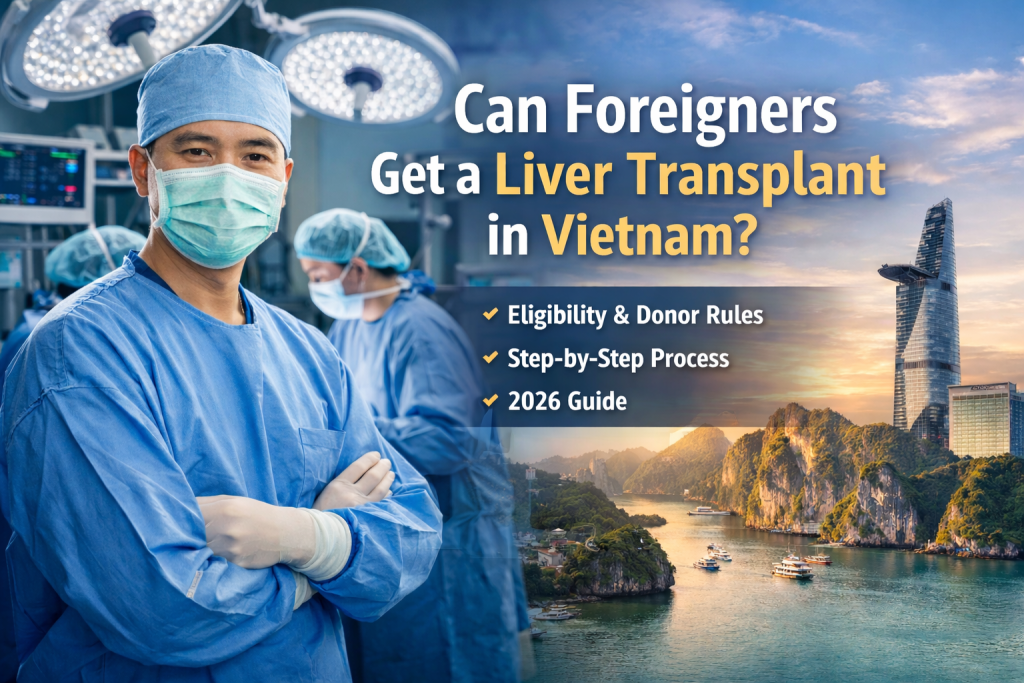
Vietnam is emerging as a destination for liver transplantation, offering advanced surgical care and dedicated support for international patients.
Why Vietnam Is Becoming a New Destination for Liver Transplant
Vietnam’s healthcare sector has developed rapidly over the past decade. Major hospitals now operate advanced surgical centers equipped with modern imaging systems, intensive care units, and multidisciplinary transplant teams.
Key advantages include:
-
Experienced transplant surgeons trained internationally
-
Modern hospital infrastructure
-
Competitive treatment costs
-
Personalized patient coordination
-
Shorter access timelines compared to some countries
As international awareness grows, Vietnam is increasingly viewed as a viable alternative within Asia’s medical tourism landscape.
How Medical Coordinators Support International Patients
Navigating a transplant abroad can feel overwhelming. Medical coordination services help simplify the process by assisting with:
-
Medical record preparation
-
Communication with hospitals
-
Appointment scheduling
-
Travel and accommodation planning
-
Language interpretation
-
Post-treatment follow-up coordination
For many families, professional coordination reduces stress and ensures smoother communication throughout treatment.
Conclusion
Foreign patients can legally receive a liver transplant in Vietnam, provided they meet medical eligibility and ethical donor requirements. With experienced transplant teams, improving hospital infrastructure, and more accessible costs, Vietnam is becoming an increasingly attractive option for patients seeking timely and high-quality treatment abroad.
However, transplantation remains a complex journey that requires careful planning, medical evaluation, and long-term commitment to recovery. Patients considering this option should begin by obtaining professional medical assessment and understanding the full treatment pathway before making travel decisions.
For those who qualify, Vietnam may offer not only affordability but also renewed hope and access to life-saving care.