
Acupuncture in Vietnam has become increasingly popular among international patients seeking safe, affordable, and effective natural healing therapies. Rooted in Traditional Oriental Medicine and strongly influenced by both Chinese and Vietnamese medical philosophy, acupuncture has been practiced in Vietnam for thousands of years. Today, it is widely integrated into modern healthcare systems, offered at public hospitals, traditional medicine institutes, private clinics, and wellness centers throughout the country.
In recent years, Vietnam has emerged as a promising destination for medical tourism, not only for advanced surgeries and dental care, but also for holistic and non-invasive treatments. Acupuncture stands out as one of the most sought-after traditional therapies, attracting patients from Australia, Europe, the United States, and neighboring Asian countries.
This comprehensive guide explores everything you need to know about acupuncture in Vietnam, including how it works, conditions treated, treatment process, safety standards, costs, best clinics, and why Vietnam is becoming a regional hub for traditional medicine.
Quick Navigation
What Is Acupuncture?
Acupuncture is a traditional medical therapy that involves inserting very fine, sterile needles into specific points on the body known as acupuncture points or meridian points. According to traditional medicine theory, these points regulate the flow of energy—commonly called Qi—through pathways known as meridians.
From a modern medical perspective, acupuncture is believed to stimulate the nervous system, increase blood circulation, release endorphins, and activate the body’s natural healing mechanisms. Numerous international studies support its effectiveness in pain management, neurological conditions, stress-related disorders, and functional diseases.
In Vietnam, acupuncture is not considered alternative medicine—it is officially recognized and regulated by the Ministry of Health and taught at major medical universities.
History of Acupuncture in Vietnam
Vietnamese acupuncture developed through centuries of cultural exchange with China, combined with indigenous herbal medicine and local healing practices. During the Ly and Tran dynasties, traditional medicine played a central role in public healthcare.
In the 20th century, Vietnam formalized traditional medicine education, establishing specialized institutions such as:
- National Hospital of Traditional Medicine (Hanoi)
- Ho Chi Minh City University of Medicine and Pharmacy – Faculty of Traditional Medicine
- Vietnam Institute of Acupuncture
Today, acupuncture is practiced by licensed medical doctors trained in both Western and Eastern medicine, making Vietnam unique among medical tourism destinations.
How Acupuncture Works
Acupuncture works through several scientifically recognized mechanisms:
1. Nervous System Stimulation
Needle insertion activates sensory nerves, sending signals to the brain and spinal cord that release neurotransmitters such as endorphins and serotonin.
2. Improved Blood Circulation
Acupuncture increases microcirculation in targeted areas, promoting tissue repair and reducing inflammation.
3. Muscle Relaxation
Trigger-point acupuncture helps release muscle tension and chronic spasms.
4. Regulation of Body Functions
It helps rebalance autonomic nervous system activity, improving sleep, digestion, hormonal balance, and emotional regulation.
Conditions Treated with Acupuncture in Vietnam
Acupuncture in Vietnam is commonly used to treat a wide range of conditions, including:
Pain Management
- Back pain
- Neck and shoulder pain
- Sciatica
- Knee pain and osteoarthritis
- Sports injuries
- Migraines and tension headaches
Neurological Conditions
- Stroke rehabilitation
- Facial paralysis (Bell’s palsy)
- Peripheral neuropathy
- Post-stroke muscle stiffness
Mental Health and Stress Disorders
- Anxiety
- Depression (mild to moderate)
- Insomnia
- Chronic fatigue syndrome
Digestive Disorders
- Irritable bowel syndrome (IBS)
- Acid reflux
- Chronic constipation
- Functional digestive issues
Women’s Health
- Menstrual pain
- Hormonal imbalance
- Menopause symptoms
- Fertility support
Other Conditions
- Allergies
- Sinusitis
- Smoking cessation
- Weight management support
Many hospitals in Vietnam combine acupuncture with herbal medicine, physiotherapy, and modern diagnostics for optimal results.
Types of Acupuncture Practiced in Vietnam
Vietnam offers multiple acupuncture techniques, depending on the clinic and medical indication:
Traditional Manual Acupuncture
The most common method using fine stainless-steel needles.
Electroacupuncture
Mild electrical stimulation is applied to needles, especially effective for pain and nerve damage.
Auricular (Ear) Acupuncture
Targets points on the ear for addiction treatment, stress, and pain control.
Scalp Acupuncture
Widely used in stroke rehabilitation and neurological recovery.
Laser Acupuncture
Needle-free option suitable for children or needle-sensitive patients.
Acupressure
Manual pressure applied instead of needles, often combined with massage therapy.
Acupuncture Treatment Process in Vietnam
Step 1: Medical Consultation
Patients undergo a detailed assessment including:
- Medical history
- Pulse diagnosis
- Tongue examination
- Review of imaging or test results (if available)
Step 2: Personalized Treatment Plan
The doctor designs a customized acupuncture protocol based on diagnosis and treatment goals.
Step 3: Treatment Session
- Duration: 20–40 minutes
- Needles: Single-use, sterile
- Sensation: Mild tingling, warmth, or heaviness
Step 4: Treatment Course
Most conditions require 5–15 sessions. Chronic illnesses may require longer-term therapy.
Safety and Regulation
Acupuncture in Vietnam is strictly regulated by the Ministry of Health.
Key safety standards include:
- Licensed practitioners only
- Medical doctors trained in traditional medicine
- Sterile, disposable needles
- Hospital-grade hygiene standards
Major hospitals follow international infection control protocols, making treatment very safe for foreign patients.
Cost of Acupuncture in Vietnam
One of the strongest advantages of acupuncture in Vietnam is affordability.
Average Costs (2026)
- Public hospitals: USD 5–15 per session
- Private clinics: USD 20–40 per session
- International-standard clinics: USD 40–70 per session
Treatment packages are often available at discounted rates.
Compared to Australia, Europe, or the U.S., costs are typically 60–80% lower while maintaining high clinical quality.
Best Places for Acupuncture in Vietnam
Hanoi
- National Hospital of Traditional Medicine
- Vietnam Institute of Acupuncture
- Traditional Medicine Hospital of Hanoi
Ho Chi Minh City
- Traditional Medicine Hospital HCMC
- University Medical Center – Traditional Medicine Department
- International wellness clinics
Da Nang and Nha Trang
- Medical spas
- Rehabilitation centers
- Wellness resorts combining acupuncture and physiotherapy
Many facilities offer English-speaking doctors and international patient departments.
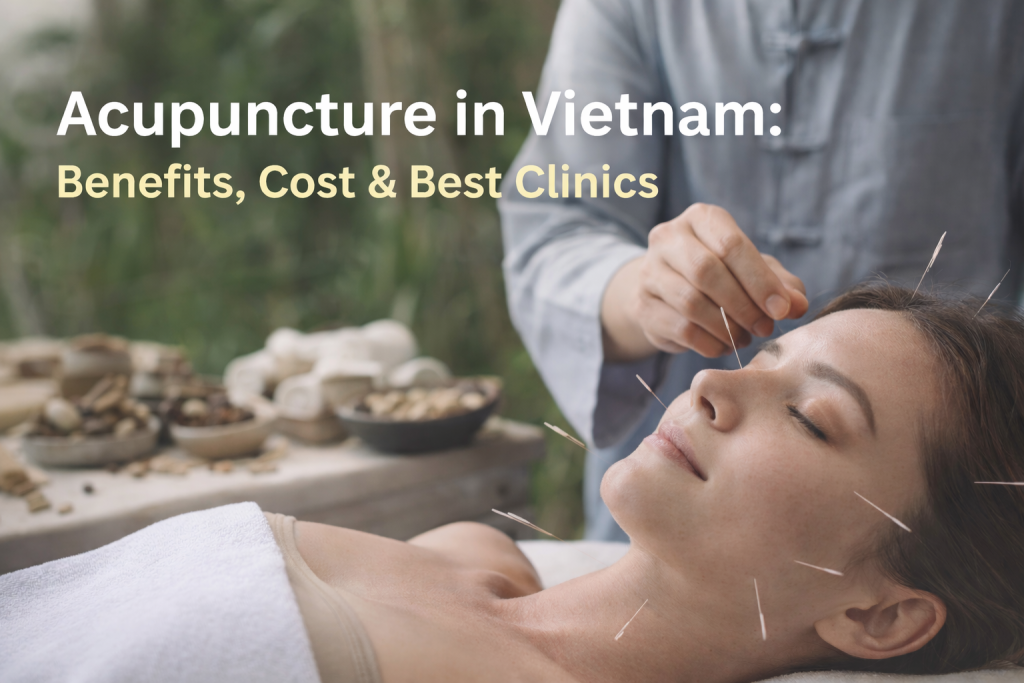
Acupuncture in Vietnam – safe, effective traditional medicine treatment for international patients
Acupuncture and Medical Tourism in Vietnam
Vietnam is increasingly recognized as a holistic medical tourism destination. Acupuncture is often combined with:
- Physiotherapy
- Rehabilitation programs
- Detox and wellness retreats
- Herbal medicine
- Post-surgery recovery
International patients appreciate:
- Short waiting times
- Personalized care
- Affordable long-term treatment
- Cultural healing environment
Vietnam’s calm atmosphere and hospitality further enhance recovery outcomes.
Benefits of Choosing Acupuncture in Vietnam
- Highly trained doctors
- Government-regulated traditional medicine system
- Excellent value for money
- Integration with modern diagnostics
- Wide hospital availability
- Safe and clean medical environment
- Ideal destination for long-term therapy
Who Is a Good Candidate?
Acupuncture is suitable for most people, including:
- Patients seeking non-drug pain relief
- Individuals with chronic conditions
- Post-stroke patients
- Patients sensitive to medications
- Those seeking preventive healthcare
However, patients with bleeding disorders or severe infections should consult doctors before treatment.
Frequently Asked Questions
Is acupuncture painful?
Most patients feel minimal discomfort. The needles are extremely thin.
How soon will I see results?
Some feel improvement after 1–3 sessions; chronic conditions require longer treatment.
Is acupuncture safe for foreigners?
Yes. Licensed doctors and hospital standards ensure safety.
Can acupuncture replace Western medicine?
It is best used as complementary therapy, not a complete replacement.
Future of Acupuncture in Vietnam
Vietnam continues to invest heavily in traditional medicine research, international cooperation, and medical tourism infrastructure. Many hospitals now collaborate with Korea, Japan, and Europe on integrative medicine models.
As global interest in natural and preventive healthcare rises, acupuncture in Vietnam is expected to grow significantly in the coming years.
Conclusion
Acupuncture in Vietnam offers a rare combination of ancient medical wisdom, modern clinical standards, and outstanding affordability. With licensed practitioners, government-regulated hospitals, and growing international services, Vietnam has become one of Southeast Asia’s most attractive destinations for acupuncture and holistic healing.
Whether you seek pain relief, neurological recovery, stress management, or wellness therapy, acupuncture in Vietnam provides a safe, effective, and culturally enriching healthcare experience.
For international patients looking beyond conventional medicine, Vietnam stands as a trusted and emerging center for traditional healing in 2026 and beyond.