
Discovering a swollen lymph node or a lump in the neck, armpit, or groin can cause significant anxiety. Many patients immediately worry about serious illness, yet in most cases, enlarged lymph nodes are caused by infections or temporary immune responses rather than cancer. Proper medical evaluation is essential to determine the underlying cause and whether treatment or surgical removal is necessary.
Vietnam has become an increasingly popular destination for international patients seeking affordable and reliable medical care. With modern diagnostic imaging, experienced surgeons, and internationally oriented hospitals, patients can receive accurate evaluation and safe lymph node lump removal procedures at significantly lower costs compared to Western countries.
This guide explains everything international patients need to know about lymph node lumps, including causes, diagnosis, when removal is recommended, surgical techniques, recovery expectations, and why Vietnam is emerging as a trusted option for treatment.
What Are Lymph Nodes and Why Do They Swell?
Lymph nodes are small, bean-shaped structures that form part of the body’s immune system. They help filter harmful substances and fight infections by producing immune cells. Lymph nodes are located throughout the body, particularly in areas such as:
-
Neck
-
Under the jaw
-
Armpits
-
Groin
-
Behind the ears
-
Chest and abdomen
When the body responds to infection, inflammation, or immune activity, lymph nodes may enlarge temporarily. This swelling is medically known as lymphadenopathy.
Common causes of swollen lymph nodes include:
-
Viral infections (cold, flu, throat infections)
-
Bacterial infections
-
Dental or skin infections
-
Immune reactions
-
Inflammatory conditions
In many cases, swelling resolves naturally within a few weeks. However, persistent or enlarging lymph node lumps require medical evaluation.
When Should a Lymph Node Lump Be Evaluated?
Not every swollen lymph node requires treatment, but certain warning signs indicate the need for professional assessment.
Patients should seek medical evaluation if a lump:
-
Persists longer than two to four weeks
-
Continues to grow in size
-
Feels hard or fixed in place
-
Causes pain or discomfort
-
Appears without signs of infection
-
Is accompanied by fever, weight loss, or fatigue
Doctors aim to determine whether the swelling is reactive (benign) or requires further investigation.
Early evaluation provides reassurance and ensures that any necessary treatment is performed promptly.
Diagnostic Evaluation Before Lymph Node Removal
Before recommending surgery, physicians perform a structured diagnostic process.
Physical Examination
Doctors assess the size, mobility, and tenderness of the lymph node. Soft and movable nodes are often benign, while firm or fixed nodes may require closer examination.
Ultrasound Imaging
Ultrasound is commonly used to evaluate lymph node structure and blood flow. It helps distinguish inflammatory swelling from suspicious masses.
CT or MRI Scans
For deeper lymph nodes, advanced imaging provides detailed anatomical information.
Needle Biopsy
A fine needle aspiration or core biopsy may be performed to analyze tissue samples. This step helps confirm diagnosis and avoid unnecessary surgery.
Laboratory Testing
Blood tests may identify infection or immune-related conditions contributing to swelling.
Only after careful evaluation do doctors determine whether removal is appropriate.
Common Reasons for Lymph Node Lump Removal
Surgical removal is recommended in specific situations, including:
-
Persistent enlargement despite treatment
-
Uncertain diagnosis after imaging
-
Suspicion requiring pathology confirmation
-
Recurrent infections
-
Pain or pressure symptoms
-
Cosmetic concerns in visible areas such as the neck
Removal allows both treatment and definitive diagnosis through laboratory analysis.
Lymph Node Lump Removal Procedures in Vietnam
Vietnamese hospitals offer modern surgical techniques designed to minimize discomfort and recovery time.
Excisional Biopsy
The most common procedure involves removing the entire lymph node through a small incision. This allows accurate pathological examination.
Minimally Invasive Surgery
For superficial lymph nodes, surgeons perform precise removal using small incisions to reduce scarring.
Local or General Anesthesia
Small procedures may use local anesthesia, while deeper nodes may require short general anesthesia depending on location.
Day Surgery Approach
Many lymph node removals are outpatient procedures, allowing patients to return to their accommodation on the same day.
After surgery, tissue samples are analyzed by pathology specialists to confirm diagnosis.
Cost of Lymph Node Lump Removal in Vietnam
One of the key advantages of treatment in Vietnam is affordability.
Estimated costs include:
-
Consultation and ultrasound: USD 50 – 150
-
Needle biopsy: USD 150 – 400
-
Lymph node removal surgery: USD 500 – 1,500
-
Complex procedures: USD 1,500 – 3,000
Final pricing depends on:
-
Location of the lymph node
-
Surgical complexity
-
Hospital type
-
Required diagnostic tests
-
Length of stay
Compared with treatment in the United States or Australia, patients often save up to 70%.
Hospitals and Specialists in Vietnam
Major cities such as Ho Chi Minh City and Hanoi offer hospitals equipped with advanced surgical facilities and experienced specialists.
International patients benefit from:
-
Skilled general and head-and-neck surgeons
-
Modern diagnostic imaging departments
-
English-speaking coordinators
-
Short waiting times
-
Personalized treatment planning
Many facilities regularly treat overseas patients, making communication and logistics straightforward.
Treatment Process for International Patients
Medical travel to Vietnam is designed to be efficient and patient-friendly.
Step 1: Online Medical Review
Patients submit imaging reports or medical history for preliminary evaluation.
Step 2: Treatment Recommendation
Doctors advise whether monitoring, biopsy, or removal is appropriate.
Step 3: Travel and Appointment Scheduling
Procedures are arranged according to patient travel plans.
Step 4: Examination and Surgery
Final assessment is performed before surgery.
Step 5: Follow-Up Care
Patients attend wound checks and receive pathology results before returning home.
Remote follow-up consultations are often available after departure.
Recovery and Aftercare
Recovery following lymph node removal is usually straightforward.
Typical expectations include:
-
Mild swelling or discomfort for several days
-
Stitch removal after 7–10 days
-
Return to normal activities within one to two weeks
Doctors provide instructions regarding wound care, hygiene, and scar prevention.
Most patients can travel shortly after recovery, depending on surgical complexity.
Are Swollen Lymph Nodes Always Cancer?
This is one of the most common concerns among patients.
The majority of swollen lymph nodes are not cancerous. Infections and immune reactions account for most cases. Surgical removal is often performed to confirm diagnosis rather than treat malignancy.
If abnormal cells are detected, patients may be referred for specialized oncology care. However, early evaluation significantly improves outcomes and reduces uncertainty.
Why Choose Vietnam for Lymph Node Lump Removal?
Vietnam is gaining recognition as a reliable medical tourism destination due to:
-
Affordable treatment costs
-
Experienced surgeons
-
Modern hospitals
-
Rapid appointment scheduling
-
Comfortable recovery environment
-
Easy regional travel access
Patients can receive timely diagnosis and treatment without long waiting periods.
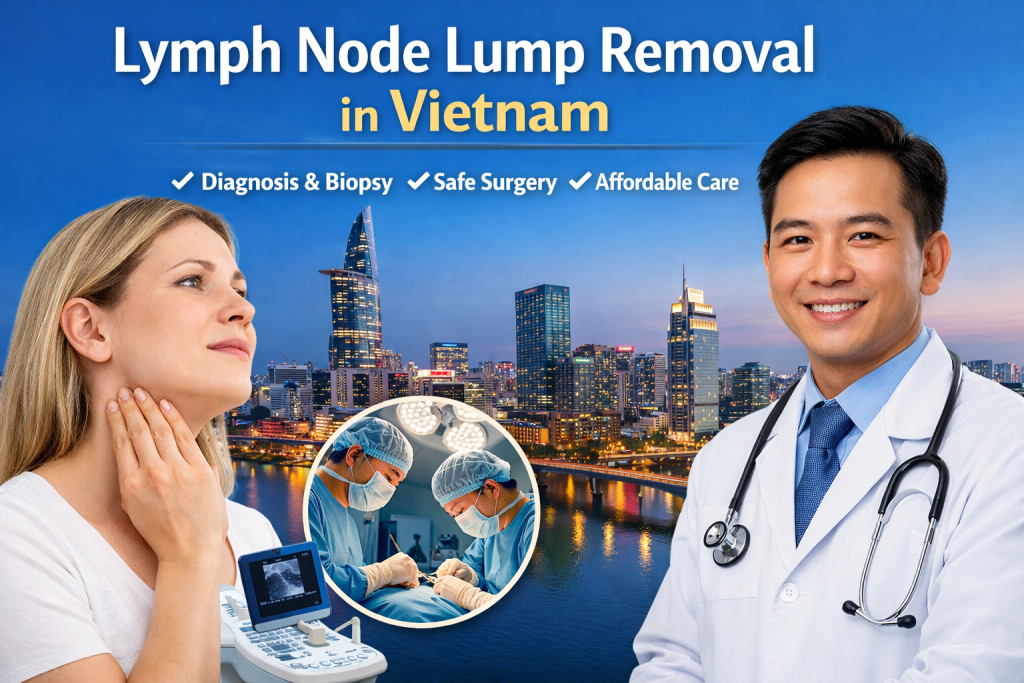
Medical consultation and surgical care for lymph node lump removal at modern hospitals in Vietnam, supporting international patients.
Frequently Asked Questions
Is lymph node removal painful?
Local or general anesthesia prevents pain during surgery. Mild soreness afterward is normal.
How long does surgery take?
Most procedures last between 30 and 90 minutes.
Will removal affect my immune system?
Removing one lymph node does not significantly impact immune function.
Can I travel after surgery?
Many patients travel within a few days after doctor approval.
When will pathology results be available?
Results are usually ready within several days to one week.
Conclusion
A lymph node lump can be concerning, but most cases are manageable with proper medical evaluation. Accurate diagnosis, modern surgical techniques, and professional aftercare ensure safe and effective treatment outcomes.
Vietnam offers international patients a strong combination of medical expertise, advanced diagnostics, and affordable care. For individuals seeking reliable lymph node lump removal abroad, Vietnam provides a practical and reassuring solution supported by experienced specialists and modern healthcare facilities.
Need a Doctor Review for a Lymph Node Lump?
Send your ultrasound/scan (if any) and get an estimated plan & cost in Vietnam.