
Finding a lump under the skin can be worrying, especially when its cause is unknown. One of the most common explanations for these lumps is a cyst — a fluid-filled sac that develops within the skin or deeper tissues. While most cysts are benign and harmless, some may grow, become infected, or cause discomfort, making medical evaluation or removal necessary.
Vietnam has become an increasingly attractive destination for international patients seeking safe and affordable minor surgical procedures. Modern hospitals, experienced surgeons, and advanced diagnostic imaging allow patients to receive accurate diagnosis and effective cyst removal treatment without long waiting times or high healthcare costs.
This comprehensive guide explains what cysts are, why they develop, when removal is recommended, available surgical techniques, expected costs, recovery timelines, and why many overseas patients choose Vietnam for cyst treatment.
What Is a Cyst?
A cyst is a closed sac filled with fluid, semi-solid material, or keratin that forms beneath the skin or within body tissues. Cysts can develop in many parts of the body and vary in size from small pea-sized lumps to larger visible swellings.
Common locations include:
-
Face and scalp
-
Neck and shoulders
-
Back and chest
-
Arms and legs
-
Groin area
-
Internal organs in some cases
Most cysts grow slowly and remain painless unless inflamed or infected.
Unlike tumors, cysts are usually non-cancerous. However, proper medical evaluation helps confirm diagnosis and determine whether treatment is required.
Common Types of Cysts Treated in Vietnam
Vietnamese hospitals frequently treat various types of cysts affecting both local and international patients.
Epidermoid Cysts
These are among the most common skin cysts, formed when skin cells become trapped beneath the surface. They often appear on the face, neck, or back.
Sebaceous Cysts
Developing from blocked oil glands, sebaceous cysts may produce thick material and occasionally become inflamed.
Pilar Cysts
Commonly found on the scalp, these cysts originate from hair follicles and may grow slowly over time.
Ganglion Cysts
Fluid-filled lumps that usually develop near joints or tendons, especially in the wrist or hand.
Breast and Ovarian Cysts
Some cysts form within organs and require specialized evaluation before treatment decisions.
Each cyst type requires individualized assessment to determine the safest management approach.
Why Do Cysts Develop?
Cysts may form for several reasons, including:
-
Blocked glands or hair follicles
-
Skin injury or irritation
-
Infection
-
Hormonal changes
-
Genetic predisposition
-
Chronic inflammation
In many cases, cysts develop without a clear cause. They are not contagious and are rarely related to serious disease.
Symptoms That May Indicate a Problematic Cyst
Many cysts remain harmless, but medical evaluation is recommended when symptoms appear.
Warning signs include:
-
Rapid growth
-
Redness or warmth
-
Pain or tenderness
-
Recurrent swelling
-
Drainage or foul odor
-
Cosmetic discomfort
-
Interference with movement
Inflamed cysts may become infected, requiring prompt treatment or surgical removal.
Diagnostic Evaluation Before Cyst Removal
Doctors in Vietnam follow internationally accepted diagnostic procedures.
Physical Examination
The physician evaluates the lump’s size, texture, and mobility.
Ultrasound Imaging
Ultrasound helps distinguish cysts from solid tumors and determines internal contents.
MRI or CT Scan
Used for deeper or complex cysts located near sensitive structures.
Biopsy (If Needed)
In rare situations, tissue analysis confirms diagnosis before removal.
Accurate diagnosis ensures that patients receive appropriate treatment while avoiding unnecessary surgery.
When Is Cyst Removal Recommended?
Not all cysts require surgery. Doctors may recommend removal when:
-
The cyst repeatedly returns
-
Infection occurs
-
Pain or inflammation develops
-
The cyst grows larger
-
Cosmetic concerns arise
-
Diagnosis is uncertain
Complete removal prevents recurrence and provides long-term relief.
Cyst Removal Procedures in Vietnam
Vietnamese hospitals offer modern surgical methods depending on cyst type and location.
Surgical Excision
The most common treatment involves removing the cyst wall entirely through a small incision. This reduces recurrence risk.
Minimal Incision Removal
Smaller cysts may be removed using refined techniques that minimize scarring.
Drainage and Infection Management
In infected cysts, doctors may first treat inflammation before performing definitive removal.
Local Anesthesia Procedures
Most cyst removals are performed under local anesthesia, allowing same-day discharge.
Cosmetic-Focused Techniques
Surgeons carefully place incisions along natural skin lines for improved aesthetic results.
After removal, tissue may be examined to confirm diagnosis.
Cost of Cyst Removal in Vietnam
One of the strongest advantages for medical travelers is affordability.
Typical costs include:
-
Consultation and ultrasound: USD 50 – 150
-
Small cyst removal: USD 150 – 400
-
Moderate surgical excision: USD 400 – 900
-
Complex or deep cyst surgery: USD 900 – 2,000
Prices vary depending on:
-
Cyst size and location
-
Infection status
-
Hospital type
-
Required imaging or laboratory tests
Compared with treatment in Western countries, patients may save up to 70%.
Hospitals and Surgeons in Vietnam
Major cities such as Ho Chi Minh City and Hanoi offer modern hospitals equipped with advanced surgical facilities.
International patients benefit from:
-
Experienced dermatologic and general surgeons
-
Modern operating environments
-
English-speaking coordinators
-
Short waiting times
-
Personalized patient support
Many hospitals provide integrated services from diagnosis through recovery.
Treatment Process for International Patients
Medical tourism in Vietnam is designed to be simple and efficient.
Step 1: Online Consultation
Patients send photos or imaging reports for preliminary evaluation.
Step 2: Treatment Recommendation
Doctors advise monitoring, medication, or removal.
Step 3: Travel Planning
Appointments are arranged according to patient schedules.
Step 4: Examination and Procedure
Final assessment confirms treatment plan before surgery.
Step 5: Recovery and Follow-Up
Patients receive wound care instructions and follow-up support.
Remote consultations are often available after returning home.
Recovery After Cyst Removal
Recovery is generally quick and uncomplicated.
Patients can expect:
-
Mild swelling for several days
-
Minimal discomfort
-
Return to normal activities within one week
-
Small scars that fade over time
Proper wound care significantly improves healing outcomes.
Are Cysts Dangerous?
Most cysts are benign and do not pose serious health risks. However, untreated cysts may become infected or enlarge over time.
Medical evaluation ensures accurate diagnosis and prevents complications. Removal is often performed for comfort, prevention of recurrence, or cosmetic improvement rather than medical necessity.
Why Choose Vietnam for Cyst Removal?
Vietnam is becoming a preferred destination for minor surgical procedures because of:
-
Affordable healthcare costs
-
Skilled surgeons
-
Modern private hospitals
-
Minimal waiting periods
-
Comfortable recovery environment
-
Easy international travel access
Patients can receive professional treatment while enjoying a smooth medical travel experience.
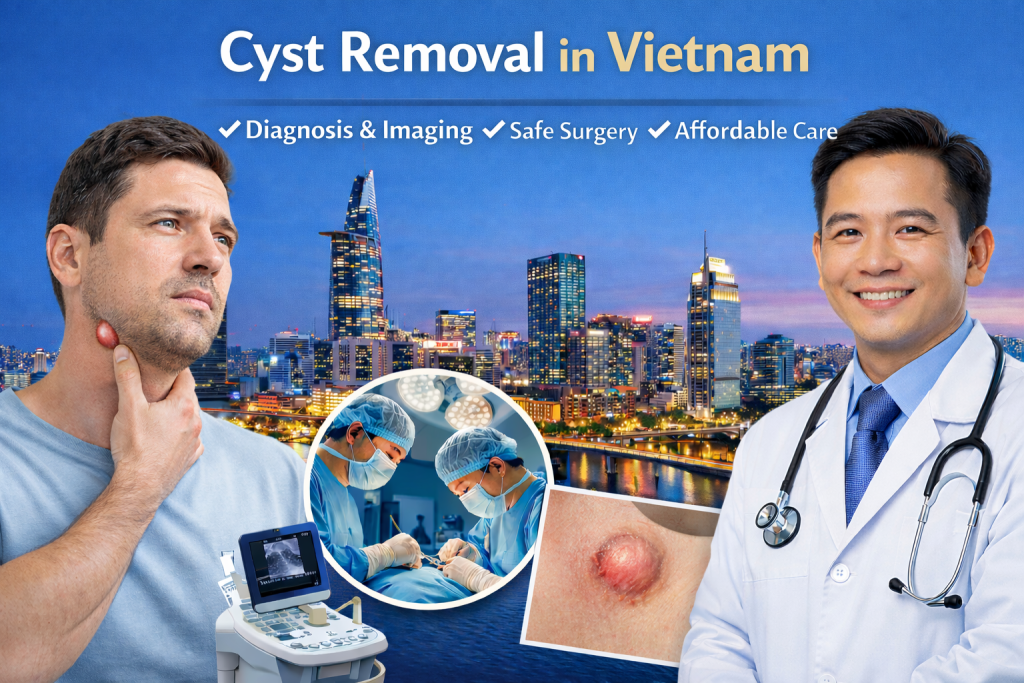
Professional consultation, diagnostic imaging, and safe cyst removal procedures performed at modern hospitals in Vietnam for international patients.
Frequently Asked Questions
Is cyst removal painful?
Local anesthesia prevents pain during surgery, and discomfort afterward is usually mild.
How long does the procedure take?
Most cyst removals take between 20 and 45 minutes.
Can a cyst return after removal?
Recurrence is uncommon when the entire cyst wall is removed.
When can I travel after surgery?
Most patients can travel within a few days after medical approval.
Will there be a scar?
Incisions are small, and surgeons aim to minimize visible scarring.
Conclusion
Cysts are common benign lumps that often require simple treatment when symptoms develop or recurrence occurs. With accurate diagnosis, modern surgical techniques, and proper aftercare, cyst removal is typically safe and highly effective.
Vietnam offers international patients an ideal combination of medical expertise, modern facilities, and affordable treatment options. For individuals seeking reliable cyst removal abroad, Vietnam provides a practical and reassuring solution supported by experienced healthcare professionals.
Need a Cyst Removal Consultation in Vietnam?
Send a photo or ultrasound (if available) to get a doctor-reviewed plan and estimated cost.