
Immunotherapy has transformed the global landscape of cancer treatment, offering new hope for patients who previously had limited options. In recent years, immunotherapy in Vietnam has developed rapidly, with modern oncology centers, access to internationally approved drugs, and significantly lower treatment costs. As a result, Vietnam is increasingly becoming a destination of choice for international patients seeking effective, personalized, and affordable immunotherapy.
This comprehensive guide explains everything you need to know about immunotherapy in Vietnam, including how it works, who is eligible, treatment types, costs, safety standards, and what international patients can expect.
What Is Immunotherapy?
Immunotherapy is a type of cancer treatment that uses the body’s own immune system to recognize and destroy cancer cells. Unlike chemotherapy, which directly attacks rapidly dividing cells, immunotherapy enhances or restores the immune system’s ability to fight cancer.
Cancer cells often evade immune detection by activating “immune checkpoints” that suppress immune responses. Immunotherapy works by blocking these checkpoints or otherwise boosting immune activity, allowing immune cells to attack tumors more effectively.
Immunotherapy may be used:
-
As a primary treatment
-
In combination with chemotherapy or radiotherapy
-
After surgery to reduce recurrence
-
For advanced or metastatic cancers
-
As long-term disease control in responsive patients
Why Choose Immunotherapy in Vietnam?
Vietnam has made major investments in oncology infrastructure and cancer drug access, making immunotherapy more available than ever before.
Key Advantages of Immunotherapy in Vietnam
-
Access to FDA- and EMA-approved immunotherapy drugs
-
Experienced oncologists trained locally and overseas
-
Treatment protocols aligned with international guidelines
-
Lower costs compared to the US, Europe, and Singapore
-
Short waiting times
-
Dedicated international patient coordination
For patients requiring repeated infusions over months or years, Vietnam offers both quality care and financial sustainability.
Types of Immunotherapy Available in Vietnam
Vietnamese oncology centers provide the most widely used forms of immunotherapy.
1. Immune Checkpoint Inhibitors
This is the most common type of immunotherapy worldwide.
These drugs target immune checkpoints such as:
-
PD-1 (Programmed Death-1)
-
PD-L1 (Programmed Death-Ligand 1)
-
CTLA-4 (Cytotoxic T-Lymphocyte Antigen-4)
By blocking these checkpoints, the immune system can better recognize and attack cancer cells.
Checkpoint inhibitors are commonly used for:
-
Lung cancer
-
Liver cancer
-
Melanoma
-
Kidney cancer
-
Head and neck cancers
-
Bladder cancer
-
Some colorectal cancers
2. Combination Immunotherapy
In many cases, immunotherapy is combined with:
-
Chemotherapy
-
Radiotherapy
-
Targeted therapy
Combination regimens can improve response rates, especially in advanced cancers.
3. Advanced Cellular Immunotherapy (Limited Availability)
Some specialized centers offer or collaborate internationally for advanced treatments such as:
-
CAR-T cell therapy (mainly for blood cancers)
Availability depends on cancer type and clinical eligibility.
Who Is a Suitable Candidate for Immunotherapy?
Not all cancer patients benefit from immunotherapy. Eligibility depends on several factors.
Common Eligibility Criteria
-
Cancer type known to respond to immunotherapy
-
Advanced, metastatic, or recurrent disease
-
Specific biomarkers such as:
-
PD-L1 expression
-
MSI-H or dMMR status
-
Tumor mutational burden (TMB)
-
-
Adequate organ function
-
No uncontrolled autoimmune disease
Before starting treatment in Vietnam, patients usually undergo biomarker testing to assess suitability.
Cancers Commonly Treated With Immunotherapy in Vietnam
Immunotherapy is commonly used in Vietnam for:
-
Non-small cell lung cancer (NSCLC)
-
Hepatocellular carcinoma (liver cancer)
-
Melanoma
-
Renal cell carcinoma (kidney cancer)
-
Head and neck cancers
-
Bladder cancer
-
Esophageal cancer
-
Some colorectal cancers
Treatment plans are personalized based on cancer stage, biomarkers, and patient health.
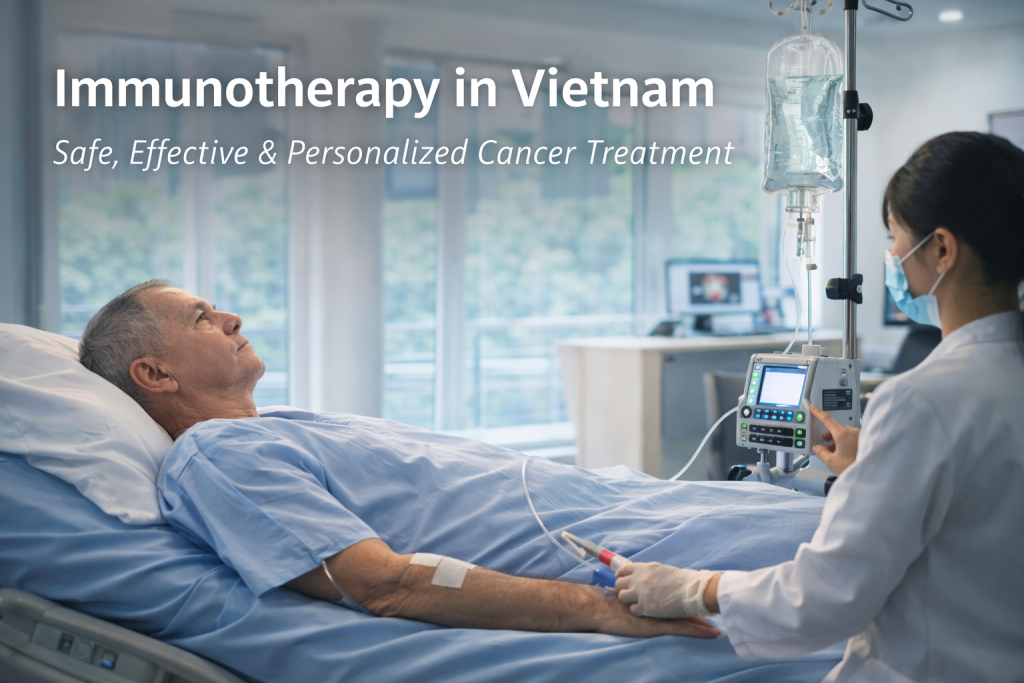
Immunotherapy treatment delivered in a modern, international-standard oncology hospital in Vietnam
Immunotherapy Process in Vietnam: Step by Step
1. Medical Record Review
International patients submit:
-
Diagnosis and pathology reports
-
Imaging (CT, MRI, PET-CT)
-
Previous treatment history
Doctors assess whether immunotherapy is appropriate.
2. Biomarker Testing
Tests may include:
-
PD-L1 testing
-
MSI/dMMR testing
-
Genetic or molecular profiling
These tests guide drug selection and predict treatment response.
3. Treatment Planning
An oncologist designs a personalized immunotherapy regimen, including:
-
Drug type
-
Dosage
-
Infusion frequency
-
Combination treatments (if needed)
4. Immunotherapy Administration
Most immunotherapy drugs are given by intravenous infusion:
-
Typically every 2–4 weeks
-
Each session lasts 30–90 minutes
-
Usually performed in day-care oncology units
5. Monitoring and Follow-Up
Doctors monitor:
-
Tumor response
-
Immune-related side effects
-
Blood tests and imaging results
Treatment may continue for months or even years in responsive patients.
Cost of Immunotherapy in Vietnam
Cost is a major consideration for immunotherapy, as these drugs are expensive worldwide.
Average Cost per Immunotherapy Infusion (USD)
-
Standard checkpoint inhibitors: USD 1,800 – 3,500 per cycle
-
Combination regimens: USD 3,000 – 5,000 per cycle
Estimated Monthly Cost
-
USD 3,000 – 7,000, depending on regimen
This is significantly lower than costs in Western countries, where immunotherapy may cost USD 8,000 – 15,000+ per month.
Side Effects and Safety Management
Immunotherapy is generally better tolerated than chemotherapy, but it can cause immune-related side effects.
Common Side Effects
-
Fatigue
-
Skin rash or itching
-
Mild fever
-
Joint pain
Less Common but Serious Side Effects
-
Inflammation of lungs, liver, intestines, or thyroid
-
Autoimmune reactions
Safety in Vietnam
Vietnamese oncology centers follow international protocols for:
-
Early detection of side effects
-
Corticosteroid management
-
Treatment interruption when necessary
Close monitoring ensures patient safety throughout treatment.
Public vs Private Hospitals for Immunotherapy in Vietnam
Public Hospitals
-
Highly experienced oncology teams
-
Lower drug and service costs
-
Higher patient volume
Private & International Hospitals
-
English-speaking medical staff
-
Shorter waiting times
-
More personalized care
-
Comfortable infusion environments
International patients often choose private hospitals for convenience and communication.
Living in Vietnam During Immunotherapy Treatment
Because immunotherapy is usually administered every few weeks, many patients stay in Vietnam for extended periods.
Average Monthly Living Costs
-
Accommodation: USD 400 – 1,000
-
Food: USD 150 – 300
-
Transportation: USD 50 – 100
Vietnam’s affordability makes long-term treatment more manageable.
International Patient Support Services
Hospitals and medical tourism providers in Vietnam offer:
-
Pre-treatment medical consultation
-
Visa assistance
-
Airport pickup
-
Language interpretation
-
Appointment scheduling
-
Follow-up coordination
These services help international patients focus on treatment and recovery.
Future of Immunotherapy in Vietnam
Vietnam continues to expand:
-
Access to new immunotherapy drugs
-
Biomarker testing capabilities
-
Oncology research and clinical trials
-
Combination treatment protocols
As precision medicine grows, immunotherapy in Vietnam is expected to become even more advanced and accessible.
Conclusion
Immunotherapy in Vietnam offers a powerful combination of modern cancer medicine, experienced oncologists, international safety standards, and more affordable costs. For many international patients, Vietnam provides a practical and high-quality option for long-term immunotherapy treatment with comprehensive medical and logistical support.
As cancer care in Vietnam continues to advance, immunotherapy is becoming an increasingly important pillar of the country’s oncology services.
Get an Immunotherapy Plan & Cost Estimate in Vietnam
Share your diagnosis, staging, recent scans (CT/MRI/PET-CT), and biomarker results (PD-L1/MSI) to receive a confidential hospital recommendation and quote.