
Electrophysiology Study (EPS) is a crucial diagnostic procedure used to evaluate abnormal heart rhythms (arrhythmias) and determine the best treatment approach, such as medication, catheter ablation, or device implantation. In recent years, Vietnam has emerged as a strong destination for advanced cardiac care, offering high-quality electrophysiology services at highly competitive prices. With internationally trained cardiologists, modern EP labs, and increasing demand for arrhythmia treatment, Vietnam now welcomes thousands of foreign patients annually.
This comprehensive guide explains everything you need to know about having an Electrophysiology Study in Vietnam, including the procedure, who needs it, benefits, risks, cost comparison, recommended hospitals, and what international patients can expect.
1. What Is an Electrophysiology Study (EPS)?
An Electrophysiology Study is a minimally invasive cardiac test that assesses the electrical activity of your heart. By inserting thin catheters into blood vessels and guiding them to the heart, cardiologists can map electrical signals and identify the areas causing arrhythmias.
What EPS Can Diagnose
-
Supraventricular tachycardia (SVT)
-
Atrial fibrillation (AF)
-
Atrial flutter
-
Ventricular tachycardia (VT)
-
AV node dysfunction
-
Heart block
-
Unexplained fainting (syncope)
-
WPW syndrome
EPS is also commonly performed before catheter ablation, pacemaker implantation, or when medications fail to control arrhythmias.
2. Why Choose Vietnam for EPS?
Vietnam has rapidly advanced in cardiology over the past decade. Today, many of its leading hospitals operate at international standards, equipped with specialized EP labs, imported mapping systems, and expert electrophysiologists with US, Europe, or Singapore training.
Key Advantages for International Patients
✔ Affordable Costs
EPS in Vietnam costs 50–70% less than in the US, Australia, Europe, or Singapore—without sacrificing quality.
✔ Modern EP Labs
Vietnamese heart centers use:
-
3D mapping systems (EnSite, CARTO, Precision)
-
High-resolution fluoroscopy
-
Cryoablation & radiofrequency systems
-
Real-time intracardiac echo
✔ World-Class Electrophysiologists
Many specialists trained or completed fellowships in:
-
France
-
USA
-
Germany
-
Singapore
-
South Korea
✔ Short Waiting Time
EPS can usually be scheduled within 24–72 hours.
✔ Full English Support (with MedtourVietnam)
From airport pickup to hospital coordination and follow-up, international patients receive clear communication and transparent guidance.
3. Who Should Consider an Electrophysiology Study?
You may need an EPS if you experience:
-
Palpitations
-
Sudden rapid heartbeat
-
Unexplained fainting spells
-
Dizziness or shortness of breath
-
Abnormal ECG results
-
Failure of antiarrhythmic medications
-
Family history of dangerous arrhythmias
Doctors may also recommend EPS to evaluate:
-
Atrial fibrillation before ablation
-
Ventricular arrhythmias in high-risk patients
-
Wolff-Parkinson-White syndrome
-
A suspected electrical conduction disorder
EPS is especially important when there is a risk of sudden cardiac arrest or when determining the need for a pacemaker or ICD.
4. How the EPS Procedure Works in Vietnam
Electrophysiology study in Vietnam follows international protocols. The typical process includes preparation, catheter insertion, signal mapping, arrhythmia induction, and detailed diagnosis.
Step-by-Step Procedure
1. Pre-procedure Evaluation
-
ECG
-
Echocardiogram
-
Holter monitor
-
Blood tests
-
Consultation with an electrophysiologist
2. Sedation or Local Anesthesia
Most patients remain awake but comfortable.
3. Catheter Insertion
Small catheters are inserted into blood vessels (usually in the groin) and guided to the heart under X-ray and mapping.
4. Electrical Signal Mapping
The cardiologist measures:
-
Conduction pathways
-
Signal speed
-
Source of arrhythmia
-
Potential abnormal circuits
5. Arrhythmia Induction
The doctor may stimulate the heart to intentionally trigger arrhythmia for accurate diagnosis.
6. Treatment (if needed)
In Vietnam, many hospitals offer EPS + Ablation in the same session if indicated.
7. Recovery
You may need 2–4 hours of monitoring and sometimes an overnight stay.
5. Benefits of Electrophysiology Study
✔ Precise Diagnosis
EPS remains the gold standard for diagnosing complex arrhythmias.
✔ Real-Time Mapping
It reveals exactly where in the heart the abnormal rhythm starts.
✔ Helps Determine the Best Treatment
EPS guides doctors to choose:
-
Medication
-
Ablation
-
Pacemaker
-
ICD
-
Further testing
✔ Can Fix the Problem Immediately
If ablation is appropriate, it can be performed during the same procedure—saving time and cost.
6. Risks of Electrophysiology Study
EPS is generally safe, with low complication rates (<1–2%).
Possible risks include:
-
Bleeding at catheter insertion site
-
Blood vessel injury
-
Rare heart valve or heart wall damage
-
Infection
-
Triggering arrhythmia requiring urgent treatment
Major complications are extremely rare, especially when the procedure is performed in modern centers.
7. Cost of Electrophysiology Study in Vietnam
Below is an approximate cost comparison for 2025:
🇻🇳 Vietnam
-
USD 1,500 – 3,500
-
EPS + Ablation: USD 4,500 – 7,000
🇸🇬 Singapore
-
EPS: USD 6,000 – 12,000
-
Ablation: USD 15,000 – 28,000
🇦🇺 Australia
-
EPS: USD 7,000 – 10,000
🇺🇸 United States
-
EPS: USD 9,000 – 25,000
-
Ablation: USD 30,000 – 60,000
🇪🇺 Europe
-
EPS: USD 8,000 – 18,000
💡 Patients in Vietnam typically save 50–70% compared to Western countries.
8. Best Hospitals in Vietnam for Electrophysiology Study
Vietnam has several world-class cardiology centers offering EPS and ablation with strong international support.
1. Vinmec Times City International Hospital (Hanoi)
-
Advanced EP lab
-
Specialized arrhythmia unit
-
English-speaking team
-
Experience with AF, SVT, and VT cases
2. Tam Anh General Hospital (Hanoi & Ho Chi Minh City)
-
Strong electrophysiology department
-
CARTO mapping system
-
Excellent for AF ablation
3. Bach Mai Hospital – Heart Center (Hanoi)
-
One of Vietnam’s top public cardiology centers
-
Highly experienced electrophysiologists
4. Chợ Rẫy Hospital (Ho Chi Minh City)
-
National referral center
-
Strong experience with VT, WPW, and complex arrhythmias
5. 108 Military Central Hospital (Hanoi)
-
Modern EP system
-
Highly trained specialists
-
Suitable for both diagnosis and advanced ablation
6. University Medical Center (UMC) – Ho Chi Minh City
-
Large cardiac electrophysiology unit
-
Surgeons trained in France & Germany
9. What International Patients Can Expect in Vietnam
Vietnam is known for safe, efficient, and patient-friendly care. With MedtourVietNam support, international patients enjoy:
✔ Fast Scheduling (24–72 hours)
No long waiting lists.
✔ English-Speaking Cardiologists
Clear communication throughout the treatment process.
✔ Detailed Treatment Plan & Cost Estimate
Transparent, upfront pricing.
✔ Smooth Hospital Coordination
Appointment booking, admission, testing, insurance documentation.
✔ Airport Pickup & Travel Support
Available upon request.
✔ Comprehensive Post-Procedure Care
Follow-up consultations online or in person.
10. Recovery After EPS in Vietnam
Recovery is usually quick:
-
Return to hotel the same day or next morning
-
Mild soreness at catheter site
-
Resume normal activities within 24–48 hours
-
Avoid heavy lifting for a few days
If ablation is performed:
-
Expect 2–5 days of reduced activity
-
Follow-up ECG and review 1–3 months later
International patients can fly home after:
-
24–48 hours (EPS only)
-
5–7 days (EPS + Ablation)
11. Is EPS Safe for Travelers?
Yes. EPS is considered low-risk and widely performed around the world. Vietnam follows the same international guidelines.
Travelers choose Vietnam for:
-
Modern facilities
-
Accurate diagnosis
-
Affordable price
-
Excellent outcomes
-
English-language support
12. When EPS Is Combined with Ablation
Many patients with:
-
SVT
-
WPW
-
Atrial flutter
-
Atrial fibrillation
-
Certain types of ventricular tachycardia
can receive ablation during the same procedure, making treatment faster and more cost-effective.
Vietnamese heart centers are experienced in both RF and cryoablation, with high success rates comparable to Singapore or South Korea.
13. Why Vietnam Is Growing in Electrophysiology
Vietnam’s cardiac care has rapidly progressed due to:
-
State-of-the-art equipment
-
Strong investment in cardiology departments
-
Training collaboration with France, USA, Singapore, and Japan
-
High patient volume, improving expertise
-
Affordable medical tourism policies
As a result, Vietnam is emerging as a leading electrophysiology destination in Asia.
14. How to Prepare for Your EPS Trip to Vietnam
Before You Travel
-
Send ECG, Holter, and medical history for review
-
Receive a treatment plan & quotation
-
Check flight and accommodation availability
Bring With You
-
Passport
-
Medical records
-
List of medications
-
Travel insurance (optional)
With MedtourVietnam Support
-
Airport pickup
-
Hotel recommendations
-
Hospital escort
-
Translation support
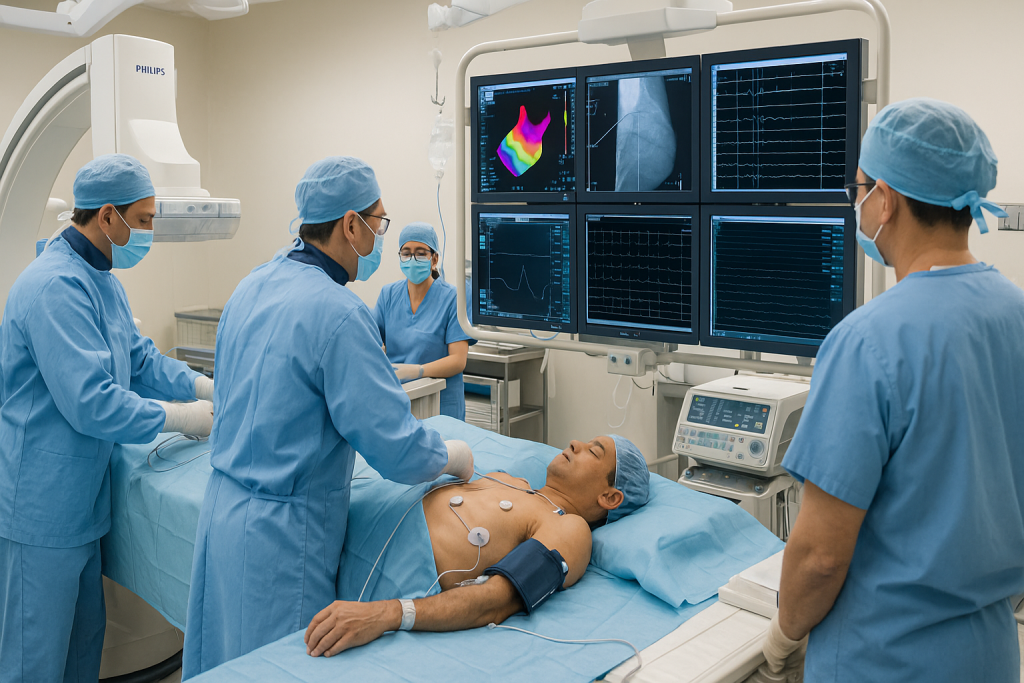
A modern electrophysiology laboratory in Vietnam where cardiologists perform advanced cardiac mapping and diagnosis.
15. Conclusion: Vietnam Is an Excellent Choice for Electrophysiology Study
Electrophysiology Study in Vietnam offers exceptional value for international patients seeking accurate arrhythmia diagnosis and advanced cardiac care. With world-class cardiology centers, internationally trained electrophysiologists, modern mapping systems, and affordable prices, Vietnam is becoming a trusted medical tourism hub.
Whether you need diagnosis, ablation, or long-term arrhythmia management, Vietnam provides reliable, efficient, and patient-centered care with excellent outcomes.
Need Help With Electrophysiology Study in Vietnam?
Contact MedtourVietnam for treatment plans, cost estimates, and full support for international patients.