
Liver transplantation remains one of the most effective treatments for patients suffering from end-stage liver disease, severe cirrhosis, and certain liver cancers. However, in many countries, access to transplantation is limited due to long waiting lists and a shortage of deceased donor organs. As a result, living donor liver transplantation (LDLT) has become an increasingly important solution worldwide.
Vietnam has developed significant expertise in living donor liver transplantation over the past two decades. Today, several major hospitals perform these procedures using modern surgical techniques and multidisciplinary transplant teams. For international patients considering treatment abroad, understanding how living donor transplantation works in Vietnam is essential before making medical travel decisions.
This guide explains donor eligibility, medical requirements, evaluation procedures, surgical steps, and what both recipients and donors can expect throughout the transplant journey.
What Is a Living Donor Liver Transplant?
A living donor liver transplant involves removing a portion of a healthy person’s liver and transplanting it into a patient with liver failure. Unlike other organs, the liver has a unique ability to regenerate. Both the donor’s remaining liver and the transplanted portion typically grow back to near-normal size within weeks or months.
This approach offers several advantages:
-
Shorter waiting time compared to deceased donor systems
-
Planned surgical scheduling
-
Improved timing before disease progression worsens
-
Higher survival outcomes when performed at appropriate stages
Because many Asian countries rely heavily on living donors, transplant teams in Vietnam have developed extensive experience with this technique.
Why Living Donor Transplantation Is Common in Vietnam
Vietnam’s transplant system primarily focuses on living donor procedures due to limited availability of deceased donor organs. This model allows hospitals to perform transplantation more predictably while maintaining strict ethical oversight.
Key reasons living donor transplantation is common include:
-
Cultural and legal frameworks supporting family donation
-
Advanced surgical expertise developed over years of practice
-
Careful donor safety protocols
-
Structured evaluation systems
For international patients, this means transplantation is often possible without long national waiting lists, provided a compatible donor is available.
Who Can Receive a Living Donor Liver Transplant?
Eligibility for transplantation depends on medical condition rather than nationality. Foreign patients may qualify if they meet clinical transplant criteria.
Common indications include:
-
Liver cirrhosis caused by hepatitis or chronic liver disease
-
Acute liver failure
-
Certain early-stage liver cancers
-
Genetic or metabolic liver disorders
-
Progressive liver dysfunction affecting quality of life
Doctors evaluate candidates based on:
-
Severity of liver disease
-
Overall physical condition
-
Heart and lung function
-
Absence of uncontrolled infection
-
Ability to undergo major surgery
Early evaluation is important because transplantation outcomes are often better before complications become severe.
Living Donor Requirements in Vietnam
Donor safety is the highest priority in living donor transplantation. Vietnamese regulations require strict medical and ethical screening before approval.
A donor must typically:
-
Be an adult in good physical and mental health
-
Have compatible blood type
-
Possess suitable liver anatomy
-
Donate voluntarily without financial compensation
-
Be a close relative or legally approved donor
Extensive testing ensures that donation will not create long-term health risks.
Medical Evaluation for Donors
Donor assessment includes:
-
Blood compatibility testing
-
Liver imaging scans
-
Cardiovascular evaluation
-
Psychological assessment
-
Infectious disease screening
Only donors who meet strict safety standards proceed to surgery.
Step-by-Step Living Donor Transplant Process
Although each case differs, the general transplant pathway in Vietnam follows a structured sequence.
1. Medical Record Submission
Patients send medical history, laboratory results, and imaging scans for initial review by transplant specialists.
2. Preliminary Evaluation
Doctors assess whether transplantation is appropriate and whether a donor appears suitable.
3. Online Consultation
International patients often participate in virtual consultations to discuss treatment expectations and risks.
4. Travel Preparation
Once approved, both donor and recipient travel to Vietnam for comprehensive testing.
5. Pre-Transplant Evaluation
Hospitals conduct final medical examinations lasting several days to confirm surgical readiness.
6. Transplant Surgery
Two surgical teams work simultaneously:
-
One team performs donor liver resection
-
The second team prepares the recipient and implants the liver segment
Surgery typically lasts 8–12 hours.
7. Intensive Care Monitoring
Both donor and recipient are monitored closely in ICU immediately after surgery.
8. Hospital Recovery
Recipients remain hospitalized for several weeks, while donors usually recover faster and are discharged earlier.
Recovery for the Liver Transplant Recipient
Recovery after transplantation requires careful monitoring to ensure the new liver functions properly.
Typical recovery stages include:
-
ICU observation for several days
-
Gradual return to eating and mobility
-
Adjustment of immunosuppressive medications
-
Frequent blood testing
Most patients remain in Vietnam for follow-up monitoring before traveling home. Long-term medication is necessary to prevent organ rejection.
Recovery for the Living Donor
Donor recovery is carefully supervised to ensure safety.
Most donors experience:
-
Hospital stay of about one to two weeks
-
Gradual return to normal activity within several weeks
-
Liver regeneration over time
Doctors provide ongoing follow-up to monitor liver function and overall health.
Risks and Safety Considerations
Like any major surgery, living donor liver transplantation carries risks, but careful screening significantly reduces complications.
Potential risks for recipients include:
-
Infection
-
Bleeding
-
Organ rejection
-
Medication side effects
Donor risks are minimized through strict selection criteria and experienced surgical teams.
Vietnamese transplant programs follow established safety protocols aligned with international medical standards.
How Long Do Patients Stay in Vietnam?
International patients should plan for an extended stay.
Typical timeline:
-
Pre-surgery evaluation: 1–2 weeks
-
Hospital recovery: 3–4 weeks
-
Post-discharge monitoring: several additional weeks
This period allows doctors to stabilize medications and monitor liver function before travel.
Advantages of Living Donor Liver Transplant in Vietnam
Many foreign patients consider Vietnam because of several practical advantages:
-
Experienced transplant surgeons
-
Modern hospital facilities
-
Shorter access timelines
-
Personalized medical coordination
-
Lower treatment costs compared to many countries
The ability to schedule surgery once donor approval is completed offers greater predictability for families.
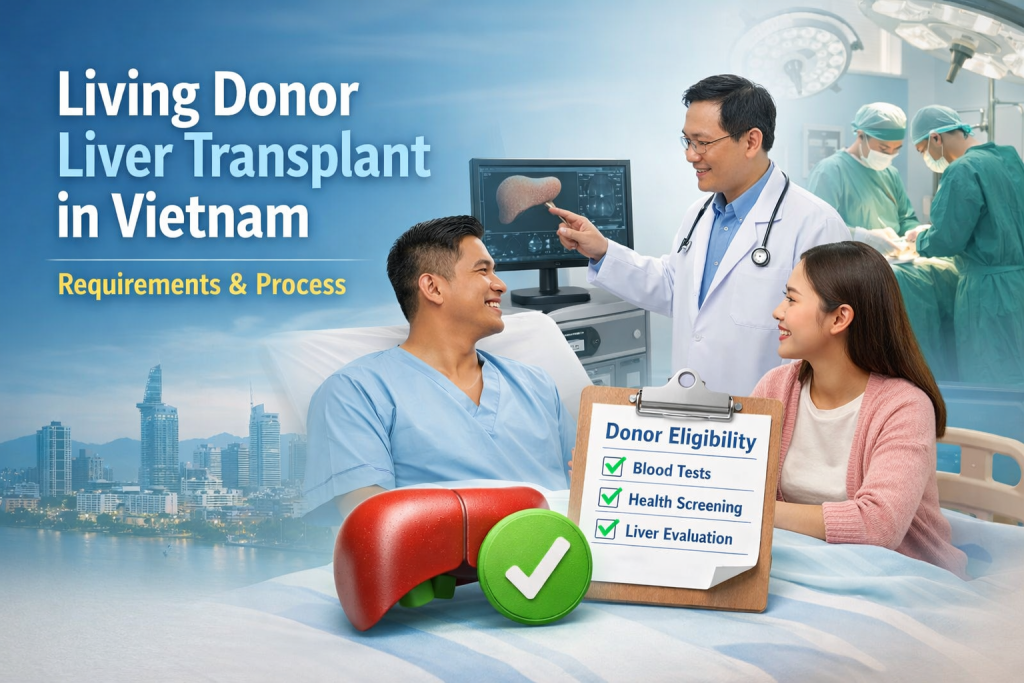
Living donor liver transplantation in Vietnam involves careful medical evaluation and coordinated care for both donor and recipient.
Challenges International Patients Should Understand
Despite its advantages, transplantation abroad requires careful preparation.
Patients should consider:
-
Need for a medically suitable donor
-
Commitment to recovery and follow-up care
-
Long-term medication management
-
Coordination with doctors in their home country
Understanding these responsibilities helps ensure successful outcomes.
How Medical Coordinators Support Donor and Recipient
Medical coordination services help simplify complex logistics by assisting with:
-
Medical record preparation
-
Communication with transplant teams
-
Scheduling evaluations
-
Travel planning
-
Language support
-
Post-treatment coordination
For many international families, this guidance reduces stress during an already challenging medical journey.
Conclusion
Living donor liver transplantation has become a vital option for patients who cannot wait for deceased donor organs. Vietnam’s growing expertise, structured evaluation systems, and experienced transplant teams make it an increasingly attractive destination for international patients seeking timely treatment.
By understanding donor requirements, medical evaluation procedures, and recovery expectations, both recipients and donors can prepare confidently for the transplant journey. With proper planning and professional medical guidance, living donor liver transplantation in Vietnam offers a realistic and life-saving pathway for patients facing advanced liver disease.