
Liver transplantation is one of the most complex and life-saving surgical procedures in modern medicine. For patients suffering from severe liver disease or liver failure, a successful liver transplant can dramatically improve both survival and quality of life.
In recent years, Vietnam has emerged as an increasingly recognized destination for advanced medical procedures, including liver transplantation. Many international patients now consider Vietnam not only for its affordable treatment costs but also for the expertise of its transplant surgeons and improving medical infrastructure.
One of the most important questions patients ask before considering treatment abroad is: What is the success rate of liver transplant in Vietnam?
This guide explains liver transplant survival rates, the factors that influence outcomes, and what international patients should know before considering liver transplant surgery in Vietnam.
For patients suffering from end-stage liver disease, many families begin researching liver transplant surgery in Vietnam to understand available treatment options and hospital expertise.
Understanding Liver Transplant Success Rates
The success rate of liver transplantation is typically measured using survival statistics. These statistics usually describe the percentage of patients who survive after a certain period of time following surgery.
Commonly reported survival rates include:
• one-year survival rate
• three-year survival rate
• five-year survival rate
Globally, liver transplantation has become a well-established treatment for end-stage liver disease. According to international transplant data, the average one-year survival rate for liver transplant patients worldwide ranges from 85% to 90%.
Long-term survival rates continue to improve thanks to advances in surgical techniques, post-operative care, and immunosuppressive medications.
Liver Transplant Success Rate in Vietnam
Vietnam has made significant progress in transplant surgery over the past two decades. Several major hospitals in the country have successfully performed hundreds of liver transplant procedures.
While exact statistics may vary between hospitals, reports from major transplant centers indicate that the short-term success rates in Vietnam are comparable to international standards when procedures are performed in experienced medical centers.
Typical outcomes reported by transplant programs in Vietnam include:
• one-year survival rate: approximately 85% – 90%
• three-year survival rate: approximately 75% – 85%
• five-year survival rate: approximately 70% – 80%
These figures are similar to those seen in many developed healthcare systems.
It is important to understand that success rates depend heavily on several factors, including the patient’s condition before surgery and the quality of post-transplant care.
Living Donor Liver Transplant vs Deceased Donor Transplant
Most liver transplants performed in Vietnam involve living donor liver transplantation (LDLT).
In this procedure, a healthy donor — usually a family member — donates a portion of their liver to the patient. Because the liver has the ability to regenerate, both the donor’s and recipient’s liver tissue can grow back after surgery.
Living donor transplantation offers several advantages.
First, it significantly reduces waiting time. In many countries, patients may wait years for a deceased donor liver.
Second, the transplant can be scheduled at an optimal time when the patient’s condition is stable.
Studies have shown that living donor liver transplants often have success rates comparable to deceased donor transplants, particularly when performed by experienced surgical teams.
Factors That Affect Liver Transplant Success
Many factors influence the outcome of liver transplant surgery. Understanding these factors can help patients better evaluate their treatment options.
Patient’s Health Condition Before Surgery
Patients who undergo transplantation earlier in the course of liver disease generally have better outcomes.
If the patient’s liver failure has already caused severe complications affecting other organs, the risk of complications may increase.
Doctors typically evaluate patients using scoring systems such as the MELD score (Model for End-Stage Liver Disease) to determine transplant eligibility and urgency.
Donor Compatibility
In living donor liver transplantation, donor compatibility is extremely important.
Doctors evaluate several factors before approving a donor, including:
• blood type compatibility
• liver size matching
• donor’s overall health condition
A well-matched donor significantly improves the chances of a successful transplant.
Surgical Expertise
Liver transplantation is a technically demanding surgery that requires highly specialized surgical teams.
Hospitals performing liver transplant procedures must have experienced transplant surgeons, advanced operating facilities, and specialized intensive care units.
Vietnam has several hospitals with transplant programs that have developed significant experience over the years.
Post-Transplant Care
The success of a liver transplant does not depend only on the surgery itself. Post-operative care plays an equally important role.
After the transplant, patients must take immunosuppressive medications to prevent the body from rejecting the new liver.
Regular follow-up visits, laboratory monitoring, and lifestyle adjustments are essential for long-term success.
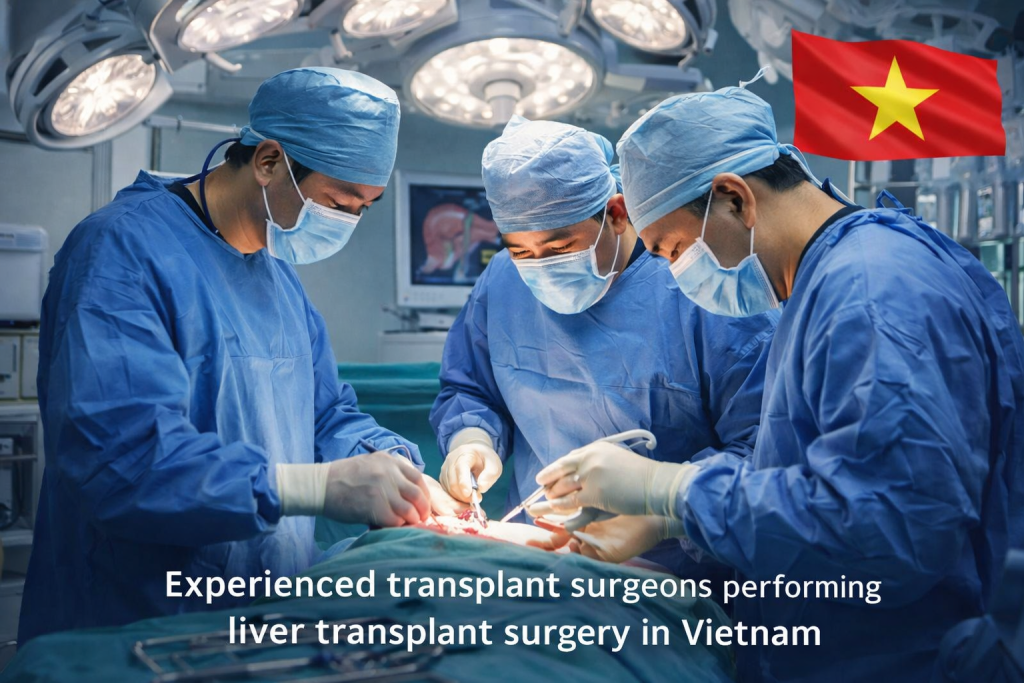
Experienced transplant surgeons performing liver transplant surgery in Vietnam.
Recovery After Liver Transplant Surgery
Recovery after liver transplant surgery typically occurs in several stages.
Immediately after surgery, patients are closely monitored in the intensive care unit (ICU). This period is critical for detecting any early complications.
Patients usually remain hospitalized for several weeks depending on their recovery progress.
During the first few months after surgery, the medical team carefully adjusts medications and monitors liver function.
Over time, many transplant recipients can gradually return to daily activities and significantly improve their quality of life.
Long-Term Survival After Liver Transplant
Advances in transplant medicine have significantly improved long-term outcomes for liver transplant recipients.
Many patients are able to live 10, 15, or even 20 years or longer after transplantation.
Maintaining long-term health after liver transplant requires:
• lifelong medical follow-up
• adherence to immunosuppressive medications
• healthy lifestyle choices
• regular monitoring of liver function
With proper care, many transplant recipients can return to work, travel, and enjoy a normal lifestyle.
Why International Patients Consider Vietnam for Liver Transplant
Vietnam is becoming increasingly attractive for international patients seeking complex medical procedures.
Several factors contribute to this growing interest.
Affordable Treatment Costs
One of the most important advantages is the cost of treatment.
Compared to Western countries, the cost of liver transplant surgery in Vietnam can be significantly lower while still providing access to experienced surgeons and modern medical facilities.
Experienced Transplant Programs
Over the past two decades, Vietnam has developed specialized transplant centers with experienced surgical teams.
Many transplant surgeons have received training or participated in international medical collaborations.
Growing Medical Infrastructure
Vietnam’s healthcare system continues to expand, with many hospitals investing in modern medical technology, specialized surgical units, and international patient services.
This development makes the country increasingly accessible to medical travelers.
Safety Considerations for International Patients
For international patients considering liver transplant surgery abroad, safety and transparency are extremely important.
Patients should ensure that:
• the hospital has an experienced transplant team
• the transplant program follows established medical protocols
• donor evaluation is performed carefully and ethically
• post-operative care and follow-up plans are clearly defined
Consultation with qualified transplant specialists is essential before making any decision about surgery.
How Medical Tourism Facilitators Can Help
Organizing a complex medical procedure in another country can be challenging for patients and their families.
Medical tourism facilitators such as MedtourVietnam help international patients understand their treatment options and connect with appropriate hospitals in Vietnam.
These services may include:
• hospital coordination
• communication with doctors
• medical record review
• appointment scheduling
• guidance on travel and treatment planning
This support helps patients navigate the medical travel process more smoothly.
Considering Liver Transplant in Vietnam
Liver transplantation remains one of the most advanced procedures in modern medicine, offering hope to patients with life-threatening liver disease.
Vietnam’s transplant programs continue to develop, with success rates that increasingly align with international standards when procedures are performed in experienced medical centers.
For international patients exploring treatment options abroad, understanding the success rate of liver transplant in Vietnam is an important step in evaluating whether the country may be a suitable destination for care.
Careful consultation with medical professionals and transplant specialists is essential to determine the best treatment plan for each individual patient.
Considering a Liver Transplant in Vietnam?
Our team at MedtourVietnam can help you review your case, connect with suitable hospitals, and guide you through the next steps for medical treatment in Vietnam.
- Hospital options for liver transplant evaluation
- Guidance on medical records and required documents
- Support for treatment planning and travel preparation